How to Wear a Belt When You Have a Belly (Tips that Works)
TL;DR: (30 seconds Quick Answer)
- Wear your belt at the natural waist — 1–2 inches above the belly button — not across or below the belly
- A 1.5" (38mm) full-grain leather belt distributes pressure evenly and holds its shape without digging in
- Size up: measure your actual waist over your pants and add 1–2 inches for a comfortable, secure fit
- A ratchet buckle or low-profile plaque buckle lies flat, prevents pressure points, and adjusts without holes
A belt with a belly isn't the problem people think it is. The problem is usually placement, width, or sizing — any one of them off and the belt digs in, bunches the shirt, or creates visual bulk where you don't want it. Get all three right and a belt becomes one of the most useful pieces in your wardrobe for looking pulled-together, regardless of your midsection.
This guide covers how to wear a belt when you have a belly — for men and women — with specific guidance on where to position it, what width to choose, how to size it properly, and which buckle type keeps things comfortable all day.

Is It Okay to Wear a Belt If You Have a Belly?
Yes — wearing a belt with a belly is completely fine. In fact, a correctly placed belt creates a waistline definition that actually improves your silhouette. The key is positioning the belt above the belly, not across it. A belt placed at the widest part of the stomach emphasizes the midsection; one placed above it creates structure and draws the eye upward.
Skipping the belt to avoid attention often backfires. Without waist definition, clothing hangs loose and formless, which can read as larger than it actually is. A belt — positioned right — gives your outfit a clear anchor point and helps clothing drape properly from the waist down. For a range of styles suited to different builds, the men's belt collection includes options from slim casual to structured dress.

Where Should a Belt Sit When You Have a Belly?
Position your belt at your natural waist — roughly 1–2 inches above your belly button, where your torso naturally creases when you bend sideways. This is typically the narrowest part of your midsection. Wearing the belt here creates visual structure above the belly rather than framing it. Never place the belt at hip level or directly over the widest point of the stomach.
For most people, the natural waist sits noticeably above where pants waistbands typically land. If your jeans currently ride at your hips or at the belly button, they may be pulling the belt placement down with them. Switching to higher-rise pants (a rise of 10–12 inches) automatically positions the belt higher on the torso, making the whole equation easier. According to research on clothing fit and body perception, waistband placement is one of the most significant factors in how body proportions are perceived.
Use the BELTLEY size guide to measure your natural waist — not your pants size — before choosing a belt length.

What Belt Width Is Best for a Bigger Midsection?
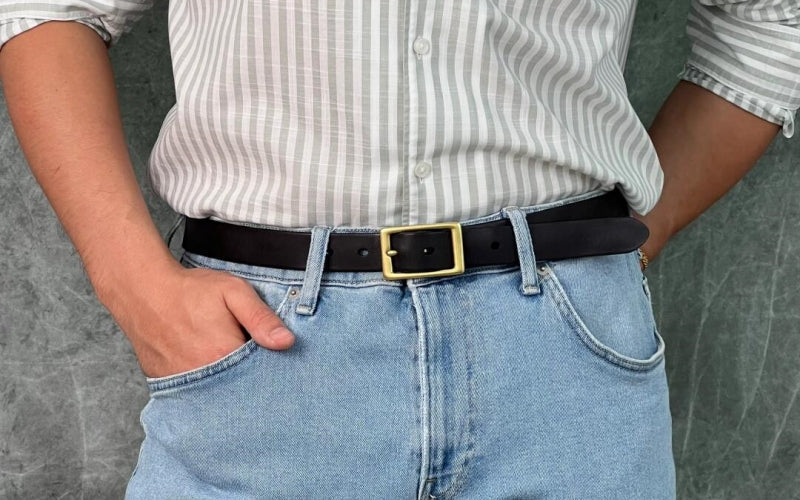
A 1.5" (38mm) belt is the most flattering and comfortable width for most people with a belly. It's wide enough to distribute pressure across the waistband without digging into soft tissue, but not so wide that it overwhelms shorter torsos or creates a shelf effect above the stomach. Belts narrower than 1" concentrate pressure on a single line, which becomes uncomfortable quickly.
Width also affects how a belt reads visually. A medium-to-wide belt at the natural waist creates a clean horizontal line of definition. A very skinny belt draws attention by contrast — the narrow strip against a wider midsection creates visual tension. Our 1.5" leather belt collection covers both dress and casual styles in this ideal width range.
For a full breakdown of how belt width scales to build and occasion, the standard belt width guide covers every scenario in detail.

Which Buckle Style Is Most Comfortable for a Belly?
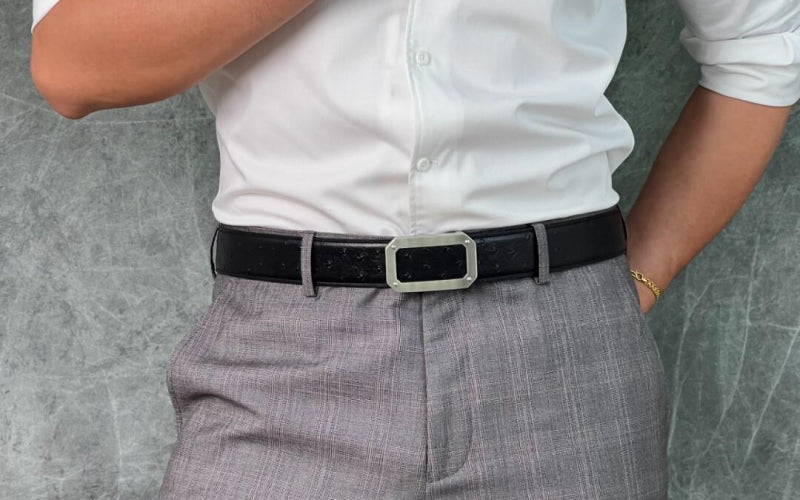
A ratchet buckle or slim plaque buckle is the most comfortable choice for people with a belly. Ratchet buckles use a track system instead of pre-drilled holes, so you get a micro-adjustable fit that stays secure without creating a pressure point. Slim plaque buckles lie flat and don't create a raised edge that digs into the stomach when sitting.
Large, chunky, or ornate buckles sit away from the body and press into the lower abdomen when you sit down — something most people don't notice until they're at a desk or in a car for an hour. Beyond comfort, an oversized buckle also draws the eye directly to the center of your midsection, which is rarely the goal. A clean, low-profile buckle in polished stainless steel or brushed brass keeps the focus on your overall outfit, not your waistline.
BELTLEY's ratchet buckle belt collection offers a modern alternative to traditional hole-punch systems — especially useful if your weight fluctuates day to day. All buckles are stainless steel, polished but not loud. See the full types of belt buckles guide for a side-by-side comparison of every buckle mechanism.

How to Size a Belt Correctly If You Have a Belly
Getting belt size wrong is the most common reason belts dig in, pop off the last hole, or bunch fabric. Standard sizing advice ("order one size up from your pants") doesn't work reliably for people with a belly, because there's often a significant gap between pants label size and actual waist measurement.
The correct method:
- Measure your actual waist where you plan to wear the belt — over your pants, not your bare stomach
- Add 1–2 inches to that measurement for a comfortable, wearable fit
- When the belt arrives, it should fasten on the middle hole when you're standing relaxed
- You should be able to fit two fingers flat between the belt and your waistband — snug but not tight
Sizing research from NIH consistently shows that men's pants labels run 1–2 inches smaller than actual waist circumference, meaning someone with a 42" waist may be wearing size 40 pants. A belt bought to match the pants label will be too tight.
Practical sizing chart:
| Measured waist (over pants) | Recommended belt size |
|---|---|
| 32–34" | 36" belt |
| 36–38" | 40" belt |
| 40–42" | 44" belt |
| 44–46" | 48" belt |
| 48–50" | 52" belt |
BELTLEY belts are available in extended sizes. Check the size guide to confirm your measurement before ordering.
Do Men Wear Their Belt Over or Under the Belly?
The belt should always sit above the belly, not under it. Wearing a belt under the belly (on the hips) might seem more comfortable, but it pushes fabric outward and draws the eye to the widest point of the stomach. Belt placement above the belly — at the natural waist — keeps the trousers in position and creates a cleaner, more proportioned silhouette.
Some men with larger midsections let their belly hang over the belt — this happens when the belt drops too low or pants are too low-rise. The fix is usually wearing higher-rise trousers, which keep the waistband closer to the natural waist and prevent the overhang. Pleated trousers help further, as the folds accommodate the belly without pulling or bunching. [Insert external link to: men's body proportion and pants rise styling guide]

The Outfit Moves That Make Any Belt More Flattering
Placement and sizing do most of the work, but a few outfit choices amplify the effect:
Choose darker colors above the waist. Dark shirts and jackets draw less attention to the midsection. A dark belt on a dark trouser with a lighter shirt focuses the eye on the upper body, not the waist.
Try the half-tuck. Tucking just the front of a shirt creates waist definition from the front view while the untucked back covers the sides. Works especially well with casual jeans and a 1.5" leather belt.
Wear an open blazer or structured jacket. An open blazer frames the body in a V-shape from shoulders to waist, making the torso look broader at the top and narrower at the middle. The belt remains visible — adding definition — while the jacket covers the side profile.
Match the belt to your trousers. A brown belt on brown trousers, or black on black, creates one continuous vertical line from waist to foot. This reads as taller and slimmer than a contrasting belt that cuts the silhouette in half horizontally. [Insert external link to: color matching principles in men's fashion styling]
For more styling guidance by occasion, the 15 types of leather belts for men guide covers how different belt constructions work across casual, business, and formal settings.

The Bottom Line
Wearing a belt with a belly comes down to three things done right: position it above the belly at your natural waist, choose a 1.5" width that distributes pressure without bunching, and size it to your actual measured waist — not your pants label. A ratchet or slim plaque buckle handles the comfort side. Everything else is outfit styling layered on top.
The leather matters too. A stiff, low-quality belt rolls and creases under pressure, creating exactly the kind of visual bulk you're trying to avoid. At BELTLEY, every belt uses full-grain leather that molds to your waist over time and lies flat against fabric — no digging, no folding. Backed by a 10-year warranty and free worldwide shipping, it's a better-built belt at a fair price.
Shop the full-grain leather belt collection and find the right width and buckle for your build.
Frequently Asked Questions
Q: Should a belt go above or below the belly?
Always above. Position the belt at your natural waist — 1–2 inches above the belly button — where your torso is narrowest. Wearing a belt below the belly pushes fabric outward and draws attention to the widest point of the midsection.
Q: What size belt should I get if I have a big belly?
Measure your actual waist over your pants where the belt will sit, then add 1–2 inches. Ignore your pants label size — it typically runs 1–2 inches smaller than your actual waist. The belt should fasten on the middle hole when you're standing relaxed.
Q: What type of belt is most comfortable for a large stomach?
A 1.5" full-grain leather belt with a ratchet buckle is the most comfortable option. The wider strap distributes pressure evenly without digging in, and a ratchet buckle allows micro-adjustments throughout the day without pre-drilled holes that create pressure points.
Q: Is a ratchet belt better than a regular belt for a belly?
For most people with a belly, yes. A ratchet belt adjusts in small increments along a continuous track, so you can fine-tune the fit as your waist fluctuates during the day — after eating, sitting for long periods, or exercising. It eliminates the common problem of being between holes on a standard belt.
Q: Should I wear suspenders instead of a belt if I have a belly?
Suspenders are a valid alternative, particularly for formal wear. They allow trousers to sit at the natural waist without any compression and eliminate pressure entirely. That said, a correctly fitted belt at the natural waist achieves a similar effect for most everyday situations and offers more styling versatility.
%0A%0AWear%20your%20belt%20at%20the%20natural%20waist%20%E2%80%94%201%E2%80%932%20inches%20above%20the%20belly%20button%20%E2%80%94%20not%20across%20or%20below%20the%20belly%0AA%201.5%22%20(38mm)%20full-grain%20leather%20belt%20distributes%20pressure%20...)