15 Different Types of Leather Belts for Men: Trendy Style Guide
TL;DR: Quick answer
Most men own one or two belts and never think much about them. But the category is far more varied than it appears — and the difference between a full-grain dress belt, a bridle leather belt, and a chrome-tanned casual belt isn't just aesthetic. It's material science, tanning chemistry, and decades of craft tradition.
This guide covers all 15 meaningful types of leather belts for men. Each one has a specific role, a specific leather, and a specific formality range where it belongs. Browse BELTLEY's full leather belt collection alongside this guide — we've made most of these types since 1999.

Which of the 15 Do You Actually Need?
You don't need fifteen belts. You need the right two or three:
| Your situation | Go with |
|---|---|
| First quality belt ever | #1, full-grain dress belt — from $58 at BELTLEY, covers 80% of life. |
| Suit-heavy work week | #2 calfskin ($100–$148) — the sleek, refined dress-belt standard. |
| Jeans, boots, weekends | #4 distressed or #13 buffalo — rugged texture that improves with abuse. |
| Ready for a statement piece | #9 crocodile/alligator ($118–$289) — the upgrade that makes the rest of the outfit look more expensive. |
| Maximum durability, period | #10 elephant (from $199.99) — the toughest hide on this list. |
Compare them side by side in BELTLEY's men's collection.
Quick Reference: All 15 Types at a Glance
| # | Belt Type | Formality | Best Width | Durability |
|---|---|---|---|---|
| 1 | Full-grain dress | Business formal → Casual | 1"–1.5" | ★★★★★ |
| 2 | Calfskin | Formal → Smart casual | 1"–1.25" | ★★★★☆ |
| 3 | Double-layer heavy-duty | Casual | 1.5" | ★★★★★ |
| 4 | Distressed / vintage | Casual → Smart casual | 1.25"–1.5" | ★★★★☆ |
| 5 | Braided leather | Casual → Smart casual | 1.25"–1.5" | ★★★☆☆ |
| 6 | Handwoven / Intrecciato | Smart casual | 1.25"–1.5" | ★★★★☆ |
| 7 | Suede | Casual → Smart casual | 1.25"–1.5" | ★★★☆☆ |
| 8 | Bridle / veg-tan | Smart casual → Business casual | 1.25"–1.5" | ★★★★★ |
| 9 | Crocodile / alligator | Smart casual → Business casual | 1.25"–1.38" | ★★★★★ |
| 10 | Elephant leather | Smart casual | 1.25"–1.5" | ★★★★★ |
| 11 | Python / snake leather | Smart casual → Statement | 1.25"–1.5" | ★★★☆☆ |
| 12 | Tooled / hand-stamped | Casual → Western | 1.5"–1.75" | ★★★★☆ |
| 13 | Buffalo / bison | Casual → Rugged | 1.5" | ★★★★★ |
| 14 | Embossed / laser-detail | Casual → Statement | 1.25"–1.5" | ★★★★☆ |
| 15 | Reversible | Business casual → Casual | 1.25"–1.38" | ★★★☆☆ |
1. Full-Grain Leather Dress Belt
The benchmark. Every other belt type on this list is measured against it.
What it is: Full-grain leather is the outermost layer of the hide — the part with the tightest fiber structure, densest grain, and highest natural resistance to moisture and abrasion. Nothing is buffed, sanded, or corrected. The surface retains its natural markings and, critically, develops a patina over time that no other leather grade can replicate.
According to the Leather Working Group's material standards, full-grain is the highest classification in the leather quality hierarchy — above top-grain (which has been sanded), corrected-grain (which has been both sanded and embossed), and far above bonded leather (reconstituted leather scraps).
Formality: Business formal through smart casual. The most versatile leather type in the category.
Width range: 1"–1.5" — the narrower end for suits, the wider end for jeans and chinos.
What to look for: Consistent grain pattern, clean-cut edges (not painted or folded to hide splitting), and a buckle that shows its own quality. BELTLEY's full-grain belts use marine-grade stainless steel buckles — the alloy used in surgical instruments and marine hardware, which won't corrode or discolor.

2. Calfskin Leather Belt
What it is: Calfskin comes from young cattle, producing a hide with exceptionally fine, tight grain and a smooth surface. It's the leather of choice for high-end dress shoes, gloves, and formal accessories — and for good reason. The fiber density is higher than standard cowhide, the surface is naturally smoother, and the result is a belt that holds a mirror-like finish without the rigidity of stiffer hides.
As Permanent Style's belt capsule guide notes, calfskin represents the formal end of the leather spectrum — appropriate for dress occasions where the surface quality of the leather actually registers.
Formality: Formal through smart casual. This is the belt for your best suits.
Best for: Pairing with calfskin dress shoes, where the surface character of both accessories matches at the material level.
Width: 1"–1.25". Beyond that, the refined quality of the leather reads out of proportion for the formality level.

3. Double-Layer / Heavy-Duty Belt
What it is: Two layers of full-grain leather laminated or stitched together, producing a belt with significantly more body, rigidity, and structural integrity than a single-layer strap. The construction adds thickness (typically 5–7mm versus 3–4mm for standard belts) and dramatically extends the belt's lifespan.
Why it matters: A single-layer belt flexes with every movement. Over time, that flex fatigues the leather at the holes, around the buckle attachment, and along the fold lines. A double-layer construction distributes that stress across two bonded layers, which is why double-layer belts tend to outlast single-layer belts by a significant margin in daily use.
Formality: Casual to workwear. The thickness and visual weight don't read as formal, but they're exactly right for jeans, work trousers, and outdoor wear.
Browse BELTLEY's double-layer belt collection — built for daily use, not display cabinet storage.

4. Distressed / Vintage Leather Belt
What it is: Leather that's been deliberately aged through physical or chemical processes — burnishing, hand-antiquing, wax pulling, or controlled surface abrasion — to produce a belt that looks like it's been through two decades of adventure before you've even worn it once. Done well, it's a character piece. Done poorly, it looks like a belt that's been through two decades of neglect.
The best distressed belts start with full-grain leather, because the natural grain structure supports the aging process authentically. When you distress corrected-grain leather, the sanded and embossed surface just looks damaged, not characterful.
Formality: Casual through smart casual. The distressed look signals intentional personality — it belongs in creative, relaxed, or Western-adjacent contexts.
What to look for: Natural-looking wear at the edges and fold points, not uniform machine-applied distressing. Hand-antiquing (where a craftsperson applies and removes wax or dye by hand) produces the most authentic result.

5. Braided Leather Belt
What it is: Multiple leather strands interwoven into a continuous strap, typically using a three-strand or five-strand braid. The weave eliminates the need for pre-punched holes — the prong rests wherever it falls in the braid — giving these belts infinite adjustability.
According to The Art of Manliness' men's belt guide, braided belts are considered casual accessories appropriate for relaxed and warm-weather dressing. Their open weave, adjustability, and textural character make them popular for resort, weekend, and smart-casual contexts.
Formality: Casual to smart casual. Not a formal option — the weave is inherently relaxed.
Leather quality matters here: A braided belt made from genuine leather strands holds its shape and wears well. A braided belt made from bonded leather or faux leather unravels, splits, and stiffens within months. Always check that the strands are solid leather, not surface-coated composite.
Width: 1.25"–1.5". The weave adds visual texture that scales better at medium width.

6. Handwoven / Intrecciato-Style Belt
A refinement of the braided belt — and a noticeably different category once you've seen both side by side.
What it is: Handwoven belts use thinner leather strips woven at tighter angles, producing a denser, more structured surface. The Intrecciato style — made famous by Bottega Veneta but rooted in Italian leather craft tradition — uses very thin strips woven over a base layer, creating a tessellated surface that's simultaneously tactile and architectural.
What separates it from standard braided: The weave is tighter, the surface reads as more refined, and the construction is substantially more labor-intensive. A proper handwoven belt can't be produced by machine — the tension and alignment require human judgment at every stage.
BELTLEY's handwoven leather belt collection is made from full-grain leather strands woven over a full-grain base — the leather all the way through, not just on the visible surface.
Formality: Smart casual to elevated casual. More refined than standard braided, but still too textured for formal contexts.

7. Suede Belt
What it is: Suede is the inner split of the hide — the layer beneath full-grain — that's been buffed to produce a napped, velvety surface. The texture is softer and more casual in character than smooth leather, and it absorbs dye differently, producing a matte, slightly powdery finish.
Durability note: Suede is less water-resistant than full-grain and more susceptible to staining and surface damage. This isn't a reason to avoid it — it's a reason to use it intentionally. A quality suede belt in a casual or smart-casual context is a genuinely elegant choice. The same belt worn in rain or in formal settings starts to look like poor planning.
Formality: Casual through smart casual. The napped surface actively reduces formality — suede doesn't read as business dress.
Seasonal note: Suede reads best in autumn and winter — it pairs naturally with heavier fabrics like wool, flannel, and corduroy. Summer suede is possible but uncommon.

8. Vegetable-Tanned / Bridle Leather Belt
This category deserves more attention than it gets.
What it is: Vegetable tanning is the oldest leather tanning method — using tannins extracted from tree bark (oak, mimosa, chestnut) to convert raw hide into stable leather. The process takes weeks rather than the hours required by modern chrome tanning. The resulting leather is denser, stiffer on arrival, more responsive to conditioning, and dramatically more capable of developing a deep, rich patina over time.
Wikipedia's vegetable tanning article documents how this method, which dates to ancient civilizations, produces leather with fundamentally different fiber characteristics than chrome-tanned alternatives — higher density, less pliability initially, but far greater longevity and patina development.
Bridle leather is vegetable-tanned leather that's been additionally stuffed with wax and tallow during production — originally developed for horse bridles and saddles, where structural integrity and weather resistance were critical. It arrives stiff, breaks in slowly, and eventually develops the most satisfying, characterful surface of any leather type.
Formality: Smart casual through business casual. The structured, substantial character of bridle leather reads as considered and quality-forward — appropriate for professional environments without being formally stiff.
BELTLEY's bridle leather and Japanese oak vegetable-tanned options represent the traditional end of our belt range — made for people who want a belt that improves decisively over 5–10 years of wear.

9. Crocodile / Alligator Leather Belt
The top of the exotic leather hierarchy.
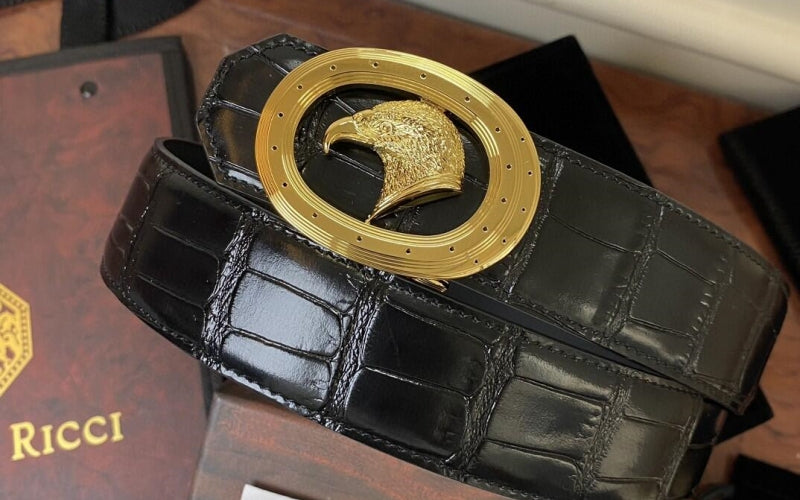
What it is: Genuine crocodile and alligator leather comes from CITES-regulated species — international wildlife trade conventions govern their sourcing and export to ensure legal, sustainable supply chains. The leather from the belly of the hide (belly-cut) produces the most uniform, closely scaled surface; the hornback cut — from the ridged dorsal scales — offers more dramatic texture.
The key distinction between crocodile and alligator: American alligator (Alligator mississippiensis) has rounder, more uniform scales; Nile and Saltwater crocodile hides have more varied scale patterns with an umbilical scar visible in belly-cut pieces. Both are exceptional. Connoisseurs have preferences; everyone else will be satisfied by either.
Why it's in a different category: Exotic leather doesn't merely look expensive. The tight, calcified scale structure — harder than any bovine leather — produces a belt that resists abrasion, holds its shape under pressure, and develops a burnished depth over years of wear that no full-grain cowhide can match. It's a material that earns its price on performance, not just aesthetics.
Browse BELTLEY's alligator and crocodile belt collection — every hide legally and responsibly sourced with official import documentation.
Formality: Smart casual through business casual. Dark colors (black, espresso) push toward formal; cognac and tan are definitively smart casual.

10. Elephant Leather Belt
What it is: Elephant leather is sourced from legally obtained hides — typically from government-managed conservation programs in southern African countries where elephant populations are actively managed. The leather is unlike any other in the exotic category: deeply textured, naturally matte, with a distinctive wrinkled grain pattern that reads as ancient and substantial.
The practical characteristics are exceptional. Elephant leather is among the thickest and most durable of any exotic hide, with natural resistance to cracking and surface wear. It doesn't patina the way crocodile does — instead it develops a gradual deepening of the surface texture that makes older elephant leather pieces look more interesting, not less.
Formality: Smart casual. The texture and weight make it a casual statement piece — too visually substantial for formal contexts.
BELTLEY's elephant leather belt collection covers this category for buyers who want something genuinely unusual.
11. Python / Exotic Snake Leather Belt
What it is: Python leather — typically from reticulated or Burmese python, both farmed for the leather trade under CITES Appendix II regulations — produces a distinctive scale pattern with elongated, overlapping scales that create a directional shimmer as the belt moves.
The leather is thinner than crocodile or elephant, making it more supple but also more susceptible to surface damage at fold points. Python belts benefit from careful handling and conditioning with appropriate exotic leather products.
Visual character: The scale pattern creates an almost iridescent quality — particularly visible in light-colored or two-tone python pieces. It's one of the boldest exotic leathers visually, which makes it more selective in application.
Formality: Smart casual to statement. Works best when the rest of the outfit stays neutral — the python pattern does its own talking.
12. Tooled / Hand-Stamped Leather Belt
What it is: Tooling is the art of pressing geometric or figurative patterns into dampened vegetable-tanned leather using metal stamps, swivel knives, and mallets. The leather must be vegetable-tanned — chrome-tanned leather doesn't hold impressions because the fiber structure responds differently to moisture. This is one of the reasons vegetable tanning has survived in an era when chrome tanning dominates commercial leather production.
As Dalgado's history of belt craft notes, tooled leather represents the oldest decorative belt tradition in Western culture — predating the modern fashion belt by centuries. The craft is associated with saddlery and saddle-making, where decorative tooling on horse gear communicated the status of the rider.
Modern context: The Western revival in fashion has brought tooled leather from niche to mainstream. The key distinction is execution — hand-tooled leather (where a craftsperson operates each stamp manually) produces irregular, characterful patterns. Machine-embossed leather that imitates tooling is visually similar at distance but flat and repetitive up close.
Formality: Casual through Western-influenced smart casual.

13. Buffalo / Bison Leather Belt
What it is: Buffalo and American bison leather are significantly thicker and more textured than standard cowhide, with a pronounced pebble grain that resists scratching and shows minimal wear over time. The hide fiber structure is denser than domestic cattle, producing leather with a natural toughness that's genuinely different — not just marketed as such.
Why it's a legitimate category: The grain pattern is unmistakable — larger pebble texture with irregular depth that catches light differently from smooth cowhide. It's a working leather with genuine rugged character, appropriate for outdoors, travel, and casual daily wear.
Formality: Casual to workwear. The texture reads as deliberately rugged — it doesn't belong in formal contexts.
14. Embossed / Laser-Detailed Belt
What it is: Two distinct techniques produce this category. Traditional embossing uses heat and pressure to press patterns into leather — a faster, machine-driven version of hand tooling. Laser etching uses a focused beam to carbonize the leather surface in precise patterns, producing clean geometric designs, illustrations, or text with accuracy that hand tooling can't match.
The substrate matters enormously: embossed or laser-detailed full-grain leather produces a result that wears and ages authentically. The same techniques applied to split leather or bonded leather produce a surface that looks good initially but peels, flakes, and cracks within a year or two.
Formality: Casual to statement. These belts are conversation starters by design — the pattern is the point. They work in creative, casual, and Western-adjacent contexts.

15. Reversible Leather Belt
What it is: A reversible belt carries two leather colors on a single strap — typically achieved by stitching or gluing two thin leather layers back-to-back with a rotating buckle that flips 180° to expose either side. The most common combinations are black/brown, black/navy, or espresso/tan.
The honest trade-off: A reversible belt is two thin belts in one. The leather is necessarily thinner than a single-layer belt, because the combined thickness has to remain wearable. This means reversible belts are inherently less durable than solid-construction alternatives, and the rotating buckle mechanism — the weakest point in any reversible belt — is where failures tend to occur.
The genuine upside: For travel, where wardrobe flexibility matters and luggage space doesn't, a reversible belt genuinely solves a real problem. One belt covering two color families is a practical choice when you're packing for a week.
Formality: Business casual through casual. The mechanism adds visual thickness at the buckle that reads as slightly less refined than a standard attachment.

How to Choose the Right Type for Your Wardrobe
You don't need all 15. Most men need three types that cover their actual range of dress codes:
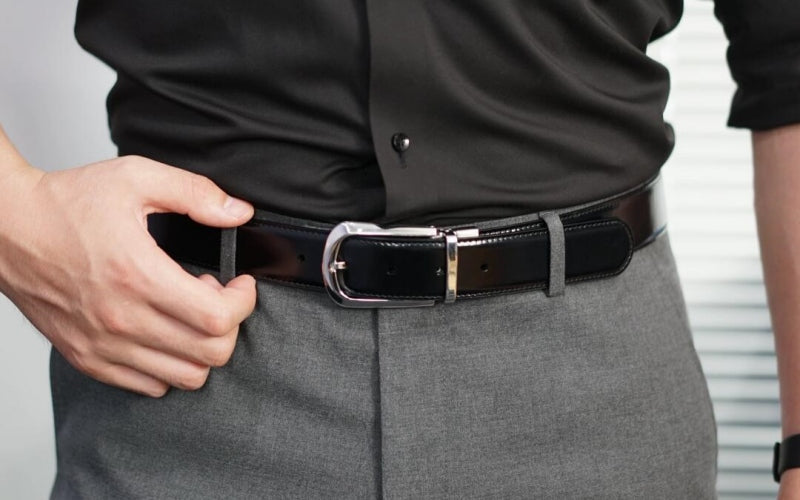
For formal and business formal: A calfskin or full-grain dress belt in black, 1"–1.25", with a low-profile silver or gunmetal buckle. This is the belt that disappears into the outfit — which is exactly what it should do. See Dress Belt vs. Casual Belt for the full breakdown.
For daily and smart casual wear: A full-grain leather belt in cognac or espresso, 1.25"–1.38". This covers business casual, weekend wear, smart casual events, and jeans. The most useful belt in any wardrobe.
For personality and statement: One exotic leather, tooled, or handwoven belt in a shade that complements your wardrobe. Wear it intentionally, not as an afterthought.
After those three, additions are situational — a bridle leather belt if you want to experience the pinnacle of everyday leather, a double-layer if you need genuine durability, a suede for seasonal use. For a deeper look at material quality across types: What Type of Leather Is Best for Belts?
BELTLEY has made all 15 of these belt types in small batches since 1999. We hand-select every hide — exotic or domestic — and back every belt with a 10-year warranty on materials and construction. Free worldwide shipping (USA 4–8 days), 30-day returns. If the type isn't right, zero friction getting to the one that is.
Frequently Asked Questions
Q: What is the best type of leather belt for everyday wear?
Full-grain leather in a 1.25"–1.38" width is the best all-purpose daily belt. It covers business casual through weekend wear, improves with use, and lasts a decade or more with minimal care. It's the type BELTLEY recommends as the first belt worth investing in.
Q: What's the difference between a dress belt and a casual belt?
Width and leather surface are the main differences. Dress belts are narrower (1"–1.25"), smooth-surfaced, and have minimal hardware — they're designed to disappear into formal outfits. Casual belts are wider (1.38"–1.5"+), often textured or distressed, with more expressive hardware. See the full comparison: Dress Belt vs. Casual Belt.
Q: Are exotic leather belts worth it for men?
Yes — for buyers who understand what they're getting. Crocodile and alligator leather is materially superior to cowhide in structural density and surface durability. The premium reflects the rarity of the hide, the labor of processing it, and the legal compliance required under CITES regulations. It's not a fashion premium — it's a material premium.
Q: What type of leather belt lasts the longest?
Vegetable-tanned full-grain leather — particularly bridle leather — lasts the longest of any belt type. The dense fiber structure, wax impregnation, and natural tanning process produce leather that stiffens and then breaks in to a lasting structural integrity. Exotic leathers (crocodile, elephant) are also exceptionally durable. The shortest-lived options are braided belts and reversible belts, which have structural weak points at the weave and rotating buckle respectively.
Q: What is a tooled leather belt?
A tooled leather belt has patterns pressed into dampened vegetable-tanned leather using stamps and a mallet — a hand craft tradition originally associated with saddlery. The design is permanently embossed into the leather surface. Tooled belts are casual, Western-influenced, and inherently handmade — the craft itself is the value.