Why Luxury Belt Buckles Are Heavier Than Fast-Fashion Ones
Quick answer: Luxury belt buckles are heavier because they're made from solid metal — solid brass or stainless steel machined or cast as one dense piece — while fast-fashion buckles are thin, hollow, or die-cast from lightweight zinc alloy. Solid brass is roughly 8.5 g/cm³ versus much less material in a hollow zinc buckle, so the weight you feel is literally more (and better) metal.
Last updated: June 2026 • By BELTLEY Editorial
TL;DR:
- Heft comes from solid metal: brass (~8.5 g/cm³) and steel buckles use more, denser material.
- Fast-fashion buckles are thin, hollow, or die-cast zinc alloy — cheap, light, and brittle.
- Weight correlates with durability: solid buckles bend and survive; hollow ones crack and snap.
- Weight is a quick quality test, but check the metal type too — heavy plating over zinc still fails.
Pick up a designer belt and a $15 fast-fashion belt back to back, and the difference announces itself before you see a single logo: the good one is heavy. That heft isn't a marketing trick — it's physics. A quality buckle is a solid block of dense metal, while a cheap buckle is thin, hollow, or cast from lightweight alloy to save material cost. The weight in your hand is a direct readout of how much real metal is there, and metal volume tracks closely with durability. This guide explains exactly why luxury buckles weigh more, what the weight tells you about quality, and how to use heft as a fast (if imperfect) buying test. It connects to our deeper look at why leather belts are so expensive.
Why do luxury belt buckles weigh more than cheap ones?
Because they contain more solid, dense metal. Luxury buckles are machined or cast from solid brass or stainless steel as a single thick piece, so there's simply more material. Fast-fashion buckles are thin, hollow-backed, or die-cast from lightweight zinc alloy to cut cost and weight — meaning less metal, less density, less heft.

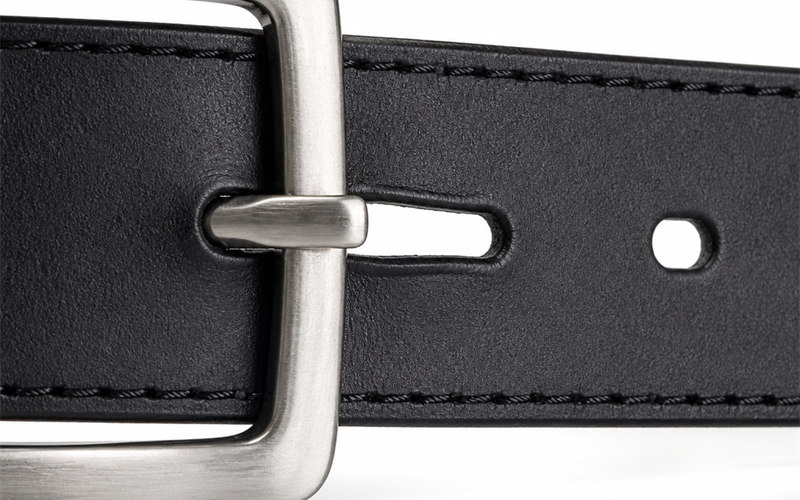
The material choice drives the difference. Solid brass — about two-thirds copper, one-third zinc — is a dense alloy, and a buckle made entirely of it feels substantial. Stainless steel is similar. Cheap buckles use zinc die-casting (often called "pot metal" or zamak), which is both lighter and far more brittle. Many also rely on thin electroplating to mimic a solid finish over that hollow core. Our types of belt buckles guide breaks down each metal in detail.
Does a heavier belt buckle mean better quality?
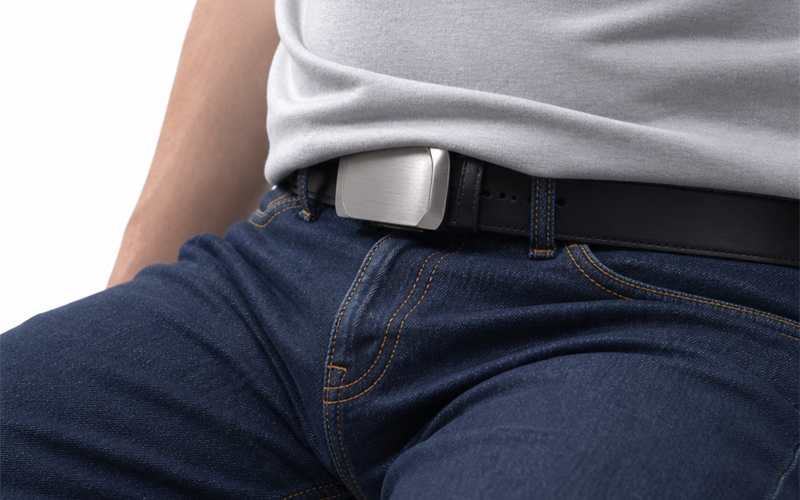
Usually, yes — with one caveat. Weight reliably signals more solid metal, which means a buckle that bends under stress instead of snapping and resists wear for decades. The caveat: a heavy buckle can still be plated zinc, so pair the weight test with a look at the metal type and finish. Heft is a strong first signal, not the whole story — and reassuringly, that extra weight won't hurt your back.

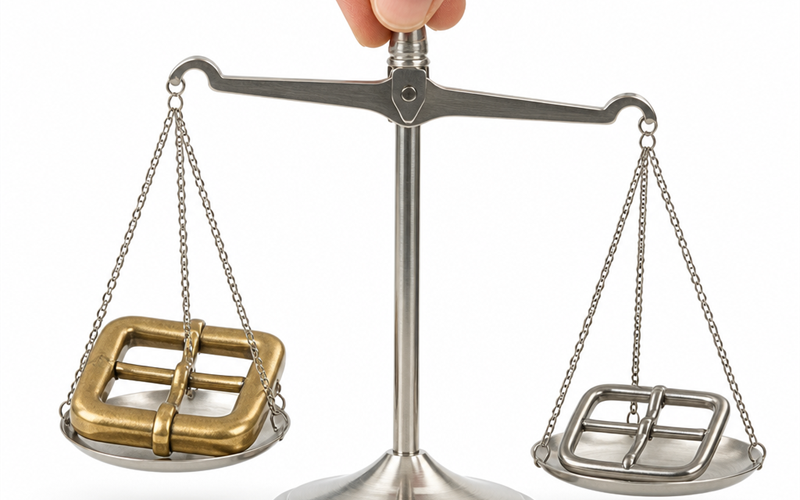
Key stat: Solid brass has a density of roughly 8.5 grams per cubic centimeter — so two buckles of identical size can differ in weight by 2–3× depending on whether they're solid brass or hollow zinc, making heft one of the fastest quality tests you can do by hand.
Here's how the two construction types compare across the things that matter:
| Factor | Luxury (solid brass/steel) | Fast-fashion (hollow/zinc) |
|---|---|---|
| Material | Solid brass or stainless | Die-cast zinc alloy, thin or hollow |
| Weight | Substantial, dense | Light, sometimes tinny |
| Failure mode | Bends, recovers | Cracks, snaps |
| Finish | Solid metal (or none needed) | Thin plating that wears through |
| Lifespan | Decades | Months to a few years |
| Re-plating needed | No | Yes, repeatedly (if at all worth it) |
Solid brass and steel resist the everyday stress that shatters cast zinc, which is why the weight you feel really does predict how long the buckle lasts. For the resale angle, see are old belt buckles worth anything.
What is fast-fashion buckle "pot metal," and why does it fail?
Pot metal is a catch-all for cheap die-cast zinc alloys used in low-cost hardware. It's poured into molds quickly and cheaply, producing light, intricate-looking buckles that are brittle. Under the repeated stress of buckling and the leverage of daily wear, pot-metal buckles crack at thin points and snap — often at the prong or frame corners.

The brittleness is the core problem. Zinc die-castings can't flex the way solid brass or steel does, so instead of bending and recovering, they fracture. A thin coat of nickel or chrome plating makes them look like quality hardware, but once that microns-thick layer wears through, the dull base metal shows — and re-plating it rarely makes economic sense, while nickel plating is also a common skin-allergy trigger. The weight gives the game away before any of that: a hollow buckle simply can't hide its lack of metal on a scale.
How can you use weight to judge a buckle before buying?
Hold the belt by the strap and let the buckle hang, then heft the buckle in your palm. A quality buckle feels dense and solid for its size; a cheap one feels light, thin, or tinny. Tap it — solid metal gives a dull, low tone, while hollow zinc rings or sounds cheap. Combine that with checking whether it's solid brass or stainless.

This hand test takes seconds and is remarkably reliable — Real Men Real Style's guide to buying a men's belt likewise flags weight and solid hardware as quality markers. Pair it with a magnet check (solid brass isn't magnetic; plated steel is) and a look at the back for hollow casting. BELTLEY's buckles are solid brass and stainless throughout, so they pass the weight test by design — feel the difference in the brass buckle belts and stainless steel buckle belts.
How does this fit BELTLEY's 3-Material Rule?
Buckle weight is the tangible proof of the BELTLEY 3-Material Rule: full-grain leather + stainless or solid brass buckle + sealed (painted or burnished) edges. The rule specifies solid metal precisely because density equals durability — a buckle heavy enough to feel substantial is a buckle with enough metal to bend instead of break and last for decades.

That's why a BELTLEY buckle feels different the moment you pick it up. There's no hollow backing, no zinc shortcut, no plating to flake — just solid brass or stainless paired with full-grain leather, backed by a 10-year warranty. The weight isn't an accident; it's the standard.
The Bottom Line
Luxury belt buckles are heavier than fast-fashion ones for the simplest possible reason: they contain more solid, dense metal. Solid brass and stainless steel buckles are machined or cast as substantial single pieces, while cheap buckles are thin, hollow, or die-cast from brittle zinc alloy and disguised with thin plating. That weight is a genuine quality signal — denser metal bends instead of snapping and lasts for decades — though it's smartest paired with a quick check of the metal type. At BELTLEY, every buckle is solid brass or stainless on full-grain leather, so the heft you feel is exactly the durability you get. Feel the difference for yourself in the brass and stainless steel buckle collections.
Frequently Asked Questions
Q: Is a heavy belt buckle a sign of good quality?
Generally yes — weight means more solid, dense metal, which bends under stress instead of snapping and lasts far longer. The one caveat is that a heavy buckle could still be plated zinc, so confirm it's solid brass or stainless rather than just heavy.
Q: What metal are cheap belt buckles made of?
Most fast-fashion buckles are die-cast zinc alloy (sometimes called pot metal or zamak), often plated with a thin layer of nickel or chrome. It's light, cheap, and brittle, so it cracks and snaps under the repeated stress of daily buckling.
Q: How heavy should a good belt buckle be?
There's no exact number, but it should feel dense and substantial for its size — noticeably heavier than a hollow buckle of the same dimensions. Solid brass is about 8.5 g/cm³, so a solid buckle can weigh two to three times a hollow one of equal size.
Q: Why does my expensive belt buckle feel so solid?
Because it's solid metal — typically solid brass or stainless steel machined or cast as one dense piece, with no hollow backing or lightweight alloy. That construction is what makes quality buckles both heavy and durable enough to last for decades.