How to Re-Plate a Worn Belt Buckle (and When It's Not Worth It)
Quick answer: To re-plate a worn belt buckle, a plating shop strips the old finish, polishes the base metal, and electroplates a fresh layer of nickel, chrome, or gold. It costs roughly $30–$150+ per piece. It's only worth it for valuable, sentimental, or vintage buckles — for everyday belts it usually costs more than a new solid-brass or stainless buckle that never needs plating.
Last updated: June 2026 • By BELTLEY Editorial
TL;DR:
- Re-plating means electroplating a fresh metal layer (nickel, chrome, gold) over the polished base.
- It's a pro job — DIY plating kits exist but rarely match shop quality or durability.
- Worth it for valuable, branded, or sentimental buckles; rarely worth it for cheap everyday ones.
- Solid brass and stainless buckles never need plating, which is the real long-term fix.
That worn patch on your belt buckle where the shiny finish has rubbed away to a dull gray underneath isn't dirt — it's the plating wearing through to the base metal. Plated buckles are built by depositing a thin decorative layer over a cheaper core, and daily friction eventually breaks through it. Re-plating can restore the look, but it's a professional electrochemical process with real costs, and for most belts the math doesn't favor it. This guide explains how re-plating works, what it costs, and the honest line where you should just buy a buckle that never needs it. It pairs with our look at whether old belt buckles are worth anything.
Re-Plate Math: Run It Before the Shop Visit
The $30–$150 question:
| Your situation | Go with |
|---|---|
| Vintage, sentimental, or valuable buckle | Re-plate — provenance justifies the cost. |
| Everyday buckle, worn plating | Don't — replacement solid hardware costs less and never plates again. |
| Tempted by DIY plating kits | Skip — home electroplating produces thin, blotchy coats that fail in months. |
| Exiting the plating cycle entirely | Solid brass or stainless steel next time — nothing to wear through, ever. |
The never-again option: BELTLEY's solid-hardware belts, from $58.
What does it mean to re-plate a belt buckle?
Re-plating is electroplating a fresh metal coating onto a buckle whose original finish has worn off. A shop strips the old plating, polishes the base metal smooth, then uses an electric current to deposit a new layer of nickel, chrome, gold, or similar. The result looks new, but the new layer is just as thin as the original.

The process is the same one used to finish the buckle originally. As the reference on electroplating explains, it produces "a metal coating on a solid substrate through the reduction of cations of that metal by means of a direct electric current" — covering metals like "nickel, chrome, gold, copper, tin, zinc." Decorative chrome and nickel are the most common buckle finishes; the entry on chromium notes chrome plating is valued because the metal "is able to be highly polished while resisting tarnishing." Understanding what your buckle is made of underneath is step one — our types of belt buckles guide helps.
How much does it cost to re-plate a belt buckle?
Expect roughly $30 to $150 or more per buckle at a professional plating or jewelry shop, depending on the metal and prep work. Gold plating costs the most; nickel and chrome are cheaper. Many shops have minimum order fees, so a single small buckle can be disproportionately expensive relative to its value.

That price range is the heart of the decision. Here's how re-plating compares to the alternatives:
| Option | Typical cost | Durability | Best for |
|---|---|---|---|
| Professional re-plating | $30–$150+ | Same as original (will re-wear) | Valuable/vintage/sentimental buckles |
| DIY plating kit | $40–$100 (kit) | Lower; inconsistent | Hobbyists, experiments |
| Polishing base metal | $0–$10 | Cosmetic only | Brass/steel core you can expose |
| New solid brass/steel buckle | $20–$80 | Lifetime — never needs plating | Everyday belts |
For a mass-market buckle, a new solid buckle often costs less than re-plating and never needs the treatment again. For a designer or heirloom piece, re-plating preserves something the price tag doesn't capture.
Can you re-plate a belt buckle at home?
Technically yes, with a DIY electroplating kit, but results rarely match a professional shop. Home kits struggle with even coverage, adhesion, and durability, and they involve chemicals that need careful handling and disposal. For a buckle you care about, a professional shop is worth the cost; for a cheap buckle, replacement is simpler.

Key stat: Decorative buckle plating is often just a few microns thick — thinner than a human hair — which is why everyday friction at the belt's contact points wears through it in a matter of years, exposing the base metal beneath.
DIY plating appeals to tinkerers, but the thin, uneven layers it produces tend to wear through even faster than factory plating. If you go this route, treat it as a hobby project, not a durable repair. The chemistry involves metal salt solutions and current control that reward experience. For most people, the time and materials cost more than they save.
When is re-plating a buckle not worth it?
When the buckle is cheap, mass-produced, or made of crumbling pot metal. If re-plating costs more than a replacement, or if the base metal is pitted zinc alloy that won't hold a finish well, skip it. Re-plating only makes sense for buckles with monetary, brand, or sentimental value worth preserving.

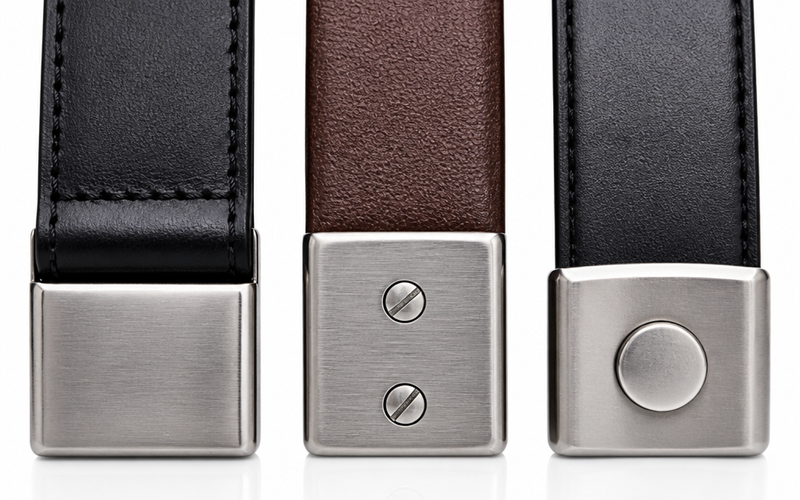
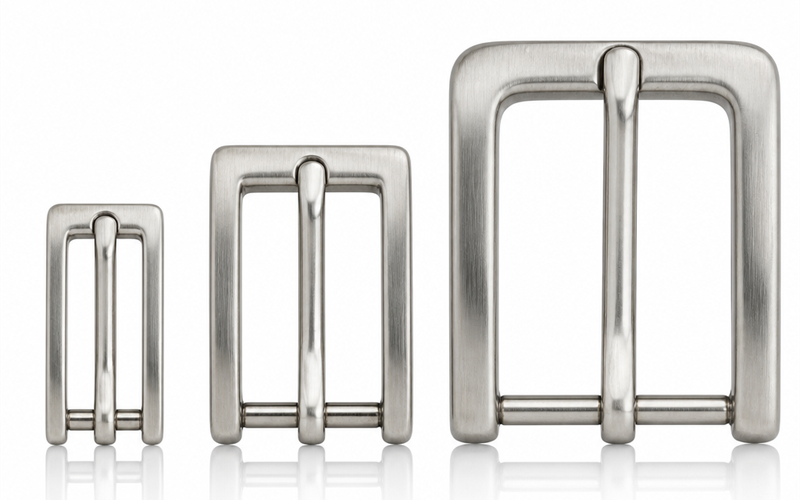
The deeper issue is that plating itself is the problem. A plated buckle will always eventually wear through, so re-plating just resets a clock that keeps ticking. The permanent solution is a buckle that has no plating to lose — one made of solid brass or stainless steel all the way through. Solid brass develops a patina you can clean or embrace, and stainless resists wear at the surface, but neither has a thin coating that can rub off. That's why BELTLEY's brass buckle belts and stainless steel buckle belts are built solid.
How does this fit BELTLEY's 3-Material Rule?
Re-plating is the symptom; the BELTLEY 3-Material Rule is the cure: full-grain leather + stainless or solid brass buckle + sealed (painted or burnished) edges. Both approved buckle metals are solid through-and-through, so there's no plating to wear away and nothing to ever re-plate. The finish is the metal.

This is the quiet advantage of solid hardware. A plated buckle is a recurring expense — wear, re-plate, repeat — while a solid brass or stainless buckle is a one-time purchase that ages gracefully for decades, part of why quality buckles are noticeably heavier than fast-fashion ones. Even better, nickel plating is a common skin-allergy trigger — the Cleveland Clinic lists belt buckles among the most common everyday sources of nickel contact dermatitis — so solid hardware sidesteps that too. Every BELTLEY buckle is solid stock, backed by a 10-year warranty.
The Bottom Line
Re-plating a worn belt buckle is a real, professional fix — a shop strips, polishes, and electroplates a fresh layer for roughly $30 to $150 — but it's a fix worth choosing only for buckles with genuine value: vintage finds, designer pieces, or sentimental heirlooms. For an everyday belt, re-plating usually costs more than a replacement and only restarts the same wear cycle, because the plating will rub through again. The lasting answer is hardware that has no plating to lose. At BELTLEY, that means solid brass and stainless buckles paired with full-grain leather — built to age, never to flake. If your buckle's finish is wearing through, see the solid brass buckle belts and skip the plating cycle for good.
Frequently Asked Questions
Q: Is it worth re-plating an old belt buckle?
Only if the buckle has monetary, brand, or sentimental value. For a vintage or designer buckle, re-plating preserves something a replacement can't. For a cheap everyday buckle, re-plating usually costs more than buying a new solid one that never needs plating.
Q: How long does buckle plating last?
Decorative plating is only a few microns thick, so on a daily belt it can wear through at high-contact points within a few years. Gentler use lasts longer. Solid brass or stainless buckles have no plating layer and effectively never wear through.
Q: What's the difference between plated and solid brass buckles?
A plated buckle has a thin brass (or nickel/chrome/gold) layer over a cheaper core that wears through over time. A solid brass buckle is brass throughout, so it can be cleaned, polished, or left to patina forever without exposing a different base metal.
Q: Can a jeweler re-plate a belt buckle?
Yes — many jewelers and dedicated plating shops re-plate buckles in nickel, chrome, or gold. Get a quote first, since minimum fees can make a single small buckle expensive relative to simply replacing it with a solid one.