Sewn-In vs Screw-Back vs Snap-Button Buckles (How to Swap)
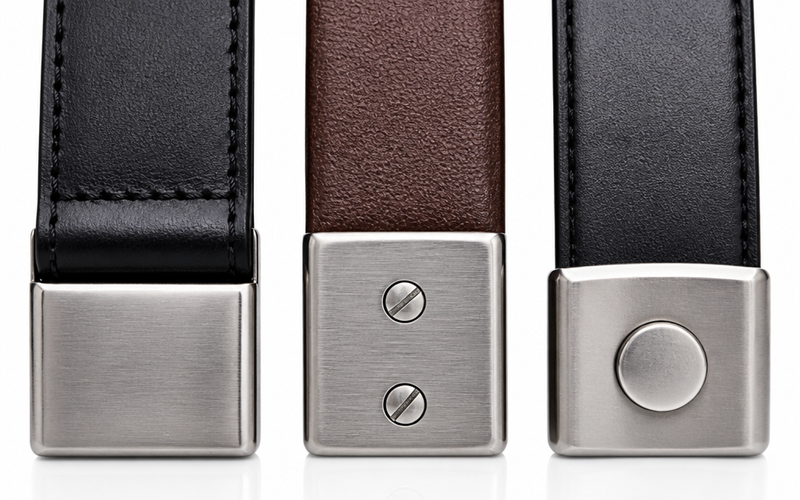
Quick answer: Sewn-in buckles are stitched permanently to the strap and are the hardest to change. Screw-back buckles attach with small Chicago screws and swap in about five minutes with a screwdriver. Snap-button buckles pop on and off by hand in seconds, making them the easiest to interchange. For swapping flexibility, choose snap or screw; for a clean permanent look, choose sewn-in.
Last updated: June 2026 • By BELTLEY Editorial
TL;DR:
- Sewn-in = permanent, cleanest look, hardest to swap (needs cutting and restitching).
- Screw-back = secure but swappable with a screwdriver; the maker's favorite.
- Snap-button = fastest to change, ideal for interchangeable-buckle wardrobes.
- All three depend on matching the buckle bar to your strap width.
If you've ever wanted to change a belt's buckle and couldn't figure out how, the answer is in the attachment. A belt buckle connects to the strap at the bar in one of three common ways — stitched, screwed, or snapped — and each makes a different trade between security, looks, and how easily you can swap hardware. Knowing which you own (and which to buy) saves frustration and lets you build a small, versatile belt wardrobe instead of a drawer of dead straps. This guide compares all three head-to-head and walks through swapping each one. It pairs naturally with our broader types of belt buckles breakdown and the question of whether you can put a buckle on any belt.
Attachment Type: Choose Before You Buy
The three systems, matched to owners:
| Your situation | Go with |
|---|---|
| One buckle, cleanest look | Sewn-in — permanent, seamless, the dress-belt standard. |
| Occasional swaps, secure feel | Screw-back (Chicago screws) — five-minute changes, rock-solid between them. |
| Frequent buckle rotation | Snap-button — seconds to change, the collector's system. |
| Already own the belt | Flip it over — the attachment you see is the answer you have; plan purchases accordingly. |
All three constructions: BELTLEY's men's collection.
What's the difference between sewn-in, screw-back, and snap-button buckles?
It's all about how the strap connects to the buckle bar. Sewn-in buckles are permanently stitched around the bar. Screw-back buckles use removable screws (usually Chicago screws) through the strap. Snap-button buckles use metal snaps so the strap releases by hand. Security runs sewn-in > screw-back > snap; swap-ability runs the opposite way.

The buckle bar is the shared anchor point. As the reference on the buckle describes, the bar "serves to hold the chape and prong to the frame" — and the chape (the loop of strap or metal that wraps the bar) is what each system secures differently. Art of Manliness's complete guide to men's belts is a solid primer on these buckle types if the terminology is new. Here's the full comparison:
| Feature | Sewn-in | Screw-back | Snap-button |
|---|---|---|---|
| How it attaches | Stitched around bar | Chicago screws | Metal snaps |
| Tools to swap | Seam ripper + thread | Screwdriver | None |
| Swap time | 30–60 min | ~5 min | Seconds |
| Security | Highest | High | Good |
| Look | Cleanest, seamless | Slight screw heads visible inside | Snap studs visible inside |
| Best for | One permanent buckle | Occasional swaps | Frequent swaps |
| Re-stitching needed | Yes | No | No |
Which buckle attachment is easiest to swap?
Snap-button is by far the easiest. The strap end releases from the snap studs by hand — no tools — so you can change buckles in seconds, like changing a watch strap. Screw-back is a close second, needing only a screwdriver. Sewn-in is the hardest because the stitching must be cut and the strap re-secured afterward.

This ease-of-swap difference is the whole reason interchangeable belt systems exist. If you like matching your buckle to your outfit — silver for formal, brass for casual — a snap or screw belt lets one strap carry many buckles. Our guide on whether a belt buckle is considered jewelry explores that "buckle as accessory" mindset, and the belt buckles collection shows removable options.
How do you swap a snap-button belt buckle?
Pull the strap end free of the snap studs, slide the old buckle off the bar, slide the new buckle on, and press the strap back onto the snaps until they click. No tools, under a minute. If the snaps feel loose, a light tap with a snap-setting tool re-secures them.
Key stat: A snap-button belt can carry 5+ different buckles on a single strap, turning one belt into an entire hardware wardrobe — the same principle behind interchangeable watch-strap systems.
Snap belts are the most beginner-friendly entry into interchangeable buckles. The only maintenance is the snaps themselves, which can wear after years of use but are cheap to replace. Make sure any new buckle's bar matches your strap width — see the standard belt width in mm guide for the common sizes.
How do you swap a screw-back belt buckle?
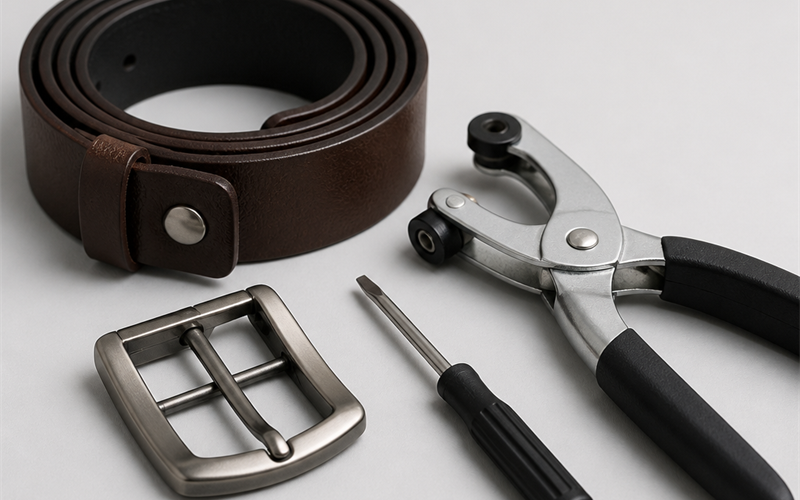
Unscrew the Chicago screws holding the strap to the bar with a small screwdriver, remove the old buckle, position the new one, and re-tighten. Add a drop of thread-locker so the screws don't loosen with daily flexing. The whole job takes about five minutes.

Screw-back is the sweet spot for many enthusiasts: nearly as secure as sewn-in, but swappable when you want a change. The screws are the only weak point, and thread-locker or an occasional check keeps them tight. This system is common on heavier, work-oriented belts where the buckle takes real strain.
How do you swap a sewn-in belt buckle?
Use a seam ripper to cut the stitching that wraps the strap around the buckle bar, free the old buckle, wrap the leather around the new buckle's bar, and re-secure it — either by hand-stitching with waxed thread or by installing snaps for easier future swaps. Confirm the bar width matches your strap first.

Sewn-in buckles aren't designed to be changed, so this is the only attachment that becomes a small project. Many people take the opportunity to convert the belt to snaps during the repair. If sewing isn't your thing, a cobbler handles it quickly. For a buckle that's actually broken rather than simply being swapped, our DIY guide to replacing a broken belt buckle walks through each attachment. Because this is effectively permanent, sewn-in construction is reserved for belts where the buckle and strap are meant to be a single, lifelong unit — which only makes sense when both are high quality to begin with.
Which attachment should you choose when buying a belt?
Choose based on how much you'll swap. Pick snap-button if you want one strap with many buckles. Pick screw-back if you want secure hardware you can still change occasionally. Pick sewn-in if you want a single, seamless, permanent buckle and never plan to change it. All three are fine — the question is your habits.

Whatever the attachment, the materials underneath matter more than the mechanism. A snap belt with a cast-zinc buckle still fails; a sewn-in belt with a cracked strap still dies. BELTLEY's belts are built to the 3-Material Rule — full-grain leather, a solid brass or stainless buckle, and sealed edges — so the hardware and strap both earn their keep regardless of how they're joined. Explore the range in the men's belts and belt buckles collections.
The Bottom Line
Sewn-in, screw-back, and snap-button buckles solve the same problem three ways, trading permanence for swap-ability. Sewn-in gives the cleanest, most secure look but resists change; screw-back balances security with a five-minute swap; snap-button turns one strap into a buckle wardrobe. Match the choice to how often you actually want to change hardware — and in every case, confirm the buckle bar matches your strap width. The mechanism is only as good as the metal and leather it joins, which is why BELTLEY pairs every attachment with full-grain leather and solid hardware. Ready to build a versatile setup? Browse the belt buckles collection and read the point of a belt buckle to choose with confidence.
Frequently Asked Questions
Q: Are snap-button belt buckles secure enough for daily wear?
Yes. Quality snaps hold firmly through normal daily use and only release when you deliberately pull the strap free. They're slightly less permanent than screws or stitching, but for everyday belts the convenience usually outweighs the small difference in security.
Q: Can I convert a sewn-in belt to a snap-button system?
Often, yes. During a buckle swap, you can cut the original stitching and install snap fasteners instead of re-stitching, making all future swaps tool-free. A leatherworker can do this cleanly if you're not comfortable setting snaps yourself.
Q: What are Chicago screws on a belt?
Chicago screws (or screw-back posts) are two-part screws that thread together through the leather to hold a buckle on. They're popular because they're secure yet removable with a simple screwdriver, making them the standard for swappable, well-made belts.
Q: Does the buckle attachment affect belt durability?
Indirectly. Sewn-in and screw-back attachments are slightly more secure, but durability depends far more on the leather quality and buckle metal than on how they're joined. A solid brass or stainless buckle on full-grain leather lasts regardless of attachment type.