Are Belt Dupes Worth It? Dupes vs Fakes Explained
Quick answer: It depends on what you mean by "dupe." A true dupe — a belt inspired by a designer style but with no copied logos or trademarks — is legal and can be worth it if the leather and hardware are quality. A counterfeit or "replica" that copies a brand's logo to pass as real is illegal, often poorly made, and not worth the risk. The smart move is a quality, logo-free leather belt: the look you want, fully legitimate.
Last updated: June 2026 • By BELTLEY
TL;DR:
- Dupe ≠ counterfeit. A dupe imitates a style with no logos; a counterfeit copies the brand's logo to deceive.
- Dupes are legal (as long as they don't copy trademarks); counterfeits are illegal under federal and state law.
- "Replica" usually means counterfeit — it copies the logo, so it's a fake, not a dupe.
- Fakes are risky: poor quality, customs seizure, funding unethical labor, no recourse.
- A good dupe is just a quality no-logo belt — and that's entirely worth it.
- Smartest buy: a full-grain leather belt with a clean buckle — the look, legally, for less.
"Are belt dupes worth it?" is really two questions hiding in one word. There's a legal, legitimate version of a dupe — and there's an illegal counterfeit that people also call a dupe. They're not the same, and confusing them can cost you money, quality, and even a run-in with customs. This guide untangles the difference and points you to the genuinely smart option. For spotting fakes, see how to tell if a designer belt is real or fake.
Dupe, Replica, or Real: What Are You Actually Buying?
Match the term to what it really means.

| What it's called | What it actually is |
|---|---|
| True dupe (inspired-by) | Legal — similar style, no copied logos |
| Replica | Usually a counterfeit — copies the logo, illegal |
| "AAA" / "mirror" copy | Counterfeit — illegal, deceptive |
| Quality no-logo belt | The legitimate "dupe" worth buying |
| Authentic designer | The real thing, with the Brand Tax |
The legal, quality option is the no-logo belt. For that look done right, see how to get the designer belt look without the logo.
What's the difference between a belt dupe and a counterfeit?
A dupe imitates the style or aesthetic of a designer belt without copying its logos or trademarks — and it doesn't claim to be the real thing. A counterfeit copies the brand's logo and trademarks to pass itself off as genuine. That distinction is the whole legal and ethical line between them.

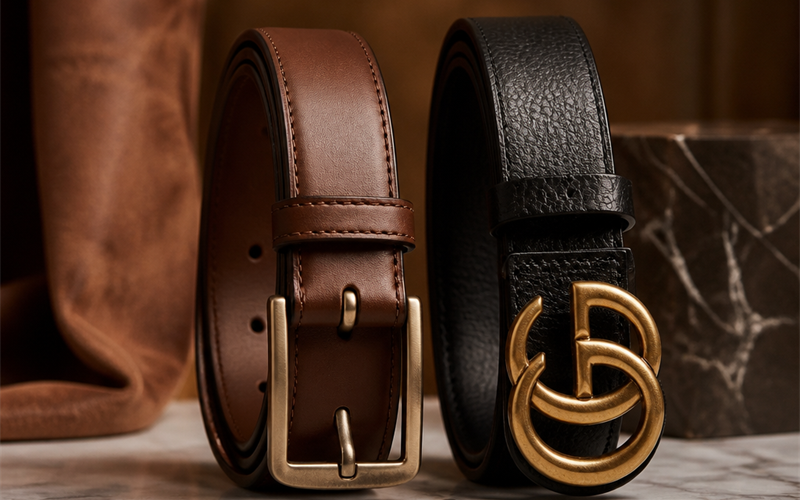
The line is about trademarks and deception, not just looks. As intellectual-property analysts explain, products are "generally considered dupes if they don't explicitly copy distinctive logos, trademarks or patented designs," while counterfeits "falsely claim to be something they're not, mimicking original products using their brand logos." Wikipedia frames it the same way: dupes "do not copy the brand name or logo" and "do not claim to be the real item," whereas counterfeits "reproduce a brand's trademarks to deceive consumers." So a belt with interlocking circles evoking a designer look — but no trademarked logo — is a dupe; one stamped with a copied GG or LV is a counterfeit.
Are belt dupes legal?
True dupes are generally legal because they don't copy a brand's logos or trademarks — they only imitate a style. Counterfeits are illegal under both federal and state law because they reproduce protected trademarks to deceive buyers. The deciding factor is whether the product copies brand identifiers or causes consumer confusion.
The law hinges on confusion, not similarity. As trademark attorneys put it, "the key legal question is not whether products look alike, but whether that similarity actually causes consumer confusion" — and "similarity alone is not infringement." A dupe that clearly isn't pretending to be the brand sits in a legal gray-but-permitted zone, since U.S. law gives fashion designs limited protection. The catch: some elements (a distinctive silhouette, a trademarked pattern) are protected, so a "dupe" that copies those can still infringe. Counterfeits, which copy the logo outright, are flatly illegal. If a seller copies the logo, you're not looking at a dupe — you're looking at a fake.
Why aren't counterfeit belts worth it?
Counterfeit belts aren't worth it because they combine poor quality with real risks: synthetic or bonded leather that wears out fast, flimsy buckles, no warranty or recourse, possible customs seizure, and support for unethical, often exploitative manufacturing. You pay for a logo on a low-grade product with downsides the price tag hides.

The problems go beyond the obvious. Quality-wise, counterfeits typically use "synthetic materials that wear out quickly, loose stitching and uneven edges, and flimsy buckles that tarnish or break" — the opposite of the full-grain leather and solid hardware a real belt's price is supposed to buy. Legally and ethically, buying counterfeits can mean customs seizure and supports illegal manufacturing tied to poor labor and environmental practices. And there's no recourse: no warranty, no returns, no authenticity. You take all the risk to wear a logo that isn't real. For what genuine quality looks like, see how to tell if a belt is full-grain leather.
When is a belt "dupe" actually worth it?
A belt dupe is worth it when it's a genuine, legal alternative: a well-made, logo-free belt that gives you the style you like using quality leather and a solid buckle. In that form, a "dupe" is really just a quality belt without the Brand Tax — the look you want, legally, for far less.

This is the version worth buying, and it's hiding in plain sight. Strip away the illegal-counterfeit meaning and a "dupe" becomes something simple and good: a belt inspired by a clean, timeless aesthetic, made from real full-grain leather with a solid metal buckle, carrying no fake logo. That's not a knockoff — it's just a quality no-logo belt, which is exactly what the quiet-luxury crowd actually wears. You get the refined look, real durability, and a fair price, with none of the legal, ethical, or quality downsides of a fake. For the value math, see designer belt vs quality leather belt.
Key stat: The dividing line is one word: logo. A belt that imitates a style with no trademarked logo is a legal dupe; one that copies the logo is an illegal counterfeit — banned under federal and state law. Skip the logo entirely and a "dupe" becomes simply a quality belt, fully legitimate and far cheaper than the real thing.
How do you choose a legitimate designer alternative?
Choose a legitimate alternative by buying a quality, logo-free belt: full-grain leather, a solid brass or stainless steel buckle, clean stitching, and a classic color and width. You get the elevated designer look without any copied trademark, so it's legal, durable, and far better value than a counterfeit.

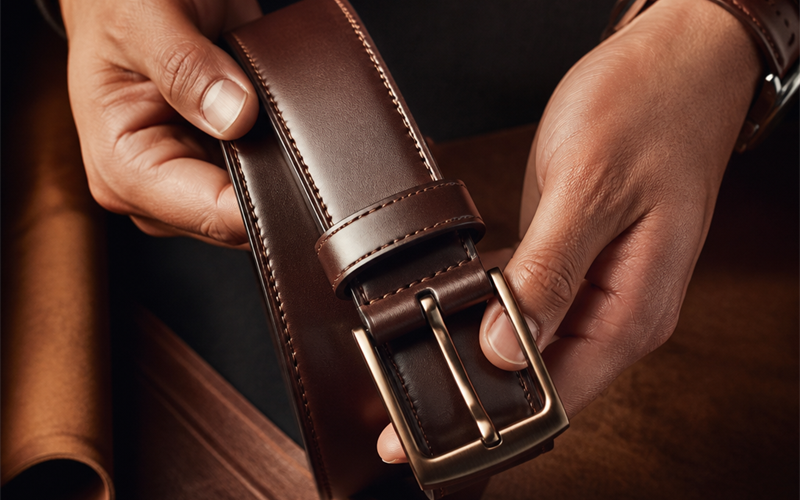
The checklist is the same one that defines any good belt. Look for full-grain leather (it ages well and lasts years), a solid metal buckle with no spelled-out brand name, tight even stitching, and a timeless black, brown, or cognac color in a flattering width. That combination delivers the refined, "expensive" impression people chase with logos — minus the logo, the Brand Tax, and the counterfeit risk. It's the honest answer to the dupe question: don't fake a brand, just buy the quality the brand's price was supposed to represent. For where logo belts stand now, see are logo belts in style in 2026.
The Bottom Line
Are belt dupes worth it? A true dupe — a logo-free belt inspired by a designer style — is legal and absolutely worth it if the leather and hardware are quality. A counterfeit or "replica" that copies a brand's logo is illegal, usually poorly made, and not worth the risk to your money, your ethics, or your standing at customs. The smartest path skips the whole dilemma: buy a quality, logo-free leather belt and you get the refined look legitimately, for far less than the real thing. That's precisely the BELTLEY model — handcrafted full-grain leather and solid hardware at fair DTC pricing, no logos to fake and no Brand Tax to pay. Get the look the honest way with a full-grain leather belt or a refined designer-style belt.
Frequently Asked Questions
Q: What is the difference between a belt dupe and a fake?
A dupe imitates the style of a designer belt without copying any logos or trademarks, and doesn't claim to be the real thing — so it's legal. A fake (counterfeit) copies the brand's logo and trademarks to pass as genuine, which is illegal. The presence of a copied logo is what makes something a fake rather than a dupe.
Q: Are belt dupes legal?
True dupes are generally legal because they only imitate a style, not a brand's logos or trademarks. Counterfeits are illegal under federal and state law because they copy protected trademarks to deceive buyers. The line is whether the product copies brand identifiers or misleads consumers about its source.
Q: Is a "replica" belt the same as a dupe?
Usually not. "Replica" typically describes a counterfeit that copies the brand's logo to mimic the real product, which makes it an illegal fake rather than a legal dupe. A genuine dupe avoids the logo entirely and only echoes the general style, so the "replica" label is often a red flag.
Q: Are counterfeit belts worth buying?
No. Counterfeit belts usually use synthetic or bonded leather and flimsy buckles that fail fast, come with no warranty or recourse, can be seized by customs, and support unethical manufacturing. You take real risks to wear a fake logo on a low-quality product — poor value any way you measure it.
Q: What's the best legal alternative to a designer belt?
A quality, logo-free leather belt: full-grain leather, a solid brass or stainless steel buckle, clean stitching, and a classic color. It gives you the refined designer look legally and durably, without a copied trademark or the Brand Tax — the smart, legitimate version of a "dupe."