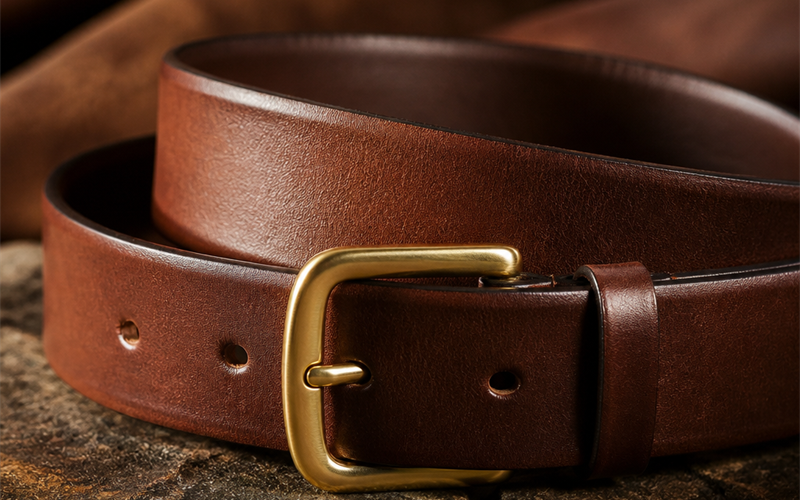
How to Get the Designer Belt Look Without the Logo
Quick answer: To get the designer belt look without the logo, follow quiet-luxury rules: choose full-grain leather in a classic color (black, brown, cognac), a clean buckle in solid metal (no visible brand name), a versatile width (about 30–38mm), and edges and stitching that are crisp. The "expensive" look comes from material quality and proportion — not a monogram. Done right, you read as refined to everyone and high-quality to those who know.
Last updated: June 2026 • By BELTLEY
TL;DR:
- Quiet luxury signals status through material and cut, not logos — that's the whole playbook.
- Leather: full-grain in black, brown, or cognac reads instantly expensive.
- Buckle: clean, solid metal, no spelled-out brand name; let it be understated.
- Proportion: ~30–35mm for dress, up to 38mm casual; match the belt to your shoes.
- Details: crisp edges, tight stitching, and a supple hand are what insiders notice.
- The payoff: the look minus the Brand Tax — you keep the money, lose the logo.
The biggest secret in menswear right now is that the most expensive-looking people aren't wearing visible logos at all. "Quiet luxury" — also called stealth wealth or old money style — has made the no-logo belt the status move, prized for craftsmanship that only insiders clock. The good news: that look is built from things you can buy without a four-figure price tag. This guide shows exactly how to get the designer belt look on substance, not branding. For the trend context, see are logo belts in style in 2026.
What Look Are You Going For?
Match your goal to the belt.

| Your goal | The quiet-luxury pick |
|---|---|
| Boardroom / formal polish | Black full-grain dress belt, ~32–35mm, clean buckle |
| Smart-casual "old money" | Cognac or brown full-grain, 35–38mm |
| Texture that says "IYKYK" | A woven or distinctive-grain leather belt |
| One belt for everything | A reversible black/brown full-grain belt |
| Maximum discretion | Any logo-free belt — that's the point |
Quality and proportion do the talking. For the brand-versus-substance debate, see designer belt brands vs luxury brands.
What is the quiet luxury belt look?
The quiet luxury belt look is a logo-free belt that signals status through material, craftsmanship, and proportion rather than branding. It uses fine leather, a clean understated buckle, and timeless color — refined enough that everyone reads it as expensive, while those "in the know" recognize the quality.

This is the dominant luxury aesthetic of the 2020s. As Wikipedia describes the movement, quiet luxury centers on "understated design, high-quality materials, and timeless styling, while avoiding conspicuous logos, flashy elements, or other overt markers of economic status." It rose precisely "as conspicuous consumption became less socially acceptable in some affluent circles." For a belt, that means the value is in the hide and the make, not a monogram — the opposite of a loud logo belt. The whole appeal is "IYKYK": communicating refined taste to those who can read it, without announcing a brand. For where this leaves logo belts, see are Gucci belts out of style.
What leather and color say "expensive" without a logo?
Full-grain leather in a classic color — black, brown, or cognac — reads expensive on sight. Full-grain has natural grain, a supple hand, and ages into a rich patina, while neutral colors look timeless and pair with everything. Avoid shiny bonded "leather" and trendy colors, which cheapen the look.
Leather quality is the foundation of the expensive look. Quiet luxury "prioritizes substance over labels," investing in pieces "crafted from premium materials such as cashmere, silk, wool, and supple leather," where "longevity and superior construction make them a wise investment." Full-grain is the top tier of belt leather — it keeps the hide's strongest surface, so it looks and feels richer and only improves with age. Stick to black for formal, brown and cognac for everything else, and let the natural grain be the texture. A subtle distinctive weave or grain can add the kind of "insider" character that signals quality without a word of branding. To shop the material, see full-grain leather belts.
What kind of buckle gives the designer look without branding?
A clean, solid-metal buckle with no spelled-out brand name gives the refined designer look. Choose a simple prong, plaque, or understated frame in solid brass or stainless steel — substantial in the hand, no plating to chip. The buckle should finish the belt quietly, not announce a label.

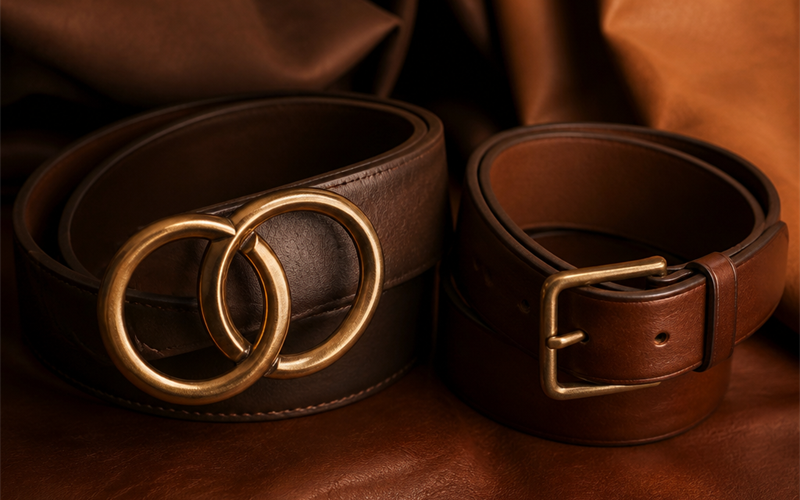
The buckle is where logos usually shout, so quiet luxury keeps it calm. The guidance from stealth-wealth stylists is to choose "belts with simple buckles" and "minimal hardware" — recognizable, if at all, only to those in the know. Material matters as much as shape: a solid brass or stainless buckle has the right weight and won't peel like plated hardware, so it reads premium up close. Avoid buckles dominated by a brand name or oversized logo plaque; instead, let a clean, well-made buckle do its job and disappear into the outfit. For the hardware deep dive, see what is the strongest type of belt buckle.
How do you style a no-logo belt to look high-end?
Style a no-logo belt by matching its leather to your shoes, keeping the width proportional (about 30–35mm for dress, up to 38mm casual), and letting the rest of the outfit stay clean and tonal. Cohesion and fit — not flash — are what make the whole look read expensive.

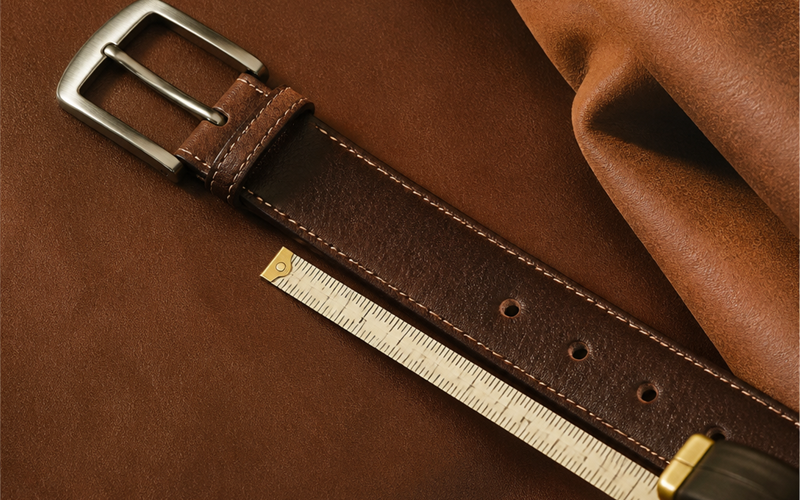
The details that signal quality are quiet ones. Match your belt leather to your shoes in color and finish, the single most reliable "put-together" cue. Keep proportion right: a dark leather belt around 3.5cm for formal wear and up to 4cm for casual, sized to your frame and loops. Then keep the surrounding outfit understated — good fabrics, neutral tones, sharp fit — so the overall impression is refinement rather than logos. This is the old-money formula: "true status is signaled by the cut of a shoulder or the quality of a stitch that only another member of the club would recognize." For matching help, see how to match belts and shoes.
Key stat: The "old money" crowd's actual belt formula is simple: full-grain leather + a solid metal buckle + no logo. There's no plating to chip and no monogram to date it — which is exactly why a well-made logo-free belt outlasts and out-classes a trend-driven designer one, at a fraction of the cost.
Why does skipping the logo save you money?
Skipping the logo saves money because a large share of a designer belt's price is the brand premium — the "Brand Tax" — not extra material or craftsmanship. A logo-free belt made from the same grade of full-grain leather and solid hardware delivers the same quality and look for far less, since you're paying for substance instead of a name.

This is the smart-money insight behind quiet luxury. Much of a designer belt's cost is marketing, retail markup, and the logo itself, not better leather than a quality maker uses. When you choose a logo-free full-grain belt, you keep the material and construction that actually create the expensive look — and drop the premium you'd pay for a monogram that's also more likely to date and depreciate. The result is the same refined impression for a fraction of the price. At BELTLEY, that's the entire model: handcrafted full-grain leather and solid hardware at DTC fair pricing, no Brand Tax. For the cost reality, see why are designer belts so expensive.
The Bottom Line
Getting the designer belt look without the logo is straightforward once you know the quiet-luxury rules: full-grain leather in a timeless color, a clean solid-metal buckle with no brand name, proportional width matched to your shoes, and crisp edges and stitching. The "expensive" signal comes from material and fit, not a monogram — so you read as refined to everyone and high-quality to those who know, while skipping the Brand Tax entirely. That's the whole BELTLEY philosophy: quality and fair pricing coexist. Build the look with a full-grain leather belt, a sharp dress belt, or a refined designer-style belt — all the substance, none of the logo.
Frequently Asked Questions
Q: How do I make a belt look expensive without a logo?
Choose full-grain leather in a classic color, a clean solid-metal buckle with no brand name, and a width proportional to your frame, then match the leather to your shoes. The expensive look comes from material quality, crisp finishing, and good proportion — not from a visible logo.
Q: What is a quiet luxury belt?
A quiet luxury belt is a logo-free belt that signals quality through fine leather, understated hardware, and timeless design rather than branding. It's the "stealth wealth" or old-money approach — refined enough to read as expensive to everyone, while those in the know recognize the craftsmanship.
Q: Are no-logo belts in style in 2026?
Yes. Quiet luxury and old-money style have made logo-free belts the status choice in 2026, prized for craftsmanship over conspicuous branding. As loud logos feel dated and depreciate, a clean full-grain belt with a simple buckle reads more refined and timeless.
Q: What buckle looks most expensive?
A clean, understated buckle in solid brass or stainless steel — a simple prong, plaque, or frame with no spelled-out brand name. It should feel substantial and finish the belt quietly. Oversized logo buckles read as flashy; a well-made minimal buckle reads as refined.
Q: Is a no-logo belt cheaper than a designer one?
Usually, yes. A large part of a designer belt's price is the brand premium, not better materials. A logo-free belt in the same full-grain leather with a solid buckle delivers the same look and quality for far less, because you're paying for substance instead of a monogram.
,%20a%20clean%20buckle%20in%20solid%20metal%20(no%20visi...)