What Is the Strongest Type of Belt Buckle? Materials &Mechanisms Ranked
TL;DR:
- By material: 316L stainless steel is the strongest and most corrosion-resistant buckle material for everyday wear; solid brass is a close second with superior aging characteristics.
- By mechanism: Box-and-prong (pin buckle) is the most mechanically reliable — fewest moving parts, nothing to fail.
- Zinc alloy and ratchet buckles are not inherently weak, but quality varies dramatically — cheap versions fail fast, quality versions last years.
Most people don't think about their belt buckle until it fails. A bar snaps mid-day, a ratchet mechanism seizes after six months, or a plated finish starts flaking off the zinc casting. Then the question becomes urgent: what should you have bought?
Buckle strength has two dimensions that most guides conflate — the material (what it's made of) and the mechanism (how it fastens). Both matter, and they can fail independently. A solid brass prong buckle will outlast a cheap stainless-steel ratchet every time. Understanding the difference helps you buy once instead of twice.
What Makes a Belt Buckle "Strong"?
A strong belt buckle combines structural material integrity — resistance to bending, cracking, and corrosion — with a reliable fastening mechanism that maintains its hold under daily stress. The two factors are independent: a buckle can be made from premium metal but use a weak closure design, or vice versa. The strongest buckles score well on both.

Practically speaking, strength breaks into three failure modes most buyers encounter:
- Metal fatigue or breakage — the buckle frame or prong cracks under load or repeated stress
- Surface degradation — plating peels, tarnish accelerates, corrosion sets in
- Mechanism failure — ratchet teeth strip, prong holes strip the leather, screws loosen
The types of belt buckles you encounter in everyday shopping vary dramatically in how they address each of these failure points.
Which Belt Buckle Material Is the Strongest?
316L stainless steel is the strongest and most durable material used in consumer belt buckles. It offers high tensile strength, near-total corrosion resistance (including sweat and saltwater), and requires virtually no maintenance. Solid brass is the strongest traditional material, with excellent density and natural corrosion resistance that deepens rather than degrades over time.

Here is how the four most common buckle materials compare:
316L Stainless Steel
316L (marine-grade) stainless steel is the benchmark for buckle durability. The "L" designation means low carbon, and the addition of molybdenum gives it superior resistance to chloride corrosion — relevant because sweat is mildly saline. As CI Official documents, 316L outperforms standard 304 stainless in humid, high-use environments. It will not rust, tarnish, or pit under normal wear conditions — potentially for decades.
At BELTLEY, our stainless steel buckle belts use 316L hardware specifically because it performs in real-world conditions without requiring the maintenance that brass demands. For buyers who want a buckle that just works indefinitely with zero upkeep, 316L is the correct answer.
Solid Brass
Solid brass has a density of 8.3–8.7 g/cm³ — substantially heavier and more substantial than zinc alloys — and its tensile strength means it resists bending and cracking under load. As Hoplock Leather explains, brass also develops a natural patina over time that most buyers find attractive. It does require occasional polishing if you want to preserve the shine, but it will not corrode in a way that structurally compromises the buckle.
Solid brass is the traditional choice for dress and heritage belts — it has been used in quality belt hardware for over a century precisely because it balances strength, machinability, and aesthetics. The critical word is solid: brass-plated zinc is not solid brass and should not be evaluated as such.
Zinc Alloy (Zamak)
Zinc alloy — often sold as Zamak or die-cast zinc — is the most common material in mid-range and fashion buckles. It casts easily into complex shapes, costs significantly less than brass or steel, and accepts plating well. The trade-off is structural: zinc alloy is more brittle under impact than brass or steel, and the plating (usually chrome or nickel) will eventually wear through, exposing the base metal to oxidation. According to Proven Hands, zinc alloy buckles are appropriate for light-duty and fashion applications, but should not be relied upon where strength and longevity are priorities.
Titanium
Titanium offers exceptional strength-to-weight ratio and is fully corrosion-resistant, but it is expensive to machine and therefore rare in standard belt buckles. It appears primarily in ultra-premium or specialist products (outdoor gear, watch straps). For most belt buyers, 316L stainless delivers comparable corrosion resistance at a much lower price point.
Material Strength Comparison
| Material | Tensile Strength | Corrosion Resistance | Maintenance | Best For |
|---|---|---|---|---|
| 316L Stainless Steel | Very High | Excellent | None | Everyday, tactical, dress |
| Solid Brass | High | Very Good | Occasional polish | Heritage, dress, casual |
| Zinc Alloy | Moderate | Moderate (plated) | Low | Fashion, light-duty |
| Titanium | Very High | Excellent | None | Premium/specialist |
Which Buckle Mechanism Holds Up the Best?
The box-and-prong (pin) buckle is the most mechanically reliable fastening design — it has the fewest moving parts, no springs or tracks to wear out, and distributes load evenly across the leather hole. Well-made ratchet buckles offer precise fit adjustment and comparable durability if the mechanism is properly engineered, but fail quickly in cheap versions.

Box & Prong (Pin Buckle)
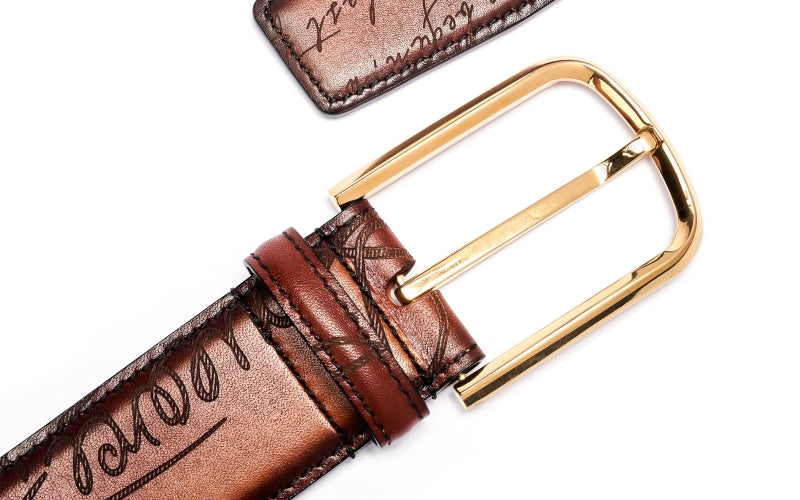
The box-and-prong is the oldest buckle design and, by most measures, the most dependable. A metal frame with a center bar holds a single prong that passes through a punched hole in the leather strap. Under tension, the load is shared across the frame and the prong — both solid metal — with no springs, ratchets, or moving parts beyond the prong pivot. As Groove Life notes, simplicity is a genuine durability advantage: there is less to fail.
The weakness of the pin buckle is the leather holes themselves. Over years of use, a single frequently used hole will stretch. High-quality leather mitigates this substantially — full-grain leather belts maintain hole integrity far longer than bonded or genuine leather. Our box & prong buckle belts pair solid metal hardware with full-grain leather for this reason.
Ratchet Buckle
Ratchet buckles use a toothed track on the underside of the belt strap and a spring-loaded pawl mechanism inside the buckle. The advantage is infinite adjustment within the track length — no fixed holes. The durability question is entirely about manufacturing quality. A well-engineered ratchet buckle with a robust spring and precise track geometry holds as reliably as a prong. A cheap one strips the teeth within months.
At a minimum, look for a ratchet mechanism with a metal (not plastic) pawl and a track cut into genuine leather rather than a synthetic strap. Our ratchet buckle belts use metal-on-metal contact points specifically to avoid the premature failure common in fashion-grade ratchets.
Plaque / Frame Buckle
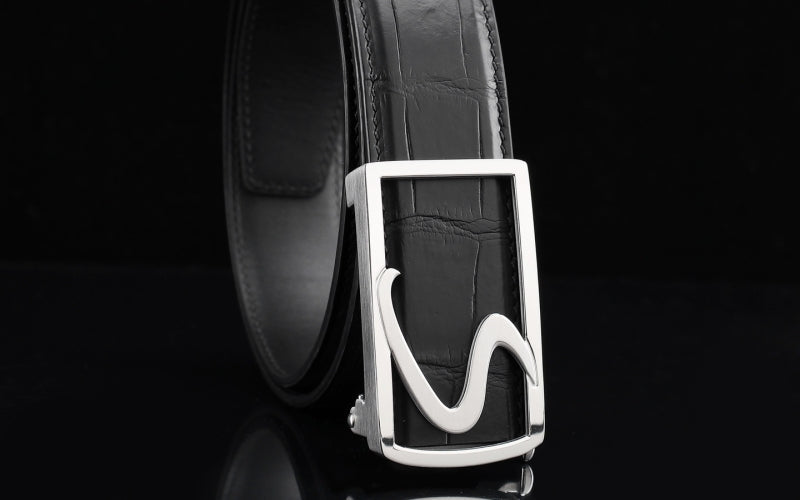
Plaque buckles (a flat solid plate with a hidden catch, common in designer belts) have a different failure mode: the catch mechanism. Under heavy lateral stress, catches can spring open, and the screws or rivets attaching the plate to the strap can loosen. They are not structurally weak, but they are optimized for appearance rather than hold strength.
Roller Buckle
Roller buckles include a rotating bar inside the frame that reduces friction on thick leather, extending strap life. They are durable in their own right but less common in dress or formal belt contexts. Their main advantage is strap longevity rather than buckle strength per se.
Does Buckle Type Affect How Long a Belt Lasts?
Yes — buckle type directly affects belt lifespan, because failure usually happens at the hardware-leather interface. A stiff prong buckle that concentrates load on a single leather hole accelerates hole stretch; a ratchet with sharp teeth cuts into the strap track over time. The mechanism determines where stress accumulates.
The most durable leather belts pair strong leather with appropriate hardware: full-grain leather with a quality prong or ratchet lasts 15-20+ years. Bonded leather with a zinc plaque buckle may not survive two years of regular wear. The buckle matters, but it works as part of a system — the strap material and construction quality have to match the hardware.
What Is the Strongest Buckle for Everyday Use?
For everyday wear, a 316L stainless steel box-and-prong buckle on a full-grain leather strap is the strongest combination available in a standard belt. It eliminates the three common failure modes simultaneously: no corrosion from sweat, no mechanism to strip or seize, no plating to wear through.

Practical recommendations by context:
- Dress / office wear: Solid brass prong buckle on full-grain cowhide. Polished finish, classic profile, ages beautifully.
- Casual / everyday: 316L stainless steel prong or quality ratchet. Zero maintenance, handles humidity and daily stress.
- Outdoor / work: Solid brass or stainless steel box buckle on 8–9 oz full-grain leather. Thick strap resists tearing, solid hardware resists torque.
- Fashion / style-first: Zinc alloy plaque acceptable if worn occasionally and not stressed — avoid as a daily driver.
The short answer: buy solid metal (brass or 316L steel), avoid plated zinc for daily use, and favor the prong or a quality ratchet over novelty closure mechanisms.
The Bottom Line
Buckle strength comes down to two decisions: what the metal is, and how the mechanism is designed. 316L stainless steel leads on pure material strength and corrosion resistance. Solid brass leads on heritage durability and aesthetics that improve over decades. Zinc alloy is fine for occasional wear, not for daily use. On the mechanism side, box-and-prong wins for reliability, and ratchet buckles work well when properly engineered.
At BELTLEY, we spec 316L stainless steel and solid brass hardware across our belt range because both metals are worth owning long-term. No Brand Tax, no shortcuts on hardware — just buckles that hold up as well as the leather they're attached to. Browse our stainless steel buckle belts and brass buckle belts to find a configuration that fits your use.
Frequently Asked Questions
Q: What is the strongest belt buckle material?
316L stainless steel is the strongest material for belt buckles in terms of tensile strength and corrosion resistance. Solid brass is a close second and outperforms stainless in natural patina development. Both significantly outlast zinc alloy or plated alternatives under daily wear conditions.

Q: Is stainless steel or brass better for a belt buckle?
Both are excellent — the difference is maintenance and aesthetics. Stainless steel requires zero maintenance and stays bright indefinitely. Brass develops a warm patina over time and benefits from occasional polishing. For no-upkeep durability, choose stainless. For a buckle that ages beautifully, choose solid brass.
Q: Are ratchet buckles as strong as prong buckles?
A quality ratchet buckle is equally strong in practice — the mechanism is well-engineered and holds reliably under normal belt tension. Cheap ratchet buckles, however, fail faster than pin buckles because stripped plastic teeth or weak spring arms give out. The prong buckle's advantage is simplicity: it has fewer parts to fail, so its floor is higher.
Q: Is zinc alloy good for belt buckles?
Zinc alloy is acceptable for light-duty or occasional-wear belts. It is cast easily into detailed shapes and is affordable, but it is more brittle than brass or steel under impact and the surface plating will eventually wear through. For a daily belt you intend to keep for years, solid brass or stainless steel is a stronger investment.
Q: What is the point of a belt buckle beyond holding the strap?
Belt buckles serve as the visual centerpiece of a belt — they signal formality, style, and material quality at a glance. A solid metal buckle communicates craftsmanship the same way a watch case does. Our guide to what a belt buckle actually does covers both the functional and aesthetic dimensions in detail.