Designer Belt Sizing: How to Get It Right (2026)
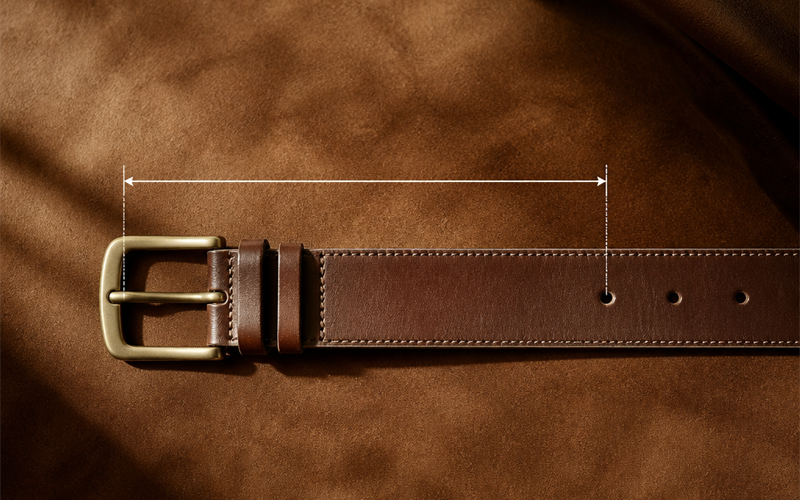
Quick answer: Designer belts are sized in centimeters (e.g., 85, 90, 95), and that number is the length from the buckle to the middle hole — NOT your pants size. To find your size, measure your waist where you'll actually wear the belt and match that to the cm size (or measure a belt you own from the buckle fold to your favorite hole). If you're between sizes, size up — most designer belts can be shortened but never lengthened.
Last updated: June 2026 • By BELTLEY
TL;DR:
- Designer belts use cm sizes (85, 90, 95) = length from the buckle to the middle hole.
- Your pants size is NOT your belt size — measure your actual waist where you'll wear it.
- Best method: measure a belt you own from the buckle fold to your favorite hole.
- Between sizes? Size up — designer belts can be shortened, not extended.
- Women commonly wear 80–85; men commonly 90–95.
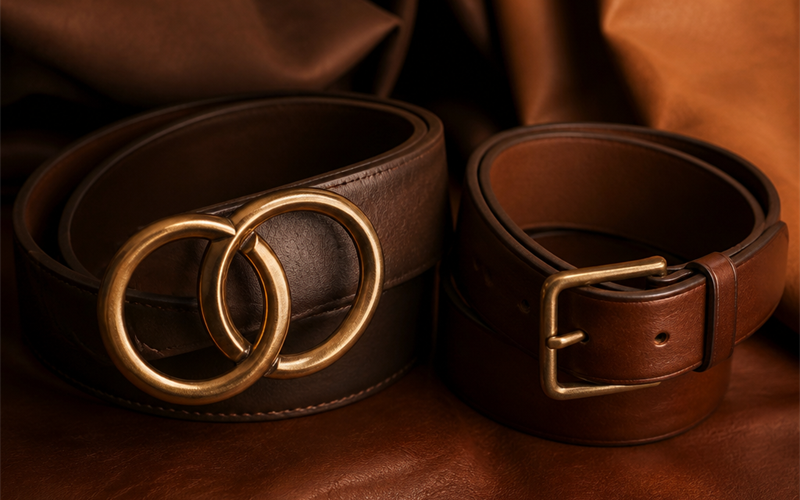
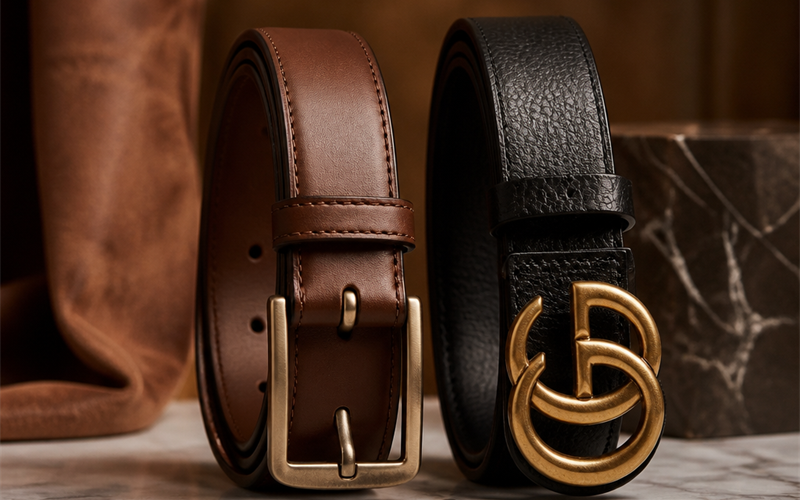
- Plaque/logo buckles can't be trimmed by you — get the size right up front.
Designer belt sizing trips up almost everyone, because the numbers aren't your pants size and the system isn't intuitive. Buy wrong and you're stuck — many luxury belts can be shortened but never lengthened, and plaque buckles can't be trimmed at home at all. This guide decodes the cm system, shows you how to measure correctly, and helps you land the right size the first time. For a brand-specific example, see what size Gucci belt should I get.
Find Your Designer Belt Size
Match your situation to the move.

| Your situation | What to do |
|---|---|
| You know your waist measurement | Match it to the cm size at your wear height |
| You have a belt you love | Measure buckle fold → favorite hole, match the cm |
| You're between two sizes | Size up — you can shorten, not lengthen |
| It's a plaque/logo buckle | Be precise — you can't trim it at home |
| It's reversible / cut-to-size | Size up and trim to fit per the brand guide |
When in doubt, measure twice. For the universal method, see our size guide.
How are designer belts sized?
Designer belts are sized in centimeters, and the number is the length of the belt from the buckle to the middle hole — usually the third of five holes. So a size 90 belt measures 90cm from the buckle to that center hole. This is a length measurement, not your waist or pants size.

This is the single most important thing to understand. As one Gucci sizing guide explains, the numbers are "centimeters, measured from the edge of the buckle to the middle hole," with each belt typically having five holes about an inch apart. Other brands measure to the third hole specifically, but the principle is the same: the size equals the belt's length to its center hole, giving you room on either side. Because it's a length, you can't just convert your jeans size — you have to relate it to where the belt actually sits on your body. For another brand's quirks, see what size Ferragamo belt should I get.
Why isn't your pants size your belt size?
Your pants size isn't your belt size because pants sizes are subject to vanity sizing and fabric stretch, while a belt sits at a different point on your body than your waistband. Going by your jeans number usually gives the wrong fit — you need your actual measured waist (or hips) where the belt will sit.
The mismatch is real and common. As one belt-measuring guide stresses, "your pant size is NOT your belt size" because of vanity sizing and stretch, and a rough fallback is to add about 2 inches to your pants size — but it's only an estimate. The better move is to measure your waist directly at the height you'll wear the belt, or your hips if you wear it lower. That measurement, converted to cm, is what you match to the designer size. Skipping this step is the number-one reason designer belts arrive too big or too small. For the men's method, see how do I know what size men's belt to buy.
How do you measure for a designer belt?
Two reliable methods: measure your waist (or hips) where you'll wear the belt with a soft tape, then match that to the cm size; or lay a belt you already wear flat and measure from where the buckle attaches to the hole you use most. Either number is your belt size — match it to the brand's chart.

Both methods work; the existing-belt method is the most foolproof. To do it, lay a well-fitting belt flat and measure "from the belt hole you typically use to the center of the hole" where the buckle's prong sits — that length is your size. For the body method, wrap a soft tape around your waist (or hips) at the exact height you'll wear the belt, snug but not tight. Convert inches to cm if needed (1 inch ≈ 2.54cm) and match to the designer chart, aiming to land on the middle hole. Measuring to the nearest quarter-inch pays off here. For what's included in the measurement, see does belt length include buckle.
Should you size up or down on a designer belt?
Size up when you're between sizes. Most designer belts can be shortened — by trimming a cut-to-size strap or having a cobbler remove length from the buckle end — but they can't be lengthened. Sizing up also leaves a little room for comfort and weight changes, so erring larger is the safer mistake.

This is the rule that saves you from a costly error. As one guide warns, these belts "can be shortened by a cobbler from the buckle end, but not extended," so a too-small belt is often unusable while a slightly-large one is fixable. Many luxury brands design for this with removable buckles and a "cut to size" guide, letting you trim an adjustable strap to a perfect length. Sizing up by one increment also gives a little wiggle room for comfort and future weight changes. The exception: don't oversize so much that even the last hole is loose — aim to fasten near the middle. For where the tail should land, see how far should a belt extend past the buckle.
Key stat: A designer belt's cm number is the distance from the buckle to the middle hole — so a size 90 fits roughly a 90cm (≈35.4") wear point, with about ±2 inches of holes on either side. And because most can be shortened but never lengthened, sizing up when in doubt is always the safer call.
Do designer belts run large or small?
Designer belts generally run true to their cm measurement, since premium leather holds its shape. But fit varies slightly by brand and buckle style, so always check the specific brand's size chart rather than assuming. Reversible and cut-to-size styles offer the most adjustment; fixed plaque-buckle belts offer the least.

"True to size" is the general rule, but the details matter. Quality leather is "designed to maintain its shape," so a designer belt should fit close to its stated measurement — yet luxury brands vary, which is why the brand's own chart is the final word. Buckle type changes your margin for error: a fixed plaque or logo buckle can't be trimmed at home, so precision matters most there, while a removable-buckle, cut-to-size strap is forgiving. Reversible belts usually come oversized to be trimmed to fit. Know which type you're buying before you choose a number. For one brand's true-to-size behavior, see are Louis Vuitton belts true to size.
The Bottom Line
Designer belt sizing comes down to one shift in thinking: the cm number is the belt's length to its middle hole, not your pants size. Measure your actual waist (or hips) where you'll wear the belt, or measure a belt you already love from the buckle fold to your favorite hole, then match that to the brand's chart. If you're between sizes, size up — most designer belts can be shortened but never lengthened, and plaque buckles can't be trimmed at home. Get those right and the belt fits the first time. Here's the on-brand note: sizing is simpler when a belt is built to be adjusted and made from leather that holds its shape — which is exactly how we build. Find your fit with our size guide and a true-to-size full-grain leather belt or reversible belt you can wear with confidence.
Frequently Asked Questions
Q: What does the number on a designer belt mean?
The number is the belt's length in centimeters from the buckle to the middle hole — usually the third of five holes. A size 90 belt measures 90cm to that center hole. It's a length measurement, not your waist or pants size, which is why you can't simply use your jeans number.
Q: How do I know my designer belt size?
Measure your waist (or hips) where you'll wear the belt with a soft tape and match it to the brand's cm chart, or lay a belt you already wear flat and measure from the buckle fold to the hole you use most. Either number is your belt size — aim to land on the middle hole.
Q: Should I size up or down on a designer belt?
Size up if you're between sizes. Most designer belts can be shortened — by trimming a cut-to-size strap or having a cobbler remove length from the buckle end — but they cannot be lengthened. Sizing up also leaves comfort room, making a slightly large belt the safer, fixable mistake.
Q: Do designer belts run true to size?
Generally yes, because premium leather holds its shape, but fit varies by brand and buckle, so always check the specific size chart. Reversible and cut-to-size belts offer the most adjustment, while fixed plaque or logo buckles can't be trimmed at home, so precision matters most there.
Q: Can you resize a designer belt?
Often, yes — but only smaller. Many designer belts have removable buckles and a cut-to-size strap you can trim, or a cobbler can shorten them from the buckle end. They can't be made longer, though, so it's safer to size up and trim down than to buy too small.
,%20and%20that%20number%20is%20the%20length%20from%20the%20buckle%20to%20the%20middle%20hole%20%E2%80%94%20NOT%20your%20pants%20size.%20To%20find%20your%20size,%20measure%20your%20wa...)