How to Tell If a Designer Belt Is Real or Fake (2026)
Quick answer: To tell if a designer belt is real or fake, check five things: the buckle (genuine ones are heavy solid metal with crisp, deep engraving), the stitching (tight and even, about 7–10 per inch), the leather (natural grain and a real leather smell), the serial/date code (correctly formatted and placed), and the packaging and price (a deep discount and generic packaging are red flags). No single test is proof — weigh them together.
Last updated: June 2026 • By BELTLEY
TL;DR:
- Buckle: real = heavy solid metal, sharp deep engraving; fake = lightweight, blurry, plastic-feel.
- Stitching: real = even and tight (~7–10/inch); fake = loose, uneven, sometimes 4–5/inch.
- Leather: real = natural grain variation and a leather scent; fake = uniform, plasticky, chemical smell.
- Codes: real = correctly formatted serial/date code in the right spot; fakes copy or fumble these.
- Context: a too-good price, generic packaging, and sketchy sellers are major red flags.
- The smart-money move: buy quality leather where there's nothing to fake in the first place.
Counterfeit belts are everywhere, and they've gotten convincing — fakes now copy serial numbers and mimic logos closely. But a real designer belt still gives itself away in the details that are expensive to get right: the hardware, the stitching, the leather, and the codes. This guide walks through each check so you can buy with confidence, whether online, secondhand, or in a thrift store. For the bigger picture on the category, see designer belt brands vs luxury brands.
Where Are You Buying? Match the Risk
Your authentication effort should scale with where you're shopping.

| Where you're buying | Risk + what to do |
|---|---|
| Brand boutique or brand website | Lowest risk — focus on keeping the receipt |
| Authorized department store | Low risk — verify the store is authorized |
| Vetted resale (authenticated) | Low–moderate — rely on their authentication, keep paperwork |
| Peer marketplace (eBay, Poshmark) | High — run every check below, demand real photos |
| Thrift store or street vendor | Highest — assume fake until the details prove otherwise |
If a deal feels too good to be true, it usually is. For a smarter path entirely, see what designer belt should I buy.
How do you check the buckle on a designer belt?
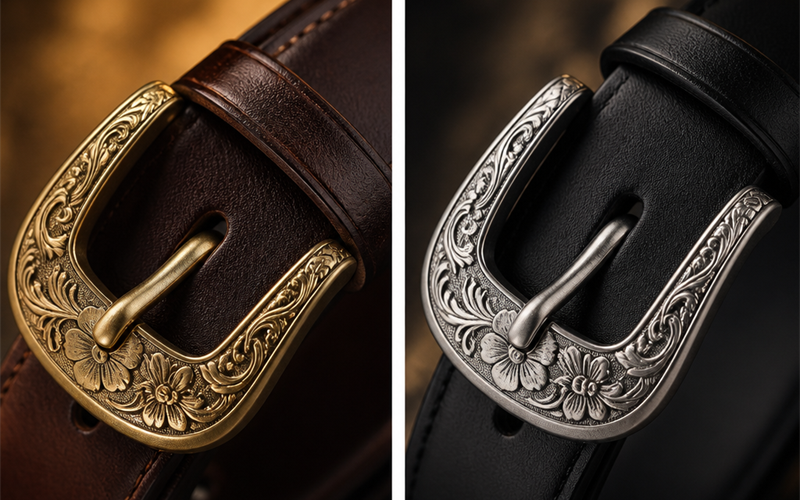
Check the buckle by weight, finish, and engraving. A genuine designer buckle is solid metal — usually brass or stainless steel — so it feels substantial and cool in the hand. The engraving is crisp and deeply etched with sharp, symmetrical letters. Lightweight, warm-feeling, or blurry-logo buckles signal a fake.

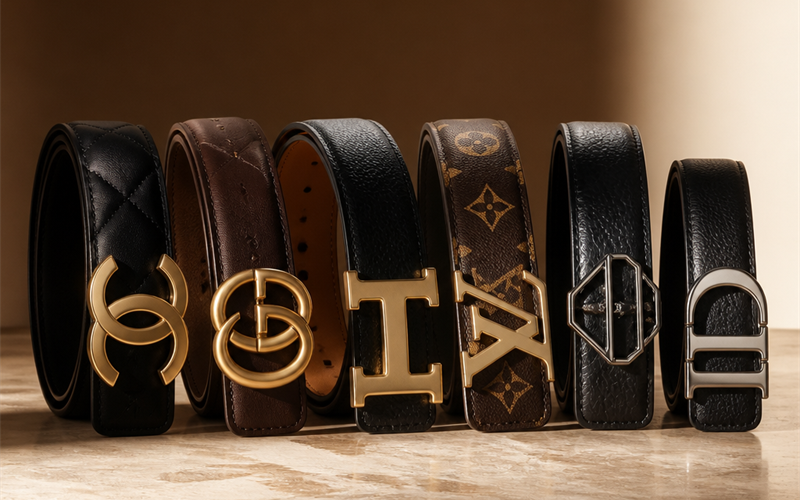
The buckle is the counterfeiter's hardest job and your best tell. As one luxury teardown noted, genuine belts "use solid brass or stainless steel, giving the buckle a substantial feel," while fakes "frequently use lightweight alloys or plastic coated with metallic paint, which chips over time." Run a finger over the logo: real engraving is deep and clean, whereas fakes often feel flat, shallow, or smudged. On a real Gucci GG buckle, for example, the two Gs are symmetrical with smooth curves; on a fake they're often distorted, too thick, or misaligned. Weight plus engraving clarity will catch most counterfeits before you even look at the leather.
How can you tell real leather from fake on a belt?
Tell real leather by its grain, smell, and behavior. Genuine leather has natural, slightly irregular grain and a distinct earthy leather scent; it warms and flexes naturally. Fake leather looks too uniform or plasticky, often smells of chemicals or glue, and feels stiff or rubbery. Real designer belts never use bonded or PVC "leather."
Leather is where cost-cutting shows. Authentic hides vary naturally across the surface, while "fake leather appears repetitive or overly smooth," and synthetics "feel unnaturally smooth." The smell test is surprisingly reliable: real leather has a rich aroma; counterfeits often carry a chemical or plastic odor. Note that some genuine designer belts (like coated-canvas logo styles) aren't full leather by design — so check the leather trim and backing against the brand's known materials. To get fluent in leather grades, see how to tell if a belt is full-grain leather and full grain leather belt vs genuine leather.
What does the stitching tell you?
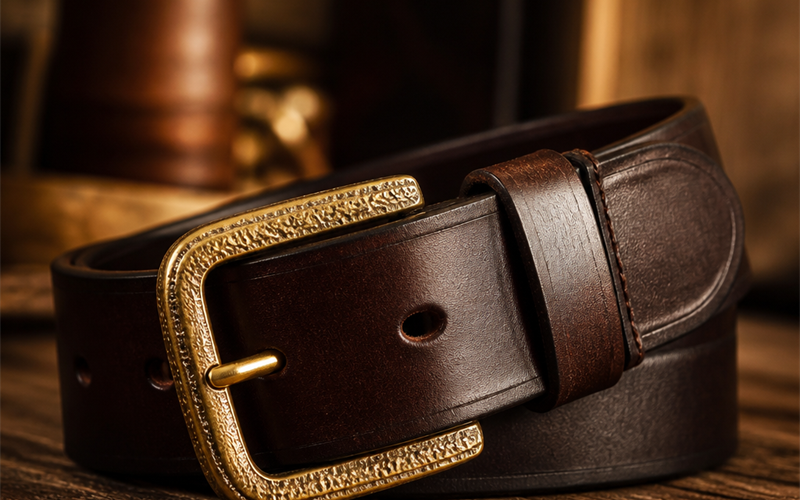
Stitching reveals factory quality fast. Authentic designer belts have even, tight, perfectly aligned stitches — roughly 7 to 10 per inch — with no loose threads or skipped spots. Counterfeits typically show looser, irregular stitching, sometimes as few as 4 to 5 stitches per inch, with crooked lines or frayed ends.

Hand-finishing is expensive, so counterfeiters cut corners here. Count the stitches across an inch and check both sides of the belt: a genuine piece has "uniform stitches inside and out," and "if seams seem crooked or sloppy, you're probably not looking at a genuine item." Look for consistent thread tension, straight lines that follow the edge precisely, and clean, sealed thread ends. Wandering stitches, uneven spacing, or loose threads are reliable fake tells — the kind of flaw a real brand's quality control would never pass.
How do serial numbers and date codes work on designer belts?
Many designer belts carry a serial number, date code, or authenticity stamp etched into the interior leather or the buckle. Each brand follows a predictable format — Gucci, for instance, uses a factory code and digits. But because counterfeiters now copy real codes, treat the code as one clue, not final proof.

Codes are useful but no longer decisive on their own. Authentic markings are cleanly laser-etched or embossed in the correct location and format, and genuine pieces contain "a date code, serial number or another clue as to when and where they were made." The catch: advanced fakes now include fabricated serials or copy codes from real products, so a present code isn't a guarantee. Cross-check the format against verified authentic examples, confirm the placement matches the brand's standard, and when it matters, use the brand or a professional service. Brand-specific guides help here — see do Hermès belts have serial numbers or fake and how can you tell if a Louis Vuitton belt is real.
Why do price and packaging matter so much?
Price and packaging are context clues that catch fakes the physical tests might miss. A genuine designer belt sold far below retail is a red flag, and authentic belts arrive with proper branded packaging — a box, dust bag, care booklet, and authenticity card. Generic poly bags, flimsy boxes, or missing components suggest a counterfeit.

Counterfeiting is a massive industry, which is why context matters. Roughly 10% of fashion products sold worldwide are counterfeit, and Louis Vuitton ranks among the most-faked brands globally — so the odds of encountering a fake are real, especially at steep discounts. A new designer belt comes in complete, well-made packaging; for example, a genuine Gucci belt ships in a red box with a matching dust bag and card. Missing or cheap packaging, combined with a suspiciously low price and a seller who can't provide clear photos or a receipt, is often the clearest signal of all. When the surrounding story doesn't add up, trust it.
Key stat: An estimated 10% of all fashion products sold worldwide are counterfeit, and Louis Vuitton is among the most-faked brands on earth. That's why no single check is enough — authenticate the buckle, stitching, leather, code, and context together, and stay skeptical of any deal that seems too good.
The Bottom Line
To tell a real designer belt from a fake, weigh five signals together: a heavy solid-metal buckle with crisp deep engraving, even tight stitching, naturally grained real leather, a correctly formatted serial or date code, and complete packaging at a believable price. No one test is proof — fakes can nail any single detail — but they rarely get all five right. Here's the honest, on-brand take: the entire fake-belt problem exists because a logo can be copied but craftsmanship is expensive. The smart-money move is to sidestep the game altogether and buy a belt where the value is the leather and hardware, not a name to counterfeit. A BELTLEY full-grain leather belt gives you real leather and a solid buckle with nothing to fake, and our designer-style belts deliver the look on genuine materials. Authenticate carefully when you buy a logo — or buy substance and skip the worry.
Frequently Asked Questions
Q: What is the easiest way to spot a fake designer belt?
The buckle is the fastest tell. Genuine designer buckles are heavy solid metal with crisp, deeply etched engraving and sharp, symmetrical letters. Fakes tend to feel lightweight or plasticky, with blurry, shallow, or misaligned logos. Weight plus engraving clarity catches most counterfeits at a glance.
Q: Do all designer belts have serial numbers?
Many do — a serial number, date code, or authenticity stamp etched into the interior leather or buckle — but formats vary by brand, and not every belt has one. Because counterfeiters now copy real codes, treat a serial number as one clue among several rather than definitive proof of authenticity.
Q: Can you authenticate a designer belt by smell?
Partly. Genuine leather has a rich, earthy aroma, while many fakes smell of chemicals, glue, or plastic. The smell test is a helpful supporting clue, but use it alongside the buckle, stitching, leather grain, code, and packaging — no single signal is conclusive on its own.
Q: Is a cheap designer belt always fake?
Not always, but a steep discount is a major red flag. Authentic designer belts rarely sell far below retail outside legitimate sales or vetted resale. If the price seems too good to be true and the packaging or seller looks off, assume it's fake until the physical details prove otherwise.
Q: Is it worth buying a designer belt at all?
It depends on what you value. If you want a specific logo, buy authentic from a trusted source and authenticate carefully. If you mainly want quality leather and a solid buckle, a well-made full-grain belt gives you the substance without the counterfeiting risk or the brand markup — often a smarter buy.
,%20the%20stitching%20(tight%20and%20even,%20about%207%E2%80%9310%20p...)