How to Soften a Stiff Leather Belt (Without Ruining It)
Quick answer: To soften a stiff leather belt, flex it gently in small sections to loosen the fibers, then rub in a thin coat of leather conditioner (or a natural oil like jojoba or coconut) with a soft cloth and let it absorb. Repeat lightly and wear the belt often — it molds to your body within a few weeks. Avoid soaking it in water, heating it, or slathering on petroleum jelly, all of which can crack or rot the leather.
Last updated: June 2026 • By BELTLEY
TL;DR:
- Stiffness is normal for new full-grain leather — it's a sign of density, not poor quality.
- Best method: gently flex the belt in sections, then condition lightly and wear it often.
- Use: a quality leather conditioner or natural oil (jojoba, coconut, mink).
- Avoid: soaking in water, heat guns/ovens, and petroleum jelly or mineral oil.
- Timeline: noticeably softer in minutes of flexing; fully broken in over 2–4 weeks of wear.
- A good belt softens, never goes limp — full-grain keeps its structure as it relaxes.
A brand-new full-grain leather belt can feel like a plank of wood — and that worries people who just spent real money on it. Here's the reassuring part: that stiffness is a feature, not a flaw. Dense, top-tier leather starts firm and softens into a supple, body-molded belt with a little help. This guide shows you the safe way to speed up break-in, the products that work, and the shortcuts that quietly destroy leather. For the bigger care picture, see our leather care guide.
Stiff or Soft: What Should You Actually Do?
Match your situation to the right move.

| Your situation | What to do |
|---|---|
| Brand-new full-grain belt | Flex in sections + one light coat of conditioner |
| Belt feels dry and rough | Condition first, then flex — it needs moisture |
| You want it broken in fast | Flex 5–10 min, condition, then wear daily |
| Belt is cheap bonded "leather" | Don't oil it — the coating won't absorb; just wear it |
| Exotic (croc/gator) belt | Condition sparingly with a product made for exotics |
When in doubt, go slow — you can always add more conditioning, but you can't undo over-oiling. For deeper upkeep, see how to keep a leather belt in good condition.
Why is my new leather belt so stiff?
A new leather belt is stiff because tanning and finishing leave the fibers tight and compact, and quality full-grain leather is especially dense. Stiffness is a sign of a strong, unprocessed hide — not a defect. The fibers simply haven't been flexed or worn enough to relax yet.

It helps to know what's happening inside the leather. Tanning, as Wikipedia explains, permanently alters the protein structure of skin, "making it more durable and less susceptible to decomposition" — a process that also leaves the fibers firm and set. Cheaper belts are often made from thin, corrected, or bonded leather that feels soft because it's been heavily processed or coated. A stiff full-grain belt is the opposite: it's solid because the hide is intact. That density is exactly what lets it last for years and develop a patina. To understand the grade, see how to tell if a belt is full-grain leather.
How do you soften a leather belt fast?
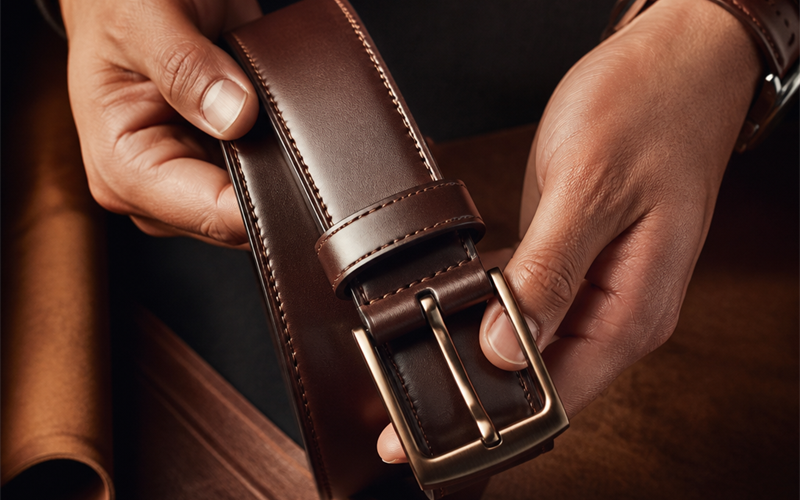
The fastest safe method is mechanical: hold the belt in both hands and gently flex it up, down, and side to side in small sections along its length. This loosens the tight tannery fibers and can make the belt noticeably more flexible in about five minutes — no chemicals required.
Think of it as a warm-up, not a workout. Work in small, gentle motions — form loose fists around the belt and twist them inward to stretch a few inches at a time, then move down the strap. As one leather guide describes the technique, you "form fists around the belt and gently twist your fists inwards to stretch small sections of your leather belt." Do this along the whole length, including near the buckle end and the tip. The key word is gentle: never crease, fold sharply, or wrench the leather, because forcing a stiff belt can crack the surface grain. A few minutes of light flexing primes the leather to take conditioner and to break in faster as you wear it.
What is the best way to condition a stiff belt?
The best way is to apply a small amount of leather conditioner to a soft cloth — not directly to the belt — and rub it in with light, even strokes on both sides. Let it absorb for 15–30 minutes, buff off any excess, and add a second thin coat only if the leather still feels dry. Less is more.

Conditioning replaces the natural oils that keep leather supple. Leather "contains oils" that "keep its fibers flexible," and over time heat, sunlight, and aging cause these oils to evaporate, leaving the strap stiff — so restoring moisture is what softens it. A quality leather conditioner is the safest choice. If you prefer a natural oil, jojoba, coconut, or mink oil work because they mimic the fats originally in the hide, restoring flexibility without harsh solvents. Apply sparingly: too much oil over-softens the leather, darkens it unevenly, and can make a belt go limp. One light coat, fully absorbed, beats three heavy ones. For more, see should you condition your leather belt.
What should you NOT do to soften a belt?
Don't soak the belt in water, apply direct heat, or use petroleum jelly and mineral oil. Water can warp and crack leather as it dries, heat dries and stiffens it further, and petroleum-based products clog the leather's pores and break down its finish over time. These "shortcuts" cause lasting damage.

The internet is full of risky hacks, and a good belt doesn't deserve them. Water might seem to soften leather temporarily, but as it evaporates it draws out the leather's own oils, leaving it more brittle than before. Heat — a hair dryer, oven, or hot car — does the same in fast-forward, baking out moisture and setting the leather hard. Petroleum jelly and raw mineral oils sit on top of the grain, attract dirt, and degrade the finish, shortening the belt's life. Stick to purpose-made conditioner or the gentle natural oils above. The slow, safe method protects the patina and the decade of wear a quality belt is built for. For more on preventing damage, see how to keep leather belts from cracking.
Key stat: A few minutes of gentle flexing can make a stiff belt noticeably more supple, and full break-in takes roughly 2–4 weeks of regular wear — versus the seconds it takes to crack a belt by soaking or heating it. The slow method wins because the fast ones cost you the whole belt.
How long does it take to break in a leather belt?
With flexing and light conditioning, a stiff belt feels softer almost immediately and breaks in fully over about two to four weeks of regular wear. Daily use is what finishes the job: body heat and movement let the leather mold to your shape and relax into a comfortable, broken-in belt.

Patience pays off here. The flex-and-condition steps give you a head start, but real break-in happens on your body. Each time you wear the belt, it bends to your waist and warms slightly, encouraging the fibers to settle. Within a few weeks a quality full-grain belt loses its board-like feel and starts developing the soft sheen and character — the patina — that makes worn-in leather look better than new. Importantly, a good belt softens without going floppy: full-grain keeps enough structure to hold its shape and support your pants for years. That balance of supple-but-sturdy is exactly what you're paying for. To shop the grade that ages this way, see full-grain leather belts.
The Bottom Line
A stiff new leather belt isn't a mistake — it's what a dense, full-grain hide feels like before you've broken it in. Soften it the safe way: flex it gently in small sections, work in one thin coat of quality conditioner or natural oil, let it absorb, and then just wear it. Skip the water baths, heat guns, and petroleum jelly that ruin leather in the name of a shortcut. Within a few weeks the belt molds to you and starts earning its patina. That slow transformation is the whole point of buying real leather — at BELTLEY, we build belts from full-grain hides precisely because they start firm and only get better with age, backed by a 10-year warranty. Start with a full-grain leather belt or a supple classic dress belt and break it in the right way.
Frequently Asked Questions
Q: Why is my new leather belt so stiff?
It's stiff because the tanning process leaves the fibers tight and compact, and quality full-grain leather is naturally dense. That firmness is a sign of a strong, intact hide rather than a defect. Gentle flexing and light conditioning relax the fibers, and regular wear finishes breaking it in.
Q: Can I use olive oil or coconut oil to soften a belt?
Coconut oil works in small amounts because it mimics leather's natural fats, but use it sparingly to avoid over-softening or darkening. Skip cooking oils like olive oil, which can go rancid and smell over time. A purpose-made leather conditioner or jojoba/mink oil is the most reliable choice.
Q: Does water soften a leather belt?
No — avoid water. It may feel softer briefly, but as it dries it pulls out the leather's natural oils and can warp or crack the surface, leaving the belt more brittle than before. Use a leather conditioner to add moisture safely instead of soaking the belt.
Q: How long does it take to break in a leather belt?
A stiff belt feels softer right after flexing and conditioning, and it breaks in fully over about two to four weeks of regular wear. Daily use lets body heat and movement mold the leather to your shape, relaxing it into a comfortable fit while keeping its supportive structure.
Q: Will softening my belt ruin it or make it weaker?
Not if you do it gently. Light flexing and a thin coat of conditioner relax the fibers without weakening them — full-grain leather stays strong and supportive as it softens. Damage comes from the harsh shortcuts (water, heat, heavy oils), not from proper conditioning and normal wear.
%20with%20a...)