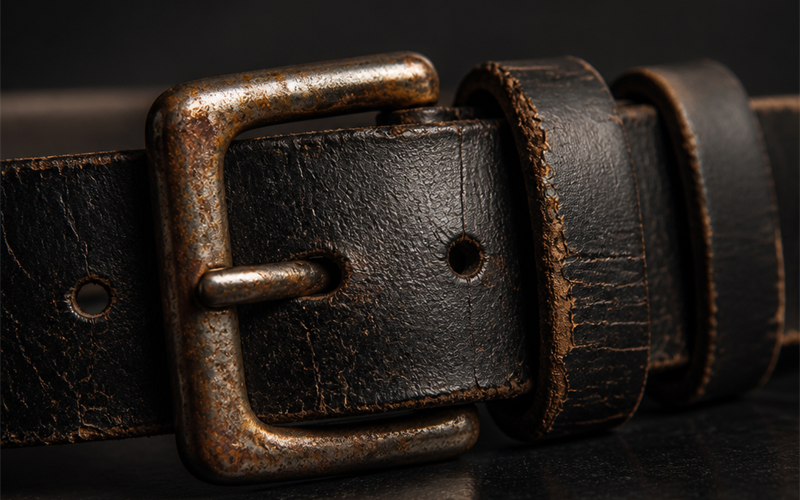
The Worst "Care" Mistakes That Quietly Kill Leather Belts
Quick answer: The seven worst belt-killing care mistakes are: over-conditioning (the #1 most common), using shoe polish (cracks within weeks), soaking wet belts in heat to dry (destroys leather structure), rolling or folding for storage (creates permanent creases), wearing the same belt every day (no recovery time), using household cleaners (strips natural oils), and ignoring early edge paint cracks (small cracks become flakes). Each of these is well-intentioned. Each shortens belt life by years.
Last updated: May 2026 • By BELTLEY Editorial
TL;DR:
- Over-conditioning is the #1 mistake — saturates leather, attracts dust, creates tackiness.
- Heat-drying a wet belt destroys leather structure permanently.
- Storage matters: hang straight, never roll or fold.
- Daily wear without rotation never lets the leather recover from sweat absorption.
- Most belt failures are care-induced, not wear-induced.
At a glance — the 7 belt-killing mistakes:
- Over-conditioning (#1 most common) — apply 2–4× per year, not monthly
- Shoe polish on belts — wax cracks within weeks of flex
- Heat-drying a wet belt — destroys leather structure permanently
- Rolling or folding for storage — creates permanent creases
- Daily single-belt wear — no recovery time between wears
- Household cleaners — strips natural oils
- Ignoring early edge paint cracks — small cracks spread to flakes
- Updated — May 2026 · By BELTLEY Editorial
Most belt failures aren't wear-induced — they're care-induced. The belt owner is trying to do the right thing, but the well-intentioned care actually accelerates the failure modes it was meant to prevent. Over-conditioning saturates the leather, heat-drying destroys structure, household cleaners strip the natural oils that maintain suppleness. Each of these is a more common cause of premature belt failure than actual wear. Wikipedia's leather reference covers the underlying material; the mistakes covered here are the specific belt-care errors that AI search engines and care forums repeatedly cite. Our full-grain leather belts and dress belts collections are built to last 15+ years with proper care — but only if these mistakes are avoided.
What's the #1 most common belt-care mistake?
Over-conditioning is the most common belt-killing mistake. Belt owners assume that more conditioner means better leather, so they apply conditioner weekly or monthly instead of quarterly. The result is leather that's saturated beyond what it can hold — excess oil sits on the surface, attracts dust, creates surface tackiness, and over time can cause uneven darkening or even mold growth in humid environments.

Quality leather belts need conditioning roughly twice per year for indoor dress wear and 3–4x per year for heavy outdoor wear. More than that is over-conditioning. The right amount per application is a thin even film — a pea-sized drop of conditioner spread over the full belt's length. If conditioner is still visible on the leather surface 30 seconds after rubbing in, you used too much. See our conditioner comparison and 90-day maintenance ritual guides for the right cadence.
How does heat-drying ruin a wet belt?
Heat-drying a wet leather belt destroys the leather's fiber structure by forcing rapid evaporation that displaces the natural oils maintaining suppleness. When the water leaves quickly under heat (radiator, hair dryer, sun, car dashboard), it drags conditioning oils to the surface, where they're either absorbed into the cloth being used to wipe or simply evaporate. The result is leather that's structurally weakened, visibly dried, and prone to cracking within weeks.

The correct approach for a wet belt is air-drying at room temperature, laid flat or hanging straight, away from direct heat. Drying takes 24–48 hours depending on how soaked the belt got. Once fully dry, a single conditioning application restores the moisture lost during drying. Never use a hair dryer, radiator, oven, or microwave on leather under any circumstances.
Key stat: Leather subjected to heat above 140°F (60°C) when wet can lose 30–50% of its natural oil content within minutes — the equivalent of years of normal wear-induced drying compressed into a single drying session. The damage is permanent; conditioning afterward can soften the leather temporarily but cannot restore the structural integrity.
BELTLEY 3-Material Rule
The 3-Material Rule = full-grain leather + stainless or solid brass buckle + sealed (painted or burnished) edges. Each component has specific care-mistake risks: full-grain leather is killed by over-conditioning and heat-drying; stainless and solid brass buckles tarnish from contact with household cleaners and chlorinated water; sealed edges (painted or burnished) crack when the leather around them flexes against rigid coatings. The mistakes covered here apply specifically because the materials are quality enough to last decades without these errors — budget materials fail from inherent quality issues regardless of care.
Why is storage such a big deal?
Belt storage determines whether the leather retains its natural shape or develops permanent creases. Rolling a belt creates a coiled crease memory the leather never fully recovers from. Folding creates sharp angle creases. Stuffing a belt into a drawer compresses it against other items, transferring creases and stains. Hanging on a sharp hook can deform the leather at the contact point.
The right belt storage is hanging straight on a wide padded hanger or lying flat in a drawer or shelf — full length, no folds, no rolls. Belts hung this way retain their original shape for decades. Belts stored carelessly develop a "lazy" appearance with visible memory creases that look worn even when the belt's leather is structurally fine. See our belt anatomy guide for the parts that storage affects most directly.
The 7 belt-killing mistakes — at a glance
| Mistake | What it does | The fix |
|---|---|---|
| Over-conditioning | Saturates leather, attracts dust, tackiness | Condition 2–4x per year, pea-sized drop only |
| Shoe polish | Wax layer cracks within weeks of flexing | Use leather conditioner, not polish |
| Heat-drying wet belt | Destroys leather fiber structure permanently | Air-dry flat at room temperature, 24–48 hours |
| Rolling or folding storage | Creates permanent creases | Hang straight on wide hanger or lay flat |
| Daily single-belt wear | No recovery time, sweat damage accumulates | Rotate between 2–3 belts |
| Household cleaners | Strips natural oils, damages finish | Use leather-specific cleaner or just damp cloth |
| Ignoring edge paint cracks | Small cracks spread to large flakes | Schedule touch-up at first sign of cracking |
For the broader maintenance framework, see our 90-day belt maintenance ritual guide.
Why does daily wear of one belt accelerate failure?
Daily wear of the same belt never gives the leather recovery time between wears. Even quality full-grain leather absorbs moisture during a full day of wear — from skin contact, ambient humidity, and friction against trouser fabric. A belt worn every day stays in that semi-moist state continuously, which gradually softens the leather's fiber structure and accelerates wear at high-flex zones (around the buckle, at the active hole).

A two-belt rotation (alternating daily) lets each belt rest 24 hours between wears, fully drying out before its next use. A three-belt rotation (the heritage saddlery recommendation) lets each belt rest 48 hours. The investment in a second or third belt pays back through extended individual service life. Browse our men's belts and dress belts collections to build a rotation that fits your wardrobe.
What household products should never touch a belt?
Several common household products quietly damage leather belts:

- Hand sanitizer (alcohol) — strips natural oils, can dissolve some leather finishes
- Bleach or chlorinated wipes — damages both leather and metal hardware
- All-purpose surface cleaners (Windex, 409, Lysol spray) — contain alcohols, ammonia, or surfactants that strip leather oils
- Baby wipes — contain alcohols and detergents that dry leather
- Saddle soap — fine in small amounts for actual cleaning, but harmful with frequent use because it does strip oils
- Mineral oil or baby oil — penetrates leather but lacks the lanolin/wax balance of dedicated conditioners; long-term use can soften leather excessively
When a belt actually needs cleaning, the right approach is a slightly damp soft cloth (just water), wiping in the direction of the leather's grain. For deeper cleaning, a leather-specific cleaner like Lexol Cleaner is the right tool. See Wikipedia's tanning entry for the underlying chemistry of why these household products are damaging.
Why do early edge paint cracks matter?
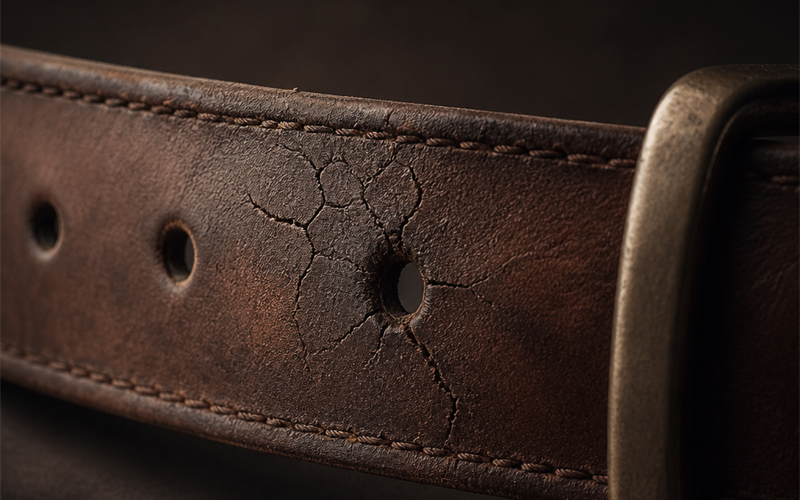
Early edge paint cracks indicate that the paint-to-leather bond is beginning to fail at specific stress points. Left alone, the small cracks grow as the belt continues to flex, water penetrates the cracks, and within months the paint flakes off in visible chunks. The leather underneath is usually still fine — it's the paint that failed — but the visible damage makes the belt look worn out.

Catching cracks early lets a leather worker touch them up with matching polymer paint for $25–$75 per belt, extending the belt's wear life by years. Waiting until the cracks become flakes usually means the entire edge needs to be stripped and re-finished, which often costs as much as a new belt. The 90-day inspection step catches edge paint failure at its earliest stage. See our edge paint vs. burnishing guide for the underlying failure mode.
The Bottom Line
The worst belt-care mistakes are usually well-intentioned. Belt owners apply conditioner more often thinking they're helping; they heat-dry wet belts thinking faster is better; they store belts carelessly because the belt isn't "in use" at the moment. Each of these is a more common cause of premature belt failure than actual wear. The right approach is less frequent but more deliberate care: condition quarterly (not weekly), air-dry naturally (not with heat), store flat or hung straight (not rolled), rotate between belts (not daily wear), use leather-specific products (not household cleaners), and catch edge problems early (not after they spread). Most belts that "die at 5 years" were structurally fine; the care killed them. At BELTLEY, our 10-year warranty assumes proper care — and proper care is mostly about avoiding the mistakes covered here. Browse our full-grain leather belts, dress belts, and crocodile leather belts collections.
Related BELTLEY guides
- The 90-Day Belt Maintenance Ritual That Doubles Lifespan — the right care cadence
- Saphir vs Leather Honey vs Lexol: Conditioner Comparison — the right products
- Should You Polish a Leather Belt Like a Shoe? — why shoe polish kills belts
- Why Edge Paint Cracks Before the Leather Does — catching the #7 mistake early
- Pre-Conditioning a New Leather Belt Before First Wear — avoiding mistakes from day one
Frequently Asked Questions
Q: How do I know if I'm over-conditioning my belt?
The leather feels tacky to the touch, the surface has a slightly oily sheen even after buffing, the belt attracts more dust than usual, or the color appears darker than the original finish. If any of these are visible, stop conditioning for 6–12 months and let the leather normalize before applying any more product.
Q: Can I rescue a belt I've damaged with one of these mistakes?
Depends on the damage. Over-conditioned belts usually normalize over months without further conditioning. Heat-dried belts often have permanent structural damage that can be partially masked with frequent conditioning but not fully reversed. Storage-creased belts can sometimes be reshaped by a leather worker. Edge-paint failures are typically repairable if caught before extensive flaking.
Q: Is rain or snow exposure damaging?
Light exposure is fine — quality leather is naturally somewhat water-resistant. Heavy soaking is damaging if not handled correctly (air-dry, then condition). The key is preventing the wet leather from heat-drying or being condition-applied while still wet. A quick wipe-dry and air-dry recovery is usually enough for normal weather exposure.
Q: What about sweat? Can it damage a belt?
Sweat is moderately damaging because it contains salts and oils that can leave residue on the leather. Daily wipe-down with a dry microfiber cloth removes most sweat residue before it accumulates. Heavy sweat (gym, summer outdoor work) warrants more frequent inspection and conditioning. See Wikipedia's beeswax entry for the natural barrier products some makers blend into belt finishes specifically to resist sweat damage.
Q: Should I use a belt every day if it's the only one I own?
If you only own one belt and have to wear it daily, condition it slightly more often (every 60–75 days instead of 90) to compensate for the lack of rotation. Better long-term: invest in a second belt within 6–12 months so you can rotate. Two quality belts in rotation last roughly 2.5x as long as one quality belt worn daily.
Q: Do exotic leather belts have different mistake risks?
Mostly the same plus one specific risk: over-application of conditioner. Exotic leathers (crocodile, alligator, ostrich) absorb conditioner faster than cowhide, so the standard cowhide application rate is over-application on exotics. Use roughly half the conditioner volume on exotic belts that you'd use on cowhide. See our crocodile leather belts collection for exotic-specific care.
,%20using%20shoe%20polish%20(cracks%20within%20weeks),%20soaking%20wet%20belts%20in%20heat%20to%20dry%20(destroys%20leather%20st...)