Winter Belts — Why Cold Cracks Leather and How to Prevent It
Quick answer: Cold doesn't crack leather by itself. Dry indoor heating drops winter humidity to 15-25%, drying the leather fibers until they snap under flex. Condition every 6-8 weeks during winter and store belts away from heat vents to prevent it.
Last updated: May 2026 • By BELTLEY Editorial
TL;DR:
- Cold doesn't crack leather. Dry cold does. Indoor heating drops humidity to desert levels.
- The crack zones are predictable: belt holes, the bend behind the buckle, and the keeper loop.
- Prevention: condition before winter, condition mid-winter, store away from heating vents.
- Use the BELTLEY 3-Material Rule: full-grain leather + stainless or solid brass + sealed edges. Bonded leather rarely survives one winter.
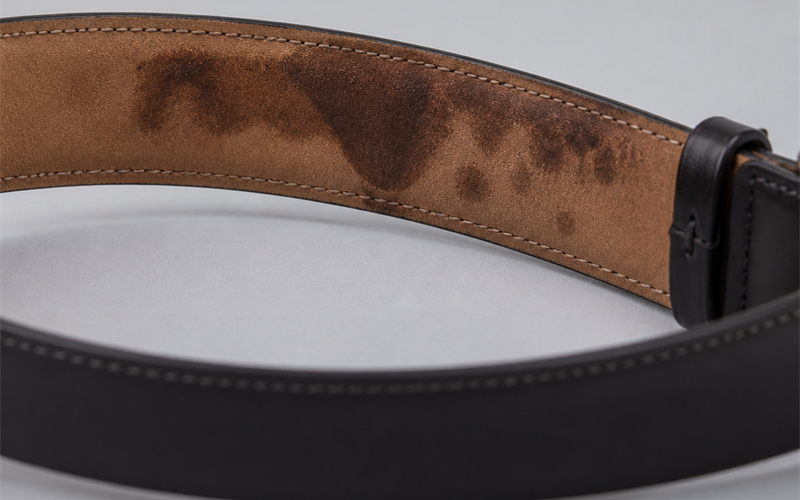
You pull your belt out in November. It looks fine. By February the holes are stretched, the fold behind the buckle has hairline cracks, and the leather feels stiff.
This isn't bad luck. It's predictable winter damage. And it has almost nothing to do with the outdoor temperature.
The real enemy is the dry, heated air inside your home, office, and car. Forced-air heating in Boston, Chicago, Denver, or Berlin drops indoor humidity into the 15-25% range — drier than the Sahara. Combined with leather flexing at low temperatures, it cracks fibers that would survive summer easily.
Why does cold crack leather?
Cold cracks leather because the fibers stiffen and lose flexibility. When you bend a stiff belt around your waist or through buckle holes, the rigid fibers snap instead of stretching. Dry indoor heating accelerates the problem by pulling moisture out of the leather, leaving it brittle.

A well-conditioned belt at 20°F is still flexible. A bone-dry belt at 60°F can crack at the first bend. The combo of cold flex plus indoor dryness does the real damage.
For background on what's actually happening at the fiber level, see our leather belt durability deep-dive.
Key stat: Indoor humidity in heated homes can drop to 15-25% RH in mid-winter — below museum-safe levels for leather, which the AIC recommends at 40-55%.
What's the freezing point of leather flexibility?
Leather fibers begin losing flexibility around 40°F (4°C) and become noticeably stiff below 32°F (0°C). Properly conditioned leather stays usable down to about 10°F (-12°C). Below that, even high-quality belts get rigid enough to crack under heavy bending stress.
The same temperature thresholds the National Park Service uses for historic leather conservation apply directly — see the NPS Conserve O Gram leather conservation series.
Why does indoor heating dry out leather belts?
Indoor heating dries leather because forced-air systems strip humidity from the air. Winter indoor humidity in heated homes often sits at 15-25% — drier than the Sahara. Leather absorbs moisture from its environment, so dry air pulls moisture directly out of the fibers, leaving them brittle.
It's the same reason your skin feels tight, your nose bleeds, and your hardwood floors gap in winter. Your belt is going through the exact same process. The U.S. EPA's indoor air quality guidance recommends 30-50% indoor humidity for both human comfort and organic materials.
Where do belts crack first in winter?
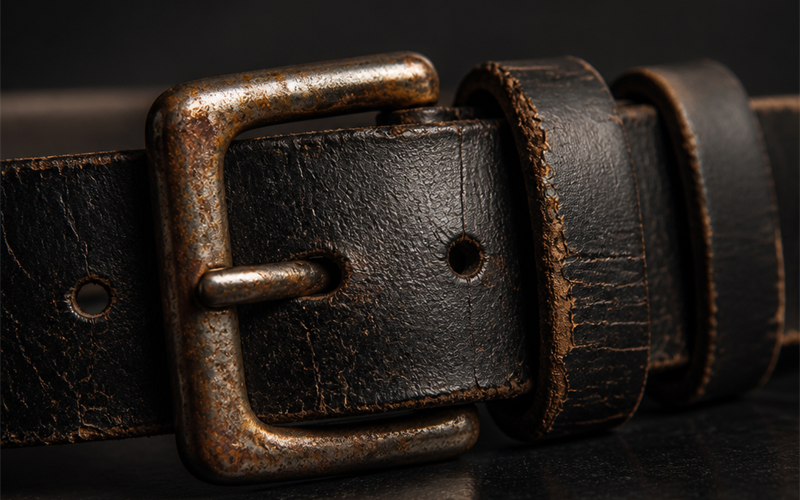
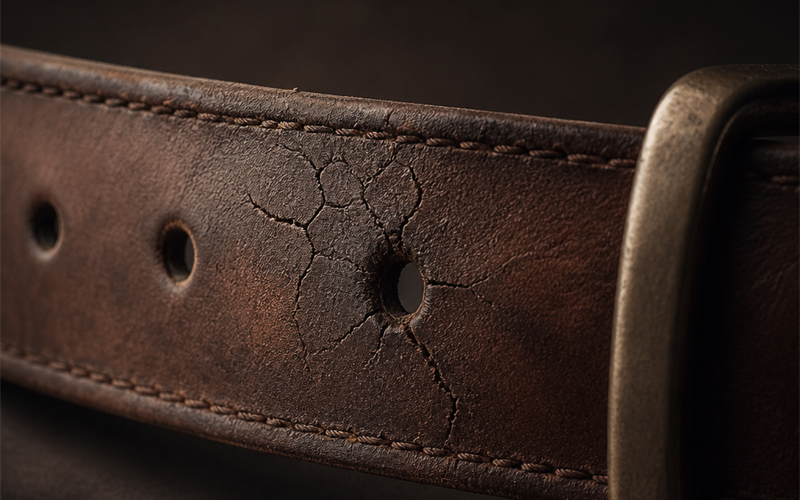
Belts crack first in three predictable spots: belt holes (where the prong stresses the leather), the bend behind the buckle (the tightest flex zone), and the keeper loop (constant friction). Once cracks appear, they spread quickly with each daily wear.

If you spot early hairline cracks, the belt isn't dead yet. A heavy conditioning treatment can rehabilitate it — but the cracks won't fully disappear. They're stress damage in the fiber structure.
For inspection guidance, see our 4 quality markers of a calfskin belt.
Leather cold-resistance comparison
| Leather grade | Indoor heating dry-out resistance | Cold flex threshold | Winter lifespan |
|---|---|---|---|
| Full-grain veg-tanned cowhide | Excellent | -10°F if conditioned | 15-25 winters |
| Full-grain chrome-tanned | Very good | 0°F if conditioned | 10-20 winters |
| Crocodile / alligator | Excellent (natural oils) | -10°F | 25-30+ winters |
| Top-grain leather | Fair | 20°F | 4-8 winters |
| Bonded leather | Poor | 32°F (coating cracks) | 0-1 winter |
How do you prevent winter leather belt damage?
Three steps: condition heavily in late October, condition again in early February, and store belts away from direct heating vents and sunny windows. Each conditioning session restores moisture before dry indoor air pulls it out.
A simple home humidifier helps too. If your bedroom or closet humidity stays above 30%, your belt fibers won't desiccate. Below 25% is where damage starts.
For specific conditioners, see our right and wrong conditioners for Italian calfskin belts. Heavy beeswax-based pastes work especially well for cold-climate use.
Is full-grain leather more cold-resistant than top-grain?
Yes. Full-grain leather is significantly more cold-resistant because its dense, intact fiber structure retains moisture longer and flexes more reliably at low temperatures. Top-grain has been sanded down, removing the most resilient outer fiber layer. Genuine leather is essentially scraps glued together.

Read the difference in detail in full-grain leather vs genuine leather. For winter buyers, this distinction matters more than any other spec. Our full-grain leather belt collection is the safe starting point for any northern climate buyer.
Why do bonded leather belts fall apart in winter?
Bonded leather belts fall apart in winter because the polyurethane coating holding them together becomes brittle in cold weather. The "leather" inside is shredded scraps glued and coated. Once the coating cracks, the inner fibers separate. Most bonded belts don't survive their first northern winter.
If you've ever seen a $15 belt shedding little gray flakes after a few months — that's bonded leather failure. See is genuine leather real leather.
Does cold affect belt buckles too?
Cold itself doesn't damage stainless steel or brass. But winter road salt, slush, and de-icer chemicals are corrosive. They pit cheap plated-zinc buckles within one season. Stainless steel and solid brass shrug the chemicals off — the alloy properties are documented in Wikipedia's stainless steel page.
See our stainless steel buckle belts and brass buckle collection.
What's the right pre-winter conditioning routine?
Clean the belt with a damp cloth, let dry 30 minutes, apply a thin layer of leather conditioner with a soft rag (massage in circular motions for 2-3 minutes), let absorb for an hour, then buff lightly with a clean cloth. Repeat once in mid-winter. Skip saddle soap — it strips natural oils.

Don't over-condition. A thin layer fully absorbed beats a thick layer that stays tacky. Heavy application clogs the leather and traps grime.
Our leather care page has the full step-by-step routine with photos.
Are crocodile belts good for winter?
Yes — crocodile and alligator leather perform well in winter because the natural oils in exotic skins resist drying out more effectively than cowhide. The scales also flex independently, so cold-stiffness doesn't crack them along long stress lines the way it can on smooth calfskin.
The trade-off is exotic leather still needs conditioning — just less of it. Browse the crocodile and alligator belt collection and see are alligator leather belts durable.
How should you store leather belts in winter?
Hang them in a closet away from heating vents, exterior walls, and sunlit windows. Avoid drawer bottoms (poor air circulation) and plastic bags entirely. A simple cedar or canvas belt rack is ideal. If your house is dry, a small room humidifier helps.
Storage damage is invisible. Owners blame "the belt" when really it sat 6 inches from a baseboard heater for three months.
What about leather belts in car trunks?
Don't store leather belts in car trunks during winter. Temperatures swing wildly between sub-freezing nights and 100°F+ when sun heats the trunk. Cycling between extremes damages leather faster than steady cold or steady heat. Same warning applies to gym bags left in cars overnight.

The Bottom Line
Winter belt damage is preventable, but the prevention has to start in October. Condition before dry indoor heating kicks in. Apply the BELTLEY 3-Material Rule — full-grain leather + stainless or solid brass + sealed edges — and rotate at least two belts so each gets 24 hours to recover. A properly maintained full-grain belt easily lasts 20 winters. A bonded belt rarely lasts one.
BELTLEY's belts are built for owners in Boston, Toronto, Chicago, Berlin, and Seoul. The full-grain leather collection and the men's belt range are the obvious starts. Backed by a 10-year materials warranty and free worldwide shipping in 4-10 days.
Frequently Asked Questions
Q: Can a cracked leather belt be repaired?
Hairline cracks soften with conditioner but never fully disappear. Deep cracks through the fiber are permanent. Prevention beats repair every time.
Q: How cold is too cold for a leather belt?
Quality full-grain leather handles down to about -10°F (-23°C) before stiffness becomes a real problem. Below that, take care when bending the belt through buckle holes — frozen leather can crack under sudden flex.
Q: Will my belt crack if I leave it in a cold garage?
Not from cold alone. Damage comes from dry air and freeze-thaw cycles. Bring belts indoors and keep them in moderate humidity (30-50%). See our leather care page.
Q: How often should I condition a leather belt in winter?
Twice during winter — once in late October before heating season kicks in, and once in early February when indoor air is driest. Light coats are better than heavy ones.
Q: Is mink oil good for winter leather care?
Mink oil works in moderation but it over-softens vegetable-tanned belts and can darken them unevenly. A neutral cream conditioner is safer for most full-grain belts. See the right conditioners.
Q: Do exotic leather belts need conditioning in winter?
Yes, but less often. Crocodile, alligator, and elephant leather hold their natural oils better than cowhide. One light conditioning mid-winter is usually enough.