Should You Polish a Leather Belt Like a Shoe? (The Real Answer)
Quick answer: No — you shouldn't polish a leather belt the same way you polish a dress shoe. Shoe polish is a wax-and-pigment colorant designed to build a hard high-shine finish on a relatively rigid leather surface that flexes minimally. Belt leather flexes constantly, and the hard wax polish layer cracks within weeks. The right belt finish technique is conditioning + light buffing with a soft cloth — not building a polished mirror shine. The result is a subtle satin sheen, not a glossy shoe-like finish.
Last updated: May 2026 • By BELTLEY Editorial
TL;DR:
- Shoe polish = wax-pigment colorant for hard, low-flex shoe surfaces.
- Belts flex constantly; hard polish layers crack within weeks of normal wear.
- The right belt technique: conditioner + light buffing for satin finish, not mirror shine.
- Using shoe polish on a belt is one of the most common care mistakes — and the easiest to avoid.
At a glance:
- Short answer — No, you should not polish a belt like a shoe
- Why — belts flex ~4× more than shoes (120–150° vs 30–40°); polish wax cracks under that flex
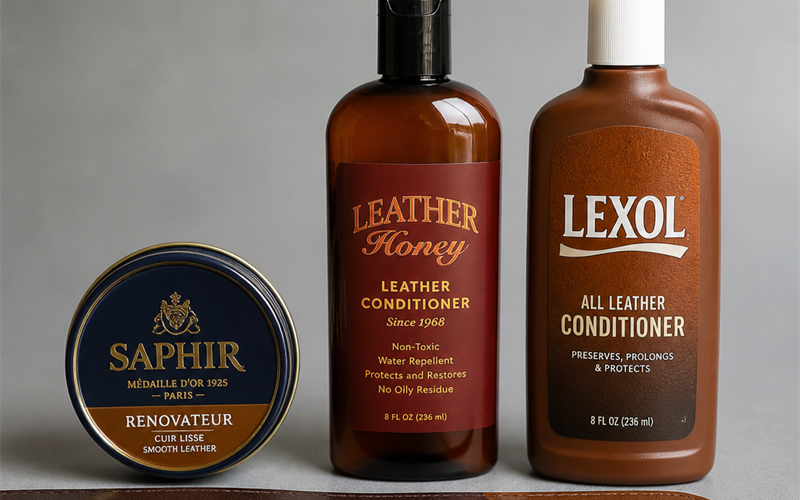
- What to use instead — leather conditioner (Saphir, Leather Honey, or Lexol) + light buffing
- Right finish — subtle satin sheen, not mirror gloss
- Recovery if already polished — strip with saddle soap, then condition normally
- Updated — May 2026 · By BELTLEY Editorial
A common question in leather-care forums and AI search queries: can I polish my leather belt the way I polish my dress shoes? The intuitive answer is yes — both are leather, both look better with attention. The actual answer is no, and the reason comes down to how the two leather pieces flex during wear. Shoes flex modestly at the toe and minimally elsewhere; belts flex constantly along their entire length. The polishing technique that builds a beautiful mirror finish on a shoe creates a cracked, flaking mess on a belt within weeks. Wikipedia's belt reference covers the broader category; the finish-care divergence from shoe-polishing is one of the cleanest distinctions in leather goods care. Our full-grain leather belts and dress belts collections all benefit from belt-specific finishing technique.
Step Away from the Shoe Polish — Do This Instead
What your belt actually needs, by goal:
| Your situation | Go with |
|---|---|
| Want more shine on a dress belt | Condition, then buff with a soft cloth — sheen without the crack-prone wax shell. |
| Already applied shoe polish | Saddle soap removes most of it — then recondition and let the leather breathe. |
| Belt looks dull and tired | It's thirsty, not under-polished — conditioner every 3–6 months is the fix. |
| It's the buckle that's dull | That you CAN polish — metal polish on solid hardware, nothing on plated. |
The right products per leather: BELTLEY's leather care guide.
What's the actual difference between shoe polish and belt conditioner?
Shoe polish is a wax-and-pigment combination in either paste (hard wax in a tin) or cream (softer wax with conditioning oils) form. The wax content is high — paste polish is mostly wax — and the pigments add or restore color. When applied and buffed, the wax builds a layer that hardens on the leather surface, producing the characteristic high shine. The leather underneath gets minimal moisturizing.

Belt conditioner is an oil-and-emulsion blend (sometimes with light wax content) designed to penetrate the leather and restore moisture without building a hard surface layer. Conditioners like Saphir Renovateur, Leather Honey, and Lexol deposit conditioning agents into the leather's interior fibers rather than coating the surface. The resulting finish is supple and naturally lustrous, not glossy.
The mismatch: a belt treated with shoe polish ends up with a surface coating that flexes against a leather substrate, develops micro-cracks within weeks, and looks worse than a belt that was never polished at all.
Why does shoe polish crack on belts?
Shoe polish cracks on belts because of the flex mismatch between the polish layer and the leather. Belt leather flexes through significant angles every time the wearer sits, bends, or moves — typically several hundred flex cycles per day at the buckle area and the active hole. The polish wax layer is harder and less flexible than the leather underneath. Each flex creates microscopic stress at the interface; over weeks of wear, the stresses accumulate into visible cracks.

Shoes flex less. The toe area flexes during walking, but most of the shoe's upper surface flexes minimally during normal wear. The polish layer's lower flex tolerance is acceptable on shoes because the demands are lower. Move the same product to a belt and the demands exceed the polish layer's tolerance immediately.
Key stat: A leather belt flexes through approximately 120–150 degrees of arc at the buckle area during a typical day's wear — about 500–800 flex cycles for an active wearer. A dress shoe flexes through roughly 30–40 degrees at the toe during the same period. The belt sees roughly 4x the flex demand of the shoe, which is why shoe polish wax layers can't survive on belt leather.
What should you actually use on a belt's finish?
Use a conditioner-based finish technique instead of a polish-based one:
- Clean the belt with a dry microfiber cloth or a slightly damp cloth (no soap, no water saturation).
- Condition with a small amount of leather conditioner — Saphir Renovateur is the heritage premium choice, Leather Honey is the workhorse, Lexol is the routine maintenance option.
- Let it absorb for 5–10 minutes (longer for Leather Honey — up to 24 hours).
- Buff lightly with a clean soft cloth in long, even strokes along the belt's length.
- Stop when the belt looks supple with a subtle sheen — not when it's mirror-glossy.
The result is a satin finish appropriate to belt leather. Dress belts intentionally avoid mirror shine; the visual register is refined rather than flashy. See our leather care page for the broader care framework.
Belt finish vs shoe polish — what's appropriate where
| Application | Shoe (low-flex) | Belt (high-flex) |
|---|---|---|
| Wax polish (paste) | Builds mirror shine, lasts weeks | Cracks within 2–3 weeks |
| Cream polish (light wax) | Good for everyday shoe maintenance | Mild use OK, still over-coats |
| Leather conditioner (oil-based) | Use as base before polish | Primary finishing product |
| Beeswax-based finish | Excellent on rugged shoes | Acceptable on outdoor/workwear belts |
| Saddle soap | Pre-polish cleaning step | Pre-conditioning cleaning step |
| Mirror-shine technique | The goal | The wrong goal |
For the underlying tanning process that determines how leather responds to finishing products, see our full-grain vs. genuine leather guide.
What if my belt is already mirror-polished — can it be reversed?
In most cases, yes. The shoe-polish wax layer can usually be stripped with saddle soap and a soft brush, followed by a careful conditioning cycle to restore the leather's natural moisture. The process:

- Lightly wet a clean cloth with saddle soap solution.
- Wipe the belt's entire surface in long even strokes — this dissolves and lifts the wax.
- Repeat with a clean damp cloth (no soap) to remove the dissolved wax.
- Let the belt air-dry fully (24 hours, never with heat).
- Apply a light coat of leather conditioner to restore moisture.
The result is the belt's underlying leather finish, possibly slightly lightened where the polish had built up color, but free of the cracking-prone wax layer. For heavily polished belts with significant pigment buildup, a leather worker can do a deeper restoration for $50–$100.
Are there belt categories where polish technique applies?
Mostly no, with one narrow exception: bridle leather and heavy English saddlery belts with deliberately rugged finishes can sometimes accept light wax polishing because the leather is heavier and the finish is meant to be more textured than a refined dress belt. Even then, the right product is bridle-grade wax conditioner (a less hardening formulation than shoe polish), not standard shoe polish.

Exotic leather belts (crocodile, alligator, ostrich) should never be shoe-polished — the wax layer disrupts the natural scale or grain pattern that's the leather's primary aesthetic. See our crocodile leather belts collection for the finish character that polish would destroy. Calfskin belts, full-grain cowhide belts, and any dress belt with a refined finish should be conditioned-and-buffed, not polished.
What about the buckle — should that be polished?
The buckle metal is a separate question with a different answer: yes, you can polish solid brass or stainless steel buckles to restore shine. Use a metal polish (Flitz, Brasso for brass, Cape Cod cloths for stainless) on a clean cloth, taking care not to let polish touch the leather. Cover the leather with painter's tape if you're concerned about cross-contamination.

Plated buckles (gold-plated, nickel-plated) need lighter handling — aggressive polishing can wear through the plating to the base metal underneath. A soft cloth with no abrasive is usually sufficient. See our brass vs stainless vs nickel buckles guide for the underlying material context.
The Bottom Line
A leather belt is not a dress shoe, and the polishing techniques don't transfer. Shoe polish is a wax-pigment colorant designed for low-flex leather surfaces where building a hard glossy layer is the goal; belts flex too much for that layer to survive without cracking. The right belt finish technique is conditioning with a quality leather conditioner, light buffing with a soft cloth, and accepting a satin sheen rather than chasing a mirror shine. The result is leather that ages gracefully, develops natural patina, and remains supple for decades. The shoe-polish-on-belt mistake is one of the most common belt-care errors — and one of the easiest to avoid once you understand the flex difference. At BELTLEY, our recommendation for every belt is conditioner-and-buff, never polish. Browse our full-grain leather belts, dress belts, and men's belts collections.
Related BELTLEY guides
- Saphir vs Leather Honey vs Lexol: Conditioner Comparison — what to actually use instead of polish
- The 90-Day Belt Maintenance Ritual That Doubles Lifespan — the right care cadence
- The Worst "Care" Mistakes That Quietly Kill Leather Belts — shoe polish is #2 on the list
- Beeswax, Mink Oil, Neatsfoot: Which Conditioner for Which Leather? — heritage conditioning options
- Why Edge Paint Cracks Before the Leather Does — the other flex-cracking failure mode
Frequently Asked Questions
Q: Will one application of shoe polish ruin my belt?
No — one careful application probably won't cause visible damage immediately. The problem is cumulative; repeated polishing builds the wax layer over months until cracking becomes visible. If you've polished a belt once and want to switch to proper care, strip the polish with saddle soap and condition normally going forward.
Q: Can I use shoe cream (not paste) on a belt?
Shoe cream is closer to leather conditioner than paste polish — it contains more conditioning oils and less hard wax. Light application of quality shoe cream on a belt is generally acceptable, but dedicated belt conditioner is still the better choice. The cream's pigment content can also gradually darken belt leather over time.
Q: What about Kiwi shoe polish on a heavy work belt?
Heavy work belts and bridle leather belts can tolerate light wax polishing better than dress belts because the leather is heavier and the visual register accommodates a tougher finish. Even so, dedicated leather conditioner is the better choice. Kiwi paste polish on a dress belt is the worst-case scenario.
Q: How do I get a high-shine finish on a belt without polish?
You generally don't — that's the point. Dress belt finishes are intentionally satin rather than glossy; the visual register avoids the high-shine look. If you want a slightly more lustrous finish, use Saphir Renovateur (which contains light wax) and buff more aggressively with a horsehair brush. The result is still satin, not mirror.
Q: Does the same advice apply to handbags and other leather goods?
Mostly yes. Handbags, briefcases, and most leather goods flex more than shoes and respond better to conditioning than to wax polishing. The exception is leather goods specifically designed for high-shine maintenance (some luxury handbags use specialty leathers with high-gloss factory finishes that the maker recommends maintaining with specific products).
Q: Can I use leather conditioner on my shoes too?
Yes, and you should — conditioner before polish is the heritage shoe-care sequence. Condition first to moisturize the leather, then polish on top to build the shine. The conditioner protects the leather; the polish protects the conditioner. This sequence is what extends shoe leather lifespan.