Saltwater vs Freshwater Crocodile Belt: The Real Difference
TL;DR:
- "Saltwater crocodile belt" almost always means Crocodylus porosus — the most prized crocodile leather on Earth, with small, uniform belly tiles and a buttery hand.
- "Freshwater" can mean two very different hides: Australian Crocodylus johnstoni (smaller, narrower tiles) or Nile crocodile Crocodylus niloticus (large, well-defined scales — the workhorse of luxury leather).
- Porosus commands the highest price; Nile offers the best balance of beauty, durability and value; Johnstoni is the slimmest, most delicate option.

Quick Facts
- Saltwater species: Crocodylus porosus (Porosus) — Australia, PNG, SE Asia
- Freshwater species: C. johnstoni (Australia) and C. niloticus (Africa, technically a freshwater dweller)
- Most prized hide: Porosus belly — smallest, most uniform tiles
- BELTLEY's primary hide: farm-raised Nile crocodile
- Belt price range at BELTLEY: $58–$299 (crocodile trends to the upper half)
- Lead time: 2-3 days handcrafted, then free worldwide shipping
In our Bangkok-adjacent workshop, the first thing a new artisan learns is to read a hide before they cut it. A Porosus belly catches the light differently than a Nile flank — softer, almost liquid. A Johnstoni strip feels lighter in the hand, with tiles that march in tighter rows. Customers rarely see these distinctions, but they pay for them every time they buy a "crocodile belt" without knowing which crocodile. This guide fixes that, in plain English, from the people who actually cut the leather.

Which Species Should Your Money Choose?
Cut through the taxonomy with your budget and eye:
| Your situation | Go with |
|---|---|
| Maximum prestige, budget open | Saltwater Porosus — the smallest, most uniform tiles and the highest price on the wall. |
| Best beauty-per-dollar | Nile crocodile — the workhorse of luxury leather; most of the look for meaningfully less. |
| Can't see the difference at arm's length | Honestly, most people can't — buy the Nile and bank the difference. BELTLEY croc runs $118–$289. |
| Verifying what a seller claims | Count scale rows and check tile symmetry — the patterns section below shows exactly what to look for. |
Species honestly labeled: BELTLEY's crocodile belts.
What does "saltwater crocodile belt" actually mean?
A saltwater crocodile belt is made from the hide of Crocodylus porosus, the largest living reptile, native to northern Australia, Papua New Guinea and Southeast Asia. Porosus is the benchmark of crocodile leather: small, evenly sized belly tiles, minimal umbilical scarring, and a supple hand that ages without cracking.
The species is so dominant in the luxury market that "Porosus" has become shorthand for top-grade exotic leather. Hermès, Brioni and most haute maroquinerie houses buy almost exclusively Porosus when they want the finest hides. According to the IUCN Crocodile Specialist Group, Porosus is now overwhelmingly farm-raised under CITES Appendix II permits, which is why a real saltwater belt can be sold legally and traceably worldwide. For a deeper species comparison, see our companion piece on Porosus vs Niloticus crocodile belts.

Is "freshwater crocodile" one species or several?
It's two — and the distinction matters. Crocodylus johnstoni (Australian freshwater, "Freshie") is a small, slender crocodile with narrow belly tiles. Crocodylus niloticus (Nile crocodile) is technically a freshwater species too, but the leather trade often files it separately because its tiles are larger and its hides bigger.
When a French maison says "crocodile," they almost always mean Porosus or Niloticus. When an Australian brand says "freshwater," they usually mean Johnstoni. When a U.S. brand says "crocodile" without specifying, you should ask. The English-language Wikipedia entry on the saltwater crocodile is a useful primer if you want to compare the species at a glance before going deeper.
How do the scale patterns differ on a belt?
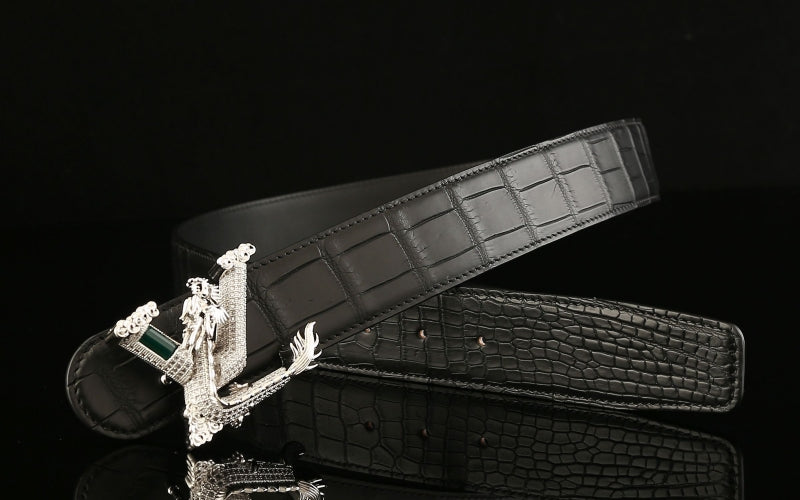
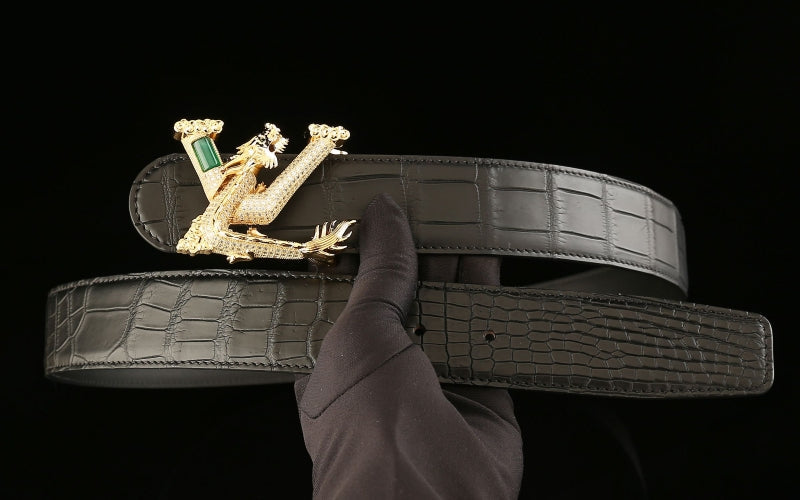
Look at the belly tiles. Porosus shows the smallest and most uniform squares (often 25-35 tiles across a belt). Niloticus shows larger, well-defined tiles with crisp borders (around 18-25). Johnstoni shows narrower, more rectangular tiles in tighter rows. Caiman, often passed off as crocodile, shows visible calcium "ossicles" that catch fingernails.
Tile geometry is the single fastest way to identify a hide on the belt rack. A trained eye can call the species from across a room. If the tiles are perfectly square and tiny, you are almost certainly looking at Porosus. If they are bigger and rectangular toward the flanks, it is likely Niloticus. If they feel bony or "pebbly," it is probably caiman — a different genus entirely, and a far cheaper material. We unpacked that confusion in detail in Caiman vs Crocodile vs Alligator belts.

Why is saltwater Porosus considered the king?
Porosus wins on three measurable traits: tile uniformity (genetics produce smaller, more regular squares), hide size-to-tile ratio (more usable belly per animal), and grain density (a finer fiber structure that takes glaze beautifully and resists cracking). Combined, those traits justify the premium that runs two to four times Niloticus at the wholesale tier.
There is also a supply story. Porosus farms in Australia and Singapore are tightly capped by quota, and the best hides are bought up by Parisian houses on long-term contracts before they ever reach the open market. That scarcity is why a finished Porosus belt at a heritage maison can cross five figures. Most of that price is brand tax, not leather — a math we broke down in Why crocodile belts cost $500 vs $5,000.

Where is each species farmed today?
The legal exotic leather supply chain is more transparent than most shoppers realize. A quick map:
| Species | Common Name | Primary Farming Regions | Typical Use |
|---|---|---|---|
| C. porosus | Saltwater / Porosus | Australia (NT, QLD), Singapore, PNG | Top-tier belts, bags, watch straps |
| C. niloticus | Nile | Zimbabwe, South Africa, Kenya, Madagascar | Mid-to-high luxury belts, briefcases |
| C. johnstoni | Australian Freshwater | Northern Territory, Australia | Slim belts, small leather goods |
| Alligator mississippiensis | American Alligator | Louisiana, Florida, Texas | American luxury belts, boots |
Every hide on that table requires a CITES export tag, sewn or stamped into the finished product. If you cannot find one, the belt is either illegal or fake. We explain how a single belt is sourced from a single hide in How many crocodiles it takes to make one belt.
What does BELTLEY use, and why?
BELTLEY uses farm-raised Nile crocodile (C. niloticus) as our primary exotic hide, sourced from CITES-permitted African farms and finished by hand in our workshop. Niloticus delivers roughly 90% of the visual character of Porosus at roughly half the landed cost — the sweet spot for buyers who want true crocodile without the brand-tax markup.
Founded in 1999 and rebuilt as a DTC brand in 2025 under the tagline Style Meets Legacy, BELTLEY exists to remove the middlemen between the artisan and the customer. Our crocodile belts ship in-stock within 2-3 working days, sit in the $58–$299 range (with crocodile naturally trending to the upper half of that range), and carry our 10-year warranty plus 30-day returns. You can read the full origin story on our About Us page, or browse the current line at our exotic leather belt collection and alligator & crocodile collection.
Key Takeaways
- "Saltwater" = Porosus, the gold standard.
- "Freshwater" = Johnstoni (Australian) or, loosely, Niloticus (Nile).
- Tile size, uniformity and grain density drive the price.
- CITES tag is non-negotiable — always verify.
- Nile crocodile is the smartest value play in 2026.
Which finish suits each hide best?
Glazed (high-gloss) finishes flatter Porosus and Niloticus by amplifying tile contrast. Matte and semi-matte finishes suit Johnstoni and casual Niloticus belts, masking minor surface variation and reading more sartorial than flashy. The same hide can look completely different across finishes — choose the finish to match the suit, not the species.
A glazed black Porosus is the right call for evening dress and bench-made oxfords. A semi-matte cognac Nile is more versatile for daywear with brown derbies or loafers. We unpacked the trade-offs at length in Glazed vs matte vs semi-matte crocodile belts. And if you are weighing a real crocodile belt against a convincing embossed cowhide, this comparison will save you a costly mistake.
How should you choose by budget?
A simple buyer's framework, based on what we see customers actually purchase:
- Under $200: Skip crocodile entirely and buy a top-tier full-grain cowhide belt. Better to own a great cow belt than a compromised croc.
- $200-$400: Genuine farm-raised Nile crocodile, semi-matte finish, classic widths. This is BELTLEY's core sweet spot.
- $400-$800: Glazed Nile or entry-level Porosus from DTC makers. Investment-grade, lifetime piece.
- $800-$2,500: Full Porosus belly from a heritage maker. Genuine luxury without the $10K logo tax.
- $2,500+: You are paying for the brand, not more leather.
The Bottom Line
A "saltwater crocodile belt" is shorthand for the world's most prized exotic leather — Crocodylus porosus, with its tight, uniform belly tiles and supple hand. Freshwater belts span two very different species, with Nile crocodile delivering the best blend of beauty, durability and price for most real-world buyers. At BELTLEY, we built our line around farm-raised Nile crocodile precisely because it lets a discerning customer own genuine exotic leather, handcrafted, with a 10-year warranty, in the $118-$289 range — without paying a brand tax. Browse the current pieces at our exotic leather collection and we'll have your belt cut, finished and shipped within 2-3 days.
Frequently Asked Questions
Q: Is a saltwater crocodile belt better than a freshwater one?
For most buyers, "better" means Porosus — finer tiles, tighter grain, longer aging curve. But a well-finished Nile crocodile belt outperforms a low-grade Porosus every time. Species matters less than hide grade and craftsmanship.
Q: Are saltwater crocodile belts legal?
Yes, when sourced from CITES-permitted farms. Crocodylus porosus is listed under CITES Appendix II, which allows regulated international trade. Every legitimate hide carries a CITES tag at the trade level — ask the seller to confirm legal sourcing before you buy.
Q: How can I tell if my crocodile belt is real?
Check the belly tiles for natural irregularity (real hides are never perfectly identical), look for the umbilical scar near the centerline, and confirm a CITES tag. Embossed cowhide repeats patterns; real crocodile never does.
Q: Why is Porosus more expensive than Nile crocodile?
Porosus has smaller, more uniform tiles, finer grain density, and a tightly capped farm supply. Heritage maisons buy most premium Porosus on long-term contracts, which keeps wholesale prices two to four times higher than Nile.
Q: Does BELTLEY sell saltwater Porosus belts?
Our core line uses farm-raised Nile crocodile because it delivers near-Porosus quality at a fairer price. We occasionally release Porosus pieces in limited drops — check our exotic leather belt collection for current availability.
Q: How long does a crocodile belt last?
A properly tanned and finished crocodile belt, conditioned once or twice a year, lasts 20+ years. BELTLEY backs ours with a 10-year warranty on materials and construction.