One Good Belt or Several Cheap Ones? The Real Math
Quick answer: Buy one good belt over several cheap ones — the math and the materials both favor it. A quality full-grain belt lasts up to 10 years and costs roughly $0.03–$0.04 per wear; a $20 bonded belt cracks in about 6–18 months and costs $0.11+ per wear, so you re-buy it again and again. The smart middle path: own two or three quality belts (a black, a brown, maybe one casual) instead of a drawer full of cheap ones — you cover every outfit for life, not for a season.
Last updated: June 2026 • By BELTLEY
TL;DR:
-
Cost-per-wear winner: one quality belt (
$0.04/wear) beats cheap belts ($0.11+/wear). - Lifespan: cheap bonded belts last ~6–18 months; full-grain lasts ~10 years.
- Re-buying is the trap — three cheap belts in 3 years can cost more than one good belt.
- Don't buy just one, though: 2–3 quality belts (black + brown + casual) cover everything.
- Sweet spot: roughly $80–$150 buys real full-grain + solid hardware, not branding.
- The BELTLEY 3-Material Rule tells you what "quality" actually means (below).
It's a familiar drawer: four or five cheap belts, two of them cracked, none of them quite right. The alternative — spending more on one belt — feels indulgent until you do the arithmetic. Then it flips: the "cheap" route is usually the expensive one. This guide runs the real cost-per-wear numbers, explains how long each option actually lasts, and lands on the genuinely smart move (hint: it's not literally one belt). For the single-belt version of this question, see is it worth buying an expensive belt.
One Good Belt or Several Cheap? Find Your Answer
Match your situation to the better buy.

| Your situation | Better choice |
|---|---|
| You wear a belt most days | One quality belt — lowest cost-per-wear |
| You only need black + brown | Two quality belts cover ~everything |
| You like variety/colors | 2–3 quality belts, not 6 cheap ones |
| Tight budget right now | One quality belt now, add a second later |
| You keep replacing cracked belts | Stop the cycle — buy one good one |
For most people, two or three quality belts is the real answer. For collection-building, see how many belts should a man have.
Is one good belt cheaper than several cheap ones?
Yes, over time. A quality full-grain belt lasts years and works out to roughly $0.03–$0.04 per wear, while a cheap bonded belt fails in months and costs around $0.11 per wear — then you buy another. Re-buying cheap belts repeatedly usually costs more than one good belt that lasts a decade.

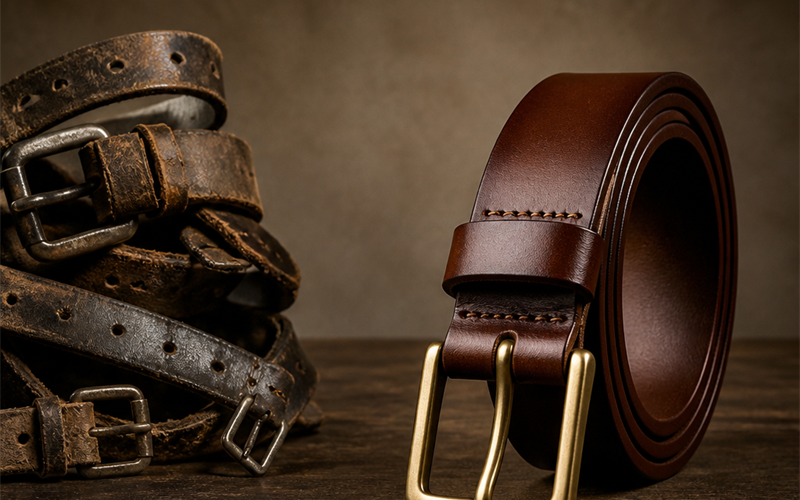
The numbers are lopsided once you spread them over real use. As one cost breakdown shows, a quality belt worn for ten years comes out to about $0.04 per day, versus roughly $0.11 for a cheap belt that cracks in six months — nearly three times more expensive per wear for the budget option. Another way to see it: a budget belt worn 50 times before it dies costs about $1.00 per wear, while a better belt worn 500 times costs $0.50. The cheap belt feels frugal at checkout and turns expensive in the drawer. For the full breakdown, see how much should a leather belt cost.
How long do cheap belts actually last?
Cheap belts — usually bonded or "genuine leather" with a coated finish — typically last about 6 to 18 months before cracking, peeling, or having the buckle fail. A quality full-grain belt can last 10 years or more with basic care. That lifespan gap is the entire reason the value math favors buying one good belt.
Materials decide everything here. Bonded "leather" is shredded leather scraps glued and coated to look like a hide; it flexes a few hundred times and then the surface splits. A full-grain belt keeps the hide's strongest top layer intact, so it bends and wears without cracking and develops a patina instead of falling apart. The practical result: replacing a cheap belt three or four times can quietly cost more than one well-made belt that outlives all of them. As a quality leather guide puts it, you pay more upfront for materials that resist deterioration "rather than repeatedly replacing cheaper alternatives that crack and tarnish over time." To spot the good stuff, see how to tell if a belt is full-grain leather.
What makes a belt actually "good"? The BELTLEY 3-Material Rule
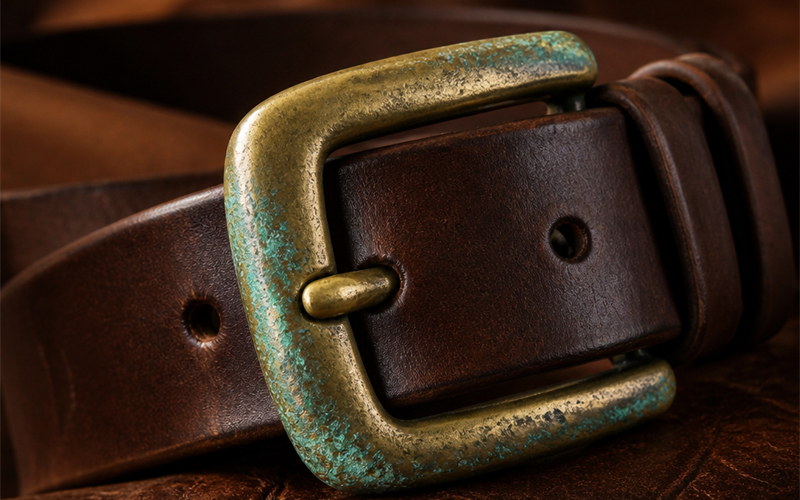
A genuinely good belt meets three material specs: full-grain leather, a solid brass or stainless steel buckle, and sealed (painted or burnished) edges. We call it the BELTLEY 3-Material Rule. Hit all three and the belt will last for years; miss any one and you're buying a future replacement.

This is the test that separates "good" from "looks good in the photo." Full-grain leather is the top, intact layer of the hide — it ages into a patina instead of cracking. A solid brass or stainless steel buckle won't peel or snap like a plated zinc one. Sealed edges keep the leather from fraying and splitting where it's handled most. The catch is that all three add cost, which is why cheap belts skip them — corrected or bonded leather, plated hardware, raw glued edges. When you compare one good belt to several cheap ones, this is what you're really comparing: three durability specs versus none. To see why hardware matters, read what is the strongest type of belt buckle.
Key stat: A $100 full-grain belt worn daily for 10 years costs about $0.03 per wear; a $20 bonded belt replaced every 6 months costs around $0.11 per wear — and you re-buy it 20 times in that decade. Quality isn't the expensive choice. It's the cheap one wearing a higher price tag.
So should you really only own one belt?
No — own two or three quality belts, not one. A single belt can't cover every outfit, so the smart move is a small, deliberate set: a black dress belt, a brown casual belt, and maybe one reversible or exotic option. That covers nearly every occasion for years, which a drawer of cheap belts never does.

"Buy quality, not quantity" doesn't mean "buy exactly one." It means stop accumulating throwaways and instead build a tiny, high-quality rotation. Two belts — one black, one brown — already handle most wardrobes, since belt color should generally follow your shoes. Add a third for variety (a casual braided or distressed belt, or a reversible black/brown for travel) and you've covered formal, work, and weekend without a single cheap belt in sight. As one style guide advises, "get yourself two or three quality options to form the basis of your wardrobe." A reversible belt is an especially efficient pick — see what are reversible belts.
What's the smartest belt-buying strategy on a budget?
Buy one quality belt now, then add a second later. Start with the color you wear most (usually black for dress or brown for casual), get a full-grain belt with solid hardware in the ~$80–$150 sweet spot, and add the second color when you can. You'll spend less over five years than you would replacing cheap belts.

A budget doesn't force you into cheap belts — it just sequences your purchases. The quality-to-price sweet spot sits around $80–$150, where, as one guide notes, a "buy-it-for-life full-grain leather belt should reasonably cost between $80 and $150," and you're paying for materials, not a logo. Buy that one belt in your most-worn color first. Because it lasts a decade, you're not on a replacement treadmill, so you can comfortably add the second color months later. Over five years, that two-belt path costs far less than cycling through cheap belts — and looks better every day in between. To choose well, see how to choose a good leather belt.
The Bottom Line
One good belt beats several cheap ones on the only measure that matters over time: cost per wear. A quality full-grain belt lasts ten years at pennies a wear; cheap bonded belts crack in months and quietly cost more as you re-buy them. The genuinely smart strategy isn't one lonely belt, though — it's two or three quality belts (black, brown, maybe a casual or reversible) that cover every outfit for years. Judge them by the BELTLEY 3-Material Rule: full-grain leather, a solid brass or stainless buckle, sealed edges. That's exactly how we build, at fair DTC pricing with a 10-year warranty — quality without the Brand Tax. Start your set with a full-grain leather belt, then add a versatile reversible belt.
Frequently Asked Questions
Q: Is it better to buy one expensive belt or several cheap ones?
One quality belt is the better value. It lasts up to 10 years at roughly $0.03–$0.04 per wear, while cheap belts crack in 6–18 months and cost about $0.11 per wear, so you keep re-buying them. Over time, several cheap belts usually cost more than one good belt that outlasts them all.
Q: How many belts do I actually need?
Most people need just two or three quality belts: a black dress belt, a brown casual belt, and optionally a third for variety (casual, exotic, or reversible). That small, deliberate set covers nearly every outfit and occasion — far more effectively than a drawer full of cheap, mismatched belts.
Q: How long does a cheap belt last compared to a quality one?
Cheap bonded or coated "genuine leather" belts typically last about 6 to 18 months before cracking or peeling. A quality full-grain leather belt can last 10 years or more with basic care. That large lifespan gap is why the cost-per-wear math strongly favors buying one good belt.
Q: What's a fair price for a quality belt?
The quality-to-price sweet spot is roughly $80–$150 for a full-grain leather belt with a solid brass or stainless steel buckle and sealed edges. In that range you're paying for materials and construction, not branding. Above about $250 for non-exotic leather, you're mostly paying for a logo.
Q: How can I tell a quality belt from a cheap one?
Apply the three-material test: full-grain leather (not bonded or "genuine"), a solid brass or stainless steel buckle (not plated zinc), and sealed, finished edges (not raw and glued). A belt that hits all three will last for years; one that misses any of them is likely a short-lived, cheap belt in disguise.