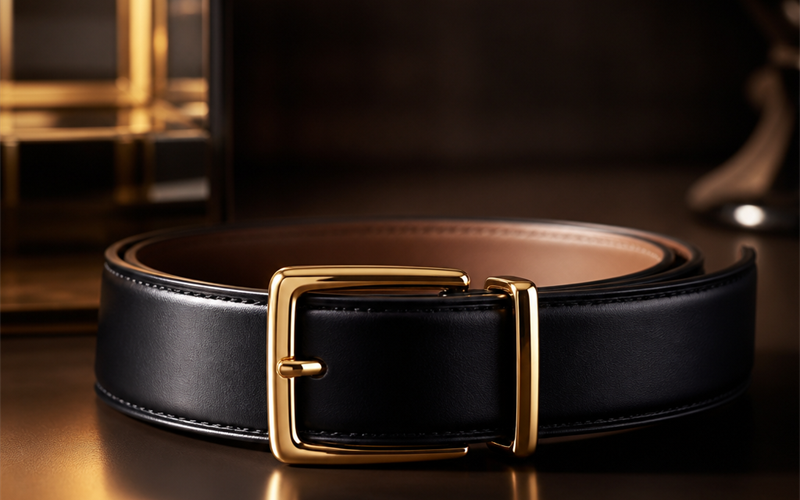
Do You Wear a Belt With a Tuxedo? Black-Tie Rules
Quick answer: No — traditional black-tie etiquette says you should not wear a belt with a tuxedo. Tuxedo trousers are built without belt loops and are held up by suspenders (braces) or built-in side adjusters, with a cummerbund or low-cut waistcoat covering the waistband. A belt breaks the clean, uninterrupted line from shirt to shoes. The one exception: modern tuxedo trousers that come with belt loops — if yours have them, a slim, polished black belt with minimal hardware is acceptable.
Last updated: June 2026 • By BELTLEY
TL;DR:
- Traditional rule: no belt with a tuxedo — it's considered incorrect black-tie.
- Why: tuxedo trousers have no belt loops and rely on suspenders or side adjusters.
- Waist cover: a cummerbund or low waistcoat hides the waistband instead.
- Never combine a belt with a cummerbund or suspenders — it bulges and clashes.
- Modern exception: if your trousers have belt loops, a slim black belt is fine.
- If you must belt: thin, black, polished leather, understated buckle — nothing flashy.
You're getting ready for a black-tie event, your tuxedo trousers are on, and you reach for a belt out of habit — then pause. Does a tuxedo even take a belt? The short answer surprises a lot of people: traditionally, no. Formal evening wear has its own rules, and the belt isn't part of them. This guide explains why, what to wear instead, and the one modern situation where a belt is actually acceptable. For a related material-specific take, see can you wear a crocodile belt with a tuxedo.
Tuxedo Waist: What Should You Actually Wear?
Match your situation to the correct move.

| Your situation | What to wear |
|---|---|
| Classic tuxedo, no belt loops | Suspenders or side adjusters — no belt |
| You want a finished waistline | Cummerbund or low-cut waistcoat |
| Modern trousers WITH belt loops | Slim, polished black leather belt is OK |
| Wearing a cummerbund | No belt — they don't mix |
| Black-tie purist event | Suspenders, hidden under the jacket |
When in doubt at a formal event, go beltless and let suspenders do the work. For the everyday version of this question, see are belts with suits out of style.
Do you wear a belt with a tuxedo?
No. In traditional black-tie etiquette, you do not wear a belt with a tuxedo. Formal evening trousers are made without belt loops and are designed to be held up by suspenders or built-in side adjusters. A belt is considered incorrect because it interrupts the sleek, continuous line a tuxedo is meant to create.

This is one of the firmest rules in menswear, not just a preference. As Wikipedia's overview of black tie states flatly, "belts are never worn with black tie trousers," and braces (suspenders) hidden under the jacket support the trousers instead. The logic is both structural and visual: the trousers literally lack loops, and the look depends on an unbroken vertical line from the white shirt down to polished black shoes. A belt buckle breaks that line and pulls the eye to the waist — the opposite of the streamlined effect formal wear is built around. For the broader etiquette, see what is a formal belt for men.
Why don't tuxedo trousers have belt loops?
Tuxedo trousers don't have belt loops because formal evening wear is designed to sit at the natural waist and be supported by suspenders, not a belt. The waistband is then concealed by a cummerbund or waistcoat. Loops would be redundant and would spoil the clean, formal silhouette.
The design is intentional, top to bottom. Black-tie trousers sit higher — at the natural waist rather than the hips — which both improves proportion and lets the jacket drape correctly. Suspenders hold them at that height without the downward tug a belt creates, and the raised waistline is then covered, so no waistband shows at all. Belt loops would serve no purpose on trousers meant to be beltless, and a visible belt would clash with the cummerbund or waistcoat doing the covering. In short, the tuxedo is a complete system; the belt simply isn't a component of it. To understand the waist covering itself, read on.
Cummerbund or suspenders: what holds up tuxedo trousers?
Suspenders (braces) hold up tuxedo trousers; a cummerbund or low-cut waistcoat then covers the waistband. Suspenders are the historically correct support, worn hidden under the jacket. The cummerbund is purely a waist covering, not a support — and you never wear it together with a belt.

These two pieces do different jobs, which trips people up. Suspenders are the structural support — black ones are standard since they match the bow tie and disappear under the jacket. The cummerbund, a pleated sash, simply hides the waistband and shirt-to-trouser transition for a polished finish. The cardinal rule is not to combine a belt with either. As Gentleman's Gazette puts it, "if you have a cummerbund, never wear it with a belt" — the belt bulges awkwardly under the sash and looks wrong. Pick suspenders for support, add a cummerbund or waistcoat if you want the covered waist, and leave the belt in the drawer. For how hardware should coordinate generally, see should your belt buckle match your watch.
Key stat: Traditional black tie has exactly zero place for a belt — trousers ship with no belt loops and rely on suspenders or side adjusters. The only time a belt enters the picture is the modern exception: tuxedo trousers that come with loops, where a slim black belt becomes the correct finishing piece.
When is it actually OK to wear a belt with a tuxedo?
It's acceptable when your tuxedo trousers come with belt loops — which many modern and rental tuxedos do. If the loops are there, leaving them empty looks unfinished, so a slim, polished black leather belt with a small, understated buckle is the right call. Keep it minimal: no shine-stealing hardware, no brown, no width.

Tradition and reality don't always match, and that's fine. As one black-tie guide advises, "ideally, you don't want to wear a belt with a tuxedo," and trousers are sleeker with suspenders or side tabs — but if your pants already have loops, you're outside the purist tradition anyway, and an empty-looped waist looks worse than a tasteful belt. The key is restraint: a thin black belt in smooth or lightly textured leather, with a clean, low-profile buckle that doesn't compete with your studs and cufflinks. Think "barely there." A loud, wide, or logo-heavy belt undoes the formality instantly. For a refined option, see our dress belts.
What kind of belt works if your tuxedo has loops?
A slim black dress belt in smooth or fine-grain leather with a small silver- or matte-toned buckle. Match it to your black formal shoes, keep the width around 30–32mm, and avoid any shine, color, or branding that draws attention. The belt should disappear into the outfit, not announce itself.

Subtlety is everything here. Stick to true black to match black-tie shoes — never brown — and choose the thinnest dress-belt profile you own, since formal belts run slimmer than casual ones. The buckle should be small and quiet: a simple frame or plaque in a finish that complements your cufflinks and watch rather than clashing with them. A textured leather like a fine alligator grain can read as discreetly luxurious without being loud, which suits a formal waist far better than a glossy strip with a big buckle. The goal is a belt nobody notices — the most formal thing a belt can do. For matching guidance, see how to match belts and shoes.
The Bottom Line
For a classic tuxedo, the answer is no belt: formal trousers are built loop-free and held by suspenders, with a cummerbund or waistcoat covering the waist for that unbroken, head-to-toe line. Never pair a belt with a cummerbund or braces. The only time a belt belongs is when modern trousers come with loops — and then it should be a slim, black, understated dress belt that all but vanishes. Black tie rewards restraint, and the waist is where that restraint shows most. At BELTLEY, our dress and exotic-leather belts are made to do exactly that job when an occasion calls for one — refined, slim, and quietly luxurious. Browse dress belts or a discreet alligator dress belt for the formal occasions that do.
Frequently Asked Questions
Q: Do you wear a belt with a tuxedo?
Traditionally, no. Black-tie tuxedo trousers are made without belt loops and are held up by suspenders or side adjusters, with a cummerbund or waistcoat covering the waistband. A belt is considered incorrect because it breaks the clean line from shirt to shoes. The exception is modern trousers that come with belt loops.
Q: What holds up tuxedo pants if not a belt?
Suspenders (braces) are the traditional, correct support, worn hidden under the jacket. Many formal trousers also have built-in side adjusters or tabs. A cummerbund or low-cut waistcoat then covers the waistband for a finished look. None of these should be combined with a belt.
Q: Can you wear a belt with a cummerbund?
No. A cummerbund and a belt should never be worn together. The cummerbund covers the waistband, and a belt underneath creates an awkward bulge and looks wrong. Use suspenders for support and let the cummerbund cover the waist — the belt has no role in that setup.
Q: My tuxedo pants have belt loops — should I wear a belt?
Yes, a slim one. If the trousers came with loops, leaving them empty looks unfinished, so wear a thin, polished black leather belt with a small, understated buckle that matches your black shoes. Keep it minimal and shine-free so it doesn't compete with your studs, cufflinks, or watch.
Q: What color belt goes with a tuxedo?
Black, always — never brown. A tuxedo is built around black formal shoes, so any belt (only if your trousers have loops) must be black to match. Choose smooth or fine-grain black leather with a low-profile buckle so the belt blends in and preserves the formal, monochrome line.
%20or%20built-in%20si...)