How to Fix a Belt That's Too Big (5 Real Options)
Quick answer: To fix a belt that's too big, you have two real paths. For a small fix, punch one or two new holes closer to the buckle and tuck the tail into a keeper loop. For a permanent fix, shorten the belt from the buckle end (not the tail): remove the buckle, trim the excess, re-seal the cut edge, and reattach. Cutting from the buckle end preserves the factory-finished tip and even hole spacing. Not comfortable doing it yourself? A cobbler does it for about $5–$40.
Last updated: June 2026 • By BELTLEY
TL;DR:
- Slightly too big: punch a new hole and use a keeper loop for the tail.
- Way too big: shorten it permanently from the buckle end, not the tip.
- Why the buckle end: it keeps the finished tip shape and even hole spacing.
- Always re-seal the cut edge (bevel + burnish) so it won't fray.
- Removable/screw buckle? Easiest of all — unscrew, trim, reattach.
- Not DIY-inclined? A cobbler shortens a belt for roughly $5–$40.
- Best long-term fix: buy the right size — most quality belts can shorten, never lengthen.
A belt that's too big is more than a minor annoyance — the flapping tail looks sloppy and the fit never sits right. The fix depends on how much too big it is and what kind of belt you have. This guide walks through every option, from a 60-second hole punch to a proper permanent shortening, and flags the mistakes that ruin a good strap. For getting the size right next time, start with our size guide.
How Big Is "Too Big"? Pick Your Fix
Match your situation to the right repair.

| Your situation | Best fix |
|---|---|
| One hole too loose | Punch a new hole + tuck tail in the keeper |
| Long flapping tail | Shorten permanently from the buckle end |
| Screw/removable buckle | Unscrew, trim, punch, reattach — easiest |
| Stitched-on buckle | Cut from buckle end and re-stitch, or see a cobbler |
| Not confident DIY | Cobbler: clean job for ~$5–$40 |
| Expensive/designer belt | Take it to a pro — don't risk it |
When in doubt, measure twice and cut once — trimming is irreversible. For the basics, see how do I know what size men's belt to buy.
What is the quickest fix for a belt that's too big?
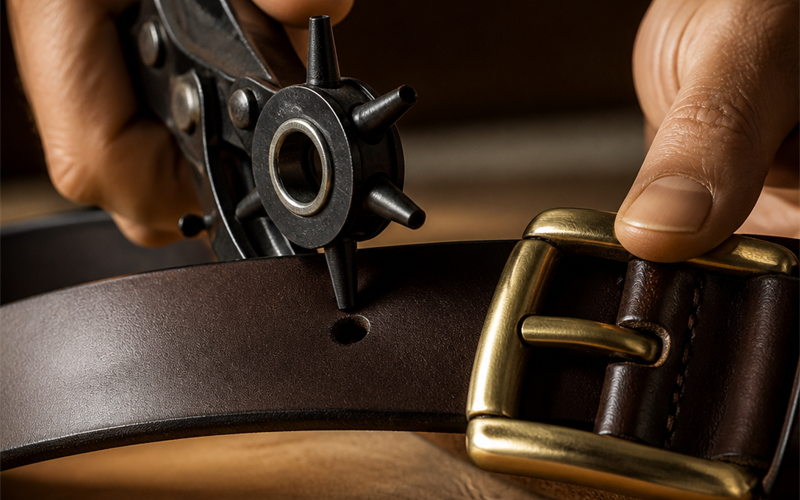
The quickest fix is to punch one or two new holes closer to the buckle with a leather hole punch, mark the spot first for accuracy, then tuck the leftover tail into the belt's keeper loop. It takes minutes and needs no buckle removal — ideal when the belt is only slightly too loose.

This is the no-commitment option. A rotary leather punch makes clean, even holes; just mark the new position about an inch from the existing hole and line it up so the belt still sits flat. The catch is the leftover tail: if adding a hole leaves an unsightly flap, secure it. As one resizing guide suggests, you can "add a keeper loop or extra ring to secure the tail end and reduce slipping," or in a pinch use a snug rubber band. Adding holes is best as a quick or temporary fix on quality leather — for a long flapping tail, shortening is the cleaner answer. For where the tail should sit, see how far should a belt extend past the buckle.
Should you cut a belt from the buckle end or the tail?
Always shorten from the buckle end, not the pointed tail end. Cutting from the buckle side preserves the belt's factory-finished tip and its evenly spaced holes, so the belt still looks and works correctly. Trimming the tail instead would destroy the finished point and throw off hole spacing.
This is the single most important rule of belt shortening, and the one most people get backwards. As a manufacturer guide states plainly, "the best way to shorten a leather belt is to cut from the buckle end, not the tail" — because the tip and holes were finished at the factory and you want to keep them. The buckle end is hidden once worn, so any imperfection there doesn't show. Remove the excess from that side and reattach the buckle, and the visible portion of the belt looks exactly as designed. Cut the tail instead and you're left with a blunt, raw end and holes that no longer line up. For more, see does belt length include buckle.
How do you permanently shorten a leather belt at home?
Try the belt on and mark how much to remove, then detach the buckle (unscrew a Chicago screw or carefully open the stitching). Trim the excess from the buckle end, re-seal the raw cut edge by beveling and burnishing it, reattach the buckle, and punch any new holes about an inch apart. Cut conservatively — you can trim more, but not add back.

Done carefully, it's a satisfying 20-minute job. First, wear the belt through your loops, pull it to your ideal tightness, and mark exactly how many inches to cut — then trim in small steps rather than one big cut, since the change is permanent. Detaching the buckle is easy if it's held by a snap or Chicago screw; a stitched buckle means picking the threads or seeing a pro. After cutting, finish the edge: a critical, often-skipped step. As the same guide warns, a raw cut edge invites fraying, so "to prevent this structural failure, you must re-seal the edge" by beveling the corners and burnishing with a damp cloth. Reattach the buckle, confirm the fit, and punch fresh holes only if needed. For how the strap is built, a belt is "a flexible band or strap, typically made of leather," so a clean cut and sealed edge keep it structurally sound.
When should you take a belt to a cobbler instead?
Take it to a cobbler when the belt is expensive or designer, has a stitched-on (non-removable) buckle, or when you'd rather not risk a permanent cut yourself. A cobbler removes the buckle, trims the strap, refinishes the edge, and reattaches everything cleanly — usually for about $5 to $40 depending on the belt.

Some belts are worth the small fee. A pricey or designer belt is not the place to practice; a slip with a knife can ruin it. Cobblers handle the tricky cases routinely and, as one guide notes, "will usually cut and refinish the strap, sometimes from the buckle end and sometimes from the tail end, depending on the fit situation and design." Their edge finishing is also cleaner than most DIY attempts, which matters on a belt you'll wear for years. Weigh the cost against the belt: a $15 cobbler job on a $300 belt is a bargain; on a $20 belt it may not be worth it. For the value math, see is it worth buying an expensive belt.
Key stat: Most quality leather belts can be shortened but never lengthened — so a too-big belt is fixable, but a too-small one usually isn't. That's why cutting from the buckle end (preserving the finished tip and hole spacing) and re-sealing the edge are the two rules that separate a clean repair from a ruined belt.
How do you fix the extra belt tail without cutting?
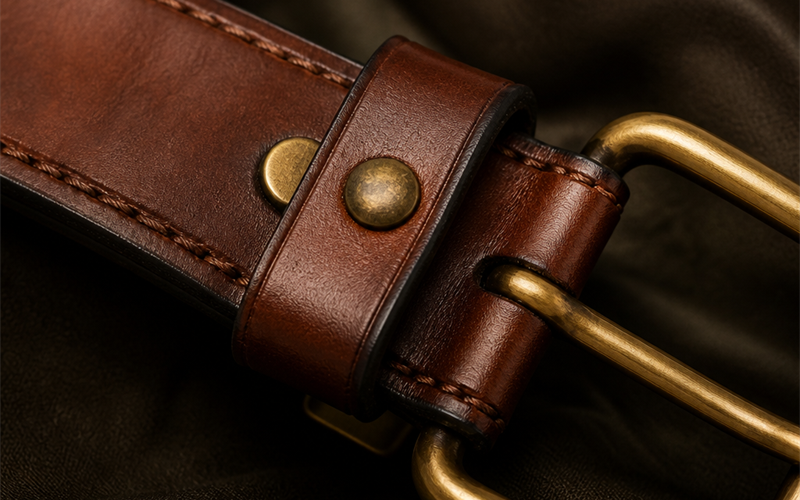
To tame a long tail without cutting, slide it through the belt's keeper loop (the small fixed loop next to the buckle), then through a second movable keeper if your belt has one. If the tail is still too long, a snug, slim belt-tail holder or a discreet rubber band keeps it flat against the belt.

Not every fix has to be permanent. Many belts come with one or two keeper loops designed exactly for this — thread the tail through both to lock it down. If your belt only has one keeper and the tail still flaps, a slim silicone or leather tail holder does the job invisibly. This no-cut approach is smart when you're between sizes or expect your waist to change, since it keeps the belt intact. But if the excess is dramatic — more than a few inches past the keeper — shortening is the better-looking long-term answer. To avoid the problem entirely, buy the right length: see should your belt be the same size as your pants.
The Bottom Line
Fixing a belt that's too big comes down to how big and how permanent you want the fix to be. A new hole and a keeper loop handle a slightly loose belt in minutes; a proper shortening — cut from the buckle end, edge re-sealed — fixes a long flapping tail for good. Send expensive, designer, or stitched-buckle belts to a cobbler for a clean job at a modest price. The one rule that never changes: most belts shorten but never lengthen, so the right size up front saves all of this. At BELTLEY, our belts are built with finished tips, even hole spacing, and sealed edges precisely so they wear and resize cleanly — and our size guide helps you nail the fit the first time. Find your length in a full-grain leather belt or an adjustable reversible belt.
Frequently Asked Questions
Q: How do I make a belt smaller without cutting it?
Punch one or two new holes closer to the buckle with a leather hole punch, then tuck the leftover tail through the belt's keeper loop. For extra length, add a slim tail holder or a snug rubber band. It's a quick, reversible fix that's ideal when the belt is only slightly too big.
Q: Should I cut a belt from the buckle end or the tip?
Always cut from the buckle end. That preserves the factory-finished pointed tip and the evenly spaced holes, so the visible part of the belt still looks and functions correctly. Cutting the tip would leave a blunt raw end and misaligned holes, ruining the belt's appearance and fit.
Q: How much does it cost to shorten a belt at a cobbler?
Usually about $5 to $40, depending on the belt and how complex the job is. A cobbler removes the buckle, trims the strap from the buckle end, refinishes the cut edge, and reattaches everything. It's well worth it for designer, expensive, or stitched-buckle belts you don't want to risk cutting yourself.
Q: Will adding holes to my belt ruin it?
Not if you do it neatly with a proper leather punch and mark the spot first. Extra holes are best as a quick or temporary fix on quality leather, though — too many can look cluttered. For a long flapping tail or a permanent fix, shortening from the buckle end looks cleaner than adding holes.
Q: Can you make a belt that's too small bigger?
Generally no. Most quality leather belts can be shortened but not lengthened, which is why a too-small belt is often unusable while a too-big one is easily fixed. When you're between sizes, it's safer to size up and shorten than to buy too small — see our size guide for the right measurement.