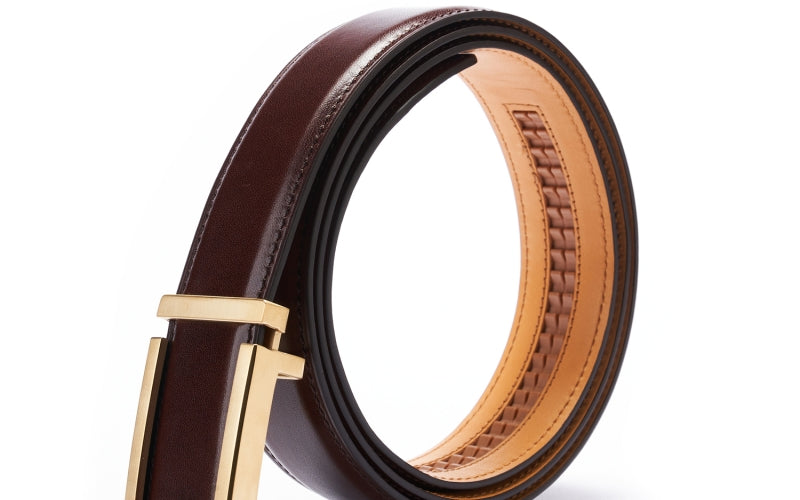
Are Luxury Calfskin Belts Worth It? Hermès vs Independent Makers
TL;DR:
- Hermès calfskin belts ($900–$5,000+) deliver elite leather, hand-finishing, and a unique resale market (70–80% retained value).
- Independent / heritage makers ($300–$700) often source from the same top-tier tanneries and offer comparable hand-finishing — minus the brand premium and resale story.
- The leather itself is usually a tie at the very top. The price gap is brand prestige, retail experience, and resale liquidity.
- Hermès earns its premium for buyers who value those three things. Independent makers earn theirs for buyers who value the craft itself.
- If you can't articulate why you specifically want Hermès, an independent maker is almost certainly the smarter purchase.
So you're staring at a $1,200 Hermès Constance and asking yourself whether it's worth it — or whether you should call your favorite independent leather workshop and order a custom calfskin belt for $400 instead. Honest question. Real answer below, with the leather, the construction, and the math broken down clean. Both can be the right call. They just answer different questions.
Hermès Money or Independent Money?
The honest fork in the road:
| Your situation | Go with |
|---|---|
| Resale liquidity is part of the purchase | Hermès — 70–80% retention is real and no independent matches it. |
| Leather quality is the whole point | Independent/DTC — often the same elite tanneries, minus the boutique ceremony. $100–$300. |
| The retail experience matters to you | Hermès — the orange box is part of what you're buying; own that honestly. |
| Want to out-material Hermès calf entirely | Genuine crocodile at $118–$289 — a hide above box calf at a tenth of Hermès croc pricing. |
The independent path: BELTLEY's calfskin and crocodile collections.
The Honest Question
The question isn't "is Hermès quality real?" (it is). The question is whether the leather and craftsmanship justify a 2–4× price premium over an independent heritage maker using the same supply chain. For some buyers, yes. For most, no. Let's work out who falls where.

This post pairs tightly with our Hermès box calf vs designer calfskin brand tax analysis (the markup math) and our 2026 calfskin belt price tiers breakdown (where each price level lives). Read those if you want the full economic picture; this post is about the luxury-end choice specifically.
What Does Hermès Actually Offer at $1,000+?
At $1,000+, Hermès delivers elite calfskin (often Annonay-sourced or equivalent), genuine hand-finishing (saddle stitching, hand-painted edges), strict quality control, and unique resale value retention. The leather and craftsmanship are real — and so is the brand-tax component of the price.
What you're actually paying for:
- Elite leather — sourced from top French tanneries.
- Hand-finishing details — saddle-stitched seams, hand-painted edges, hand-buffed surfaces.
- High rejection rates — Hermès rejects more hides than most brands.
- The orange box — packaging that itself has resale value.
- The retail experience — Paris flagship, boutique service.
- Resale liquidity — popular models retain 70–80% of retail in the secondary market.
For more context, see our complete guide to calfskin leather and why full-grain calfskin is the gold standard.
What Do Independent Makers Offer at $300–$700?
Independent and heritage leather makers offer hand-crafted calfskin belts — often from the same elite tanneries that supply Hermès — at significantly lower prices because they skip the boutique retail layer, the heavy advertising, and the brand premium. The leather quality at the top of this tier is comparable to Hermès. The craftsmanship is too.
What you typically get from an independent maker at $300–$700:
- Premium full-grain calfskin from named tanneries (Italian, French, English).
- Hand-stitched construction — often saddle stitching done by an actual craftsperson.
- Hand-burnished edges — no painted plastic finish.
- Custom options — leather color, hardware, length, sometimes monogramming.
- A real warranty — many heritage makers stand behind their work for life.
- No logo — clean, brand-neutral aesthetic.
- No resale story — but cost-per-wear is usually still excellent.
Names worth knowing in this category: Frank Clegg Leatherworks (Massachusetts), Equus Leather (UK), Tanner Bates (UK), Saddleback Leather (US, higher-tier lines), Bexar Goods (US), and smaller artisans on craft-focused marketplaces.
The Leather Quality Gap
This is where the honest answer is "smaller than you'd think."

At the very top of the market — Hermès and elite independent makers — the leather often comes from the same supply chain. Tanneries like Annonay, Haas, and the top Tuscan houses sell to multiple luxury buyers. Hermès doesn't have an exclusive on Annonay box calf. They have stricter rejection criteria, more selectivity, and more elaborate inspection — but the underlying material is accessible.
For background on the tannery supply chain, see our piece on Italian vs French calfskin tannery differences. Tanneries certified by the Leather Working Group supply most reputable luxury brands; an independent maker who names their LWG-certified tannery is sourcing from the same global pool Hermès draws from.
Where Hermès legitimately edges ahead: their internal QC rejects more pieces for cosmetic flaws, so the specific hides in finished Hermès products may be slightly more pristine than what a smaller maker can afford to reject. That's real. It's also subtle.
The Construction Gap
Both Hermès and quality independent makers do hand-finishing at the high end. The differences are at the margins.
Hermès construction typically includes:
- Saddle stitching (the two-needle hand stitch — strongest stitch in leatherwork).
- Hand-burnished or hand-painted edges (high-end products).
- Lined, multi-layer construction with internal stiffeners.
- Aged-feeling, refined finishing techniques perfected over decades.
Top independent maker construction typically includes:
- Saddle stitching (often, depending on the maker).
- Hand-burnished edges (almost always).
- Single-layer or simpler construction (less "designed").
- Direct, honest craftsmanship without elaborate finishing flourishes.
For most belts, the construction gap is small. For complex pieces like reversible belts with hidden hardware or laminated multi-layer straps, Hermès has refined details that smaller makers may not match. For a simple dress belt? You're looking at very similar craft.
The Resale Value Gap
Hermès retains 70–80% of retail value for popular models. Independent makers retain effectively nothing — there's no secondary market for unbranded handmade leather goods. This is the single biggest defensible reason to pay Hermès prices.
The math:
- $1,080 Hermès Constance, sold in 5 years at 70%: net cost = $324 over 5 years.
- $400 independent maker, sold in 5 years at 10%: net cost = $360 over 5 years.
Surprisingly close. But — and this matters — Hermès resale only works if you actually sell. If the belt sits in your closet for 20 years, the resale value evaporates from your decision math entirely. So this argument is real but conditional.
For independent makers, the value calculation is about cost-per-wear (extremely strong) and craft appreciation (you're paying the actual artisan, not a marketing department). Both are valid economics.
The Retail Experience Gap
This one is real and rarely discussed honestly.

Hermès offers a retail experience that's part of what you're buying — the Paris flagship, the orange box, the boutique service, the heritage brand association. For some buyers, that's worth a meaningful premium. For others, it's overhead they'd rather skip.
Independent makers offer a different experience: direct contact with the maker (sometimes), custom options, transparent sourcing, and the satisfaction of supporting small craft. For buyers who value those things, it's worth more than a boutique experience. Neither is universally "better" — they're different luxury models.
When Hermès Is Genuinely Worth It?
Buy Hermès if you value resale liquidity, want the brand prestige, plan to actually sell or pass the piece down, or specifically love the orange-box retail experience. Those are real, defensible reasons. Pay the premium with eyes open.
A short list of when Hermès is the right call:
- You attend events where Hermès goods are explicitly recognized and valued.
- You're buying as an investment piece with resale in mind.
- You're gifting at a level where the brand matters as much as the leather.
- You're building a permanent collection and want pieces with cultural staying power.
- You specifically love the brand's history and craftsmanship traditions.
When an Independent Maker Is the Smarter Buy?
Buy from an independent maker if you value craft over brand, want custom options, prefer direct contact with the artisan, or simply want world-class leather without paying for boutique retail and resale liquidity you won't use. For most quality-first buyers, this is the better answer.

When independent wins:
- You won't sell the belt — you'll wear it.
- You appreciate hand-craft details for their own sake.
- You want custom (color, length, hardware) options.
- You'd rather pay the artisan than the marketing department.
- You value brand-neutral aesthetics (no logo on display).
This is also where DTC brands like BELTLEY fit, though we're priced below most independent heritage makers — see our about us page for context. Our Classic Calfskin Dress Belt is in the $100–$300 DTC tier, distinct from the $300–$700 independent-maker tier, but the underlying philosophy is the same: skip the brand tax.
Notable Independent Calfskin Makers Worth Knowing
A non-exhaustive list, by country:
United Kingdom:
- Equus Leather — Yorkshire-based, bridle and calf, custom options.
- Tanner Bates — Devon-based, English heritage style.
- Settle Leather — boutique British craftsmanship.
United States:
- Frank Clegg Leatherworks — Massachusetts, fine business accessories.
- Saddleback Leather — heritage US construction (higher-tier lines).
- Bexar Goods — Texas-based artisan workshop.
Continental Europe:
- Smaller workshops in Italy and France, often supplying replacement straps for luxury buckles or making complete custom belts.
For a wider view of leather belt makers, see our piece on who makes the best leather belt.
Hermès vs Independent Maker: Side-by-Side
| Feature | Hermès | Top Independent Maker |
|---|---|---|
| Price range | $900–$5,000+ | $300–$700 |
| Leather source | Elite (Annonay-level) | Often same tier or close |
| Construction | Hand-finished, refined | Hand-finished, simpler |
| Customization | Limited | Often extensive |
| Brand visibility | High (H buckle) | None (typically unbranded) |
| Resale value | 70–80% retail | ~0–10% retail |
| Retail experience | Boutique, premium | Direct with maker |
| Buyer wins on | Prestige + resale | Craft + value |
| Wait time | In-stock to months | Often custom-order, weeks |
| Right buyer | Resale-conscious / brand-focused | Craft-focused / value-focused |
What I'd Personally Buy
For most quality-first buyers, an independent maker is the smarter call. You get the same leather, comparable craft, custom options, and roughly half the price of Hermès. The only reason to pay Hermès prices is if you specifically value the brand, the orange box, or the resale market. If you can't name one of those three reasons confidently, save the money.

If you want a clear sequence:
- Daily-driver dress belt → DTC tier ($100–$148, BELTLEY range).
- Heritage-grade upgrade → independent maker tier ($300–$700).
- Brand-prestige / resale piece → Hermès tier ($1,000+).
The independent-maker tier is genuinely underrated in 2026. It's where serious leather buyers shop when they've graduated from DTC but haven't decided that brand prestige is worth a 3x premium.
The Bottom Line
The "is Hermès worth it" question doesn't have a universal answer because it depends on which luxury you actually value. The leather quality gap between Hermès and a top independent maker is small. The construction gap is small-to-modest. The brand prestige and resale gaps are large and defensible — but only for buyers who actually use them. For everyone else, an independent maker delivers 90% of the experience at 40% of the cost. At BELTLEY we built our pricing one tier below independent heritage makers because we wanted the same honest-craft philosophy at a more accessible price point — full-grain calfskin, real construction, real warranty, no logo tax. Whichever tier matches your priorities, the right answer is the one where you can articulate exactly why you're paying that price. If the answer is "I just want the leather," skip Hermès. If the answer is "I want the leather and the orange box," Hermès earns its premium.
Frequently Asked Questions
Q: Is the leather in an Hermès belt actually better than in an independent maker's belt?
At the very top of the market, often not by much — the elite tanneries that supply Hermès also supply other luxury and heritage makers. Hermès has stricter rejection rates and more refined finishing, but the underlying leather is comparable.
Q: What independent leather makers offer Hermès-quality calfskin?
Equus Leather, Tanner Bates, Frank Clegg Leatherworks, and several artisan workshops in Italy and France produce calfskin belts at heritage-craft quality. Prices typically run $300–$700 for hand-stitched work with named tannery sourcing.
Q: Will an independent maker's belt last as long as Hermès?
Yes — assuming both are full-grain calfskin with proper construction. The leather and craft determine lifespan, and quality independent makers match Hermès on both. With care, either belt easily clears 20 years.
Q: Why does Hermès keep its resale value when independent makers don't?
Brand demand and recognition. Hermès has a global resale market because the brand is universally recognized as luxury. Independent makers, however excellent, don't have brand recognition outside their immediate customer base — so resale value is minimal.
Q: What's the cost-per-wear difference between Hermès and an independent maker?
A $400 independent belt worn 200 days a year for 10 years = $0.20/wear. A $1,200 Hermès worn the same way = $0.60/wear. If you sell the Hermès at 70% after 10 years, it drops to ~$0.18/wear. Roughly equivalent — but only if you actually sell.
%20deliver%20elite%20leather,%20hand-finishing,%20and%20a%20unique%20resale%20market%20(70%E2%80%9380%25%20retained%20value).%0A%0AIndependent%20/%20heritage%20makers%C2%A0($300%E2%80%93$700)%20often%20source%20from...)