Can You Wear a Calfskin Belt in the Rain? What Actually Happens
TL;DR:
- Yes, you can wear a calfskin belt in light rain — it won't ruin the leather.
- Heavy soaking, full submersion, or repeated drenching will damage the leather over time.
- If it gets wet: air-dry slowly at room temperature, never near heat. Don't use a hair dryer.
- Water rings and color changes are reversible with proper conditioning after drying.
- A water-repellent spray adds protection but slightly changes the leather's look — your call.
The rain question gets asked a lot. You've spent real money on a calfskin belt, the forecast is wet, and the internet is full of dramatic warnings about leather and water. Here's the honest answer: calfskin handles rain better than people think, as long as you don't soak it and you dry it correctly.
This guide covers what happens when calfskin meets water, when to worry, and how to dry a wet belt without making it worse. If you got caught in a downpour with your favorite calfskin belt, this is the recovery manual.
Can calfskin leather actually get wet without damage?
Yes — calfskin can get lightly wet without damage. Light rain, mist, and accidental splashes won't ruin a quality calfskin belt. Leather is naturally somewhat water-resistant because of the conditioning oils added during tannage. The damage starts when the leather gets fully saturated and then dries too quickly, which strips the natural oils and leaves the hide stiff, cracked, or discolored.

What light rain does (mostly fine):
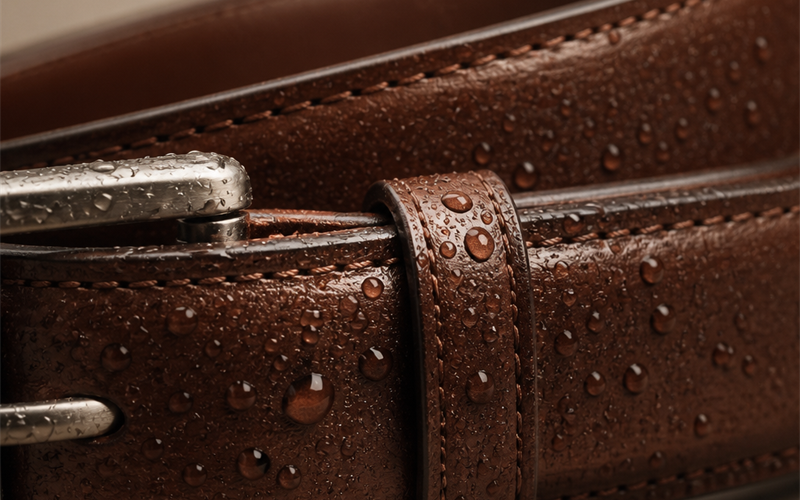
- Surface beads up briefly, then absorbs
- Color may darken slightly when wet — returns to normal after drying
- No structural damage if dried properly
What heavy rain / soaking does (bad):
- Saturates the leather all the way through
- Strips natural oils as it dries
- Can leave water rings or uneven color
- Repeated cycles cause cracking and stiffness over years
Britannica's leather entry confirms that leather's structure includes natural oils that resist water absorption — but only up to a point. Saturation is the line.
What happens to calfskin when it gets soaked?
When calfskin gets fully soaked, water displaces the natural oils inside the hide. The leather temporarily becomes more pliable (you might even notice it stretches slightly). As it dries, the oils that were displaced don't always return to their original positions — leaving dry spots, stiffness, and sometimes visible water rings or "tide lines" where the water front stopped advancing through the leather.

The damage timeline:
- Immediately: Belt feels soft, possibly heavier, slightly darker
- As it dries (1–6 hours): Color returns to normal, but tide lines may form at the edges of the wet area
- After drying (24+ hours): Leather may feel stiffer than before; surface may show water rings
- Repeated soakings over time: Cracking, color loss, fiber breakdown
The good news: most of this is reversible with proper drying technique and a light conditioning after the belt is fully dry. We covered the conditioning process in our calfskin care 101 post.
How do you dry a wet calfskin belt correctly?
Air-dry a wet calfskin belt slowly at room temperature, laid flat or hung loosely. Never use direct heat, never use a hair dryer, never put it in front of a fire or on a radiator. Heat dries the leather too fast and causes irreversible cracking. The slower the drying, the better the leather recovers.
The right drying process:
- Blot, don't rub. Use a clean, dry, soft cloth to gently absorb surface water. Press, don't drag.
- Lay flat or hang loosely at room temperature, away from direct sunlight and heat sources.
- Wait at least 24 hours before wearing again, even if the belt feels dry. Internal moisture takes time to evaporate.
- Condition lightly once dry. A small amount of leather conditioner (calfskin-appropriate, no mink oil) restores oils displaced by water.
- Reshape if needed. If the belt curled, gently flatten and weight it lightly while drying.
What to absolutely avoid:
- Hair dryers, ovens, radiators — heat causes cracking
- Direct sunlight — UV fades dye and dries leather unevenly
- Wringing or twisting — distorts the strap permanently
- Conditioning while still wet — traps moisture inside the leather
Carl Friedrik's care content and most quality leather makers all converge on the same advice: slow, patient drying is the only correct approach.
Should you use a waterproofing spray on a calfskin belt?
A waterproofing or water-repellent spray can extend a calfskin belt's tolerance to wet weather, but with two caveats: it slightly darkens the leather (sometimes permanently), and it can reduce the belt's natural breathability over time. For dress belts where appearance matters, most owners skip the spray and just avoid heavy rain. For everyday casual belts, a light beeswax-based spray is a reasonable add-on.

Sprays worth considering:
- Beeswax-based protectors (Renapur, Saphir Beeswax) — light, traditional, slightly darkens
- Silicone-free water repellents — purpose-built for fine leather
- Saphir Renovateur — light conditioning with mild water resistance
Sprays to avoid:
- Silicone-based waterproofing — clogs leather pores, prevents conditioning later
- Heavy mink-oil treatments — over-saturates calfskin
- Generic shoe waterproofing — formulated for boot leather, too heavy for calf
Always test on a small inconspicuous area first. The "this will look the same after I spray it" assumption is the #1 source of regret in leather care.
Are water rings on a calfskin belt permanent?
Water rings are often fixable, not permanent. A light water ring usually disappears after a full conditioning treatment because the conditioner re-distributes the leather's natural oils across the surface. Severe water damage (deep tide lines, white salt deposits, cracked surface) is harder to fully reverse, but a skilled leather repair shop can often blend the damage to acceptable levels.

The fix process for water rings:
- Make sure the belt is fully dry (24+ hours after exposure)
- Apply a small amount of calfskin-appropriate conditioner
- Work it in evenly across the entire belt, not just the ring
- Buff lightly with a soft cloth
- Allow 12–24 hours to absorb
- Repeat if needed
What this doesn't fix:
- Salt stains from sea water (requires specialized cleaning)
- Mold or mildew (requires antifungal treatment)
- Deep dye loss in faded patches (requires re-dyeing by a pro)
We covered authentication and quality recovery in our 4 quality markers of a calfskin belt post — quality calfskin is much easier to recover from water damage than cheap split leather, which often fails permanently after one heavy soaking.
What about salt water, snow, and sweat?
Salt water is the worst — salt crystals left in the leather as it dries can dramatically accelerate cracking and dye loss. Snow is essentially fresh water but melts slowly, so the belt can get more saturated than you realize. Sweat is mildly acidic and slightly salty, but in normal amounts it just contributes to natural patina rather than damage.

If your belt gets exposed to:
- Salt water: Rinse gently with fresh water as soon as possible, then dry slowly. Skip the salt rinse and the leather will crack faster.
- Snow: Wipe off any clinging snow immediately, then let the belt air-dry at room temperature.
- Sweat: Wipe down with a dry cloth at the end of the day in hot weather. Don't soak or wash.
This is one area where a quality full-grain calfskin belt outperforms cheaper leathers significantly. The tighter fiber structure resists salt and sweat penetration better than coarser hides — meaning fewer mid-life cracking issues from accumulated minor exposures.
The Bottom Line
You can wear a calfskin belt in the rain. Light rain is fine. Heavy rain isn't ideal but won't ruin the belt if you dry it correctly afterward. The actual damage comes from heat-drying a soaked belt — hair dryers, radiators, fireplaces — which strips oils and causes cracking. The fix is patience: air-dry slowly, condition lightly after, repeat as needed.
At BELTLEY, our calfskin belts are made from full-grain hides with proper tannery finishing, which means they handle moderate weather without complaint. Light rain on the commute? No problem. Caught in a downpour? Dry it slowly, condition it lightly, and the belt recovers. The 10-year warranty doesn't cover swimming in your belt — but normal weather wear is exactly the kind of life calfskin is built to handle.
Find a belt built to survive your actual weather in our calfskin belt collection.
Frequently Asked Questions
Q: Can a calfskin belt be ruined by a single rainstorm?
Rarely — only if it gets fully soaked and then dried too fast with heat. A single light-to-moderate rain caught on your commute won't ruin a quality calfskin belt as long as you let it air-dry properly at room temperature afterward.
Q: Should I take my belt off if I get caught in rain?
Not necessary for light rain. For heavy rain, taking the belt off and stashing it in a coat pocket or bag is a reasonable move. Don't leave a wet belt buckled tight around a wet pair of pants for hours — that's how creases and tide lines form.
Q: How long should I let a wet calfskin belt dry?
At least 24 hours at room temperature, ideally 48. Even when the surface feels dry, the inner leather can still hold moisture. Condition only after the belt is fully dry.
Q: Is waterproofing spray worth using?
For everyday wet-climate wear, yes — a beeswax-based protector adds useful resistance. For dress belts where finish matters, most owners skip it. Test on a small area first.
Q: Will rain leave permanent marks on calfskin?
Light rain rarely leaves visible damage. Heavy rain can leave water rings or tide lines, but these are usually reversible with proper drying and conditioning afterward.