Best Belt for Doctors and Medical Professionals: A Complete Guide
TL;DR:
- Doctors in professional dress need a full-grain leather belt, 32–35mm wide, in black or dark brown — smooth finish, minimal buckle
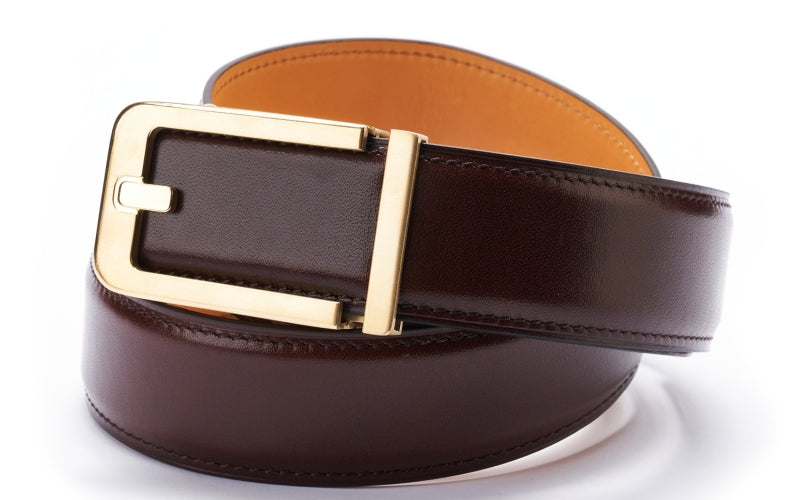
- For long clinical shifts, a ratchet (automatic) buckle belt offers micro-adjustment that a prong-hole belt cannot
- Leather is the correct material for professional contexts; it wipes clean and does not harbor bacteria the way porous fabric belts do
A doctor's wardrobe gets scrutinized from two directions: by hospital dress policies that set hygiene and professionalism standards, and by patients who form trust and competence impressions within seconds. The belt sits at the intersection of both concerns. It must be professional enough for patient-facing rounds, practical enough to survive a twelve-hour shift on your feet, and easy enough to clean to meet infection control expectations. This guide covers every scenario — clinical rounds, outpatient clinics, conferences, and off-ward professional meetings — with specific recommendations for each.
What Makes a Belt "Medical Professional Grade"?
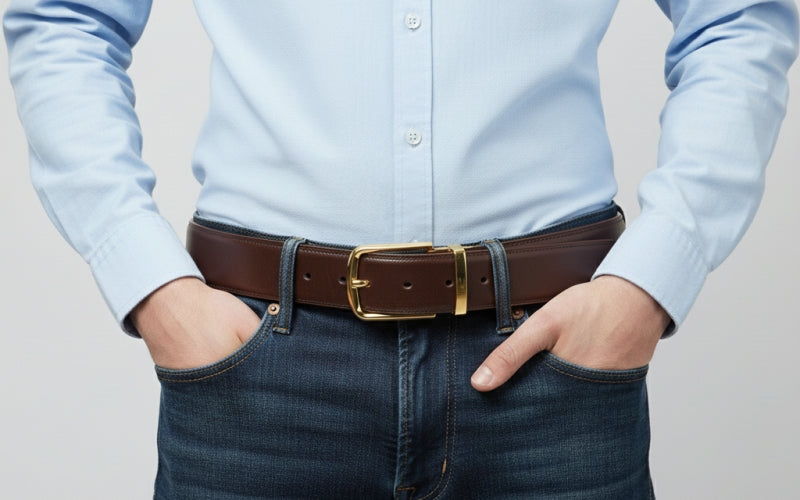
The best belt for a doctor combines three qualities: professional appearance for patient-facing settings, durability under long-shift conditions, and surface hygiene. This means full-grain smooth leather (not fabric, not porous suede), a 32–35mm width that fits dress trouser loops, a low-profile buckle without protruding hardware, and a finish that can be wiped clean.

No single belt works identically across every medical context, but full-grain leather in black or dark brown covers the widest range. It reads as professional in attending rounds and outpatient clinics, survives years of daily wear without cracking, and cleans easily with a damp cloth. Browse full-grain leather belts to understand the material standard — these are the belts built to outlast medical training programs.
The Two Belt Contexts Every Doctor Navigates
Most belt guides treat medical professionals as a single category. In practice, doctors wear two distinct types of clothing, each with different belt requirements:
| Context | Typical Outfit | Belt Requirement |
|---|---|---|
| Clinical / Inpatient rounds | Dress pants + white coat, or scrubs | Slim (32–35mm), smooth leather, minimal buckle |
| Outpatient clinic | Dress pants + shirt, white coat optional | Same as above, slightly more color flexibility |
| Hospital meetings / admin | Business casual or business formal | Standard dress belt rules apply |
| Medical conferences | Business formal | Conservative dress belt — black or dark brown |
| Scrubs-only settings | Scrubs with drawstring waist | Belt not worn or not visible |
The scrubs context is the exception: when you're wearing scrubs with a drawstring waist, the belt simply isn't part of the equation. The belt becomes relevant the moment you're in dress pants — which for many attending physicians, residents in clinic, and department heads is most of their working day.
According to Stanford Medical School's clinical dress code guidelines, professional attire appropriate for patient care includes business-appropriate clothing that conveys professionalism and does not undermine patient trust. The belt is part of that overall coherence. See how to match a belt with your work outfit for the broader coordination rules that apply in these settings.
What Is the Best Belt Material for Doctors?
Full-grain leather is the best material for a doctor's belt. It is non-porous at the surface, wipes clean with a damp cloth, does not absorb odors, and maintains its appearance under years of daily wear. Unlike fabric, canvas, or braided belts, smooth full-grain leather does not trap bacteria in its weave structure.

Expert guidance on healthcare personnel attire published in the American Journal of Infection Control (PMC) notes that healthcare accessories should be easy to clean and should not serve as fomites — surfaces that transfer pathogens between environments. A smooth-finished full-grain leather belt can be wiped down with standard hospital-grade disinfectant wipes without surface degradation, unlike fabric belts that absorb moisture and cannot be reliably sanitized.
Avoid these materials in clinical settings:
- Suede or nubuck — porous, absorbs moisture and odors, cannot be wiped clean
- Braided leather — textured open weave traps debris and bacteria
- Canvas or woven fabric — not wipeable, absorbs contaminants
- Bonded or genuine leather — starts peeling within months; cracked leather surfaces harbor bacteria
The full-grain vs. genuine leather distinction matters particularly here. A full-grain leather belt versus a genuine leather belt is the difference between a sealed surface and a degrading one.
Ratchet Belt vs. Leather Belt: Which Is Better for Long Medical Shifts?
For long clinical shifts, a ratchet (automatic) buckle belt offers a measurable practical advantage over a traditional prong-hole belt. Ratchet belts adjust in 1/4-inch (6mm) increments across the full length of the strap, rather than locking into fixed 1-inch holes. This matters during a 12-hour shift where your waist size changes from sitting, standing, eating, and physical activity.

Traditional prong-hole belts lock you into one of five fixed positions. If your waist sits between two holes — which it often does during a long shift — you end up either slightly too tight or slightly too loose all day. A ratchet belt eliminates this entirely: you set the exact fit at the start of your shift and adjust instantly when needed.
Research on physician comfort and productivity during long clinical shifts confirms that comfort in professional attire directly correlates with focus and performance. A belt that creates pressure points or requires repeated readjustment is a minor but real ergonomic friction point across a twelve-hour day. BELTLEY's ratchet buckle belts use full-grain leather straps with stainless steel ratchet mechanisms — combining the hygiene and appearance benefits of leather with the fit precision that long shifts require.
The visual difference at the buckle is minimal: a ratchet buckle looks nearly identical to a standard rectangular plaque buckle. Patients and colleagues won't notice. You will.
What Belt Width Works Best for Hospital Dress Pants?
The correct belt width for medical professional dress pants is 32–35mm (1.25"–1.38"). This is the standard dress trouser loop width — narrow enough for a clean, tailored appearance, wide enough to anchor the belt securely through a full day of movement.
A wider belt (38–40mm) is a casual or workwear item. It will not thread cleanly through dress trouser loops and will look visually heavy against tailored trousers. A narrower belt (under 30mm) is a fashion item, appropriate for formal women's attire but undersized for a standard men's dress trouser.
The Ultimate Guide to Standard Belt Width in MM covers the full breakdown. For hospital settings, 35mm is the most versatile single choice — it fits dress trouser loops without forcing, works with both formal and business casual trousers, and maintains a clean professional profile under a white coat.
Should Doctors Worry About Belt Hygiene and Infection Control?
Smooth leather belts are low-risk from an infection control standpoint and do not require any special precautions beyond standard professional clothing hygiene. The belt is not a high-touch surface in patient contact — hands don't rest on it, patients don't contact it, and it sits under a white coat in most clinical settings.

The NIH-published expert consensus on healthcare personnel attire focuses infection control attention on white coat sleeves, ties, and other items that directly contact patients or high-touch surfaces. Belts are not identified as a significant vector in any major infection control guideline. The "bare below the elbows" policy, adopted in many UK and some US hospitals, addresses sleeve length — not waist accessories.
The practical hygiene recommendation is straightforward: keep the belt surface clean (a monthly wipe-down with a damp cloth is sufficient for most clinical environments), condition the leather every few months to prevent cracking, and replace the belt if the surface becomes visibly degraded. Full-grain leather that is properly maintained will never develop the cracked, porous surface that could theoretically trap bacteria. BELTLEY's leather care guide covers the full maintenance routine.
Best Belt for Female Doctors and Medical Professionals
Female physicians in professional dress should follow the same core principles — smooth full-grain leather, color-matched to shoes, minimal buckle — at a narrower width of 25–30mm (1"–1.18"). The narrower profile suits the belt loops on women's dress trousers and skirts, and maintains proportion under a white coat or blazer.

For female attending physicians who wear belted dresses or use a belt as a waist-defining element over a white coat, the belt becomes a more visible styling component. In these cases, a slim black leather belt in a smooth finish is the most conservative and versatile choice — appropriate from morning rounds through afternoon outpatient clinic without adjustment.
Corporette's guide to fashion for female doctors notes that female physicians face an additional challenge: maintaining professional authority in environments where attire choices are more varied and more scrutinized than for male colleagues. A well-chosen belt — slim, quality leather, color-coordinated — contributes to the polished coherence that supports professional credibility.
The Bottom Line
The best belt for doctors and medical professionals is a smooth full-grain leather belt, 32–35mm wide, black or dark brown, with a minimal stainless steel buckle. For long clinical shifts, a ratchet buckle mechanism adds practical comfort without any visible compromise to professional appearance. The material choice matters both aesthetically and hygienically — smooth full-grain leather wipes clean, ages well, and never develops the cracked surface that porous alternatives do.
A doctor's belt is worn in front of patients every day. It is a small detail that contributes to the overall professional presence that patients associate with competence and trust. BELTLEY's dress belt collection is built to exactly this standard — full-grain leather, stainless steel hardware, handcrafted finish, and a 10-year warranty. Free worldwide shipping means it arrives faster than your next set of rounds.
Frequently Asked Questions
Q: What is the best belt for a doctor to wear at work?
The best belt for a doctor is a smooth full-grain leather belt, 32–35mm (1.25"–1.38") wide, in black or dark brown, with a slim rectangular buckle. For long shifts, a ratchet buckle provides better fit adjustment throughout the day. Avoid fabric, suede, or braided belts in clinical settings — they cannot be wiped clean and do not hold professional appearance over extended wear.
Q: Are leather belts hygienic for hospital environments?
Yes. Smooth full-grain leather is non-porous, can be wiped clean with a damp cloth or disinfectant wipe, and is not identified as a significant infection vector in any major hospital dress code guideline. Cracked or degraded leather is different — a belt in poor condition should be replaced. A well-maintained full-grain belt poses no hygiene concern in standard clinical settings.
Q: Should doctors wear ratchet belts or traditional prong belts?
Ratchet belts offer a practical advantage for long clinical shifts because they adjust in small increments across the full belt length, rather than locking into fixed holes one inch apart. This allows a precise, comfortable fit throughout a twelve-hour shift. Visually, a ratchet buckle is nearly indistinguishable from a standard rectangular plaque buckle.
Q: What belt width should a physician wear with dress pants?
32–35mm (1.25"–1.38") is the correct belt width for professional dress trousers in medical settings. This width fits standard dress trouser belt loops cleanly and maintains a tailored appearance under a white coat or blazer. A 38mm or wider belt is a casual item that does not belong with formal hospital attire.
Q: Do female doctors need to wear a belt at work?
Not always. Female physicians in scrubs or wearing self-supporting tailored trousers don't require a belt. When wearing dress pants, a fitted skirt, or a belted dress in clinical or professional settings, a slim belt (25–30mm) in smooth black or dark brown leather that matches shoes is the correct choice. A belt worn over a white coat as a waist-defining element should be narrow and understated.
%20buckle%C2%A0bel...)