What Belt Should an Engineer Wear to the Office?
TL;DR:
- Engineering dress codes range from jeans-daily (tech startups) to business casual (civil/consulting firms) — the belt should match the actual culture, not an imagined standard
- For business casual engineering offices: full-grain leather, 35–38mm, brown or black, matched to shoes
- Context shifts everything: the belt for a regular desk day is different from a client presentation or a site visit
Engineering offices sit in a unique cultural middle ground. They're more casual than law firms and investment banks, more varied than any single dress code captures, and more context-dependent than most guides acknowledge. A software engineer at a 40-person startup and a civil engineering project manager at a 2,000-person infrastructure firm both call themselves engineers — and they wear completely different things to work. Getting the belt right means understanding which engineering world you actually inhabit, and what each context within that world requires.
What Belt Should an Engineer Wear to the Office?
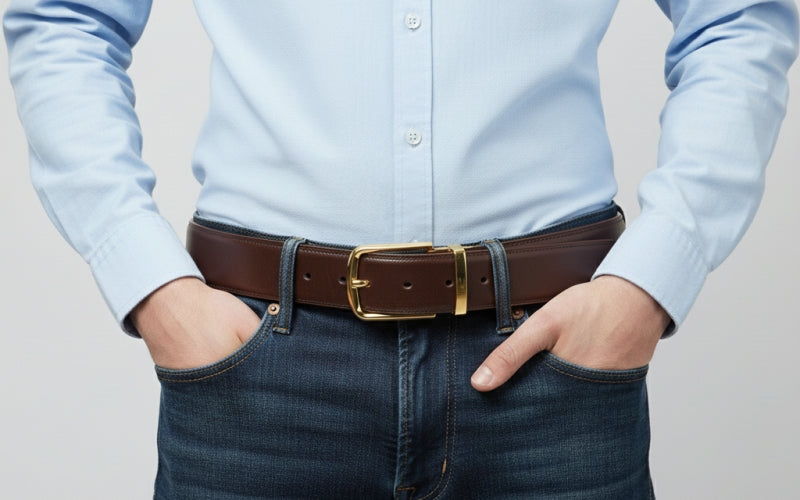
For most engineering offices — which operate on business casual dress codes — the right belt is a full-grain leather belt, 35–38mm wide, in brown or black, matched to shoes. This covers the majority of engineering work environments: tech companies, civil and structural firms, mechanical and aerospace contractors, and consulting engineers. Narrower for more formal client-facing roles; wider for casual tech environments.

The match-to-shoes rule applies regardless of discipline. Penn State's Engineering Career Services dress guide specifically notes that belts should coordinate with shoe color as a baseline of professional dress — a standard that holds from a startup standup meeting to a client site walkthrough. For the full color-coordination logic, see how to match a belt with your work outfit.
Belt by Engineering Discipline and Office Culture
The most useful lens isn't "engineer" — it's the specific culture of your engineering environment. These vary more than most professions:

| Engineering Environment | Typical Dress Code | Belt Recommendation | Width |
|---|---|---|---|
| Software / Tech startup | Casual to smart-casual | Dark brown or black leather, or quality canvas | 35–38mm |
| Big Tech (FAANG-adjacent) | Smart-casual | Full-grain leather, brown or black | 35–38mm |
| Civil / Structural firm | Business casual | Full-grain leather, black or brown | 35mm |
| Mechanical / Aerospace | Business casual | Full-grain leather, brown or black | 35–38mm |
| Engineering consulting | Business casual to professional | Slim dress belt, black or dark brown | 32–35mm |
| Government / Defense contractor | Business casual to professional | Conservative leather belt, black | 32–35mm |
| Client-facing project manager | Professional | Slim leather dress belt, black | 32–35mm |
According to the Engineering Management Institute's career development research, how engineers dress significantly affects how colleagues and clients perceive their competence and leadership potential — particularly at the transition from individual contributor to manager. The belt doesn't make or break that transition, but it's part of the coherent professional signal that does.
What Belt Width Is Right for Engineering Business Casual?
For engineering business casual — the most common office standard across disciplines — 35mm (1.38 inches) is the single most versatile width. It threads cleanly through chino and dress trouser loops, looks proportional with both button-down shirts and blazers, and reads professional without being stiff.
Software engineers in casual tech environments who regularly wear dark jeans to the office can go up to 38mm (1.5 inches) — the standard width for jeans belt loops. A quality leather belt at 38mm is the rare accessory that works with both dark jeans on a Tuesday and chinos for a company all-hands. Going narrower than 32mm in most engineering offices looks underdressed; wider than 40mm looks like workwear rather than office attire.
Oregon State's EECS department business casual guide notes that business casual in tech and engineering contexts means "neat, clean, and professional without being formal" — the belt should fit that same brief. See The Ultimate Guide to Standard Belt Width in MM for the complete width-to-context breakdown.
Does Belt Quality Actually Matter in an Engineering Office?
Yes — for a specific reason that's different from law or finance. Engineering cultures tend to respect function over display. A cheap belt that peels is noticed not as a status signal but as a quality control failure — which is an uncomfortable irony in any profession built around material specifications and tolerances.

DigitalDefynd's research on software engineer dress standards notes that tech professionals should choose quality over quantity in accessories — fewer items, better materials — because tech culture rewards substance and penalizes perceived superficiality. A full-grain leather belt fits this value system exactly: it's not flashy, it's not logo-forward, and it demonstrably performs better than cheaper alternatives over years of daily use.
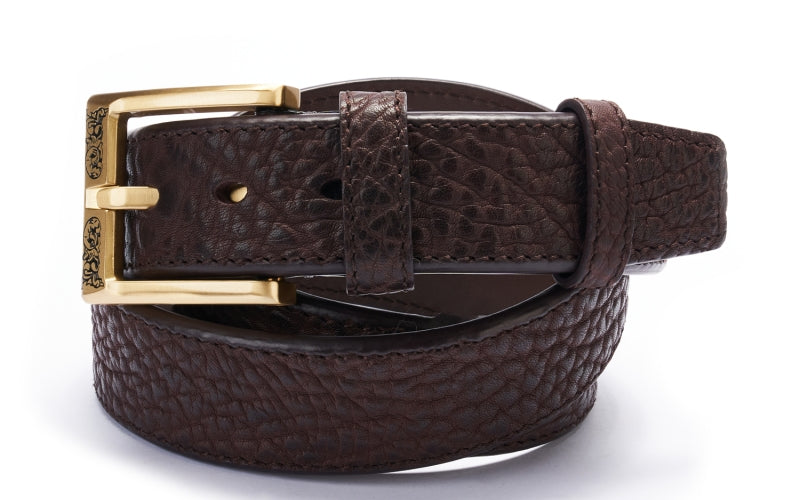
The material distinction that matters is full-grain versus genuine leather. Full-grain leather is the outermost, densest layer of the hide — it does not crack, peel, or degrade under daily wear. Genuine leather, made from lower hide layers and coated with artificial finish, begins to fail at stress points (the prong hole, the buckle bar) within months. In an engineering office where you're in the same belt five days a week, that difference shows by year two. Browse full-grain leather belts to understand the material standard.
What Belt for Client Meetings and Presentations?
Client meetings represent the one context in most engineering careers where the dress standard shifts up — sometimes significantly. A civil engineering firm presenting to a municipal client, a mechanical contractor in a pre-award meeting, or a software architect presenting to enterprise procurement all operate in environments where business formal or upper business casual is expected.

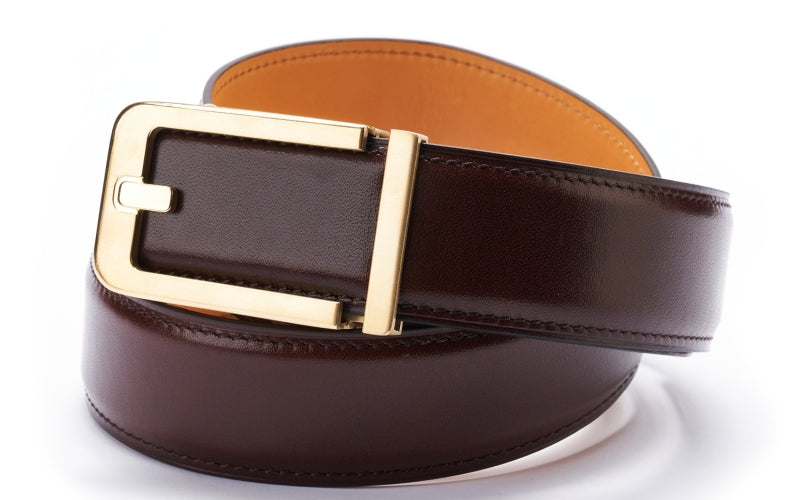
In these contexts, the belt moves from a background element to part of a coherent formal outfit. The right choice is a slim dress belt — 32–35mm, smooth full-grain leather, black for charcoal and navy suits, dark brown for tan and medium grey — with a slim rectangular plaque buckle. No canvas, no texture, no statement hardware.
The ASCE's guidance on civil engineering professional attire notes that engineers meeting with clients or presenting to stakeholders should dress to match the client's expectations, not the office default. A municipality client may expect a formal suit; a construction site client may expect a clean business casual look. Understanding the difference between a dress belt and a casual belt makes switching between these contexts seamless.
What Belt for a Field Visit or Site Inspection?
For field visits, site inspections, and construction walkthroughs, the belt priority shifts entirely from professional appearance to practical durability. A leather dress belt does not belong on a construction site — it gets dusty, scratched, and exposed to conditions that degrade fine leather quickly.
The practical options for site visits:
- A second, heavier-duty leather belt at 38–40mm — full-grain or thick bridle leather — that you keep specifically for field work
- A heavy canvas or nylon webbing belt with a sturdy metal buckle, appropriate for work trousers and steel-toed boots
- Jeans with a 38mm leather belt if the site visit is more walkthrough than active construction
Most engineers who move between office and site regularly maintain two belts: one dress or business casual belt for the office, one heavier belt for field contexts. The 1.5-inch leather belt collection at 38mm covers the middle ground — professional enough for a casual office, substantial enough for an outdoor site visit without active construction work.
What Belt for Female Engineers?
Female engineers navigate the same discipline-based variation as male colleagues, with the additional consideration that belts are often a more visible styling element in women's work outfits — used to define waist proportion or add structure to a blouse-and-trouser combination.

High Latitude Style's dress code guide for female engineers recommends building a professional wardrobe around quality neutral pieces that work across office and site contexts — the belt included. For business casual engineering offices, a 25–35mm smooth leather belt in black or dark brown, matched to shoes, handles the full range of office-day outfits. For more formal client contexts, a narrower belt at 25–28mm under a blazer reads as polished and intentional.
Browse women's belts by width and color for options calibrated to professional engineering contexts — not fashion offices.
The Bottom Line
The right belt for an engineer depends on three things: the engineering culture (tech startup versus consulting firm), the specific context (desk day versus client meeting versus site visit), and the trousers being worn. For most engineering business casual environments, a full-grain leather belt at 35–38mm in brown or black is the single most versatile choice — it handles daily desk work, scales up for client meetings, and looks as deliberate as the engineering behind the projects you work on.
Engineers, almost by definition, are people who value specs and performance over marketing. A full-grain leather belt with a stainless steel buckle is the accessory equivalent of that mindset — built to a specific standard, performs as claimed, lasts for a decade. BELTLEY's casual belt and dress belt collections cover both ends of the engineering dress spectrum, with free worldwide shipping and a 10-year warranty.
Frequently Asked Questions
Q: Do engineers need to wear a belt to the office?
It depends on the dress code. Engineers in business casual and business professional environments are expected to wear a belt with dress trousers or chinos if the trousers have belt loops. Engineers in tech startups wearing jeans with elastic or drawstring waists may not need one. When in doubt, a belt always adds to rather than detracts from professional appearance.
Q: What color belt should a software engineer wear?
Dark brown is the most versatile first choice for software engineers, who typically work in casual-to-smart-casual environments where dark jeans or chinos are common. Brown leather reads as warm and intentional without being formal. Black is correct for more conservative engineering firms, formal client meetings, and any outfit built around a navy or charcoal suit.
Q: What belt width fits jeans for engineering casual Fridays?
38mm (1.5 inches) fits standard jeans belt loops cleanly. This is the most common casual belt width. Go for a quality full-grain leather belt at 38mm rather than a canvas or fabric belt — it works equally well with jeans and chinos, so it becomes a single belt that covers both casual and business casual contexts.
Q: What should an engineer wear to a job interview?
For an engineering job interview, dress one level above the company's daily standard. If the office is business casual, wear business professional. If the office is casual, wear business casual. A slim black leather dress belt at 32–35mm, matched to black dress shoes, is always correct for interview settings regardless of discipline.
Q: Does a belt matter for a field site visit?
On a working construction or field site, a dress belt is impractical and will be damaged by dust, debris, and active movement. Use a heavier leather belt at 38–40mm or a durable webbing belt with work trousers and safety boots. Keep your office belt for the office and maintain a separate belt for field contexts.
%20to%20business%20casual%20(civil/consulting%20firms)%20%E2%80%94%20the%20belt%20should%20match%20the%20actual%20culture,%20not%20an%20imagined%20standard%0AFor%20business%20...)