Chef Belt Guide: Kitchen-Appropriate Options for Every Context
TL;DR:
- During active kitchen service the belt is covered by the apron — comfort and durability under heat and movement are the priorities
- For dining room appearances and executive roles, the belt becomes visible — full-grain leather in black or dark brown is the correct call
- Leather is kitchen-appropriate when properly maintained; full-grain is the only grade that resists the grease and moisture of a working kitchen without degrading
A professional kitchen is one of the most physically demanding work environments for clothing. Heat, grease, moisture, long shifts, constant movement — every item a chef wears takes punishment that office clothing never faces. The belt is no exception. But unlike most kitchen clothing guides, which cover chef coats and aprons in detail, the belt is almost always left out. This guide fills that gap: what to wear during active service, what to wear when you step into the dining room, and what an executive chef needs for front-facing professional work.
Which Kitchen Context Are You Buying For?
A chef's belt has three different jobs:
| Your situation | Go with |
|---|---|
| Line service, under the apron | Comfort and heat-tolerance: flexible full-grain, 1.5", flat buckle — nobody sees it, your hips feel it. |
| Dining-room walkthroughs | Visible now: clean black or espresso full-grain that matches the chef-whites polish. |
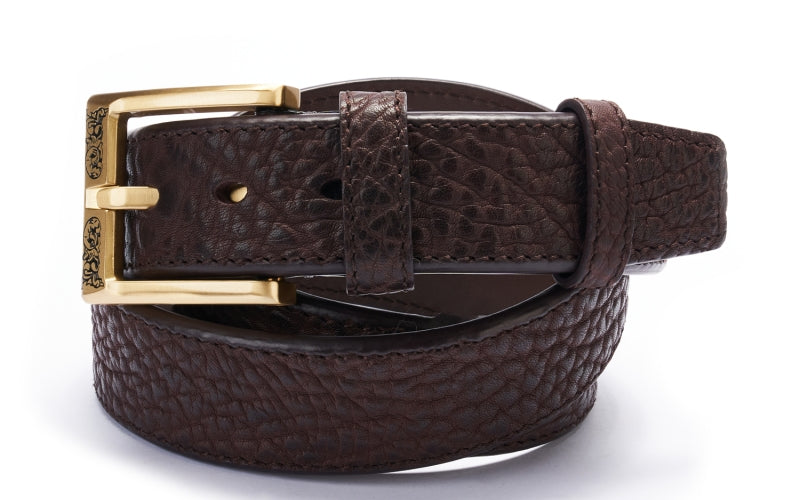
| Executive chef, owner meetings | Dress-belt rules apply — and a croc strap suits the toque-level gravitas. $118–$289. |
| Grease-soaked belts keep dying | Full-grain is the only grade that survives kitchen humidity — and wipe it down weekly like a knife. |
Kitchen-tough, dining-room clean: BELTLEY's full-grain belts.
What Belt Should a Chef Wear in the Kitchen?
During active kitchen service, a chef should wear a durable, close-fitting belt — 35–38mm (1.38"–1.5") wide — in smooth leather or heavy canvas, primarily for comfort and function. The apron covers it during service, so the belt's job is to hold up the chef's trousers through hours of movement, heat, and physical work. When stepping into the dining room, a quality leather belt becomes the visible element.

According to Culinary Institute of America's uniform and hygiene policy, professional kitchen attire is evaluated on cleanliness, fit, and safety — all three of which affect belt choice. A belt that slips or loosens mid-shift creates fit problems that compound through a 12-hour service. A belt with a large, protruding buckle becomes a hazard near hot surfaces. For the broader context of belt durability under demanding conditions, see What Is the Most Durable Leather Belt?
The Three Belt Contexts Every Chef Navigates
Most kitchen guides treat "chef" as a single context. In practice, professional chefs move through three distinct environments — each with different belt requirements:
| Context | Belt Priority | Best Material | Width |
|---|---|---|---|
| Active kitchen service | Comfort, durability, fit stability | Full-grain leather or heavy canvas | 35–38mm |
| Dining room / chef's table | Visible presentation, professional appearance | Full-grain leather, black or dark brown | 35–38mm |
| Executive / management roles | Professional polish, client-facing credibility | Slim full-grain leather dress belt | 32–35mm |
The apron context is the key insight: during active service, the apron covers the belt entirely, shifting the priority from appearance to function. The moment a chef removes the apron to step into the dining room — to speak with guests, present a dish, or oversee a private dining room — the belt becomes visible at close range.
According to WebstaurantStore's comprehensive chef uniform guide, every element of a chef's appearance signals professionalism to guests and staff alike. A high-quality leather belt stepping into the dining room reinforces that signal; a visibly worn or cheap belt undercuts it.
Is Leather Safe to Wear in a Kitchen?
Yes. Smooth, well-maintained leather is kitchen-appropriate and does not pose food safety risks under normal working conditions. The FDA Food Code regulates jewelry and accessories that may directly contact food — but a belt worn at the waist, covered by an apron during active service, does not fall into this category.

The practical concern with leather in kitchens is not food safety but material degradation. Kitchen environments expose leather to heat, grease, steam, and moisture — conditions that dry out and crack poorly maintained leather over time. Full-grain leather is significantly more resistant to these conditions than genuine or bonded leather because its natural fiber structure remains intact, allowing it to flex and recover rather than stiffen and crack.
FDA Food Code Chapter 2 on personal cleanliness addresses jewelry and accessories that could contact or contaminate food — rings, bracelets, and unsecured items near food prep surfaces. A belt worn at hip level under an apron is not identified as a contamination risk in any current FDA guidance. The food safety clothing requirements documented by Alsco Uniforms similarly focus on coat sleeves, hair restraints, and gloves rather than waist belts.
What Belt Material Survives Kitchen Conditions?
The kitchen rankings by material, from most to least appropriate:

1. Full-grain leather — Best long-term performance. The densest, outermost layer of the hide. Resists surface moisture absorption better than lower grades. Can be wiped clean with a damp cloth. Develops a patina under kitchen conditions rather than cracking. Requires conditioning every 2–3 months in active kitchen use (more frequently than office use). See Full Grain Leather Belt vs. Genuine Leather for the material comparison.
2. Heavy canvas or nylon webbing — Best for active line cooking. Fully washable, heat-neutral, lightweight. Looks utilitarian and is not appropriate for dining room appearances, but handles kitchen conditions without any maintenance. Common in kitchen supply stores. Not a belt you'd wear outside the kitchen.
3. Genuine leather — Adequate initially, degrades fast. The artificial coating that makes it look smooth absorbs kitchen grease and moisture, then begins to peel at flex points. In a kitchen environment, a genuine leather belt shows visible deterioration within one season of daily wear.
4. Suede or nubuck — Not appropriate. Porous surface absorbs grease and odors immediately and cannot be wiped clean. Avoid entirely in kitchen settings.
The two-belt strategy works well for professional chefs: a heavy canvas belt for active line cooking, and a full-grain black leather belt for dining room appearances and management contexts. This keeps the quality leather away from the worst kitchen conditions while ensuring a polished look when it matters.
What Belt for Front-of-House and Dining Room Appearances?
When a chef steps out of the kitchen — for a chef's table service, a dining room walkthrough, a media appearance, or a cooking demonstration — the apron comes off and the belt is part of the visible outfit. This is the context where leather quality becomes the visible signal.
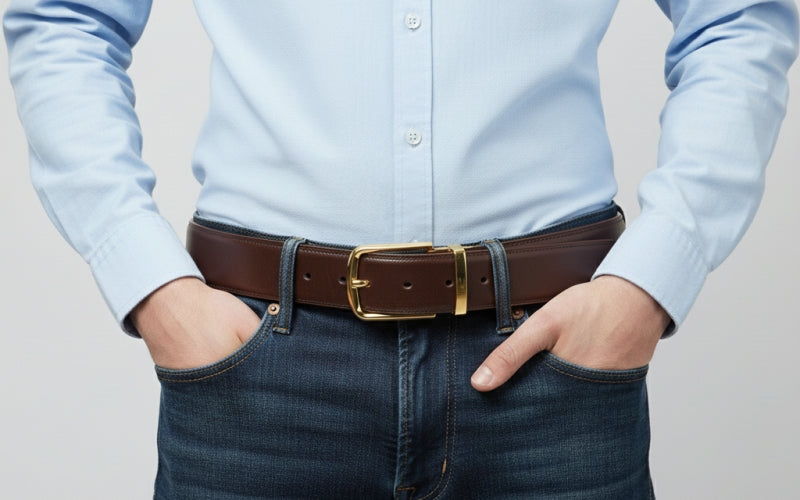
The standard here mirrors executive professional dress: smooth full-grain leather, 35–38mm, black or dark brown, with a slim metal buckle. No canvas, no texture, no novelty hardware. A chef stepping onto the floor of a fine dining room in a well-pressed white coat and a quality leather belt projects the same authority as the kitchen itself.
Galley Solutions' research on how chef uniforms maintain food safety and professional standards notes that the front-of-house moment is when a chef's uniform functions as much as communication as it does as workwear — the quality of each element signals the quality of the kitchen behind the door. A full-grain leather dress belt carries that signal without demanding attention.
What Belt for Executive Chefs and Management Roles?
Executive chefs, head chefs in multi-venue groups, culinary directors, and food and beverage managers increasingly operate in contexts that look more like business than kitchen: supplier meetings, staff interviews, investor presentations, food media appearances, and cookbook events. In these settings, the kitchen belt is entirely wrong.

The executive chef off the line needs a belt that matches business professional standards: smooth full-grain leather, 32–35mm, black for formal meetings, dark brown or espresso for business casual contexts, with a slim rectangular buckle. This is the same spec as any executive-level professional. The difference is that a chef has a sharper eye for material quality — which makes the full-grain leather choice particularly resonant.
At BELTLEY, we work exclusively with full-grain and exotic leathers because the quality is visible and tangible to anyone trained to notice it. An executive chef — someone who selects ingredients by touch and sources materials by provenance — appreciates the same standard in accessories.
Maintenance for the executive belt in kitchen-adjacent contexts is simple: condition with leather cream every two months and wipe clean after any kitchen exposure. BELTLEY's leather care guide covers the full routine in under ten minutes.
Does the FDA Have Rules About Belts in Kitchens?
No. The FDA Food Code does not contain specific regulations about chef belts, belt materials, or belt buckles. The Code addresses personal hygiene accessories that pose contamination risks — primarily jewelry on hands and wrists (rings, bracelets, watches) that contact food preparation surfaces. A belt worn at the waist under an apron does not fall within this regulatory scope.

The FDA Food Code Section 2-301 and 2-303 on personal cleanliness focuses on handwashing, nail condition, and jewelry removal — with specific mention that rings, bracelets, and similar items should not be worn during food preparation. Belt buckles at waist level are not mentioned. Individual restaurant groups and culinary schools may have their own appearance standards that go beyond the FDA Code, so check your specific employer's policy for any additional requirements.
The Bottom Line
A professional chef needs the belt to solve two completely different problems at once: survive active kitchen service under heat and movement, then look appropriate the moment the apron comes off. The cleanest solution is two belts — a durable canvas or heavy leather belt for line service, and a quality full-grain leather belt in black or dark brown for every moment a guest or client can see you.
The executive chef context adds a third requirement — a polish level that matches business meetings and media appearances. Full-grain leather handles all three of these contexts, provided it's properly maintained. At BELTLEY, every belt is built with stainless steel buckles and full-grain leather that withstands daily wear across demanding professional environments — backed by a 10-year warranty and free worldwide shipping. It's the kind of belt a chef who respects materials will recognize immediately.
Frequently Asked Questions
Q: Can chefs wear leather belts in the kitchen?
Yes. Smooth full-grain leather is kitchen-appropriate when properly maintained. During active service it is covered by the apron, so its main function is comfort and fit stability. The FDA Food Code does not regulate belts as a food safety concern. Avoid suede, nubuck, or porous-textured leather, which absorb grease and cannot be wiped clean.
Q: What is the best belt material for kitchen work?
Full-grain leather is the best material for a chef who needs a single belt that handles both kitchen service and front-of-house appearances. Heavy canvas or nylon webbing is the best option for active line cooking only — it is fully washable but not appropriate for dining room contexts. Avoid genuine leather, which peels quickly under kitchen heat and moisture.
Q: Does the FDA regulate what belt a chef can wear?
No. The FDA Food Code addresses accessories that directly contact food or food preparation surfaces — primarily hand and wrist jewelry. Belts at the waist, particularly when covered by an apron during service, are not regulated under current FDA guidance. Individual restaurant groups or culinary schools may have additional dress code requirements beyond the FDA standard.
Q: What belt should an executive chef wear for front-of-house service?
An executive chef stepping into the dining room should wear a smooth full-grain leather belt, 35–38mm wide, in black or dark brown, with a slim metal buckle. This matches the formal standard expected in fine dining environments. The same belt worn under the apron during service presents perfectly when the apron is removed.
Q: How do you maintain a leather belt in a kitchen environment?
Condition leather belts every 2–3 months when used in kitchen environments — more frequently than office wear due to heat and moisture exposure. Wipe off any grease or moisture after service with a damp cloth and allow to dry naturally before storing. Never leave leather in direct contact with a hot surface. A quality full-grain leather belt maintained this way lasts years in professional kitchen use.