Belt Buckle Rash: Why It Happens & How to Stop It
Quick answer: A belt buckle rash — a red, itchy patch near your navel — is almost always allergic contact dermatitis from nickel released by the buckle, made worse by sweat and friction. Stop it by switching to a nickel-free buckle (titanium, solid brass, or stainless), keeping the area dry, or sealing the buckle with a barrier coat.
Last updated: May 2026 • By BELTLEY Editorial
TL;DR:
- A belt buckle rash is usually a nickel allergy reaction, not just irritation.
- Sweat speeds up nickel release, which is why it flares in heat or activity.
- Fix it by switching to titanium, solid brass, or stainless hardware.
- A temporary barrier (clear coat) helps, but changing the metal is the real cure.
That red, itchy ring of skin just above your waistband has a cause — and it is rarely the leather. A belt buckle rash is one of the most common metal-allergy complaints, and once you know what is driving it, it is genuinely easy to stop. This guide explains why your buckle is reacting with your skin, how to tell an allergy from simple friction, and the fastest ways to clear it up for good. For help choosing better hardware overall, see how to choose a good leather belt.
What does a belt buckle rash look like?
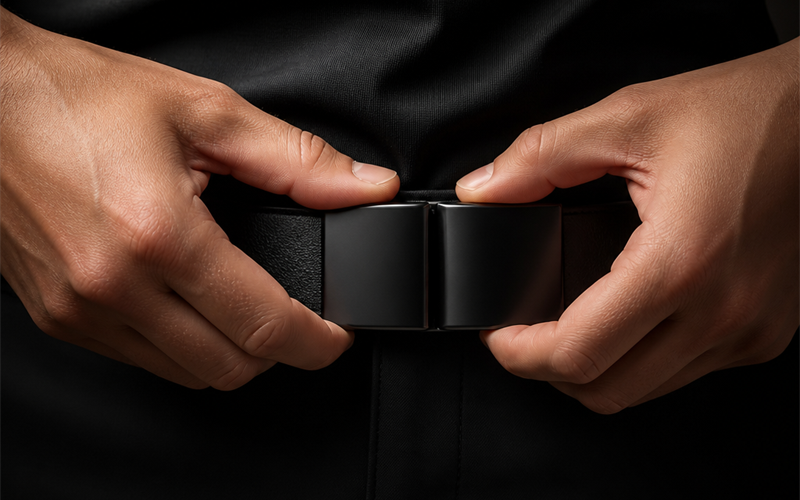
A belt buckle rash typically appears as a red, itchy, sometimes scaly or blistered patch of skin directly where the buckle touches you — usually around the navel. It often mirrors the shape of the buckle and worsens with heat, sweat, or a long day in the belt.

That buckle-shaped outline is the tell. Allergic contact dermatitis shows up right at the contact point, so a rash that maps to your buckle's footprint — rather than spreading randomly — points straight at the metal. It can take hours to a day or two to flare after contact, which is why people often miss the connection. Understanding what a buckle is and how it sits against you makes the pattern obvious.
Why does your belt buckle give you a rash?
Your belt buckle gives you a rash because it releases nickel that reacts with your skin, triggering allergic contact dermatitis. Nickel is the most common contact allergen, and the reaction depends on how much nickel the buckle's surface releases — which sweat accelerates.

The mechanism is well documented: nickel allergy is the most common contact allergy, affecting 8% to 19% of adults, and the risk tracks the nickel an object's surface releases rather than its total content. Your warm, sweaty midsection is the perfect place to drive that release, which is why the rash flares in summer or after exercise. Cheap, nickel-plated buckles are the worst offenders, especially once the plating starts to wear.
Key stat: Nickel allergy affects roughly 8–19% of adults — the single most common contact allergy — and a belt buckle pressed against sweaty skin is one of its classic triggers.
Is it a nickel allergy or just sweat and friction?
It is likely a nickel allergy if the rash is itchy, well-defined to the buckle's shape, and recurs every time you wear that specific belt. Simple sweat-and-friction irritation tends to be less itchy, less sharply shaped, and clears quickly once you cool down.

The clinching test is swapping belts. If a rash returns only with one metal buckle and disappears when you wear a nickel-free one, it is an allergy, not chafing. A true contact allergy is also persistent and itchy rather than just briefly red. When in doubt, a dermatologist can confirm nickel sensitivity with a patch test.
How do you stop a belt buckle rash fast?
To stop a belt buckle rash, remove the trigger: switch to a nickel-free buckle, keep the contact area clean and dry, and treat the inflamed skin gently. For a quick temporary fix, you can seal the buckle's back with a barrier so nickel cannot reach your skin.

Here is the practical order of operations:
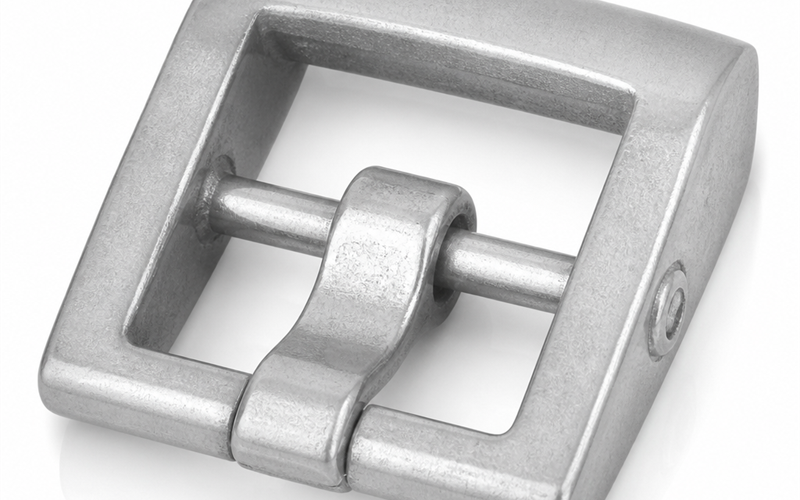
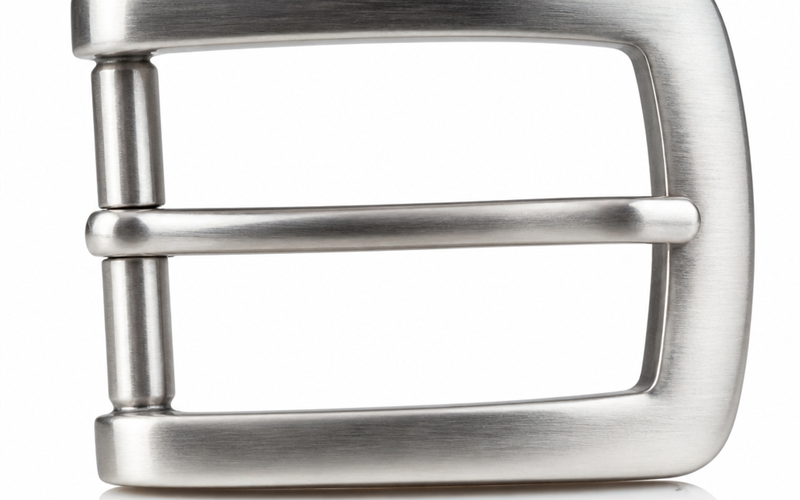
- Switch the metal. The permanent cure is a nickel-free buckle — solid brass, titanium, or stainless steel stainless steel.
- Barrier the buckle. A temporary clear barrier coat on the buckle back blocks nickel contact until you replace the belt.
- Keep it dry. Sweat drives the reaction, so a dry undershirt layer between buckle and skin helps.
- Calm the skin. Wash the area and use a soothing or anti-itch cream while it heals.
If you love the belt but not the buckle, check whether you can swap the buckle for a nickel-free one.
Which buckle metals won't cause a rash?
The buckle metals least likely to cause a rash are titanium (nickel-free and biocompatible), solid brass (copper and zinc, no nickel), and stainless steel (releases very little nickel). Avoid cheap nickel-plated and unmarked zinc-alloy buckles.

| Metal | Nickel? | Rash risk |
|---|---|---|
| Titanium | None | Lowest — biocompatible |
| Solid brass | None | Very low |
| stainless | Low, locked in | Low for most people |
| Nickel-plated zinc | High at surface | Highest — avoid |
Match the metal to your skin and the problem ends. For most people, a solid brass or stainless buckle clears the rash entirely; for severe sensitivity, titanium is the safest choice.
The Bottom Line
A belt buckle rash is your skin reacting to nickel, not a mystery — and that makes it fixable. The rash shows up buckle-shaped near your navel, flares with sweat, and returns with the same belt every time. The fast fix is a temporary barrier; the real cure is switching to a nickel-free buckle in titanium, solid brass, or stainless steel. Change the metal that touches your skin and the itch disappears for good. Explore BELTLEY's belt buckles collection for skin-friendly, solid-metal hardware.
Frequently Asked Questions
Q: Can a belt buckle really cause a rash?
Yes. A metal belt buckle can release nickel that triggers allergic contact dermatitis where it presses against your skin. The result is a red, itchy, often buckle-shaped rash near the navel that worsens with sweat. Switching to a nickel-free buckle resolves it.
Q: How do I stop my belt buckle from irritating my skin?
The permanent fix is a nickel-free buckle — titanium, solid brass, or stainless steel. As a temporary measure, seal the back of the buckle with a clear barrier coat and keep the area dry. If only the buckle is the problem, you may be able to swap it on a belt you like.
Q: Is solid brass safe for a nickel allergy?
Yes. Solid brass is an alloy of copper and zinc with no nickel, so it is a safe, affordable choice for nickel-sensitive skin. Just confirm the buckle is solid brass and not nickel-plated, since plating would put the allergen right at the surface.
Q: Does stainless steel cause a rash?
stainless steel releases very little nickel and is tolerated by most people with mild to moderate sensitivity, even though it contains a small amount. For severe nickel allergies, titanium or solid brass is the safer choice since both are completely nickel-free.