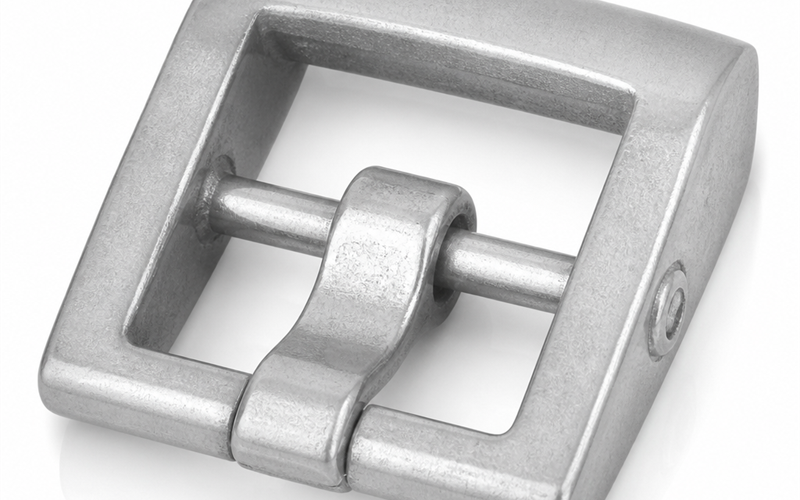
Is Zinc Alloy Bad for Belt Buckles? (Zamak Explained)
Quick answer: Zinc alloy (Zamak) is not dangerous, but it's a low-durability choice for belt buckles. It's a cheap die-cast metal that is lighter and more brittle than brass or steel, and it's almost always plated to hide a dull gray base — so once that plating wears, the buckle looks cheap fast. For longevity, solid brass or stainless beats zinc alloy.
Last updated: May 2026 • By BELTLEY Editorial
TL;DR:
- Zinc alloy (Zamak) is an inexpensive die-cast metal used for budget buckles.
- It's lighter and more brittle than solid brass or stainless steel.
- It's nearly always plated, and the finish wears to reveal a gray base.
- It's fine for a throwaway buckle, poor for one you want to keep.
If a belt buckle's listing says "zinc alloy," it is worth a pause — because that single phrase tells you most of what you need to know about how long it will last. Zinc alloy belt buckles dominate the cheap end of the market for one reason: they are cheap to make. They are not unsafe, but they are not built to last, either. This guide explains what zinc alloy (Zamak) actually is, how long it survives, why brands keep using it, and how to spot it before you buy. For the broader hardware view, see the point of a quality buckle.
What is zinc alloy (Zamak) in belt buckles?
Zinc alloy in belt buckles is almost always Zamak — a zinc-based casting alloy mixed with aluminum, magnesium, and copper. It melts and pours into molds easily, which makes it cheap to mass-produce intricate buckle shapes at scale.

The name itself spells out the recipe. Zamak comes from the German names for its metals — zinc, aluminum, magnesium, and copper — and it is the standard alloy for low-cost die-cast parts, from appliance fittings to toys. That castability is exactly why it is everywhere in budget hardware: a manufacturer can stamp out detailed buckles for pennies. The trade-off is what happens after the casting.
Is zinc alloy bad for belt buckles?
Zinc alloy is not bad in the sense of being unsafe, but it is a poor choice for durability. It is lighter and more brittle than solid brass or stainless steel, and because it relies on a thin plated finish to look good, it degrades visibly once that plating wears through.

There are two real weaknesses. First, some Zamak variants grow brittle and lose elasticity over time, so a zinc buckle can crack under stress where a brass one would not. Second, the bare alloy is a dull gray, so it is always plated to mimic brass, chrome, or gold — and that coating is the first thing to fail. Compare that with a solid brass buckle, which is the same color throughout and ages into a patina rather than flaking.
How long does a zinc alloy buckle last?
A zinc alloy buckle often lasts only months to a year or two of regular wear before the plating wears through or the metal chips. Because the finish is a micron-thin coating over a soft base, friction at the edges exposes the gray alloy underneath relatively quickly.

The plating is the weak link. Electroplated finishes can be under 0.1 micron thick, so daily contact with belt loops and fabric grinds it down. Once that happens, no amount of polishing restores it — the base metal is simply showing. A solid brass or stainless buckle has no coating to lose, which is why it lasts for decades instead.
| Factor | Zinc Alloy (Zamak) | Solid Brass | Stainless Steel |
|---|---|---|---|
| Construction | Plated die-cast | Solid throughout | Solid throughout |
| Weight | Light (~6.6 g/cm³) | Heavy (~8.5 g/cm³) | Heavy (~8 g/cm³) |
| Durability | Months to a couple years | Decades | Decades |
| When finish wears | Gray base shows | Just more brass | Same steel |
| Brittleness | Can grow brittle | Tough | Tough |
Key stat: Solid brass is about 30% denser than zinc alloy (≈8.5 vs ≈6.6 g/cm³) — so simply hefting a buckle is one of the fastest ways to catch a cheap die-cast fake.
Why do brands use zinc alloy anyway?
Brands use zinc alloy because it is cheap and easy to cast into detailed shapes at high volume. For a buckle sold on price rather than longevity, Zamak lets a maker hit a low cost while still looking shiny on day one.

It is a price-first decision, not a quality one. The plating makes a zinc buckle indistinguishable from solid brass in a photo, which is exactly the point — it looks the part until it wears. That is fine for genuinely disposable fashion, but it is why a "great deal" buckle so often disappoints within a year. Knowing the signs of buckle quality protects you at the checkout.
How do you spot a zinc alloy buckle before buying?
You spot a zinc alloy buckle by weight and finish. It feels noticeably light for its size, and the listing often says "zinc alloy" or simply "alloy." Check the back and edges — a plated zinc buckle shows a duller, grayer metal than its polished front.

Three quick checks settle it: heft it (zinc feels light), read the material spec (vague "alloy" is a flag), and inspect high-wear spots for a different-colored base metal. At BELTLEY we skip the guesswork with a simple 3-Material Rule: full-grain leather, a solid stainless steel (304 or 316L) or solid-brass buckle, and sealed edges — which is why our hardware carries a 10-year warranty instead of a replacement cycle.
The Bottom Line
Is zinc alloy bad for belt buckles? Not unsafe — but it is the compromise metal, built to a price rather than a lifespan. Zamak casts cheaply and looks great on day one, then reveals its limits as the plating wears to gray and the brittle base chips or cracks. For a buckle you actually want to keep, solid brass or stainless steel is the clear upgrade: heavier, tougher, and the same color all the way through. Weigh the buckle, read the spec, and buy solid. Explore BELTLEY's belt buckles collection for hardware built to outlast the leather.
Frequently Asked Questions
Q: Is a zinc alloy belt buckle safe to wear?
Yes, a zinc alloy buckle is safe to wear — it is not toxic. The issue is durability, not safety: it is lighter and more brittle than solid metals and relies on plating that wears through. If the buckle is nickel-plated, however, it could trigger a nickel allergy as the coating wears.
Q: Is zinc alloy or brass better for a belt buckle?
Solid brass is clearly better for longevity. It is denser, tougher, and the same color throughout, so it ages into a patina instead of flaking like plated zinc. Zinc alloy only wins on price, making it suitable for disposable fashion rather than a lasting belt.
Q: Will a zinc alloy buckle rust?
Zinc alloy does not rust like iron, but it can corrode and its plating can flake, pit, or develop white oxidation over time. The bigger problem is the thin finish wearing off to reveal a dull gray base. Solid brass and stainless steel hold up far better.
Q: How can I tell if a buckle is zinc alloy or solid metal?
Weight is the quickest test — zinc alloy feels noticeably light, while solid brass and stainless feel substantial. Also check the listing for "zinc alloy" or vague "alloy" wording, and inspect the back and worn edges for a gray base metal showing through plating.
%20is%20not%20dangerous,%20but%20it's%20a%20low-durability%20choice%20for%20belt%20buckles.%20It's%20a%20cheap%20die-cast%20metal%20that%20is%20lighter%20and%20more%20brittle%20than%20brass%20or%20steel,%20and%20it's%20alm...)