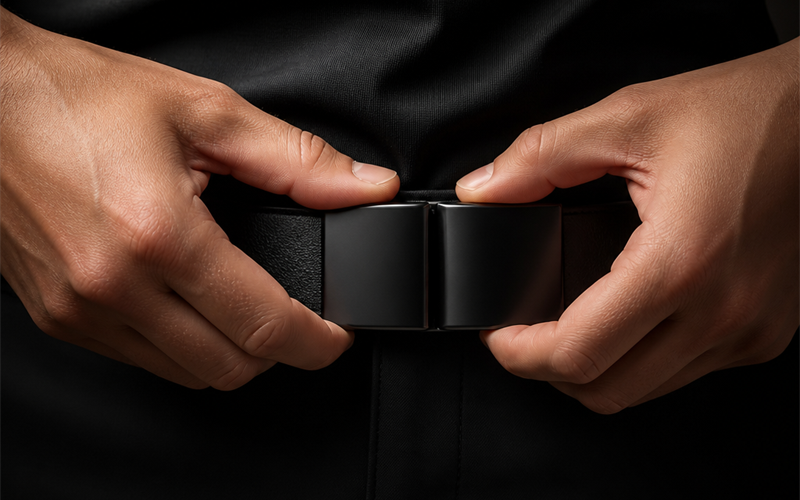
Easy Belts for Arthritis & One-Handed Dressing
Quick answer: The easiest belts to fasten with arthritis or one hand are magnetic-buckle belts (snap shut automatically), ratchet belts (slide-and-click, no holes to line up), and elastic stretch belts (minimal fastening). All three remove the pinch-and-thread motion that traditional prong buckles demand of weak or painful hands.
Last updated: May 2026 • By BELTLEY Editorial
TL;DR:
- Magnetic buckles self-align and snap shut — the least dexterity required.
- Ratchet belts slide and click with no small holes to target.
- Elastic/stretch belts need almost no fastening at all.
- Look for large, grippable hardware and one-handed operation.
Buttoning a prong buckle takes more finger strength and coordination than most people notice — until arthritis, a tremor, a stroke, or a one-handed day makes it genuinely hard. The good news is that the right adaptive belt removes that struggle entirely. Several buckle styles are designed (or happen) to fasten with little grip and one hand, restoring independent dressing. This guide compares the easiest options and what to look for. For the basics of how closures differ, see the point a belt buckle serves.

What makes a belt easy to fasten with arthritis?
A belt is easy to fasten with arthritis when it removes fine-motor steps: no pinching a thin pin, no threading it through a small hole, and no force to hold tension. The best adaptive belts let you align and close the buckle in one simple, low-grip motion — ideally with one hand.

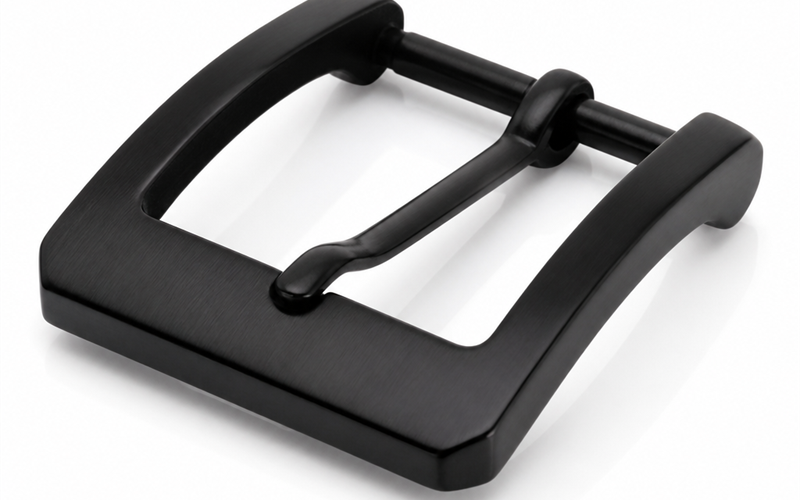
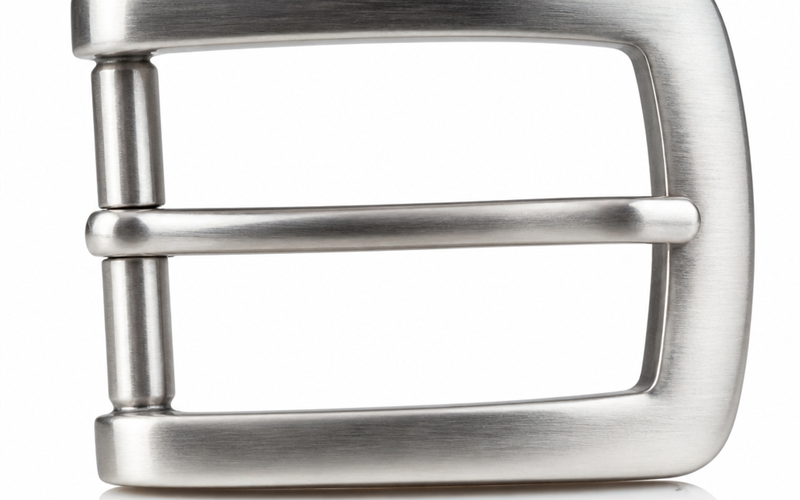
Traditional prong buckles fail this test on every count. They demand you pinch a pin, find a specific hole, and push through stiff leather — a sequence that painful or weak hands struggle with. Adaptive designs replace that with a snap, a slide, or a stretch. The wider and more grippable the hardware, the easier it is, which is why chunky, well-made buckles often beat tiny dress hardware for accessibility. Start with sturdy options in our belt buckles collection.
Which buckle types are easiest for limited hand mobility?
The easiest buckles for limited hand mobility are magnetic, ratchet, and elastic closures. Magnetic buckles self-align and snap; ratchet buckles slide and click with no holes to target; elastic belts barely fasten at all. Each removes the strength and precision a prong buckle requires.

| Buckle type | How you fasten it | Dexterity needed | Best for |
|---|---|---|---|
| Magnetic | Bring ends close — snaps shut | Lowest | Weak grip, tremor, one hand |
| Ratchet (no-hole) | Slide strap in, it clicks | Low | Arthritis, easy micro-fit |
| Elastic / stretch | Minimal or no buckle | Very low | Maximum ease, casual wear |
| Hook-and-loop | Press to close | Low | Caregiver-assisted dressing |
| Traditional prong | Pinch pin, thread hole | Highest | Not recommended |
Ratchet belts deserve special mention: because they use a hidden toothed track instead of holes, you never have to line up a tiny target — you just slide and it clicks. See exactly how ratchet belts work and browse ratchet buckle belts for the easiest daily option.
Key stat: About 21% of U.S. adults — 53.2 million people — have diagnosed arthritis, per the CDC's 2019–2021 data — a huge population for whom an easy, one-handed belt is a real daily upgrade.
Are magnetic belts strong enough for everyday use?
Quality magnetic belts are strong enough for everyday use because the better ones pair the magnet with a mechanical catch that carries the real load. The magnet handles the easy alignment and snap; the catch keeps the belt securely closed under normal tension.

The key is buying a well-made version, not a flimsy novelty. A magnetic buckle with a hollow housing and a weak latch can pop open, but a solid one with a proper backup catch holds reliably all day. For heavier needs, a ratchet belt gives a firmer mechanical hold while staying easy to operate.
How do you fasten an adaptive belt one-handed?
You fasten an adaptive belt one-handed by choosing a closure that self-completes: a magnet that pulls the two halves together, or a ratchet you push the strap into. Both let your stronger hand do the work while the buckle handles alignment.

A few practical tips make it easier still: pre-size the belt to your waist so you are not adjusting it each time, position the buckle slightly to your stronger side, and choose a stiffer strap that feeds into a ratchet without folding. Occupational therapists often recommend exactly these features for independent dressing. For sizing help, our size guide walks through measuring once so the fit is set.
The Bottom Line
An adaptive belt is simply one that respects how hands actually work on a hard day. Magnetic buckles ask the least — align and snap. Ratchet belts remove the line-up-the-hole problem with a slide-and-click. Elastic belts barely fasten at all. The common thread is the same: no pinching a thin pin, no forcing it through stiff leather, and ideally one-handed operation on grippable hardware. Match the closure to the hands using it, and getting dressed stops being a daily battle. Explore BELTLEY's belt buckles collection for easy-fasten options built to last.
Frequently Asked Questions
Q: What is the easiest belt buckle to use with arthritis?
Magnetic and ratchet buckles are the easiest. A magnetic buckle self-aligns and snaps shut with minimal grip, while a ratchet buckle slides and clicks with no small holes to target. Both eliminate the pinch-and-thread motion that makes traditional prong buckles painful for arthritic hands.
Q: Can you fasten a ratchet belt with one hand?
Largely, yes. Once the belt is around your waist, you feed the stiff strap into the buckle and it clicks automatically, so your stronger hand does most of the work. Pre-sizing the belt and choosing a rigid strap make one-handed use even easier.
Q: Are magnetic belts safe for everyday wear?
Quality magnetic belts are safe and reliable for everyday wear because they pair the magnet with a mechanical catch that holds the real load. Avoid flimsy versions with hollow housings. Anyone with a pacemaker or similar implant should check with their doctor before wearing strongly magnetic accessories.
Q: What belt is best for someone recovering from a stroke or hand injury?
An elastic or magnetic belt is usually best, since both require minimal grip and can be managed one-handed. Occupational therapists often suggest these for independent dressing. Choose large, grippable hardware and pre-size the belt so no fine adjustment is needed each time.
,%20ratchet%20belts%20(slide-and-click,%20no%20holes%20to%20line%20up),%20and%20elastic%20stretch%20...)