Why Is Cowhide Leather So Expensive? (It’s Not Just About the Cow)
TL;DR: Quick Answer
- Raising a single cow costs $2,500-$5,000. Then you still have to tan the hide. That's another $150-$650. The cow hasn't even become a belt yet and you're already out thousands.
- Only 5-10% of cowhides qualify as premium grade. The rest have scars, bug bites, and stretch marks. Cows live rough lives. Their hides show it.
- Full-grain vegetable-tanned cowhide costs $5-$8 per square foot. Corrected-grain costs $1.50-$3.50. You're paying for what wasn't done to it — which is the whole point.
- Despite the sticker shock, a quality cowhide belt at $8/year beats a cheap belt at $15/year. Math doesn't care about your feelings.

You saw the price tag. You blinked. Maybe you blinked twice. A belt made from cow? The most common farm animal on the planet? How is this expensive?
Fair question. Terrible assumption. Cowhide leather isn't expensive because cows are rare. It's expensive because turning a cow's skin into something you'd actually want on your waist involves years of animal husbandry, weeks of chemical processing, and quality standards that reject 90% of the raw material. The cow is the easy part. Everything after the cow is where the money goes. For the full leather pricing landscape, our guide on how much should a leather belt cost covers every price tier.

Why Does Cowhide Leather Cost So Much?
Cowhide leather is expensive because of the compounding costs across a multi-stage supply chain: 2-3 years of raising the animal ($2,500-$5,000), tanning the hide ($150-$650), strict grading that rejects 90%+ of hides from premium status, and skilled labor to cut, finish, and construct the final product. Each stage adds cost. No stage is optional.
According to The Handmade Store's cowhide pricing guide, "the journey from raw hide to finished leather product involves multiple stages — each of which adds cost." Steel Horse Leather's pricing analysis confirms that the expense comes from "the lengthy process of raising cattle, processing hides, and skilled craftsmanship."
Let's break it down. Stage by stage. Dollar by dollar.

How Much Does It Cost to Raise a Cow?
Between $2,500 and $5,000 per animal over 2-3 years. That covers feed, veterinary care, land, water, fencing, and the farmer's time questioning their career choices. The leather is a byproduct of the meat industry — but "byproduct" doesn't mean "free." Hides account for roughly 5-10% of the animal's total value.
According to Leather Hub's 2025 cowhide analysis, the quality of the leather starts with the quality of the cow's life — "stress-free cows yield fewer scars and insect bites," while "grass-fed, open-range cows yield smoother hides." A cow that lived well produces leather that looks well. A cow that was stressed, overcrowded, or insect-bitten? Its hide tells the whole story.
So yes. Your belt's price tag partially reflects a cow's quality of life. Ethical farming isn't just good PR. It's good leather.

Why Does Tanning Add So Much Cost?
Tanning a single cowhide costs $150-$650 depending on the method. Vegetable tanning — the traditional process using tree bark and plant tannins — takes 2-8 weeks and commands a 30% premium over chrome tanning, which finishes in 1-3 days. You're paying for time. And time is the most expensive ingredient in every luxury product.
According to Hoplok Leather's leather cost guide, the tanning method is "one of the biggest variables in leather pricing." Satchel & Page's tannery pricing breakdown reveals that premium vegetable-tanned hides from quality tanneries can cost significantly more than standard chrome-tanned alternatives.
The tanning process alone involves:
| Step | What Happens | Time |
|---|---|---|
| Soaking | Rehydrate salted/dried hide | 1-2 days |
| Liming | Remove hair and epidermis | 1-3 days |
| Deliming | Neutralize chemicals | Hours |
| Tanning | Plant tannins or chrome salts penetrate fibers | 1-3 days (chrome) or 2-8 weeks (veg-tan) |
| Dyeing | Color application | 1-2 days |
| Finishing | Conditioning, buffing, coating | 1-3 days |
That's a minimum of a week for chrome. Up to two months for veg-tan. Neither one involves sitting around eating snacks. Our guide on what is a vegetable-tanned leather belt covers the full tanning process if you want the nerdy details.

What Makes Some Cowhide Way More Expensive Than Others?
The grade. Only 5-10% of cowhides qualify as full-grain premium grade. The rest are downgraded due to scars, brand marks, insect damage, stretch marks, or grain inconsistencies. Full-grain leather — where the natural surface is completely intact — is the rarest and most expensive because it requires a nearly perfect hide.
According to Szoneier Leather's cowhide pricing guide, "the price varies dramatically by grade — full-grain hides can cost 3-5x more than corrected-grain from the same animal." Domini Leather's cost analysis confirms the pricing breakdown across grades.
Here's what you're actually paying per square foot:
| Grade | What It Is | Price Per Sq Ft | Belt Quality |
|---|---|---|---|
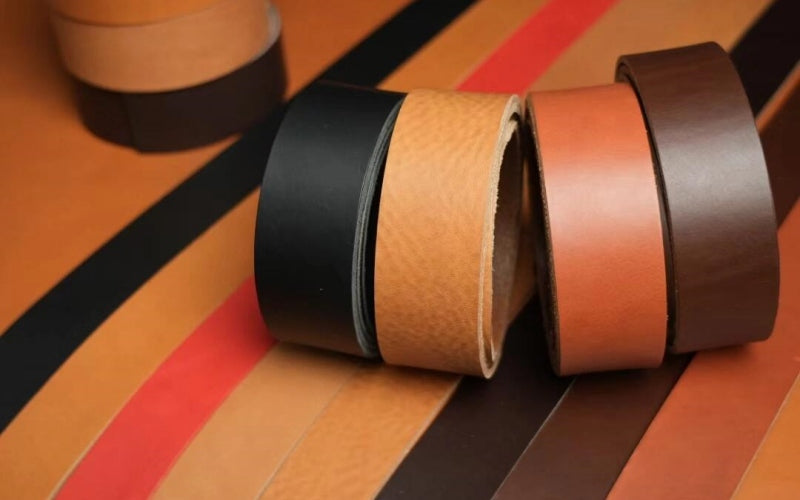
| Full-grain (veg-tan) | Top surface, untouched, plant-tanned | $5-$8+ | Premium — lasts decades |
| Full-grain (chrome-tan) | Top surface, untouched, chrome-tanned | $4-$7 | Very good — lasts years |
| Top-grain | Sanded/buffed to remove imperfections | $3-$5 | Good — respectable |
| Corrected-grain | Heavily processed, embossed pattern | $2-$4 | Okay — looks uniform |
| Split leather | Bottom layer of hide | $1.50-$3 | Poor — cracks fast |
| Bonded | Ground-up scraps glued together | $0.50-$2 | Terrible — glorified cardboard |
Same cow. Six different price points. The difference is which part of the hide you get and how much processing it survived. Our guide on what type of leather is best for belts ranks every option honestly.
Does the Craftsmanship Really Justify the Price?
Yes. A skilled artisan turns flat leather into a functional belt through cutting, skiving, edge finishing, hole punching, buckle fitting, and quality inspection. Each step requires tools, training, and time. A machine-made belt takes minutes. A handcrafted belt takes hours. Guess which one falls apart first.
According to Cale & Cael's cowhide quality guide, "the craftsmanship that goes into working with premium cowhide — from cutting to edge finishing — directly impacts both the product's durability and its price." LeatherNeo's cowhide guide adds that cowhide's "exceptional tensile strength and resistance to tearing" make it worth the investment.
Edge finishing alone tells the story. Cheap belts get edge paint — a cosmetic coating that peels within months. Premium belts get burnished edges — sealed through friction and heat, becoming part of the leather itself. Our guide on what are edge painting belts explains why this single detail separates belts that last from belts that don't.

Is Expensive Cowhide Leather Actually Worth It?
A quality full-grain cowhide belt costing $100-$180 lasts 10-20 years — working out to $5-$18 per year. A $30 bonded leather belt lasts 6-18 months — costing $20-$60 per year. The expensive belt is the cheap belt. The cheap belt is the expensive belt. This is the plot twist nobody sees coming at the register.
According to Montana Leather's cowhide guide, cowhide leather "is one of the most durable materials available — when it's full-grain and properly processed." The Jacket Maker's cowhide analysis confirms that "the investment in quality cowhide pays dividends over years of reliable use."
The cost-per-year reality check:
| Belt Type | Price | Lifespan | Cost Per Year |
|---|---|---|---|
| Bonded leather | $20-$35 | 6-18 months | $20-$60 |
| Genuine leather (split) | $30-$50 | 1-3 years | $15-$50 |
| Top-grain chrome-tan | $50-$80 | 3-7 years | $11-$27 |
| Full-grain chrome-tan | $80-$130 | 5-10 years | $10-$26 |
| Full-grain veg-tan | $100-$200 | 10-20+ years | $5-$20 |
Every row tells the same story. The more you pay upfront, the less you pay over time. Our guide on are full-grain leather belts worth the investment does the complete math.
Why Is Cowhide Getting More Expensive?
Three forces are pushing prices up simultaneously. First, global cattle herds have decreased — Buckskin Leather's 2025 price list shows steady price increases across all hide grades.
Second, environmental regulations are raising tanning costs worldwide — proper chemical waste management isn't free. Third, consumer demand for full-grain and vegetable-tanned leather is growing faster than supply. More people want the good stuff. There isn't more good stuff.
The trend is clear: quality leather is getting more expensive, not less. A belt you buy today at $120 might cost $150 next year for identical quality.
Leather isn't a tech product that gets cheaper. It's an agricultural product that gets scarcer.
The Bottom Line
Why is cowhide leather so expensive? Because every stage costs real money: 2-3 years of raising the animal ($2,500-$5,000), tanning the hide ($150-$650), grading that rejects 90%+ from premium status, and skilled craftsmanship that turns flat leather into functional art.
Full-grain cowhide costs $5-$8+ per square foot because it comes from the top 5-10% of hides with minimal imperfections. The sticker shock fades when you divide the price by 10-20 years of daily use — suddenly the "expensive" belt costs $8/year while the "cheap" belt costs $20/year. Quality cowhide leather isn't overpriced.
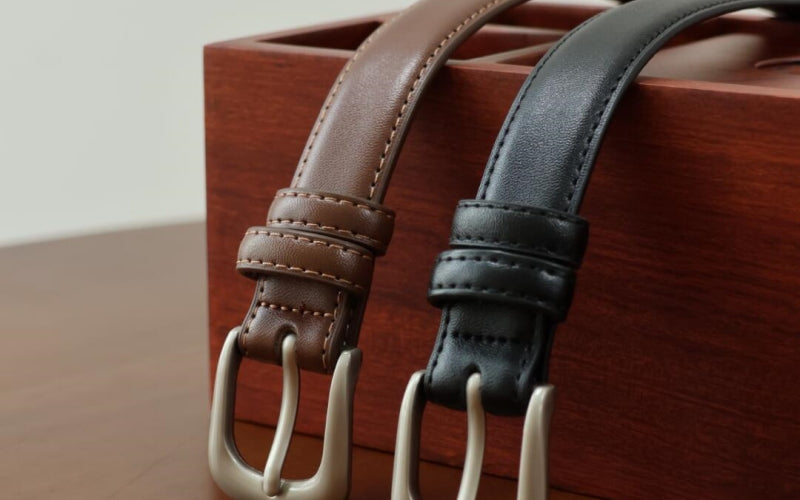
It's front-loaded. You're paying tomorrow's savings today. At BELTLEY, our full-grain leather belts are crafted from premium hides with 316L stainless steel hardware — the kind of belt where the price makes you blink once but the quality makes you smile for a decade. 10-year warranty. Free worldwide shipping.
Browse the men's collection or women's collection and invest in the belt that costs less by costing more.
Frequently Asked Questions
Q: Why is cowhide leather so expensive?
Because of compounding costs across the supply chain: raising a cow costs $2,500-$5,000 over 2-3 years, tanning the hide adds $150-$650, only 5-10% of hides qualify as premium grade, and skilled craftsmanship adds labor costs. Each stage adds expense. None can be skipped without sacrificing quality.
Q: How much does cowhide leather cost per square foot?
Full-grain vegetable-tanned cowhide costs $5-$8+ per square foot. Full-grain chrome-tanned runs $4-$7. Top-grain is $3-$5. Corrected-grain is $2-$4. Split leather is $1.50-$3. The grade and tanning method determine the price — same cow, vastly different price points.
Q: Is cowhide leather worth the higher price?
Yes — for full-grain grades. A $120 full-grain cowhide belt lasting 15 years costs $8/year. A $30 bonded leather belt lasting 1 year costs $30/year. The "expensive" belt is cheaper over time, develops a patina, and doesn't crack or peel. The savings are real. They just require patience.
Q: What makes full-grain cowhide more expensive than genuine leather?
Full-grain uses the top surface of the hide with natural grain intact — requiring a nearly perfect hide (top 5-10%). "Genuine leather" often uses lower-quality splits or heavily processed hides that cost less to source. Full-grain is denser, more durable, and develops patina. Genuine leather peels.
Q: Why is vegetable-tanned cowhide more expensive than chrome-tanned?
Time. Vegetable tanning takes 2-8 weeks using natural plant tannins. Chrome tanning takes 1-3 days using chemical salts. The longer process, more expensive tanning agents, and smaller batch sizes push veg-tan prices 20-30% above chrome-tan — but veg-tan lasts longer and develops richer patina.
Q: Is cowhide leather getting more expensive?
Yes. Decreasing global cattle herds, stricter environmental regulations on tanneries, and growing demand for premium full-grain leather are all pushing prices upward. Quality cowhide is an agricultural product that's getting scarcer, not cheaper. Buying now locks in today's pricing.