Is Cowhide Leather Good for Belts? ( It’s the Beyoncé of Leather)
TL;DR: Quick Answer
- Good? It's the global default. Over 65% of all leather belts on Earth are cowhide. It's not just good. It's the industry standard everything else gets measured against.
- Six reasons cowhide dominates: tensile strength (8-25 N/mm²), patina development, body molding, thickness options for every use case, availability across every price point, and a 10-20+ year lifespan when full-grain.
- The catch: not all cowhide is equal. Full-grain cowhide is exceptional. "Genuine leather" cowhide is a polite way of saying "the scraps." Same animal. Completely different belt.
- If you buy one belt for the next decade, make it full-grain cowhide. Preferably vegetable-tanned. Your future self will send a thank-you note.
Let's settle this fast. Is cowhide leather good for belts?
It's like asking if water is good for swimming. Cowhide isn't just good for belts — it's the leather that defined belts. The overwhelming majority of quality belts worldwide are made from cowhide.
Every other leather is either a luxury upgrade (crocodile, elephant) or a budget downgrade (faux, bonded). Cowhide sits in the sweet spot where durability, beauty, availability, and price all shake hands and agree to cooperate.
But here's where people get tripped up: cowhide is a spectrum.
A full-grain vegetable-tanned cowhide belt and a "genuine leather" cowhide belt are both technically cowhide. One lasts twenty years. The other lasts until Thursday. Our guide on what type of leather is best for belts ranks every leather type honestly.

Is Cowhide Right for YOUR Belt?
The default choice still has decision points:
| Your situation | Go with |
|---|---|
| Everyday workhorse belt | Full-grain cowhide, no contest — 10–20 years of service from $58. |
| Dress belt for suits | Calfskin ($100–$148) — younger hide, finer grain, dressier face. |
| Maximum ruggedness | Buffalo or elephant — thicker and tougher than standard cowhide. |
| Seeing "genuine leather" on a label | That's the lowest grade that still legally counts as leather. Insist on "full-grain" — the word matters more than the species. |
Full-grain cowhide done right: BELTLEY's collection, 10-year warranty.
Why Is Cowhide the Most Popular Leather for Belts?
Cowhide dominates belt-making because it offers the best combination of tensile strength, thickness, flexibility, and aging characteristics of any commonly available leather. It's strong enough to hold tension daily without stretching, thick enough to maintain structure for years, and develops a patina that improves its appearance over time.
According to Leather Hub's 2025 cowhide analysis, cowhide remains the top pick for leather goods because of its "unmatched combination of durability, versatility, and natural beauty." Obscure Belts' definitive leather guide ranks full-grain vegetable-tanned cowhide as "the gold standard for leather belts due to its firmness, thickness, and durability."
Six specific properties make cowhide the king of belt leather. Let's walk through each.

Reason #1: It's Incredibly Strong
Cowhide has a tensile strength of 8-25 N/mm². In human terms: it won't snap, tear, or give up on your pants. A belt's only job is holding tension around your waist, all day, every day. Cowhide was basically born for this.
According to Cale & Cael's cowhide durability guide, cowhide's "dense fiber structure provides exceptional resistance to tearing and stretching." Leelinebags' expert cowhide guide confirms that cowhide's tensile strength measurements make it "one of the strongest commonly available leathers for daily-use products."
Compare that to sheepskin (soft, tears easily — great for gloves, terrible for belts) or synthetic leather (cracks under sustained tension within months). Cowhide holds. That's the job. It does the job.

Reason #2: It Develops Patina
Good cowhide doesn't just age. It upgrades. The oils from your hands, daily friction, and sun exposure gradually darken the leather and create a warm, glossy surface that's uniquely yours. Your belt at year three looks better than your belt at day one. Try getting that from plastic.
According to Rugged Strap's full-grain cowhide guide, "full-grain cowhide develops a rich patina over time — deepening in color and gaining character that synthetic materials simply cannot replicate." LeatherNeo's cowhide guide adds that "over time, real cowhide becomes more beautiful with natural aging."
The patina timeline:
| Time | What Happens |
|---|---|
| Week 1 | Stiff. You're questioning your life choices. |
| Month 1 | Softening. Subtle color shift starting. |
| Month 3 | Noticeably warmer tone. Starting to mold. |
| Month 6 | Real patina emerging. Scratches disappearing. |
| Year 1 | Rich, deep color. Strangers ask about your belt. |
| Year 5+ | Museum piece. Your belt has more character than most people's wardrobes. |
Faux leather skips this journey entirely. It starts looking okay. Then it cracks. Then it peels. Then you buy another one. Our guide on the truth about leather belt durability covers how different leathers age.

Reason #3: It Molds to Your Body
Cowhide leather conforms to your specific waist shape over time. The belt curves where you curve. It remembers your body. Chrome-tanned cowhide does this moderately. Vegetable-tanned cowhide does it beautifully — firming into a custom-fit contour without stretching out lengthwise.
According to Proven Hands' belt leather comparison, full-grain cowhide "molds to the wearer's body while maintaining structural integrity — you get a custom fit without the belt losing its shape." That's the key distinction. Molds ≠ stretches. Your belt adapts to you. It doesn't surrender to gravity.

Reason #4: Thickness Options for Every Use Case
Cowhide comes in a range of thicknesses that match every belt purpose. Dress belts. Casual belts. Work belts. Gun belts. The same leather works across the entire spectrum — you just adjust the thickness.
| Thickness | Weight | Best For |
|---|---|---|
| 2-3mm (5-7 oz) | Light | Dress belts, women's belts |
| 3-4mm (7-9 oz) | Medium | Daily casual, most common |
| 4-5mm (9-11 oz) | Heavy | Work belts, rugged wear |
| 5mm+ (11+ oz) | Extra heavy | Tool belts, holsters, gun belts |
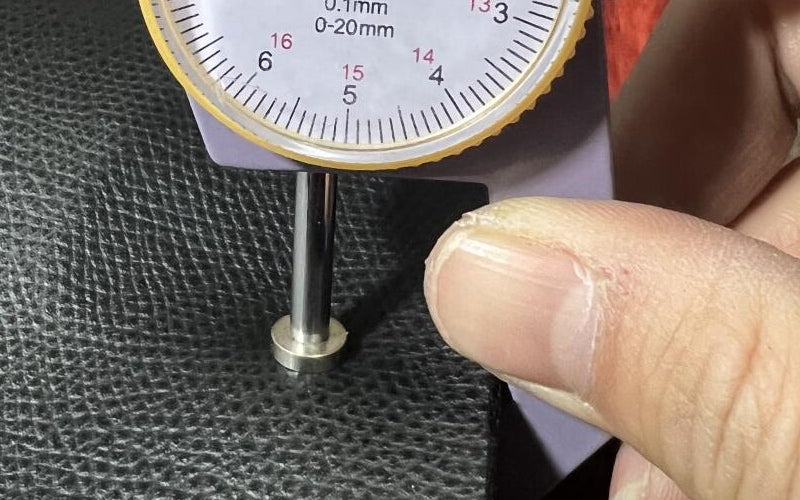
According to Rolford Leather's belt-making guide, the ideal cowhide belt thickness is "3.5-4mm for daily wear — thick enough to resist stretching, thin enough for comfort." Most other leathers don't offer this range. Cowhide gives you options. Our guide on different types of leather belts for men covers every style category.

Reason #5: Available at Every Price Point
Cowhide spans from $20 bonded-leather belts to $200+ full-grain masterpieces. No other leather covers this range. Exotic leathers start at $300+. Faux leather tops out at $50. Cowhide meets you wherever your budget is — and rewards you proportionally for spending more.
According to Leatherbeltsonline's leather comparison, cowhide's "range of available grades means there's a quality level for every budget — from entry-level genuine leather to premium full-grain."
The cowhide belt pricing ladder:
| Grade | Price Range | Lifespan | Cost Per Year |
|---|---|---|---|
| Bonded cowhide | $15-$30 | 6-18 months | $20-$40 |
| Genuine leather (split) | $25-$50 | 1-3 years | $12-$50 |
| Top-grain cowhide | $50-$90 | 3-7 years | $10-$30 |
| Full-grain chrome-tan | $80-$140 | 5-10 years | $10-$28 |
| Full-grain veg-tan | $100-$200 | 10-20+ years | $5-$20 |
Same animal. Five different belts. Five different lifespans. The math always favors full-grain. Our guide on how much should a leather belt cost breaks down the full pricing landscape.

Reason #6: It Lasts 10-20+ Years (When Full-Grain)
A quality full-grain cowhide belt outlasts marriages, car payments, and most New Year's resolutions. With basic care — conditioning twice a year, keeping it dry, storing it properly — cowhide just keeps going. Synthetic belts crack at year one. Bonded leather peels at year two. Full-grain cowhide is just warming up at year five.
According to Frederic St. James' leather comparison, "a well-made cowhide belt can last 10-20 years" with proper care. Leather Hub's durability analysis confirms that "genuine cowhide is long-lasting — unlike synthetic leather which can crack and peel."
Our guide on how to keep a leather belt in good condition covers the complete care routine. Spoiler: it takes five minutes twice a year. Your Netflix password gets more maintenance.

How Does Cowhide Compare to Other Belt Leathers?
Cowhide isn't the only option. But it's the best default option. Here's how it stacks up.
| Leather | Durability | Patina | Price | Best For |
|---|---|---|---|---|
| Cowhide (full-grain) | Excellent | Rich | $80-$200 | Daily wear, everything |
| Buffalo/Bison | Excellent+ | Good | $90-$200 | Rugged/work belts |
| Crocodile/Alligator | Very good | Minimal | $200-$2,000+ | Luxury, statement pieces |
| Elephant | Outstanding | Unique | $200-$500+ | Exotic collectors |
| Sheepskin/Lambskin | Poor | None | $30-$80 | Not belts. Just... not belts. |
| Faux/Vegan | Very poor | None | $10-$50 | Temporary, budget |
Cowhide wins the "best all-around" category every time. Exotics win on prestige. Buffalo wins on raw toughness. But cowhide is the one that makes sense for 90% of people, 90% of the time. Our exotic leather belt collection covers the premium tier for when cowhide isn't dramatic enough.
What Grade of Cowhide Should You Actually Buy?
Full-grain. Every time. Full-grain cowhide uses the top surface of the hide with all natural grain intact. It's the densest, strongest, most beautiful layer — and the only one that develops real patina. "Genuine leather" is marketing code for "we used the leftovers."
According to Buffalo Jackson's leather grade comparison, "full-grain leather comes from the top layer of the hide and includes all of the natural grain" — keeping "all the dense fibers that make it strong." Vinacreations' leather guide adds that full-grain is "the highest quality grade, retaining the entire grain surface."
Our guide on how to tell if a belt is full grain leather teaches you to spot the difference before you spend.
The Bottom Line
Is cowhide leather good for belts? It's the best all-purpose belt leather on the planet. Six properties make it dominant: tensile strength (8-25 N/mm²), patina development (gets better looking every year), body molding (custom fit through wear), thickness range (dress to work), price accessibility (every budget covered), and lifespan (10-20+ years when full-grain).
The only caveat is grade — full-grain cowhide is exceptional while bonded cowhide is garbage wearing a leather costume. Same cow. Wildly different belt. If you're buying one belt for the next decade, make it full-grain cowhide, ideally vegetable-tanned.
At BELTLEY, our full-grain leather belts are crafted from premium cowhide with stainless steel hardware — the belt that earns its place on your waist and keeps earning it for years. 10-year warranty. Free worldwide shipping. Browse the men's collection or women's collection and pick the cowhide belt you won't need to replace.
Frequently Asked Questions
Q: Is cowhide leather good for belts?
Yes — it's the #1 belt leather worldwide. Full-grain cowhide offers exceptional tensile strength (8-25 N/mm²), develops a rich patina over time, molds to your body, and lasts 10-20+ years with basic care. It's the industry standard for good reason. The key is buying full-grain, not "genuine leather" grade.
Q: How long does a cowhide belt last?
Depends entirely on grade. Full-grain cowhide belts last 10-20+ years with basic care. Top-grain lasts 3-7 years. "Genuine leather" (split) lasts 1-3 years. Bonded leather lasts 6-18 months. Same animal, vastly different lifespans. Always check the grade before buying.
Q: Is cowhide better than exotic leather for belts?
For daily wear, yes. Cowhide is more durable, more affordable, and better suited to everyday tension and friction. Exotic leathers (crocodile, alligator, elephant) are luxury statement pieces — stunning but delicate and expensive. Cowhide is the workhorse. Exotics are the show horse.
Q: What thickness should a cowhide belt be?
3.5-4mm (8-9 oz) is the sweet spot for daily wear. This provides structure and stretch resistance without being uncomfortable. Dress belts can go thinner (2-3mm). Work belts and gun belts need thicker (4-5mm+). Match thickness to intended use.
Q: What's the difference between full-grain and genuine leather cowhide belts?
Full-grain uses the top surface of the hide with natural grain intact — it's the strongest layer that develops patina. "Genuine leather" is often split leather from lower layers — thinner, weaker, and prone to cracking. Full-grain costs more but lasts 5-10x longer. The price difference pays for itself within two years.
Q: Does cowhide leather develop patina?
Full-grain cowhide develops beautiful patina — darkening and gaining a glossy warmth from body oils, sunlight, and daily friction. Visible patina typically appears within 3-6 months. Top-grain develops slight patina. Corrected-grain and bonded develop none. The patina potential is directly tied to the leather grade.