Why Does My Belt Keep Coming Undone? (How to Stop It)
Quick answer: A belt usually keeps coming undone for one of four reasons: the buckle's grip or prong is worn or bent, the strap has stretched or compressed where it meets the buckle, you're fastening on the wrong (too-loose) hole, or the belt is too thin or soft for your loops. Fixes are simple — go one hole tighter, straighten or replace a bent prong, trim the compressed end to give the buckle fresh material, or switch to a thicker, better-made belt. A quality belt with a solid buckle rarely does this.
Last updated: June 2026 • By BELTLEY
TL;DR:
- Worn buckle grip — cheap locking parts wear down and stop holding.
- Bent or loose prong — won't seat properly in the hole; straighten or replace it.
- Stretched/compressed strap — trim the worn end so the buckle grabs fresh leather.
- Wrong hole — going one notch tighter often fixes it instantly.
- Too thin or soft — flimsy straps slip through loops and buckles; go thicker.
- Best fix: a solid, well-made belt with a proper buckle holds without fuss.
There's nothing quite like feeling your belt quietly pop loose in the middle of the day. It's annoying, a little embarrassing, and it makes a belt feel untrustworthy. The good news: a belt that won't stay fastened almost always has a specific, fixable cause — usually the buckle, the strap, or the hole you're using. This guide walks through each one so you can make it hold for good. For a related issue, see why do my pants keep falling down even with a belt.
Why Won't It Stay? Find Your Cause
Match the symptom to the likely cause and fix.

| Your symptom | Likely cause & fix |
|---|---|
| Prong slips out of the hole | Bent/loose prong — straighten or replace it |
| Buckle won't grip (no holes) | Worn clamp on a ratchet/clamp belt — trim or replace |
| Loosens slowly as you move | Wrong hole — go one notch tighter |
| Strap slides back through buckle | Strap too thin/soft — use a thicker belt |
| Tail won't stay put | Missing keeper — tuck it, or get a belt with keepers |
Start by watching exactly how it fails — that points to the fix. For buckle repairs, see how to fix a loose belt buckle.
Why does my belt prong keep slipping out of the hole?
A prong usually slips out because it's bent or the buckle has loosened, so it no longer seats firmly in the hole — or because you're on a too-loose hole and body movement pops it free. Check that the prong is straight and the buckle is tight, and try fastening one hole tighter.

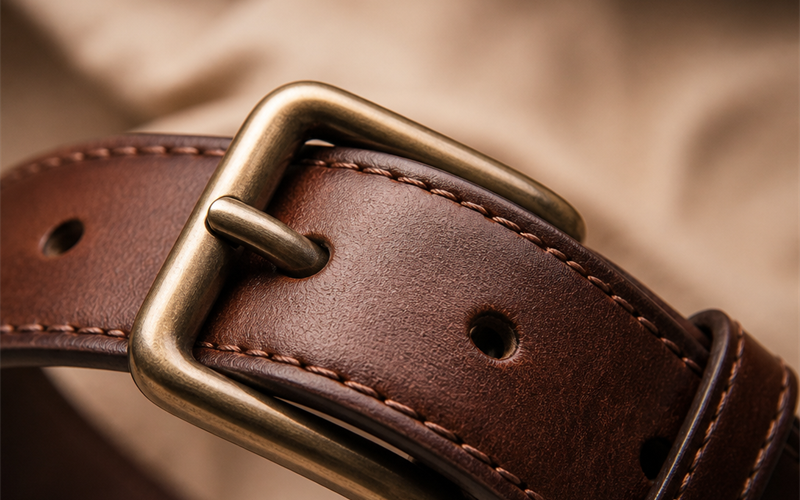
This is the most common version of the problem, and it's mechanical. A buckle works by a prong (or tongue) catching in the strap to hold the two ends securely, so if that prong is bent, flattened, or wobbling, it can't sit deep enough in the hole to stay put. Gently straighten a bent prong with pliers, and make sure the buckle itself isn't loose on the strap. The other culprit is fit: fasten on a hole that's slightly too loose and the natural tension shifts as you sit, stand, and bend, eventually working the prong out. Going one notch tighter often solves it instantly. For getting the right tightness, see how far should a belt extend past the buckle.
Why does my buckle stop gripping the strap?
On hole-less belts (ratchet or clamp styles), the buckle stops gripping when its internal clamp wears down or the strap gets compressed where it's repeatedly clamped. Lower-quality buckles wear fastest. Trimming a little off the compressed end gives the clamp fresh material to bite, and a quality buckle holds far longer.

This one is specific to clamp-and-track and similar mechanisms. The grip relies on the buckle's locking parts pressing into the strap, and those parts degrade — as one belt guide explains, "on lower-quality belts, the locking parts wear down quickly, especially if the metal is light or poorly finished." The strap also gets crushed at the exact spot it's always clamped, so the buckle has less to hold. The fix is to trim a small amount off the end, giving the mechanism uncompressed material to grip again. If a cheap buckle keeps failing, that's the deeper issue — the hardware quality. For more, see what is the strongest type of belt buckle.
Could my belt be too stretched or too thin to hold?
Yes. A strap that's stretched or compressed near the buckle, or one that's simply too thin or soft, won't hold tension well — it slides back through the buckle or pops loose. Reinforcing a stretched section with stitching or a rivet helps, but a belt that's too flimsy for your loops is better replaced with a thicker, firmer one.

Material and condition matter more than people expect. Over time the leather right by the buckle can stretch out, loosening the grip — and as one repair guide notes, "if the area near the buckle has stretched significantly, you can reinforce it with stitching or rivets." A too-thin or overly soft belt is a different problem: it lacks the body to stay seated and can slip through both the buckle and your belt loops. The durable answer is a belt with enough thickness and firmness to hold its tension — typically a quality full-grain strap. For why thickness helps, see the truth about leather belt durability.
Key stat: Most belts that won't stay fastened fail for a mechanical reason, not bad luck: a bent prong, a worn clamp, a stretched strap, or a too-loose hole. The cheapest fix costs nothing — fasten one hole tighter — and the most reliable one is a thick, solid belt whose buckle and strap simply don't loosen.
How do you stop a belt from coming undone for good?
Permanently fixing it means matching the fix to the cause: straighten or replace a bent prong, tighten a loose buckle, trim a compressed strap end, fasten a hole tighter, or reinforce a stretched section. If a cheap belt keeps failing despite all that, replace it with a thicker, well-made belt that has a solid buckle.

Lasting reliability comes down to addressing the real cause and starting with good hardware. Run through the checklist: is the prong straight and the buckle tight? Are you on a secure middle-ish hole rather than the loosest one? Is the strap stretched or compressed where it meets the buckle? Each has a simple remedy above. But if you've tried them and a flimsy belt still won't behave, the honest fix is an upgrade — a firm, thick belt with a solid, well-finished buckle grips correctly and keeps gripping. Quality hardware and a substantial strap are exactly why a good belt rarely comes undone in the first place. To get one that holds, see our stainless steel buckle belts.
The Bottom Line
A belt that keeps coming undone is almost always telling you something specific: the prong is bent, the buckle's grip is worn, the strap has stretched or compressed, or you're simply on a too-loose hole. Work through those causes and the fixes are quick — straighten the prong, tighten the buckle, trim the worn end, or go one notch tighter. When a cheap belt keeps failing anyway, the root cause is the hardware and the strap, and a thicker, better-made belt solves it. That reliability is built into every belt at BELTLEY — solid buckles, substantial full-grain straps, and a 10-year warranty behind them. Upgrade to a belt that simply holds with a full-grain leather belt or a heavy-duty double-layer belt.
Frequently Asked Questions
Q: Why does my belt keep coming undone?
Usually because of a worn buckle grip, a bent or loose prong, a stretched or compressed strap, or fastening on a too-loose hole. As you move, the weak point gives way and the belt pops open. Identify which applies, then straighten the prong, tighten the buckle, trim the worn end, or go one hole tighter.
Q: How do I stop my belt prong from slipping out?
Make sure the prong is straight (gently bend it back with pliers if not) and the buckle is firmly attached, then fasten one hole tighter so movement can't work it loose. A too-loose hole is the most common cause. If the prong is broken or badly bent, replace the buckle for a secure hold.
Q: Why does my ratchet or no-hole belt stop holding?
Because the buckle's internal clamp wears down or the strap gets compressed where it's repeatedly gripped. Lower-quality buckles wear fastest. Trimming a small amount off the compressed end gives the clamp fresh material to bite. If a cheap buckle keeps failing, the hardware quality is the real problem.
Q: Can a stretched belt cause it to come undone?
Yes. When the leather near the buckle stretches out, it loses tension and the belt can loosen or slip. Reinforcing that section with stitching or a rivet can help. But a belt that's too thin or soft to hold its shape is better replaced with a thicker, firmer one that stays seated.
Q: How do I keep my belt from coming undone for good?
Fix the specific cause — prong, buckle, strap, or hole — and if a flimsy belt still won't hold, upgrade. A thick, well-made belt with a solid, properly finished buckle grips correctly and keeps gripping. Quality hardware and a substantial strap are why a good belt rarely comes undone in the first place.