How to Fix a Loose Belt Buckle (5 Easy Fixes)
Quick answer: To fix a loose belt buckle, first find how it's attached. If it's a Chicago screw, tighten it flush with a screwdriver (hold the back post so it doesn't spin) and add a dab of clear nail polish to the threads so it stays put. If it's a snap, press it fully closed. If the buckle is stitched or riveted on and the threads or rivet have loosened, re-stitch or replace the rivet. If a prong-style buckle wobbles, reseat the prong in its slot. Most fixes take five minutes.
Last updated: June 2026 • By BELTLEY
TL;DR:
- Chicago screw loose? Tighten flush, hold the back post, seal threads with clear nail polish.
- Snap buckle loose? Press the snaps fully closed until they click.
- Stitched-on buckle? Re-stitch the loose threads with a saddle stitch, seal the ends.
- Riveted buckle? Replace the loosened rivet with a setter and hammer.
- Wobbly prong? Reseat the prong in the strap's cutout slot.
- Prevention: check screws periodically; nail polish stops them backing out.
A wobbly belt buckle is annoying and makes a good belt feel cheap — but it's almost always a five-minute fix with tools you already own. The trick is matching the fix to how your buckle attaches, because a screw, a snap, stitching, and a rivet each loosen differently. This guide walks through all of them so you can stop the wobble and keep your belt in service. For buckle background, see types of belt buckles.
What's Loose? Find Your Fix
Match how the buckle attaches to the right repair.

| How your buckle attaches | Fix |
|---|---|
| Chicago screw | Tighten flush + clear nail polish on threads |
| Snap closure | Press snaps fully shut until they click |
| Stitched on | Re-stitch loose threads, seal the ends |
| Riveted on | Remove and replace the loose rivet |
| Prong wobbles | Reseat the prong in its slot |
Start by identifying the attachment — everything else follows from that. For whether a buckle can be swapped at all, see can you put a buckle on any belt.
How do you tighten a loose Chicago screw buckle?
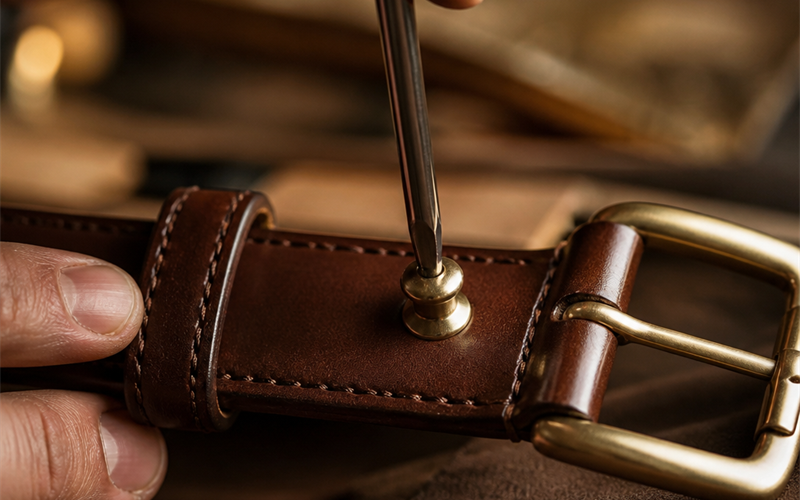
Use a flat-head screwdriver to turn the screw until it sits flush against the leather. If the back post spins, hold it still with a fingertip or a piece of rubber grip while you turn the front. Once it's snug, a dab of clear nail polish on the threads keeps it from working loose again.

Chicago screws are the most common removable-buckle fastener, and the most common cause of a loose buckle. As one belt maker explains, "all of our belts have removable buckles with the majority featuring Chicago Screws that hold the buckle on the belt" — a two-part screw and post that sandwiches the leather. Over time the screw can back out. Tighten it flush (don't overdo it and strip the threads), holding the rear post steady if it spins. The pro tip that prevents repeats: brush a little clear nail polish on the threads before final tightening — it acts like a mild thread-locker, holding the screw without gluing it permanently. Then tug the buckle in both directions to confirm it won't shift. For how a buckle works generally, a buckle is "a device used for fastening two loose ends" in an adjustable way.
How do you fix a buckle attached by snaps?
If your buckle is held by snaps (press studs), the fix is usually just pressing them fully closed until each one clicks. A buckle that feels loose often has a snap that's only partially engaged. If a snap is worn out and won't hold, it can be replaced with a snap-setting tool, or a cobbler can swap it quickly.

Snap-on buckles are the easiest to fix because there's rarely anything broken — just a snap that isn't fully seated. Press firmly on each snap until you feel and hear it click home, then test the buckle by pulling it away from the strap; it shouldn't pop open or wobble. If a snap has stretched or the cap is worn and won't stay shut, replacing that snap restores a secure hold. A snap-setter kit makes it a quick DIY job, or any shoe-repair shop can do it in minutes. Snaps make swapping buckles convenient, which is part of why they're popular on casual belts. For more on hardware, see what is the strongest type of belt buckle.
How do you fix a stitched or riveted buckle that's come loose?
For a stitched-on buckle, re-stitch the loose section with a saddle stitch in matching thread and seal the ends with beeswax or leather glue. For a loose rivet, remove the old rivet, line up the holes, and set a new rivet with a rivet setter and hammer. Both restore a secure buckle in minutes.

These are the fixes for permanently attached buckles. Loose stitching is, in fact, the most common belt issue and the easiest to handle: trim the frayed threads, then re-thread and "match the original thread color for seamless blending," using a strong saddle stitch and sealing the ends so it won't unravel. For a loosened rivet, gently pry out the old one with a flathead or pliers (taking care not to tear the leather), then set a fresh rivet through the aligned holes with a setter and a light hammer tap. If the leather itself is torn where the buckle attaches, or the stitching runs through several layers, it's worth taking to a professional. For more repairs, see how to fix a belt that is too big.
Key stat: Most "broken" buckles aren't broken at all — the attachment loosened. A Chicago screw backing out is the #1 culprit, and the single best prevention is a dab of clear nail polish on the threads, which acts as a mild thread-locker so the screw stays flush for months instead of days.
How do you stop a belt buckle from coming loose again?
Prevention is mostly about the fasteners. For screw buckles, seal the threads with clear nail polish and check them every few weeks. For snaps, make sure they're fully clicked before wearing. Keep the buckle dry, since moisture can loosen rivets and rust hardware, and avoid yanking the buckle, which stresses every attachment.

A few habits keep a buckle tight for the long haul. The nail-polish trick is the big one for screw buckles — it stops the slow self-loosening that vibration and daily use cause. Build in a quick check: every few weeks, give the screws a gentle turn to confirm they're flush. Treat snaps and rivets gently, fasten them fully, and keep the buckle area dry so rivets and threads don't degrade. And buy quality hardware to begin with — a solid, well-attached buckle simply loosens less than cheap, plated hardware on flimsy stitching. A belt built with solid buckles and tight saddle-stitching rarely gives you this problem at all. To shop belts made that way, see stainless steel buckle belts.
The Bottom Line
Fixing a loose belt buckle is quick once you know how it's attached. Tighten a Chicago screw flush and seal it with clear nail polish; press a snap fully closed; re-stitch a loose seam or replace a worn rivet; reseat a wobbly prong. Most of these take five minutes and basic tools, and a little prevention — sealed threads, periodic checks, dry storage — keeps the buckle solid for good. The deeper fix, of course, is starting with quality: a belt built with a solid buckle and tight saddle-stitching rarely loosens in the first place. That's how we make every belt at BELTLEY — solid hardware, proper construction, and a 10-year warranty behind it. Upgrade to a belt that stays tight with a full-grain leather belt or a brass buckle belt.
Frequently Asked Questions
Q: Why does my belt buckle keep coming loose?
Usually because its fastener has worked loose — most often a Chicago screw backing out from daily use, but sometimes a partially closed snap, frayed stitching, or a loosened rivet. Identify how the buckle attaches, tighten or repair that specific fastener, and seal screw threads with clear nail polish to stop it recurring.
Q: How do you tighten a belt buckle screw?
Turn the Chicago screw clockwise with a flat-head screwdriver until it sits flush against the leather, holding the back post still with a fingertip if it spins. Don't overtighten or you'll strip it. Then brush a little clear nail polish on the threads so it won't work loose again, and tug the buckle to test it.
Q: Can you fix a belt buckle without tools?
Sometimes. A snap-on buckle often just needs firm hand pressure to click fully shut. But a loose screw, rivet, or stitch needs basic tools — a screwdriver, a rivet setter, or a needle and thread. Clear nail polish helps secure screws. For torn leather or multi-layer stitching, a cobbler is the safer choice.
Q: How do I keep my belt buckle from wobbling?
Make sure the attachment is secure: tighten screws flush and seal them with nail polish, fully close snaps, and reseat the prong in its slot. Keep the buckle dry to protect rivets and stitching, and avoid yanking it. Quality belts with solid buckles and tight saddle-stitching wobble far less to begin with.
Q: When should I take my belt to a professional?
See a cobbler when the leather is torn where the buckle attaches, the stitching runs through multiple layers, a rivet won't hold, or the buckle has structurally broken. These repairs need specialized tools and skill to do cleanly, and on an expensive belt it's well worth the small cost to avoid ruining it.
%20and%20add%20a%20dab%20of%20clear%20...)