Why Do My Pants Keep Falling Down Even with a Belt? (And How to Fix It)
Quick takeway for busy readers
- Your pants keep falling down even with a belt because of one (or more) of seven fixable problems: wrong belt size, worn-out leather, low-rise waistband, body shape, slippery fabric, wrong belt width, or a buckle that can't hold tension.
- The most common culprit is wearing a belt that's too long — the excess strap adds weight and reduces grip.
- Switching to a properly sized full-grain leather belt with a ratchet or snug-fit buckle fixes the problem for most people.
You cinch it tight. You tug your waistband up. Five minutes later, your pants are sagging again. If your pants keep falling down even with a belt, you're not imagining the problem — and you're not alone. This is one of the most common fit complaints men and women bring to tailors, according to menswear forums like Ask Andy.
The good news: the cause is almost always identifiable, and the fix is usually simple. Here are the seven reasons it happens and exactly what to do about each one.

Is Your Belt the Wrong Size?
The single most common reason a belt fails to hold your pants up is incorrect sizing. A belt that's too long creates excess strap that hangs past the buckle, adding dead weight that pulls downward. A belt that's too short forces you to use the last hole, which stretches the leather and weakens the connection point over time.
Here's the rule most people get wrong: your belt size is not the same as your pants size. Your belt should measure 2 inches longer than your pants waist measurement. If you wear size 34 pants, you need a size 36 belt. This gives you enough length to fasten comfortably at the middle hole — the sweet spot for both grip and longevity. For a detailed walkthrough, check our belt size guide.
The middle hole matters because it distributes tension evenly across the belt's structure. Using the first or last hole creates uneven stress, which accelerates leather fatigue and reduces the belt's ability to grip your waistband.

How Body Shape Affects Belt Performance
Your body's geometry determines whether a belt can do its job. Belts work by creating friction between the belt, the waistband, and your body. If your hips are narrower than your waist — common in men with larger midsections — there's no natural shelf for the belt to rest on. Gravity wins every time.
This is a physics problem, not a fashion problem. As UnderFit's research on pant fit explains, people with a higher waist-to-hip ratio (carrying weight above the beltline) face a constant downward force that no amount of tightening can overcome.
If this describes your body type, you have three options:
- Wear high-rise pants that sit at your natural waist (above the belly), where your torso narrows and creates a natural grip point
- Switch to suspenders for formal wear — they bypass the hip problem entirely
- Try a wider belt (1.5" or 38mm) that distributes pressure across a larger surface area, increasing friction. Browse 1.5-inch leather belts for options built to stay put
For more targeted advice, read our guide on how to wear a belt with a big stomach.

Why Low-Rise Pants Make Belts Useless
Low-rise jeans and chinos sit on your hip bones, not your natural waist. This is a structural problem — your hips slope downward from front to back, creating a ramp that belts slide down. There's no flat shelf for the belt to grip. The belt tightens, the fabric bunches, and the whole system migrates south.
Fashion publication GQ has noted that the mid-rise revival in menswear isn't just aesthetic — it's functional. Mid-rise pants (with a 10-11 inch front rise for men) sit just above the hip bone, where your body provides a natural anchor point. High-rise pants go even higher, sitting at the narrowest part of the torso.
Quick test: stand up and place your thumbs where the top of your pants sits. If it's below your hip bone, no belt will reliably hold them up. The fix isn't a better belt — it's pants with a higher rise.

The Worn-Out Belt Problem
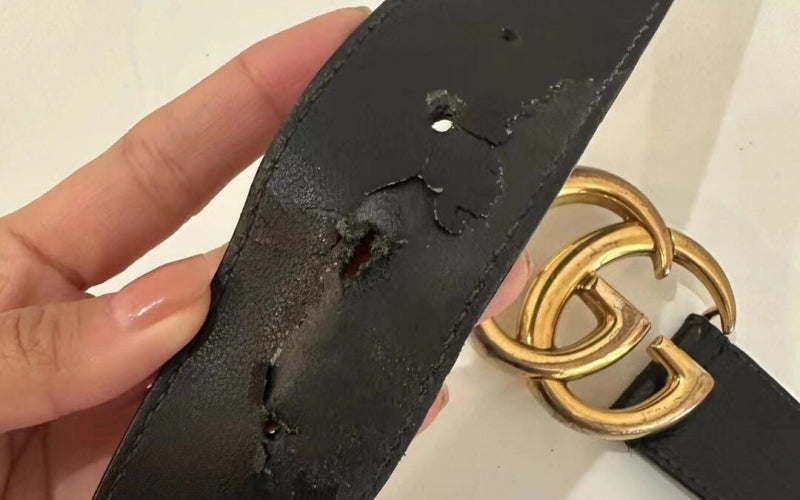
Leather belts have a lifespan, and a belt past its prime loses the structural rigidity needed to hold tension. The signs are obvious once you know what to look for:
- The leather bends easily when held flat — a healthy full-grain belt should hold its shape when extended horizontally
- The holes are elongated — oval-shaped holes mean the leather has stretched beyond recovery
- The surface is cracked, peeling, or flaking — this indicates either bonded leather breaking down or dried-out genuine leather
Cheap belts made from bonded or "genuine" leather — which is actually the lowest usable grade — typically last 6-12 months before losing grip. Full-grain leather, by contrast, maintains its fiber structure for years because the hide's natural grain hasn't been sanded or corrected. According to leather science research, full-grain leather's tight, interlocking fibers resist stretching far longer than corrected or split leather alternatives.
At BELTLEY, every belt is cut from a single piece of full-grain cowhide or exotic leather — no bonded scraps, no filler layers. That's why we back each belt with a 10-year warranty on materials and construction.

Can Slippery Fabric Cause Your Pants to Slide?
Yes — and this is the cause most people overlook. Synthetic fabrics like polyester, rayon blends, and silk-lined trousers create a low-friction surface that lets pants slide right over the belt. The belt stays in place on your body, but the pants glide underneath it.
This explains why your jeans might stay up fine with the same belt that fails with your dress pants. Cotton denim has a rougher texture that grips leather naturally. Smooth poly-blend dress pants don't.
Fixes for slippery pants:
- Add a non-slip waistband strip — adhesive silicone strips (sold at fabric stores) applied inside the waistband create grip against your shirt
- Choose a textured belt — belts with a matte, unpolished finish or suede-backed construction provide more friction than glossy smooth leather
- Tuck your shirt in — a tucked cotton shirt adds a layer of friction between belt and pants
Does Belt Width Matter for Holding Pants Up?
A narrow belt generates less friction against the waistband than a wide one — simple physics. A 1-inch (25mm) dress belt contacts roughly 40% less waistband surface area than a 1.5-inch (38mm) casual belt. Less contact means less grip.
Here's a practical width guide based on pant type:
| Pant Type | Recommended Belt Width | Why |
|---|---|---|
| Jeans / casual chinos | 1.5" (38mm) | Maximum grip, fits standard jean loops |
| Dress pants / slacks | 1.25"–1.38" (32–35mm) | Balanced grip with sleek profile |
| Formal trousers | 1"–1.18" (25–30mm) | Loop size limits; consider suspenders |
| Heavy work pants | 1.5" (38mm) double-layer | Maximum rigidity and hold |
If your pants consistently fall down with a thin belt, try stepping up one width category. Our belt width collection lets you compare every size side by side.

Why Your Buckle Type Might Be the Problem
Standard prong buckles rely on fixed hole positions — and if your ideal tension falls between two holes, you're stuck choosing too tight or too loose. That half-inch gap between holes is enough to let pants slide.
Ratchet buckles solve this. Instead of fixed holes, ratchet mechanisms use a toothed track on the belt's interior, allowing micro-adjustments in roughly 1/4-inch increments. You get precise tension without the too-tight/too-loose compromise.
This is why ratchet buckle belts have gained popularity with people who've struggled with traditional belts. The mechanism locks under tension and only releases when you lift the lever — no gradual loosening throughout the day.
Other buckle types that hold tension well include box-frame buckles (the friction of the frame pressing against leather holds position) and plaque buckles with snap closures. Avoid buckles with thin prongs or weak springs — they bend under stress and lose grip.
The Bottom Line
If your pants keep falling down even with a belt, the problem is almost always one of seven things: wrong belt size, body shape mismatch, low-rise pants, worn-out leather, slippery fabric, insufficient belt width, or a buckle that can't hold precise tension.
Start with sizing — measure your waist and add 2 inches. Then evaluate your pants rise and fabric. If the belt itself is the weak link, replace it with a full-grain leather belt that grips, holds, and lasts. Every BELTLEY belt ships free worldwide, comes with a 10-year warranty, and includes 30-day hassle-free returns — so there's zero risk in finding out what a real belt feels like.
Frequently Asked Questions
Q: Why does my belt keep loosening throughout the day?
Most belts loosen because the leather stretches under tension and heat from your body. Bonded and corrected-grain leather stretches significantly more than full-grain leather. A ratchet buckle also helps — it locks in position rather than relying on a single hole that can work loose.
Q: Should I wear my belt tight or loose to keep pants up?
Snug, not tight. You should be able to slide two fingers between the belt and your waistband. Over-tightening actually causes the belt to ride up over your waistband and push your pants down — the opposite of what you want. See our guide on side effects of wearing a tight belt.
Q: Are suspenders better than belts for keeping pants up?
Suspenders are more effective for people with a high waist-to-hip ratio (larger midsection, narrower hips) because they use your shoulders — not your hips — as the anchor point. For most body types, a properly sized belt works fine. For challenging body shapes, suspenders or a belt-and-suspender combination is the better solution.
Q: Can a tailor fix pants that keep falling down?
Yes. A tailor can take in the waistband, add interior grip strips, or adjust the rise. This is often cheaper than buying new pants. Tailoring costs for waistband adjustments typically run $15–$30, according to typical alteration pricing guides.
Q: What type of belt is best for keeping pants up all day?
A 1.5-inch full-grain leather belt with a ratchet buckle provides the most reliable hold. The wide strap maximizes friction, the full-grain leather resists stretching, and the ratchet mechanism allows micro-adjustments as your body shifts throughout the day. Browse BELTLEY's ratchet buckle belts for handcrafted options starting at $58.

%20of%20seven%20fixable%20problems:%20wrong%20belt%20size,%20worn-out%20leather,%20low-rise%20waistband,%20body%20shape,...)