Belts Keep Breaking? Here’s Why—and How to Fix It for Good
Quick Takeaway!
- Belts break in three predictable ways — leather failure (cracking/peeling), buckle failure (bending/snapping), and stitch failure (unraveling). Each one points to a specific material problem.
- A $20 belt replaced three times a year costs $60/year. A $100 full-grain belt lasting 10 years costs $10/year. The "expensive" belt is 6x cheaper.
- To fix the cycle permanently, buy one belt with five specific specs: full-grain leather, 3.5mm+ thickness, solid brass or stainless steel buckle, double-stitched seams, and burnished edges.

If your belts keep breaking, you've probably already tried the obvious fix — buying a slightly better one. Maybe you moved from a $15 department store belt to a $35 "genuine leather" model. It lasted a few months longer. Then it cracked at the holes, just like the last one.
The problem isn't your budget. The problem is that most belts under $60 are built from materials that can't survive daily wear. The leather grades, hardware metals, and stitching methods used in cheap belts are fundamentally incompatible with longevity. No amount of care can fix a structural problem.
This guide helps you diagnose exactly how your belts are failing, understand why, and — most importantly — know exactly what to buy so you never deal with it again.

How Is Your Belt Failing? A Diagnostic Guide
Before you can fix the problem, you need to identify which part of your belt is actually failing. Belt failure falls into three categories, and each one points to a different material deficiency.
Type 1: Leather Failure (cracking, peeling, splitting)
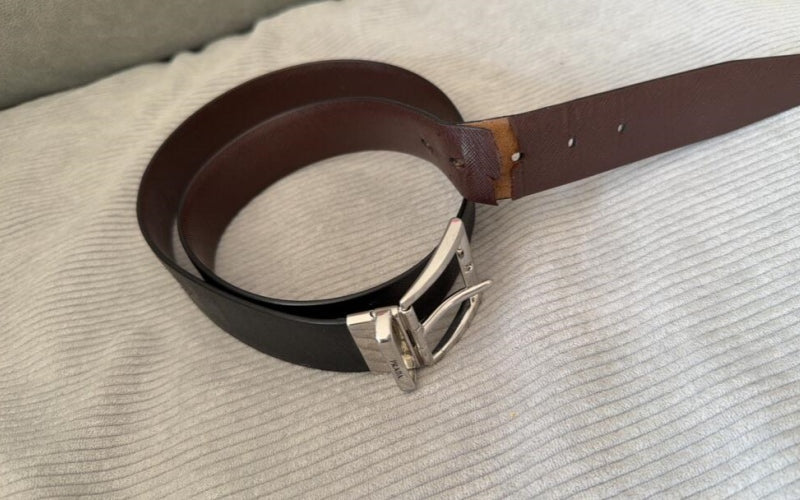
The leather surface shows hairline cracks, is peeling away in sheets, or has split through at the holes or buckle fold. This is the most common failure type and almost always indicates bonded leather, corrected-grain leather, or severe dehydration of a better leather.
Type 2: Buckle Failure (bent prong, snapped frame, loose connection)
The buckle prong has bent or broken, the frame is warped, or the buckle has separated from the strap. This indicates zinc-alloy hardware — brittle die-cast metal that can't handle repeated stress.
Type 3: Stitch Failure (unraveling, pulling through)
The stitching has come undone along one or both edges, or the thread has cut through the leather at the stitch holes. This indicates single-thread lockstitching with unwaxed thread — the cheapest construction method.
Most belts fail at Type 1 first. If your belt is peeling or cracking, read our detailed breakdown of why belts always crack for the full science. If your buckle is the weak point, the fix is simpler — you need better metal.

Why Do Cheap Belts Break So Quickly?
Cheap belts break quickly because every component — leather, buckle, thread, edge finish — is optimized for shelf appearance rather than structural performance. The materials look passable for 30 days (the return window) but aren't engineered to survive 300 days of flexing, sweating, and tension.

Here's what goes into a sub-$30 belt versus a quality belt:
| Component | Sub-$30 Belt | Quality Belt ($80-$150) |
|---|---|---|
| Leather | Bonded scraps or corrected split | Full-grain cowhide, single piece |
| Thickness | 2-3mm | 3.5-5mm |
| Buckle | Die-cast zinc alloy, 20-40g | Solid brass or stainless steel, 80-150g |
| Stitching | Single-thread lockstitch, polyester | Double-stitch or saddle-stitch, waxed nylon/linen |
| Edge finish | Spray-painted (cracks when flexed) | Hand-burnished with beeswax (seals fibers) |
| Lifespan | 3-12 months | 5-15 years |
According to GearJunkie's 2026 belt testing, the weight of the buckle alone is a reliable quality indicator — a quality buckle weighs 80g or more, while cheap buckles weigh under 40g. You can feel the difference the moment you pick one up.
The leather grade is the most critical factor. Bonded leather contains as little as 10-20% actual leather fiber, held together by polyurethane adhesive. When that adhesive dries — and it will within a year — the belt delaminates. Full-grain leather, by contrast, is a single unaltered layer of hide with a dense collagen fiber network that can flex thousands of times without fracturing.

The Cost-Per-Wear Math That Ends the Debate
The "expensive belt" is almost always cheaper than the cheap belt. Here's the math, broken down by leather grade:
| Belt Type | Purchase Price | Expected Lifespan | Wears (daily use) | Cost Per Wear |
|---|---|---|---|---|
| Bonded leather | $20 | 6 months | ~180 | $0.11 |
| "Genuine" leather | $35 | 18 months | ~540 | $0.065 |
| Top-grain leather | $65 | 5 years | ~1,825 | $0.036 |
| Full-grain leather | $100 | 10 years | ~3,650 | $0.027 |
| Full-grain, double-layer | $130 | 15+ years | ~5,475 | $0.024 |
Over a 10-year period, the person buying $20 bonded belts spends $400 (replacing every 6 months). The person who buys one $100 full-grain belt spends $100. That's a $300 difference — and the full-grain belt still looks better after a decade than the bonded belt did after three months.
This cost-per-wear analysis, documented by leather goods researchers, applies across all leather goods. The initial price is a distraction — the only number that matters is how long the product performs.

The 5-Point Buying Checklist for a Belt That Won't Break
If your belts keep breaking and you want to buy the last belt you'll need for the next decade, check these five specs before purchasing. Every one is non-negotiable.
1. Full-Grain Leather (Not "Genuine" or "Real")
The label must specifically say "full-grain." Terms like "genuine leather," "real leather," or "100% leather" are marketing language for lower grades. Full-grain means the outermost layer of the hide is intact and unaltered — the densest, strongest part of the skin. You can verify by checking for natural grain variations (no two hides look identical) and a leather smell, not a chemical one. For a detailed guide, see how to tell if a belt is full-grain leather.
2. Minimum 3.5mm Thickness
Hold the belt flat and let the end extend off a table. A 3.5mm+ belt holds its shape horizontally for several inches. A thin belt droops immediately. Thickness equals stress distribution — thicker leather absorbs bending fatigue across more material, extending lifespan dramatically. For heavy-duty use, look for double-layer construction at 6-7mm.
3. Solid Brass or Stainless Steel Buckle
Lift the buckle. If it feels light or hollow, it's zinc alloy and will bend or snap. Solid brass has a warm, heavy feel. stainless steel — the same alloy used in surgical instruments — is heavier still and virtually corrosion-proof. Both metals resist fatigue for decades.
4. Double-Stitched or Saddle-Stitched Seams
Look at the edge stitching. If you can see a single continuous thread (like a sewing machine line), it's lockstitching — one broken stitch unravels the whole seam. Saddle stitching uses two needles passing through the same holes from opposite sides, creating a self-locking construction where each stitch is independent. As TechGearLab's belt testing notes, stitch quality is the best predictor of long-term edge integrity.
5. Burnished Edges (Not Painted)
Run your thumb along the belt's edge. Painted edges feel smooth and uniform but will crack and flake within months — you'll see white or raw leather peeking through. Burnished edges feel slightly waxy and have a rounded, sealed profile. Burnishing is a hand process where an artisan uses friction and beeswax to melt the leather fibers together at the edge, creating a permanent seal that prevents delamination from the perimeter inward.

How to Make Your New Belt Last Even Longer
Once you have a quality belt, basic maintenance extends its life from "long" to "virtually permanent."
Condition 2-3 times per year. Use mink oil, neatsfoot oil, or a beeswax cream. Apply in thin coats, let it soak in for 15-20 minutes, then buff with a soft cloth. This replaces the natural oils that keep collagen fibers flexible. For a full maintenance walkthrough, see our 7 tips for keeping a leather belt in good condition.
Store properly. Hang by the buckle on a closet rack or roll loosely in a drawer. Never fold — folding creates crease lines that become crack initiation points. Keep belts away from direct sunlight and heat sources. Read our full guide on how to store leather belts.
Rotate your collection. Wearing the same belt every single day accelerates wear at the most-used hole and the buckle fold. Even owning just two belts and alternating daily gives each belt 50% more recovery time between wears.
Use the middle hole. The middle hole distributes tension evenly across the belt's structure. The first and last holes create uneven stress that stretches leather unevenly. If you can't use the middle hole, your belt is the wrong size — check our size guide.

The Bottom Line
If your belts keep breaking, the cycle ends with one decision: stop buying belts built to fail and invest once in a belt built to last. Check the five specs — full-grain leather, 3.5mm+ thickness, solid metal buckle, double stitching, burnished edges — and you'll buy one belt instead of twenty.
Browse BELTLEY's full-grain leather belts starting at $58, or our double-layer heavy-duty belts for maximum longevity. Free worldwide shipping, 30-day hassle-free returns, and a 10-year warranty on every belt — because quality shouldn't be a gamble.

Frequently Asked Questions
Q: How long should a good leather belt last?
A full-grain leather belt with solid hardware and proper care should last 10-15 years of regular wear. Handmade belts with vegetable-tanned leather can last 15-20+ years. If your belt is failing in under 2 years, it's a materials problem, not a care problem. See our full breakdown of leather belt durability.
Q: Is it worth spending $100+ on a belt?
Yes — the cost-per-wear math overwhelmingly favors quality. A $100 full-grain belt worn daily for 10 years costs $0.027 per wear. A $20 bonded belt replaced every 6 months costs $0.11 per wear — four times more expensive over a decade, with the added inconvenience of constant shopping and breaking in new belts.
Q: What's the single most important spec when buying a belt?
Leather grade. Full-grain leather is the only grade with a dense, intact collagen fiber structure that resists cracking, stretching, and delamination for years. Every other quality factor — stitching, buckle, edges — matters, but none of them can compensate for bad leather. Start with the leather, then verify everything else.
Q: Can I fix a belt that's already breaking?
It depends on the failure type. Surface cracks in real leather can be improved with conditioner. But peeling bonded leather, snapped zinc buckles, and unraveled lockstitching are all terminal — the materials are fundamentally unable to recover. At that point, replacement with a better-quality belt is the only fix.
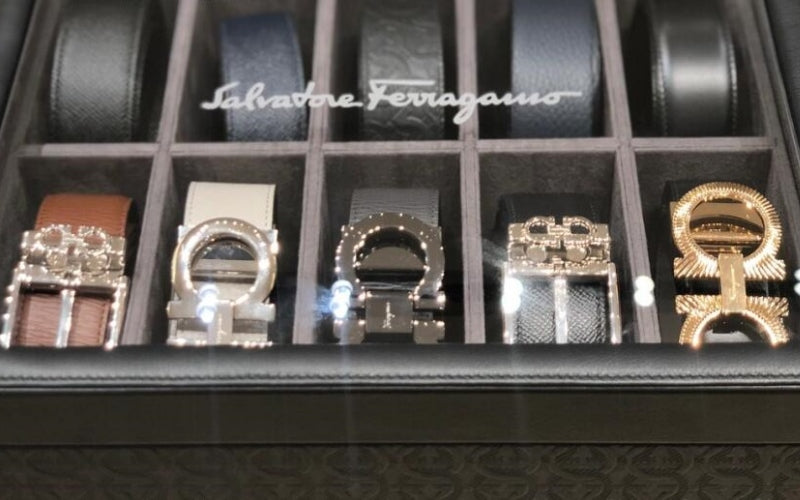
Q: Do expensive designer belts last longer than non-designer belts?
Not necessarily. Price alone doesn't guarantee durability — some $500 designer belts use coated canvas or corrected leather that fails the same way cheap leather does. What matters is material specs: full-grain leather, solid metal buckle, quality stitching. A well-made $100 DTC belt will often outlast a $400 logo-driven designer belt. For more on this, read do expensive belts last longer.
,%20buckle%20failure%20(bending/snapping),%20and%20stitch%20failure%20(unraveling).%20Each%20one%20points%20to%20a%20specific%20mater...)