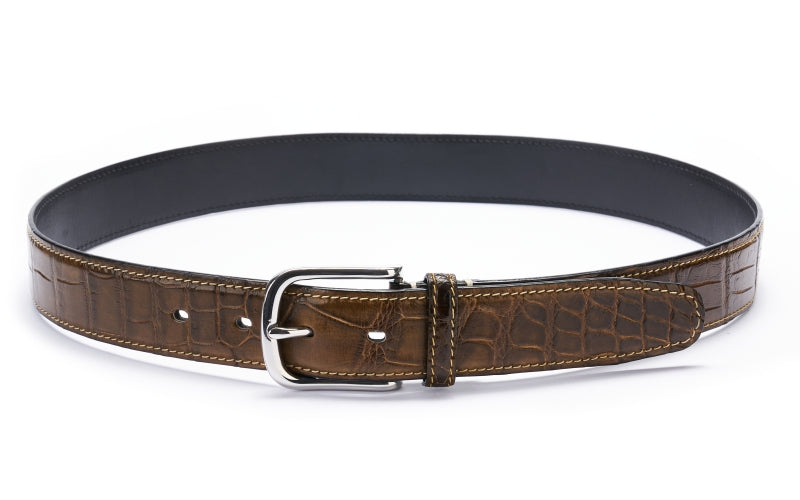
Why Do Leather Belts Smell Bad? (And How to Fix It)
TL;DR:
- Leather belts smell bad for five distinct reasons: new-leather chemical off-gassing, poor tanning, sweat absorption, mold from moisture, or low-quality materials (faux/bonded leather)
- A strong "new leather" smell from a quality belt is normal and fades within days to weeks — it's VOC off-gassing from tanning agents
- A fishy, plasticky, or chemical smell usually means faux leather, bonded leather, or low-grade genuine leather — not a fix-able problem
- Baking soda, white vinegar, and activated charcoal are the three most effective home remedies for genuine leather odor
- Never use heat, water saturation, or alcohol on leather — these cause permanent damage
A new belt arrives. You open the box, and instead of that warm, rich leather scent, you get something closer to chemicals, fish, or wet dog. Or you pull out a belt you haven't worn in months and it smells musty. Or your everyday belt has started picking up a sweaty odor that won't go away.
Not all leather smells are the same problem — and not all of them have the same fix. Before reaching for the baking soda, you need to identify what kind of smell you're dealing with, because the cause determines the cure. This guide breaks down every type of leather belt smell, what it means, and exactly what to do about it.
Why Does a New Leather Belt Smell So Strong?
A strong smell from a brand-new leather belt is almost always normal — it's the result of volatile organic compounds (VOCs) off-gassing from the tanning, dyeing, and finishing chemicals used in production. These compounds are not intentionally added to create a scent; they're residual chemicals that evaporate at room temperature.

A 2021 study of natural upholstery leathers identified over 40 VOCs in new leather off-gassing, including formaldehyde, toluene, and xylene — with concentrations highest when the leather is new and diminishing naturally within days to weeks of airing out. For belts, which have relatively low surface area, this process is faster.
The smell varies dramatically by tanning method. Vegetable-tanned leather has a rich, earthy, almost sweet organic smell — the classic "leather scent" most people associate with quality goods. Chrome-tanned leather, which accounts for roughly 80% of global leather production, can have a slightly metallic, chemical, or "horse blanket" undertone when new, because chromium salts and synthetic finishing agents take longer to off-gas fully.
Neither of these is a sign of a defective belt. Give it a few days hanging in a well-ventilated room — away from direct sunlight — and the smell will settle considerably. If you buy from BELTLEY's full-grain leather belt collection, the natural vegtan smell is actually something most buyers come to enjoy; it's the same smell quality leather goods have carried for centuries.
What Causes a Leather Belt to Smell Like Fish or Chemicals?
A fishy, plasticky, or sharply chemical smell — especially from a new belt — is a different problem entirely. This odor is characteristic of faux leather, bonded leather, or heavily processed genuine leather, not real full-grain or top-grain hide.
Faux leather (PU leather, vegan leather, bonded leather) uses phthalates — chemical plasticizers added to polyurethane to keep it flexible. Phthalates are notorious for producing a fishy or plasticky smell that doesn't fade the way natural VOCs do; it worsens as the material ages and the chemicals migrate to the surface, a pattern documented in the ECHA's phthalate hazard profile.
If your belt smells like fish or strong plastic chemicals and it was sold as "genuine leather" at a low price point, the honest answer is that the material itself is the source of the smell — and no amount of baking soda will eliminate it permanently. The smell is the product telling you what it's made of.
This is one of the most reliable sensory tests for leather quality. Real full-grain or top-grain leather does not smell like fish or plastic. If it does, something in the production used synthetic materials or very heavy processing with chemical binders. Our breakdown of full-grain leather belt vs. genuine leather goes into more detail on how these materials differ at a structural level — and why that difference shows up in smell, feel, and lifespan.
Why Does My Leather Belt Smell Musty or Moldy?
A musty, damp, or mildewy smell from a leather belt is caused by mold or bacteria growth — the result of the leather absorbing moisture and not drying properly before storage. Leather is a porous, natural material that readily absorbs humidity from the air. When it stays damp and sealed (in a drawer, a bag, a humid closet), it creates exactly the conditions mold needs.

This is a solvable problem, but it requires addressing the moisture source as well as the smell itself. Fix the smell without fixing your storage situation and it will return.
How to Fix a Musty Leather Belt
- Air it out first — hang the belt in a dry, well-ventilated area for 24–48 hours. Do not put it in direct sunlight. This step alone resolves mild musty cases.
- White vinegar wipe-down — mix equal parts distilled white vinegar and water. Dampen a soft cloth (not soaking wet) and wipe the belt surface in even strokes. Vinegar's acidity kills surface mold and neutralizes bacterial odor, as confirmed by peer-reviewed research on acetic acid's antifungal and antibacterial efficacy. Let it dry fully — 30–60 minutes — before handling.
- Condition after vinegar — vinegar is mildly drying to leather. Once the belt is fully dry, apply a light coat of quality leather conditioner to restore the surface oils. See our leather care guide for conditioner recommendations by leather type.
- Store differently — leather should be stored in a breathable environment, not sealed in plastic bags or packed in humid spaces. See what is the best way to store leather belts for a complete storage guide.
Why Does My Leather Belt Smell Like Sweat?
Leather is breathable and porous — which is part of what makes it comfortable to wear. The downside: it absorbs sweat, skin oils, and bacteria over time. A belt worn daily against skin accumulates these gradually, and eventually the bacteria break down the organic compounds into the compounds responsible for that sour, sweaty smell.
This type of odor is most common on the underside (flesh side) of the belt, near the buckle and the most-used holes — anywhere the leather contacts skin directly under friction.
How to Remove Sweat Odor from a Leather Belt
Baking soda is the most effective and safest method for sweat-based odor. Place the belt in a sealable bag or container with a generous layer of baking soda. Seal it and leave it for 24 hours. Baking soda is alkaline and absorbs the acidic compounds responsible for sweat smell without damaging the leather surface.
For persistent odor, repeat the baking soda treatment a second time. You can also try activated charcoal pouches — more powerful than baking soda for deep-seated odors, and completely safe for leather. Place the belt and one or two activated charcoal sachets in a sealed bag for 48 hours.
After either treatment, wipe the belt with a dry cloth and consider a light conditioning application. The should you condition your leather belt guide explains when conditioning helps and how often to do it.
Is a Bad-Smelling Leather Belt a Sign of Low Quality?
It depends entirely on the type of smell. A strong new-leather smell from a full-grain belt is not a quality indicator — it's chemistry, and it fades. A musty or sweaty smell from an older belt is a maintenance issue, not a material defect.

A persistent fish, plastic, or sharp chemical smell from a new belt is a quality signal — it indicates synthetic materials, bonded leather, or heavy chemical processing that won't resolve with time. Real full-grain leather does not smell like phthalates.
The smell test is one of the fastest quality checks available before purchase. Rich, warm, organic = real leather with natural tanning agents. Flat, plasticky, chemical = synthetic materials or heavily processed hide. Once you know the difference, your nose becomes a reliable shopping tool.
How to Get Bad Smells Out of a Leather Belt: 5 Methods That Work
Here is a ranked comparison of the most effective leather belt odor removal methods, matched to the smell type:
| Method | Best For | Safety | Time Required |
|---|---|---|---|
| Fresh air + ventilation | New-leather VOC smell | Completely safe | 2–7 days |
| Baking soda | Sweat, general odor | Completely safe | 24 hours |
| White vinegar + water | Mold, bacteria, musty smell | Safe if diluted | 1–2 hours + dry time |
| Activated charcoal | Chemical smell, persistent odors | Completely safe | 48–72 hours |
| Cedar chips/sachets | Long-term storage freshness | Completely safe | Ongoing |
Important: Coffee grounds are sometimes recommended online but should be used with extreme caution on leather — the oils in coffee can stain lighter-colored leather permanently. If you try this method, ensure grounds are completely dry and keep them from direct contact with the leather surface.
What You Should Never Do to a Smelly Leather Belt
Some odor-removal methods that work on fabric will permanently damage leather. Avoid these:

- Never soak leather in water. Leather absorbs water, which swells the fibers, causes irreversible stiffening, and promotes mold — the opposite of what you want. The Leather Conservation Centre's conservation guidelines detail water damage treatment and why prevention is critical for vegetable-tanned leather.
- Never use a hair dryer or direct heat. Heat dries out leather aggressively, causing cracking and shrinkage. This is also one of the fastest ways to destroy the surface finish of top-grain and full-grain leather.
- Never apply rubbing alcohol or acetone. These solvents strip the natural oils from leather, cause discoloration, and can permanently alter the surface finish. For why leather cracks and how to prevent it, see how to keep leather belts from cracking.
- Never put leather in a washing machine or dryer. The combination of water saturation, heat, and mechanical agitation will destroy any leather product beyond repair.
- Never spray perfume or deodorant directly on leather. The alcohol and propellants in aerosols dehydrate leather and leave permanent residue.
How to Prevent Leather Belt Odor Going Forward
The best odor management is prevention. A few habits make a significant difference:

Rotate your belts. Wearing the same belt every day doesn't give it time to breathe and dry between uses. Even rotating two belts doubles each belt's rest time and dramatically reduces sweat and bacteria buildup.
Condition regularly. A conditioned leather surface is more resistant to moisture absorption and bacterial penetration. Once or twice a year is enough for most belts. The 7 tips for keeping a leather belt in good condition guide covers the full maintenance routine.
Store properly. Hang belts or roll them loosely in a breathable space. Avoid sealed plastic bags, overcrowded drawers, or humid environments like bathrooms. Cedar blocks in your storage area help maintain a neutral, dry scent over time.
Wipe down occasionally. A quick wipe with a dry cloth after wearing — especially in hot weather — removes surface sweat before it absorbs deeply into the leather.
The Bottom Line
Leather belt odor falls into three buckets: normal chemistry that fades with time (new-leather VOC smell), a fixable maintenance issue (sweat or mold), or a material quality problem you can't conditioner away (faux or bonded leather). Identifying which bucket you're in determines whether you need patience, a baking soda treatment, or a different belt entirely.
For genuine full-grain leather — the kind built to last 20+ years — the smell story has a good ending: the new-leather smell fades, the belt develops a natural character, and with basic conditioning and sensible storage, odor is rarely a recurring problem. That's the built-in advantage of starting with quality material.
If you're noticing persistent chemical or fishy smells from a belt you've been wearing, it may be worth taking that as the diagnostic signal it is — and upgrading to something that will actually improve with time. BELTLEY's full-grain leather belt collection is a good place to start, backed by a 10-year warranty and made from hides that earn their smell.
Frequently Asked Questions
Q: Why does my new leather belt smell so strong?
New leather smell comes from VOCs — volatile organic compounds — left over from the tanning, dyeing, and finishing process. It's completely normal and fades within days to a few weeks of airing out. Hang the belt in a ventilated room away from direct sunlight. Vegetable-tanned leather smells earthy and warm; chrome-tanned leather may smell slightly chemical or metallic initially.
Q: Why does my leather belt smell like fish?
A fishy smell almost always indicates synthetic materials — faux leather, bonded leather, or heavily processed genuine leather containing phthalate plasticizers. Phthalates are used to keep PU (polyurethane) flexible and produce a characteristic fish-like odor that worsens over time rather than fading. Real full-grain or top-grain leather does not smell like fish.
Q: Can baking soda damage leather?
No. Baking soda is one of the safest odor-removal methods for leather. It absorbs odor without stripping oils or damaging the surface finish. Apply generously, leave for 24 hours in a sealed container, then brush or wipe off. Repeat if needed. Always condition the leather afterward as a good practice.
Q: Will the leather smell go away on its own?
For new-leather VOC smell: yes, within days to weeks with ventilation. For sweat or bacterial odor: not without intervention — it will worsen without treatment. For musty/mold smell: not without addressing both the smell and the moisture source. For faux leather chemical smell: no — it's a material characteristic, not a surface issue.
Q: How often should I condition my leather belt to prevent odor?
Once or twice a year is sufficient for most leather belts. Conditioning keeps the leather surface flexible and less porous to sweat and bacteria. Over-conditioning can make leather too soft and increase absorption — so more is not better. After any vinegar or baking soda treatment, a single light conditioning application is recommended.
Q: Is a smelly leather belt ruined?
Not necessarily. Sweat odor, musty smell, and new-leather VOC smell are all treatable with the methods above. A belt is effectively "ruined" by smell only if the odor is embedded in synthetic material that cannot be treated (faux or bonded leather) or if moisture damage has progressed to advanced mold growth that has structurally compromised the hide. In most cases of genuine leather, the smell is a maintenance issue, not a material death sentence.
%0AA%20str...)