Is Calfskin Better Than Regular Leather? An Honest Comparison
TL;DR:
- "Better" depends on use. Calfskin wins for fine, smooth, refined goods (dress belts, formal wallets, luxury shoes).
- Regular cowhide wins for rugged durability at lower cost (workwear, casual belts, heavy bags).
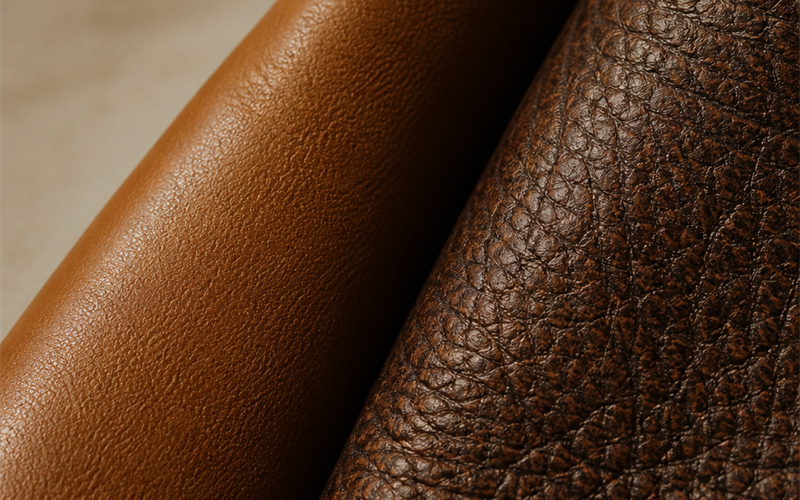
- Calfskin has finer, denser fiber structure — smoother surface, takes dye more evenly.
- Calfskin costs 2–4x more than equivalent cowhide because the hides are smaller and less common.
- For dress belts and elegant accessories, calfskin is genuinely better. For a $30 workhorse belt, it's overkill.
"Calfskin is better than regular leather." You see this claim on every luxury brand's product page, and most people just nod along. But is it actually true? The honest answer is: yes for some things, no for others, and the marketing has been hiding the nuance for decades.
This guide gives you the straight comparison between calfskin and regular cowhide leather. What "regular leather" actually means, where calfskin earns its premium, and where it doesn't. If you're trying to decide whether to upgrade to a calfskin belt, this answers the underlying question first.
What does "regular leather" actually mean?
"Regular leather" usually means adult cowhide — leather sourced from mature cattle, the most common leather on Earth. It accounts for roughly 65% of global leather production according to FAO hides and skins data. When a generic belt says "genuine leather" or "real leather," it almost always means cowhide somewhere in the top-grain or split-grain tiers.

The leather grade hierarchy:
- Full-grain cowhide — strongest, most durable, develops patina
- Top-grain cowhide — sanded to remove imperfections; less character
- Genuine leather — bonded or split layers; lowest real leather tier
- Bonded leather — leather scraps glued together; technically leather but barely
When people say "calfskin vs regular leather," they usually mean calfskin vs adult cowhide of unspecified grade. Britannica's leather entry covers this distinction in depth.
What makes calfskin technically different?
Calfskin differs from adult cowhide in three measurable ways: fiber density, hide thickness, and surface fineness. Calves are slaughtered young (6–9 months), so their hides haven't developed the coarse fiber structure of mature cattle. The result is a smaller, thinner hide with a tighter grain — visually finer, more uniform, and more refined-feeling to the touch.

The technical comparison:
| Property | Calfskin | Adult Cowhide |
|---|---|---|
| Hide thickness | 0.6–1.2mm | 2–5mm |
| Fiber density | High | Moderate |
| Grain pattern | Fine, uniform | Coarser, more visible |
| Hide size | Smaller (8–12 sqft) | Larger (40–55 sqft) |
| Stretch resistance | Excellent | Good |
| Dye penetration | Even | More variable |
| Price (per sqft) | $$$ | $ |
We covered the fiber-density side in detail in our calfskin hide anatomy post — the short version is that smaller, denser fibers create a surface that takes dye, polish, and finish more cleanly than coarser cowhide.
When is calfskin genuinely better than regular leather?
Calfskin is genuinely better when the application requires fineness, smoothness, formality, or refined visual quality. Dress belts, formal shoes, luxury wallets, fine leather gloves, and high-end watch straps all benefit measurably from calfskin's tighter grain and more uniform finish. The advantages aren't marketing — they're visible at arm's length.

Where calfskin wins:
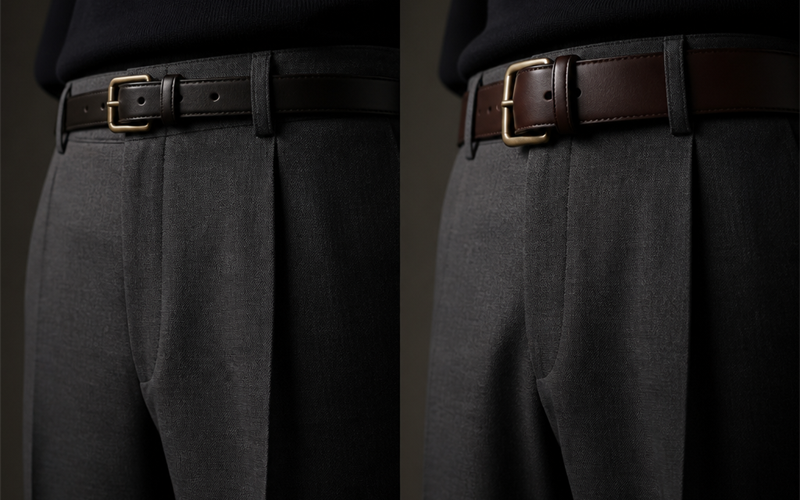
- Dress belts — smoother surface, holds polish better, slim widths look more refined
- Dress shoes — finer grain takes a higher polish, ages with more elegant patina
- Formal wallets and small leather goods — cleaner edges, finer stitching, smaller scale
- Luxury watch straps — fine grain looks correct on a watch case
- Bookbinding, gloves, jewelry boxes — anywhere the leather surface is the visual feature
Stridewise's interview with tanner Ed Gallun covers exactly this distinction — for fine work, calfskin's finer grain isn't a luxury, it's a functional requirement.
When is regular cowhide actually the better choice?
Regular cowhide is the better choice when the application requires rugged durability, thickness, or low cost. Work belts, heavy duffel bags, saddles, motorcycle gear, and casual everyday belts under $100 all work better with thicker, more durable adult cowhide. Calfskin in these applications is either overkill or actively inferior to a properly tanned full-grain cowhide.

Where cowhide wins:
- Workwear belts — thicker, takes abuse, doesn't need refinement
- Casual everyday belts — full-grain cowhide is excellent at this job; calfskin is unnecessary
- Heavy bags and luggage — needs hide thickness calfskin can't provide
- Saddlery, harness, equestrian — needs the structural body of adult leather
- Boot uppers (work boots) — thicker, more abrasion-resistant
- Anything under $80 — calfskin pricing makes this product tier impossible
The good news: a properly tanned full-grain cowhide belt is an excellent product. It's not a downgrade — it's a different tool. We compared the two head-to-head in our calfskin vs cowhide post.
Why does calfskin cost 2–4x more than cowhide?
Calfskin costs more because of smaller hide size, lower availability, and higher processing care. A single calfskin hide yields a third the usable surface area of an adult cowhide, but the labor to tan and finish each hide is similar — sometimes higher because the leather is delicate. Multiply that across the supply chain and the price gap widens.

The cost drivers:
- Hide yield: One calf = ~10 sqft usable. One cow = ~50 sqft. Five calves equal one cow in surface area.
- Availability: Most cattle are raised to maturity for beef. Veal-industry hides are a smaller, more variable supply.
- Tannery care: Calfskin is more delicate during tanning — slower processes, more careful finishing.
- Demand premium: Luxury houses (Hermès, Loro Piana, top shoemakers) buy the best calf supply, pushing market prices up.
CITES and the Leather Working Group track hide supply data — the structural scarcity of premium calfskin isn't going away, which is why prices remain elevated relative to cowhide.
The Bottom Line
Is calfskin better than regular leather? Yes for dress belts, formal shoes, and refined accessories. No for workwear, heavy-duty applications, or anything below the $80 price tier where cowhide simply gives better value. The marketing claim that "calfskin is better" is half-true — it depends entirely on what you're asking the leather to do.
At BELTLEY, our dress belts are full-grain calfskin because dress belts deserve the finer grain. Our heavier casual belts use full-grain adult cowhide because they're built for different jobs. Same brand, same 10-year warranty — different leather for different applications. The honest answer is "use the right tool," not "always pay more."
If you're shopping for a refined dress belt, browse our calfskin collection. If you want a rugged everyday belt, our full-grain cowhide collection is the better starting point.
Frequently Asked Questions
Q: Is calfskin real leather?
Yes. Calfskin is real leather sourced from young cattle (typically 6–9 months old). It's a subset of cowhide, not a separate animal — just from younger animals with finer grain structure.
Q: Does calfskin last as long as cowhide?
For dress belts and small leather goods, yes — calfskin lasts 10–20+ years with care. For heavy-duty workwear, thicker adult cowhide outlasts calfskin because of sheer hide thickness.
Q: Is "Italian leather" the same as calfskin?
Not necessarily. "Italian leather" refers to where the leather was tanned, not the animal. Italian tanneries produce both calfskin and adult cowhide. Look for "Italian calfskin" specifically to get both.
Q: Why do luxury brands use calfskin so much?
Because calfskin's fine grain photographs well, takes dye uniformly, and reads as "refined" in finished goods — exactly what luxury marketing rewards. The premium pricing also supports luxury margins.
Q: Is calfskin always full-grain?
No. Calfskin can be split, top-grain, or full-grain just like cowhide. Always look for "full-grain calfskin" specifically — that's the premium tier.

.%0ARegular%20cowhide%20wins%20for%20rugged%20durability%20at%20lower%20cost%20(workwear,%20casua...)