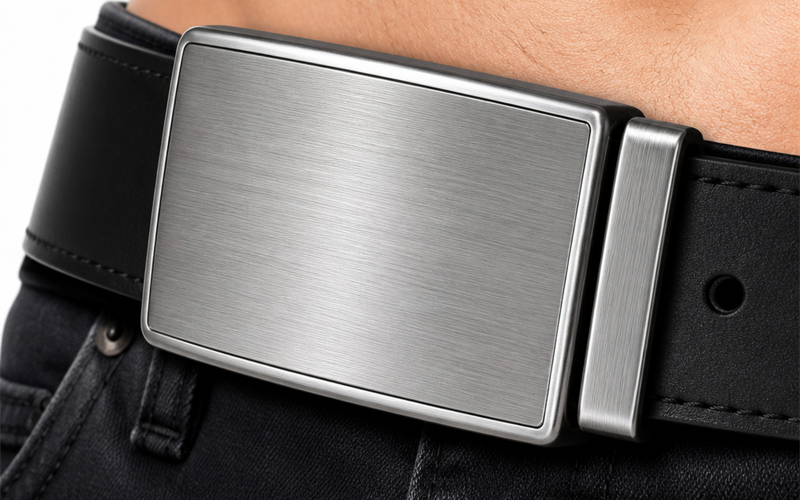
Hypoallergenic Belt Buckles: A Nickel-Allergy Guide
Quick answer: For a nickel allergy, the safest belt buckles are titanium (biocompatible and nickel-free), solid brass (a copper-zinc alloy with no nickel), and 316L surgical-grade stainless steel (releases very little nickel). Avoid cheap nickel-plated and unmarked zinc-alloy buckles, which release the most nickel and trigger rashes.
Last updated: May 2026 • By BELTLEY Editorial
TL;DR:
- Titanium — biocompatible, nickel-free, the gold standard for sensitive skin.
- Solid brass — copper and zinc, contains no nickel at all.
- 316L surgical steel — releases very little nickel; fine for most sensitivities.
- Avoid nickel-plated finishes and cheap zinc-alloy buckles — the worst offenders.
That itchy red mark above your waistband may not be your imagination — it is one of the most common metal allergies in the world reacting to your belt buckle. Nickel hides in cheap hardware, and for millions of people it means a persistent rash. The fix is choosing a hypoallergenic belt buckle made from the right metal. This guide explains why nickel causes the reaction and exactly which buckle materials are safe to buy. For help picking quality hardware in general, see how to choose a good leather belt.

Why do belt buckles cause a nickel rash?
Belt buckles cause a rash when they release nickel that contacts sweaty skin, triggering allergic contact dermatitis. Nickel is the most common contact allergen, and the reaction depends on how much nickel the metal releases at the surface — not how much it contains overall.

This release mechanism is the key. Nickel allergy is the most common contact allergy in industrialized countries, affecting around 8% to 19% of adults, and the risk of a reaction is tied to the nickel an object's surface gives off rather than its total nickel content. Sweat accelerates that release, which is why a buckle pressed against your warm midsection is a classic trigger point. The solution is hardware that contains no nickel, or locks it in tightly.
Is titanium a good hypoallergenic buckle?
Titanium is the best hypoallergenic buckle material. It is nickel-free and one of the most biocompatible metals known — so biocompatible it is used for surgical implants — which makes it virtually non-reactive against even very sensitive skin.

The same properties that make titanium ideal for orthopedic and dental implants make it excellent for a buckle worn all day: it is inert, corrosion-resistant, and remarkably light. For anyone with a severe nickel allergy who has reacted to other "hypoallergenic" claims, titanium is the safest bet. It is the premium choice, and it earns the price for the most sensitive wearers.
Are solid brass and stainless steel safe for nickel allergies?
Solid brass is safe because it is an alloy of copper and zinc with no nickel at all. 316L surgical-grade stainless steel is safe for most people because it releases very little nickel, even though it contains a small amount.

Brass is genuinely nickel-free, which makes a solid brass buckle a comfortable, affordable option — just confirm it is solid brass, not nickel-plated. As for stainless, marine-grade 316L locks its nickel into a stable structure and releases minimal amounts, so most people with mild-to-moderate sensitivity wear it without trouble; you'll find 316L options among our stainless steel buckle belts. Those with severe allergies should still favor titanium.
| Material | Nickel content | Allergy safety | Notes |
|---|---|---|---|
| Titanium | None | Best | Biocompatible, light, premium |
| Solid brass | None | Excellent | Confirm it's not nickel-plated |
| 316L stainless | Low, locked in | Good for most | Releases very little nickel |
| Nickel-plated zinc | High at surface | Worst | Common trigger — avoid |
Key stat: Nickel allergy affects roughly 8–19% of adults in industrialized countries — making it the single most common contact allergy, and the most likely reason a belt buckle leaves a rash.
What buckles should nickel-allergic men avoid?
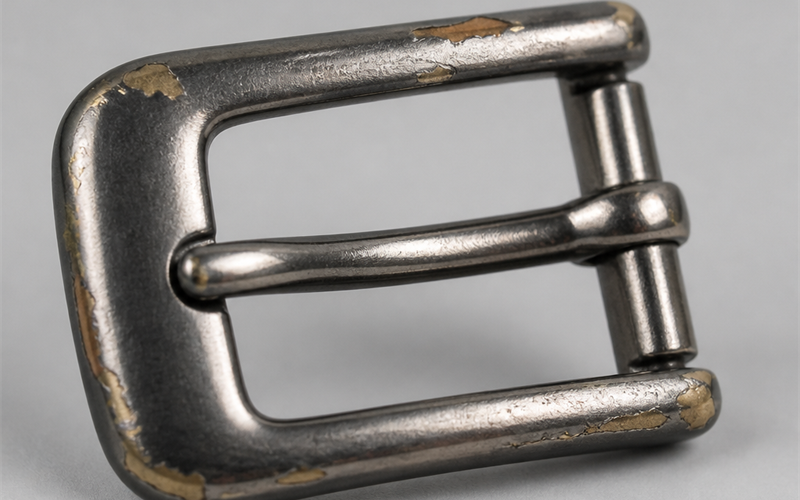
Nickel-allergic wearers should avoid nickel-plated buckles and cheap, unmarked zinc-alloy buckles. These release the most nickel at the surface, especially as the plating wears, exposing more reactive metal to sweat and skin.

The danger zone is the bargain bin. Mass-market buckles are frequently die-cast zinc with a nickel or chrome plating, and as that thin coating wears, nickel release can increase right where the buckle meets your skin. If a buckle's material is not clearly stated, treat it as suspect. Knowing whether a buckle can even be swapped helps if you want to replace a reactive one on a belt you love.
The Bottom Line
A belt buckle rash is almost always nickel, and the cure is simply choosing the right metal. Titanium leads the field — nickel-free, biocompatible, and safe even for severe sensitivities. Solid brass is a nickel-free, budget-friendly alternative, and 316L surgical stainless steel works for most people thanks to its minimal nickel release. The buckles to avoid are the cheap, plated, zinc-alloy kind, where nickel sits right at the surface. Match the metal to your skin, and the rash disappears for good. Explore BELTLEY's belt buckles collection for skin-friendly, solid-metal hardware.
Frequently Asked Questions
Q: What is the most hypoallergenic belt buckle material?
Titanium is the most hypoallergenic. It contains no nickel and is highly biocompatible — the same reason it is used for medical implants — so it rarely reacts even with very sensitive skin. Solid brass and 316L surgical stainless steel are also good, lower-cost options.
Q: Does stainless steel contain nickel?
Most common stainless steels, including 304 and 316L, contain some nickel. The difference is that quality grades like 316L lock the nickel into a stable structure and release very little, so most people with mild sensitivity tolerate it well. Those with severe nickel allergies should choose titanium or solid brass.
Q: Is solid brass nickel-free?
Yes. Solid brass is an alloy of copper and zinc with no nickel, making it a genuinely nickel-free buckle option. The only caution is to confirm the buckle is solid brass and not a nickel-plated piece, since plating would reintroduce the allergen at the surface.
Q: Can a PVD coating stop a nickel reaction?
A hard PVD coating over a low-nickel base like 316L stainless can act as a barrier that further reduces nickel release. For added security, pairing PVD with a nickel-free base such as titanium or solid brass is the most reliable approach for sensitive skin.
,%20solid%20brass%20(a%20copper-zinc%20alloy%20with%20no%20nickel),%20and%20316L%20surgical-grade%20stainless%20steel%20...)