How to Style a Waist Belt Over a Cardigan, Coat, or Dress
Quick answer: To style a belt over layers, place it at the narrowest part of your natural waist — just above the belly button — over the outermost piece you want to define, like a cardigan, coat, blazer, or dress. Use a medium-to-wide belt for structured layers (coats) and a slimmer one for softer pieces, let the layer blouse slightly over the belt for shape, and match or contrast the belt color deliberately.
Last updated: June 2026 • By BELTLEY Editorial
TL;DR:
- Place the belt at the narrowest part of your natural waist, above the belly button.
- Wider belts suit structured coats; slimmer belts suit soft cardigans and dresses.
- Let the layer blouse slightly over the belt for a flattering, effortless shape.
- Match or contrast the belt color on purpose — both work, randomness doesn't.
Belting over a layer is one of the fastest ways to transform a shapeless outfit — an open cardigan, an oversized coat, a loose dress — into a defined, intentional look. But do it wrong and it looks awkward or adds bulk. This guide covers exactly where to place the belt, what width to use over different layers, and the small tricks that make it flattering. For matching principles generally, see our guide on how to match a belt with your outfit for ladies.

Belting the Layer: Quick Placement Guide
By what you're cinching:
| Your situation | Go with |
|---|---|
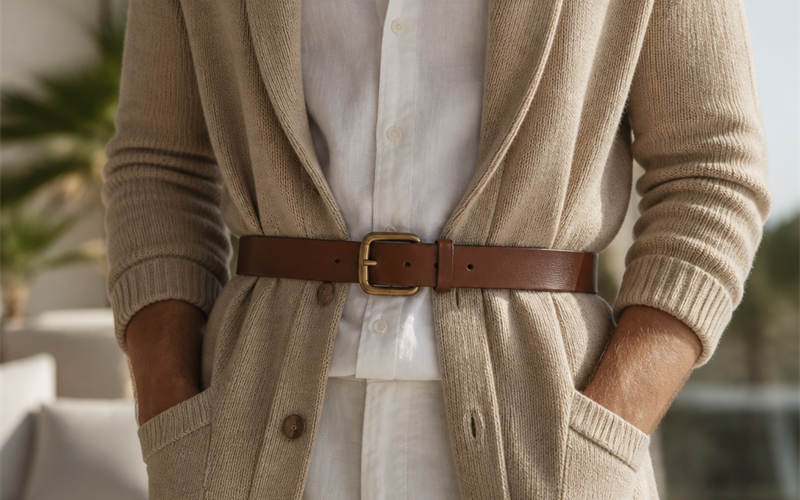
| Chunky cardigan | Medium width at the natural waist, gentle blouse above — soft structure. |
| Wool coat | Wider structured belt (1.5"+) — heavy fabric needs authority. |
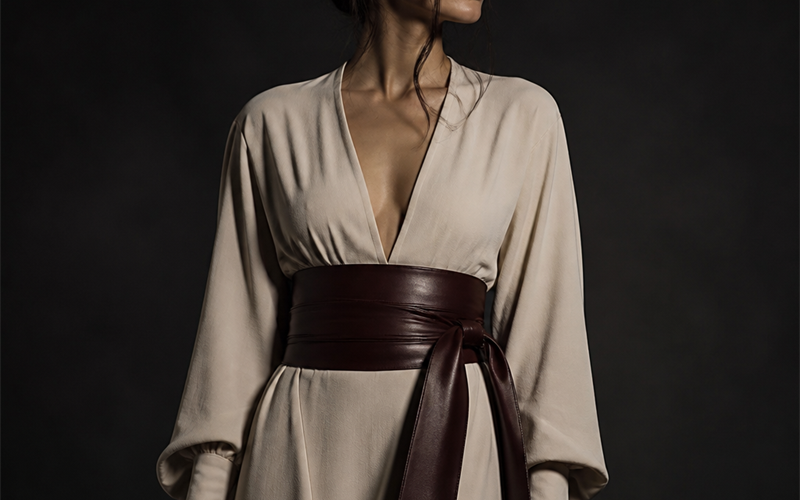
| Flowy dress | Slim-to-medium at the narrowest point — definition without bulk. |
| Match or contrast call | Tonal = elegant elongation; contrast = the belt becomes the outfit's punctuation. |
Waist-belt widths across the range: BELTLEY's women's collection.
Where should you place a belt over a layer?
At the narrowest part of your natural waist — typically just above your belly button, below the ribcage. Belting at your true waist creates the most flattering hourglass definition, whatever the layer. Placing it too low (at the hips) or too high (at the ribs) loses the shaping effect and can look off-balance. Aim for that natural waist sweet spot.

Placement is the single biggest factor in whether a belted layer looks good. Your natural waist — the narrowest point of your torso — is where a belt creates the cinch that reads as an hourglass. Over a cardigan, coat, or dress, find that point and belt there, not at the hip-level where trouser belts sit. Stylist Imogen Lamport of Inside Out Style notes that belting over a layer works best when you "have a small waist and want to highlight it" — placing the belt at that narrowest point is what creates the definition. The reference on the belt describes it as worn "around the natural waist or near it," and for layering, the natural waist is exactly the target. Get the height right and even a simple belt over a basic cardigan instantly looks styled. Get it wrong and the same belt adds bulk or confusion. When in doubt, belt a little higher rather than lower.
What belt width works over different layers?
Match width to the layer's weight and structure. Use a medium-to-wide belt over structured, bulky layers like coats and chunky cardigans, where a thin belt would get lost; use a slimmer belt over softer, lighter pieces like fine-knit cardigans and dresses, where a wide belt can overwhelm. The belt should feel proportional to the layer it's cinching.

Key stat: The rule of thumb is proportion — a belt should be roughly proportional to the bulk of what it's cinching, which is why a wide belt suits a heavy coat and a slim belt suits a fine dress: matching width to weight keeps the waist defined without adding bulk.
Here's a quick width guide for layering:
| Layer | Belt width | Effect |
|---|---|---|
| Heavy coat / chunky knit | Medium to wide | Holds structure, bold cinch |
| Blazer | Medium | Balanced definition |
| Fine cardigan | Slim to medium | Subtle shape |
| Dress | Slim to medium | Elegant waist definition |
| Oversized layers | Wider | Tames volume |
The principle is proportion: the heavier and bulkier the layer, the more belt width you need to define it without disappearing. A wide belt over a thin dress can overwhelm; a thin belt over a heavy coat vanishes. Choosing the right width is what makes the cinch look intentional. For the structured belts that do this well, our women's belts collection covers the range.
How do you make a belted layer look flattering, not bulky?
Let the layer blouse slightly over the belt, keep the cinch comfortable (not crushing), and choose width by proportion. Pull a little fabric up so it softly drapes over the belt's top edge rather than pulling everything tight and flat. This adds a relaxed, flattering shape and hides any bunching, turning a cinched layer into an effortless-looking one.

The blousing trick is the secret to a polished belted layer. Instead of cinching the garment flat against your body, gently pull a bit of fabric up and over the belt so it drapes softly — this creates a relaxed, shaped silhouette and conceals any awkward bunching at the waist. Don't over-tighten; the belt should define, not constrict. With an open cardigan or coat, belt it closed at the waist while letting the lower part fall open for a long, lean line. These small adjustments separate an intentional look from a clumsy one. The goal is shape without bulk — the same flattering-fit thinking in our guides on using a belt to define and flatter the waist.
Should the belt match or contrast the layer?
Either works — just decide on purpose. A belt that matches the layer's color creates a streamlined, elegant, monochrome look that elongates the figure; a contrasting belt makes the waist a bold focal point and adds visual interest. Both are valid; the mistake is a random, unconsidered color that clashes rather than coordinates.

Color is a styling choice, not an accident. A tonal, matching belt blends into the outfit for a long, seamless line — flattering and understated. A contrasting belt (a tan belt over a navy coat, a black belt over a camel cardigan) draws the eye to the waist and makes a statement. Pick based on the effect you want: streamlined or bold. What doesn't work is grabbing a belt whose color neither matches nor deliberately contrasts, which just looks like an afterthought. Coordinate it with your shoes or another accessory for cohesion, following the logic in choosing the perfect belt color for women. A quality leather belt in a versatile neutral — black, brown, or tan — covers most layering needs and always looks intentional.
The Bottom Line
Belting over a cardigan, coat, blazer, or dress is one of the easiest style upgrades there is — the keys are placement, width, and a little finesse. Belt at the narrowest part of your natural waist, match the belt's width to the layer's bulk (wide for coats, slim for soft pieces), let the fabric blouse gently over the belt for an effortless shape, and choose a matching or contrasting color on purpose. Done right, a belt turns a shapeless layer into a defined, intentional outfit. A quality leather belt in a versatile neutral is the tool that makes it work every time. Find structured, well-made options in our women's belts collection, built full-grain and priced without a Brand Tax.
Frequently Asked Questions
Q: Where do you put a belt over a cardigan or coat?
Place it at the narrowest part of your natural waist, just above your belly button and below your ribcage. Belting at your true waist creates the most flattering hourglass definition. Avoid belting at hip level (too low) or at the ribs (too high), which lose the shaping effect.
Q: What width belt should I wear over a coat?
Use a medium-to-wide belt over a coat or other structured, bulky layer — a thin belt gets lost against heavy fabric. For softer, lighter pieces like fine cardigans and dresses, choose a slimmer belt. The belt's width should feel proportional to the bulk of the layer it's cinching.
Q: How do I belt a layer without looking bulky?
Let the layer blouse slightly over the belt by pulling a little fabric up so it drapes softly over the top edge, rather than cinching everything tight and flat. Keep the belt comfortable, not crushing, and match the width to the layer. This creates a relaxed, flattering shape and hides bunching.
Q: Should a belt match the cardigan or contrast it?
Both work if done deliberately. A matching, tonal belt creates a streamlined, elongating look; a contrasting belt makes the waist a bold focal point. Choose based on the effect you want. The only mistake is a random color that neither matches nor purposefully contrasts — coordinate it with your shoes or outfit.