How to Donate or Recycle a Worn-Out Leather Belt
Quick answer: If a leather belt is still wearable, donate it to a charity shop, thrift store, or clothing-donation bin. If it's worn out, leather is hard to conventionally recycle (it's tanned, not like paper or plastic), so the best options are repurposing it, sending it to a specialist leather or textile recycler, or salvaging the buckle. Avoid landfill where you can — donation and reuse are far more sustainable than binning it.
Last updated: June 2026 • By BELTLEY Editorial
TL;DR:
- Wearable belt? Donate it — charity shops and thrift stores take belts.
- Worn out? Leather isn't easily recycled like paper or plastic.
- Best end-of-life: repurpose, specialist recycling, or salvage the buckle.
- Avoid landfill — reuse and donation are the most sustainable choices.
When a belt's life with you ends, the bin shouldn't be the default. A still-good belt can serve someone else, and even a worn one has a buckle and leather worth saving. But leather is genuinely tricky to recycle, so it helps to know your real options. This guide covers donating, the truth about recycling leather, and the most sustainable way to part with a belt. For creative reuse, pair it with our guide on what to do with old leather belts.

Retiring a Belt: The Responsible Routes
By the belt's remaining life:
| Your situation | Go with |
|---|---|
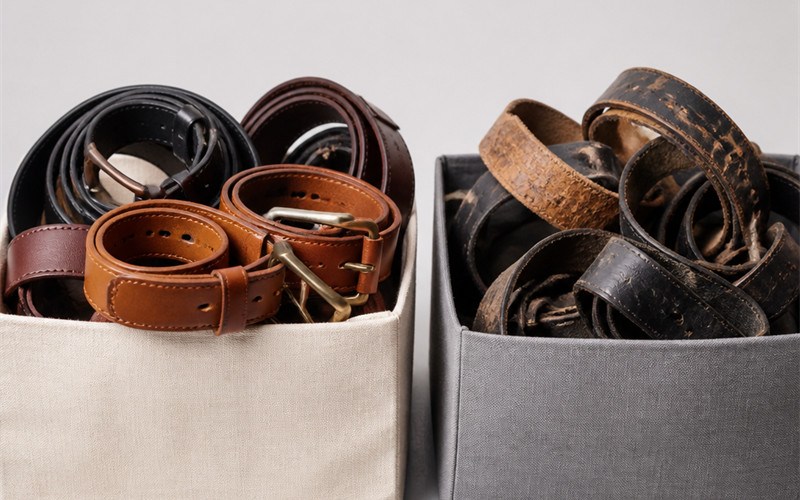
| Still wearable, just replaced | Donate — thrift stores move belts fast; someone needs exactly this. |
| Strap dead, buckle solid | Salvage the hardware — solid brass buckles outlive several straps. |
| Truly worn out | Leather/textile recycler or repurpose (plant ties, drawer pulls, camera straps) — landfill last. |
| Breaking the replace-cycle | The next belt should be the last for a decade — full-grain from $58 with a 10-year warranty. |
The buy-less-often option: BELTLEY's full-grain collection.
Can you donate a used leather belt?
Yes — if it's still wearable, a used leather belt is welcome at most charity shops, thrift stores, and clothing-donation bins. Belts are useful, in-demand accessories, and a clean, intact belt with a working buckle finds a new owner easily. Give it a quick wipe and condition before donating so it presents well.

Donation is the best outcome for any belt with life left in it. Charity and thrift organizations readily accept accessories, and a quality leather belt is exactly the kind of durable, reusable item they want. Before you drop it off, clean and condition it so it looks its best — a presentable belt is more likely to sell and serve someone, as covered in our leather care guide. Make sure the buckle works and the leather isn't cracked through; donating something genuinely worn out just shifts the disposal problem. For a belt that's too small, out of style for you, or simply unused, donation keeps a good product in circulation and is far better than landfill.
Is leather actually recyclable?
Not easily through conventional recycling. Unlike paper, glass, or plastic, leather is tanned animal hide, and standard curbside recycling programs don't accept it. Some specialist leather and textile recyclers can process leather scraps into new materials, but these are limited. For most people, repurposing or donating is more practical than recycling.

Key stat: Recycling means "converting waste materials into new materials and objects," but tanned leather's chemically treated fibers make it far harder to process than paper or plastic — which is why reuse and repurposing, not curbside recycling, are usually the realistic options.
The recycling reality is nuanced. Tanned leather is a chemically stabilized material designed to last, which is exactly what makes it hard to break down and reprocess. As RecycleNation explains, "belts cannot be recycled per se" the way plastic is melted down — so it advises donating a belt "still in good shape" and notes that "if the buckle on your belt is metal, you might be able to remove it and recycle it" separately. Curbside programs won't take it, and dedicated leather recycling is specialized and not widely available. Here's how the end-of-life options actually stack up:
| Option | Practicality | Sustainability |
|---|---|---|
| Donate (if wearable) | High | Best |
| Repurpose/upcycle | High | Excellent |
| Salvage the buckle | High | Excellent |
| Specialist leather recycler | Limited availability | Good |
| Curbside recycling | Not accepted | N/A |
| Landfill | Easy but wasteful | Worst |
Our piece on whether leather belts are recyclable goes deeper, but the headline is clear: reuse beats recycling for leather, because recycling it is genuinely difficult.
What's the most sustainable way to part with a worn belt?
Reuse it in some form rather than discarding it. The most sustainable options are donating a wearable belt, repurposing the leather into useful items, and salvaging the metal buckle for another strap. These keep the material in use and out of landfill. Specialist recycling is a fallback; the bin is a last resort.

Sustainability with leather is really about reuse, because the material is durable but hard to recycle. A wearable belt should be donated; a worn one should be repurposed or have its buckle saved. The solid metal buckle, in particular, can outlast many straps and be moved to a new belt — a small act with real impact, as covered in our guide on repurposing old belts. Only when none of these is possible should a belt go to landfill, and even then, a quality full-grain belt rarely reaches that point quickly because it lasts so long. The most sustainable belt is one that's well-made enough to be worn for years, restored, donated, and finally repurposed — a long chain of use rather than a quick trip to the trash.
Why does buying quality reduce belt waste?
Because a durable, full-grain belt lasts for years and stays useful at the end of its life, while a cheap bonded belt wears out fast and offers little to donate, repurpose, or recycle. Quality belts generate far less waste over time — one good belt outlasts many disposable ones, and its leather and buckle remain reusable.

The most sustainable choice happens at purchase. A fast-fashion belt that cracks within a year or two heads to landfill quickly and has no usable leather or salvageable hardware. A quality full-grain belt with a solid buckle lasts for years or decades, can be restored repeatedly, donated when you're done, and finally repurposed — keeping it out of the waste stream far longer. This is the quiet sustainability of buying well once. The BELTLEY standard of full-grain leather, a stainless or solid brass buckle, and sealed edges, backed by a 10-year warranty, is built for exactly this kind of long, reusable life. Fewer, better belts mean less waste — explore them in our full-grain leather belts collection.
The Bottom Line
When you're done with a leather belt, reuse beats the bin every time. A still-wearable belt should be donated to a charity shop or thrift store — clean and condition it first. A worn-out belt is hard to recycle conventionally, since tanned leather isn't accepted curbside, so repurpose the leather, salvage the solid buckle, or seek a specialist recycler. Landfill is the last resort. The deepest sustainability, though, comes from buying a quality belt that lasts for years and stays useful at the end — generating far less waste than a string of cheap, disposable ones. Choose belts built for that long life in our full-grain leather belts collection.
Frequently Asked Questions
Q: Can you donate old leather belts?
Yes, if they're still wearable. Charity shops, thrift stores, and clothing-donation bins accept belts, which are in-demand accessories. Clean and condition the belt first so it presents well and is more likely to find a new owner. Avoid donating belts that are cracked through or genuinely worn out.
Q: Is leather recyclable?
Not through conventional curbside recycling. Tanned leather is chemically treated animal hide, which standard programs don't accept and which is hard to reprocess. Some specialist leather and textile recyclers exist but are limited. For most people, donating a wearable belt or repurposing a worn one is more practical than recycling.
Q: How do you dispose of a worn-out leather belt sustainably?
Reuse it rather than binning it: repurpose the leather into useful items, salvage the metal buckle for another strap, or find a specialist leather recycler. Donate it if it's still wearable. Landfill should be the last resort, since reuse keeps the durable material in service and out of the waste stream.
Q: Does buying a quality belt reduce waste?
Yes, significantly. A durable full-grain belt lasts years or decades, can be restored repeatedly, donated when you're done, and finally repurposed — keeping it out of landfill far longer than a cheap belt that quickly cracks and has no reusable leather or hardware. Buying quality once is a genuinely sustainable choice.