Obi & Sash Belts vs Traditional Belts — The Wrap-Belt Guide
Quick answer: An obi or sash belt is a wide "wrap belt" that ties or wraps around the waist instead of fastening with a buckle and holes. Inspired by the Japanese obi and the classic sash, these belts are decorative and waist-defining rather than trouser-holding — they cinch dresses, tunics, coats, and high-waisted looks. Traditional buckled belts are functional and structured; wrap belts are soft, dramatic, and primarily about silhouette.
Last updated: June 2026 • By BELTLEY Editorial
TL;DR:
- An obi/sash belt is a wide wrap belt that ties instead of buckling.
- It's decorative and waist-defining — for shape, not holding up trousers.
- Rooted in the Japanese obi and the classic sash.
- Best over dresses, tunics, coats, and high-waisted looks; mostly womenswear.
Not every belt has a buckle. The obi and sash belong to a whole family of "wrap belts" that tie or fold around the waist to define the silhouette — a different tool with a different job from your everyday buckled strap. This guide explains what obi and sash belts are, where they come from, how they differ from traditional belts, and how to wear one. For the buckled-belt world, our overview of different types of belts with names is a good companion.

Wrap or Buckle: Which Job Today?
Two belt species, different missions:
| Your situation | Go with |
|---|---|
| Holding trousers up | Traditional buckled belt — wraps decorate; buckles work. |
| Cinching a dress or tunic | Obi/sash — the wide wrap defines a waist nothing else can. |
| Belting a coat or kimono-style layer | Wrap again — it's literally the heritage use case. |
| Wrap effect, leather permanence | A wide leather waist belt — obi silhouette, buckle security, decades of wear. |
Wide leather waist styles: BELTLEY's women's collection.
What is an obi or sash belt?
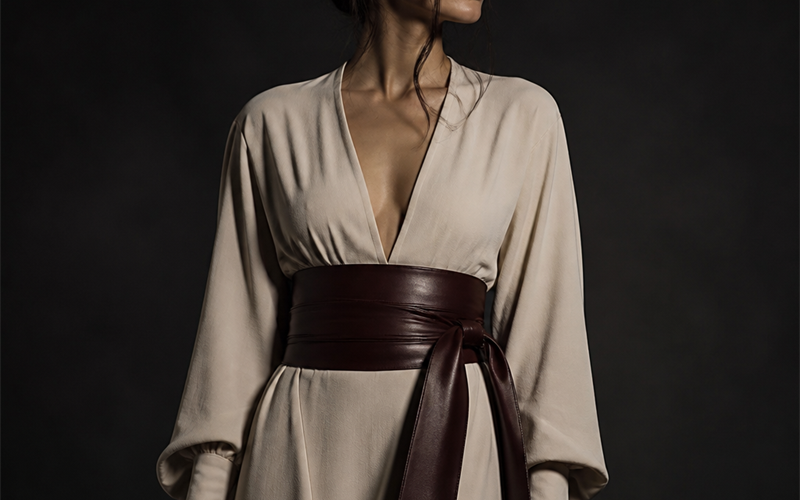
An obi or sash belt is a wide, soft belt that wraps and ties around the waist rather than fastening with a buckle. The obi takes its name and shape from the Japanese sash worn with kimono, while "sash" describes any band of material tied around the body. Both are decorative, silhouette-shaping belts rather than functional trouser belts.

These belts come from deep textile traditions. The reference on the obi describes it as "a sash of varying size and shape worn with both traditional Japanese clothing," and the sash is "a large and usually colorful ribbon or band of material worn around the human body." Modern obi-inspired fashion belts borrow the wide, wrap-and-tie format — often in leather, suede, or fabric — to cinch and define the waist over clothing. Unlike a buckled belt threaded through loops, a wrap belt sits over a garment and is tied, knotted, or wrapped closed. It's a fundamentally different object: less about function, more about shape and drama.
How is a wrap belt different from a traditional belt?
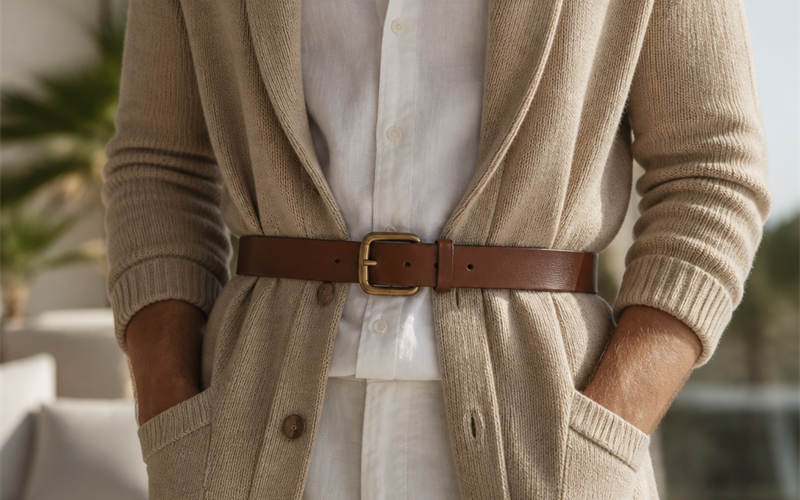
A traditional belt is narrow, structured, and functional — it threads through loops and buckles to hold up trousers or cinch precisely. A wrap belt (obi or sash) is wide, soft, and decorative — it ties around the waist over clothing to define the silhouette. One is a tool; the other is an accent. They serve different purposes and rarely substitute for each other.

Key stat: The Japanese obi can be remarkably wide and long — formal women's obi historically reach around 30 cm wide and several meters long — a scale that explains why obi-inspired fashion belts emphasize wrapping and shaping rather than the slim function of a buckled belt.
Here's how the two families compare:
| Factor | Traditional belt | Obi/sash wrap belt |
|---|---|---|
| Closure | Buckle and holes | Ties, wraps, knots |
| Width | Narrow to medium | Wide |
| Purpose | Hold trousers / cinch | Define waist, decorate |
| Structure | Firm, structured | Soft, draping |
| Worn through loops | Usually | No — over clothing |
The key insight is that they don't compete — they do different jobs. You'd wear a buckled belt to hold up jeans and a wrap belt to cinch a flowing dress or coat. Many wardrobes benefit from both. For the structured, functional side, our women's belts collection covers buckled options; the wrap belt is the dramatic, shape-making complement.
Who should wear an obi or sash belt?
Anyone wanting to define the waist and add drama to soft, flowing, or layered outfits — most commonly in womenswear. Obi and sash belts shine over dresses, tunics, wrap coats, kimonos, and high-waisted looks, creating an hourglass shape and a focal point. They're less suited to holding up trousers or to minimalist, structured outfits where a clean buckled belt fits better.

The wrap belt is a styling tool for silhouette. It's ideal when you want to cinch volume — a loose dress, an oversized shirt, a belted coat — and create waist definition that a thin buckled belt couldn't achieve as dramatically. It reads bold and fashion-forward, so it suits expressive, layered, or romantic looks more than pared-back minimalist ones. While historically and predominantly womenswear, sash-style belts appear in some menswear and unisex contexts too. If your goal is shape and statement over function, the wrap belt delivers; if you want understated structure, a buckled belt is the better tool, as explored in our guide on how to choose a good belt for a woman.
How do you style an obi or sash belt?
Wrap it high on the natural waist over a soft garment, tie or knot it cleanly, and keep the rest of the outfit simple so the belt leads. Use it to cinch dresses, tunics, and coats for an hourglass shape. Choose a width and color that contrast or complement the garment, and let the tie or knot be a deliberate focal point.

Styling a wrap belt is about placement and restraint. Position it at the narrowest part of your waist for maximum shaping, and tie it neatly — a clean knot, bow, or wrap-and-tuck — so it looks intentional. Style blogger Sydne Style describes the obi as "a wrap-style belt that majorly cinches your waist and creates that coveted hourglass silhouette," and favors it "over dresses and sweaters" for the contrast of structure against soft fabric. Because the belt is already a statement, keep competing accessories minimal. Width matters: a wider obi makes a bolder, more structured statement, while a narrower sash is softer. Color can either blend for an elegant tonal look or contrast for drama. This is the same "let one piece lead" logic behind statement dressing generally. Worn thoughtfully over the right garment, a wrap belt transforms a shapeless outfit into a defined, considered one — a different kind of power from the structured belts in our women's belts collection, but a valuable one.
The Bottom Line
Obi and sash belts are wrap belts — wide, soft, tie-closed bands rooted in the Japanese obi and the classic sash — and they do a fundamentally different job from traditional buckled belts. Where a buckled belt holds trousers and cinches precisely, a wrap belt defines the waist and adds drama over dresses, tunics, and coats, primarily in womenswear. They're complements, not substitutes: many wardrobes want both the structured belt and the silhouette-shaping wrap. For the structured, functional side of your collection, BELTLEY's full-grain, fairly priced belts are the foundation. Explore them in our women's belts and men's belts collections.
Frequently Asked Questions
Q: What is an obi belt?
An obi belt is a wide wrap belt inspired by the Japanese obi, the sash worn with kimono. Instead of a buckle, it ties or wraps around the waist over clothing to define the silhouette. It's decorative and shape-making rather than functional, used to cinch dresses, tunics, and coats.
Q: What's the difference between a sash belt and a regular belt?
A regular belt is narrow and structured, threading through loops and fastening with a buckle to hold trousers or cinch precisely. A sash belt is wide and soft, tying around the waist over clothing to define the silhouette and add drama. One is functional; the other is decorative and shape-focused.
Q: Can you use an obi belt to hold up trousers?
Not really — obi and sash belts are decorative wrap belts designed to define the waist over clothing, not to hold up trousers through belt loops. For holding up trousers or precise cinching, use a traditional buckled belt. The wrap belt is about silhouette and statement, not function.
Q: How do you wear a wide wrap belt?
Wrap it high on your natural waist over a soft or flowing garment like a dress, tunic, or coat, and tie or knot it cleanly for an hourglass shape. Keep other accessories minimal so the belt leads, and choose a width and color that either complement or boldly contrast the garment.