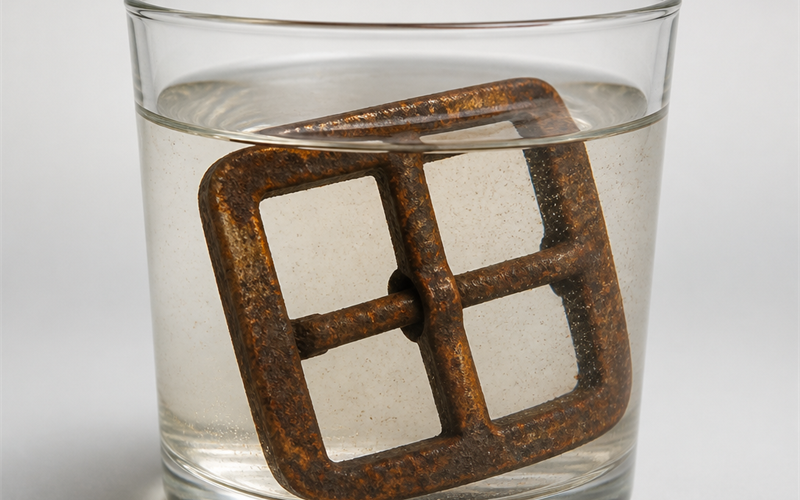
How to Remove Rust From a Belt Buckle (and Stop It Returning)
Quick answer: To remove rust from a belt buckle, soak it in white vinegar for 1–3 hours (or scrub with a baking soda paste for light rust), then work the rust off with an old toothbrush, rinse, and dry completely. To stop it returning, keep the buckle dry, wipe off sweat after wear, and apply a thin coat of wax or machine oil — or switch to a stainless buckle that won't rust at all.
Last updated: June 2026 • By BELTLEY Editorial
TL;DR:
- Rust only forms on iron-based buckles (plated steel, cheap alloys) — real stainless and solid brass don't rust.
- White vinegar, citric acid, or a baking soda paste all dissolve rust safely at home.
- The real fix is prevention: dry storage, post-wear wipe-downs, and a thin protective coat.
- Once rust eats through thin plating, the buckle will keep re-rusting — that's the point to replace it.
A rusty belt buckle is almost always a materials problem in disguise. Rust is iron oxide — it forms only when iron reacts with oxygen and moisture, so a buckle that rusts is telling you it's made of plated steel or a cheap iron-bearing alloy, not solid brass or quality stainless. Salt accelerates it dramatically, which is why sweat, beach trips, and winter road salt are the usual culprits. The encouraging news is that surface rust comes off easily with kitchen chemistry, and a few simple habits keep it gone. This guide removes the rust and fixes the cause — and connects to the leather care routine that protects the strap, too.
What's the fastest way to remove rust from a belt buckle?
For light rust, scrub a thick baking soda and water paste into the spots with an old toothbrush, rinse, and dry. For heavier rust, soak the buckle in plain white vinegar for one to three hours, then brush the loosened rust away. Both lift iron oxide without aggressive grinding — finish by drying the metal completely.

The chemistry does the heavy lifting. Vinegar is dilute acetic acid, "mildly corrosive to metals including iron," which is exactly what dissolves the rust layer. Baking soda works as a gentle scouring paste for lighter cases. Home-repair guides such as Bob Vila's eight methods for removing rust from metal back this up, ranking a plain white-vinegar soak among the most effective household fixes. If the buckle detaches from the strap, treat it off the belt so no acid touches the leather. For buckles that don't easily separate, our guide to whether you can put a buckle on any belt explains which designs come apart.
Does vinegar or citric acid work better for rust?
Both work; citric acid is gentler on surrounding finishes. White vinegar is cheapest and removes moderate rust in a 1–3 hour soak. A citric acid solution (or lemon juice) dissolves rust while being kinder to plating and nearby metals. Use vinegar for stubborn rust and citric acid when you want more control.

Citric acid is a quiet workhorse here. The reference on citric acid confirms it's "used to dissolve rust from steel, and to passivate stainless steels" — it binds to the iron and lifts it away. Here's how the home methods stack up:
| Method | Strength | Soak/work time | Best for |
|---|---|---|---|
| Baking soda paste | Gentle | Scrub 2–3 min | Light surface rust |
| Lemon juice + salt | Mild | 15–30 min | Light rust, plated buckles |
| Citric acid solution | Medium | 30–60 min | Moderate rust |
| White vinegar soak | Strong | 1–3 hours | Heavy rust |
| Commercial rust remover | Strongest | Per label | Severe, solid-steel buckles |
After any acid treatment, rinse with plain water and dry thoroughly — leftover acid or moisture restarts the rusting immediately.
Why does my belt buckle keep rusting?
Because it's iron-based and getting wet. Rust needs iron, oxygen, and moisture; salt speeds it up. A buckle that rusts repeatedly is plated steel or cheap alloy whose protective coating has worn or chipped, exposing bare iron underneath. Once that happens, it will rust again no matter how well you clean it.

Key stat: Salt makes iron rust dramatically faster — which is why a single sweaty summer or one walk on a winter sidewalk treated with road salt can rust a cheap buckle that survived months of dry indoor wear.
The root cause is in the material. The reference on rust explains it forms "by the reaction of iron and oxygen in the catalytic presence of water," and that "if salt is present… the iron tends to rust more quickly." Plated buckles are especially vulnerable: the electroplating layer that protects them is thin, and once it's breached, the iron beneath corrodes freely. That's the difference between a buckle you maintain and one you should replace — a theme we explore in are old belt buckles worth anything.
How do you stop a belt buckle from rusting again?
Keep it dry and protected. After cleaning, wipe the buckle bone-dry, then apply a thin layer of paste wax, mineral oil, or a dab of machine oil to seal out moisture. Store the belt in a dry place — not a humid bathroom or sweaty gym bag — and wipe the buckle down after heavy perspiration or rain.

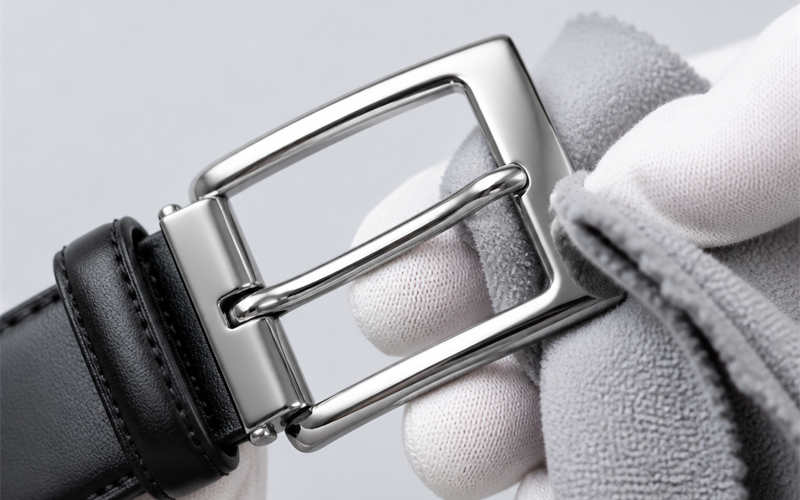
A protective coat buys time, but it's a patch on a flawed material. Stainless steel resists rust at the chemical level: its chromium content forms a self-healing oxide film that blocks oxidation in the first place. So the most reliable "rust prevention" is owning a buckle that can't meaningfully rust — which is why BELTLEY uses stainless and solid brass across its stainless steel buckle belts and brass buckle belts. Each metal asks for a slightly different touch — see polishing a stainless buckle without scratching and cleaning a tarnished brass buckle for the specifics.
How does this fit BELTLEY's 3-Material Rule?
Rust resistance is baked into the BELTLEY 3-Material Rule: full-grain leather + stainless or solid brass buckle + sealed (painted or burnished) edges. Both approved buckle metals are chosen specifically because they don't rust — stainless through its chromium oxide layer, brass because it contains no iron at all. A buckle that rusts has already failed the rule.

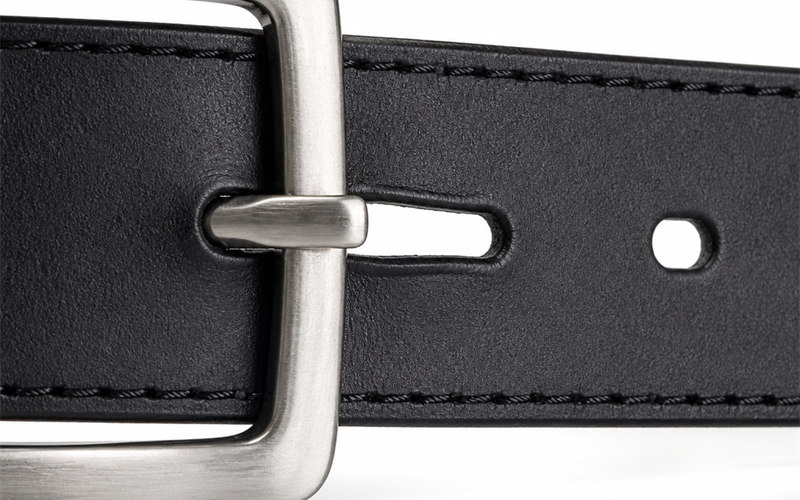
This is why a quality buckle is a one-time purchase, not a recurring chore. Pair a stainless steel buckle with full-grain leather and you get hardware that survives sweat, rain, and decades of wear — all covered by a 10-year warranty.
The Bottom Line
Removing rust from a belt buckle is quick: a vinegar soak or baking soda scrub, a thorough rinse, and a complete dry-off handle almost any case. But cleaning treats the symptom — the cause is an iron-based buckle that gets wet, and once thin plating wears through, the rust will keep coming back. Prevent it with dry storage and a light protective coat, or sidestep the problem entirely with a buckle that can't rust. At BELTLEY, that means solid brass and stainless paired with full-grain leather. If you're tired of fighting corrosion, see the stainless steel buckle belts and keep your leather just as protected with our leather care guide.
Frequently Asked Questions
Q: Does stainless steel belt buckle rust?
Quality stainless like stainless steel is highly rust-resistant because its chromium content forms a protective, self-healing oxide layer. It can develop spots if exposed to chlorine or salt for long periods, but it won't rust the way plated steel does. Dry it after heavy sweat or swimming to be safe.
Q: Will vinegar damage my buckle while removing rust?
Vinegar removes rust but is also mildly corrosive, so don't soak indefinitely — 1–3 hours is plenty. Rinse and dry immediately afterward. Keep vinegar off leather and plated finishes you want to preserve; use gentler citric acid for those.
Q: Can I remove rust from a buckle without taking it off the belt?
Yes, for light rust. Use a baking soda paste applied carefully with a toothbrush, keeping it off the leather, then wipe clean and dry. For a soak, it's far better to detach the buckle so acid never touches the strap.
Q: Is a rusty buckle worth saving?
If it's solid steel, yes — clean it and seal it. If it's thin plated metal that has rusted through, no — it will keep corroding, and you're better off replacing it with a solid brass or stainless buckle that won't rust again.
,%20then%20work%20the%20rust%20off%20with%20an%20old%20toothbrush,%20rinse,%20an...)