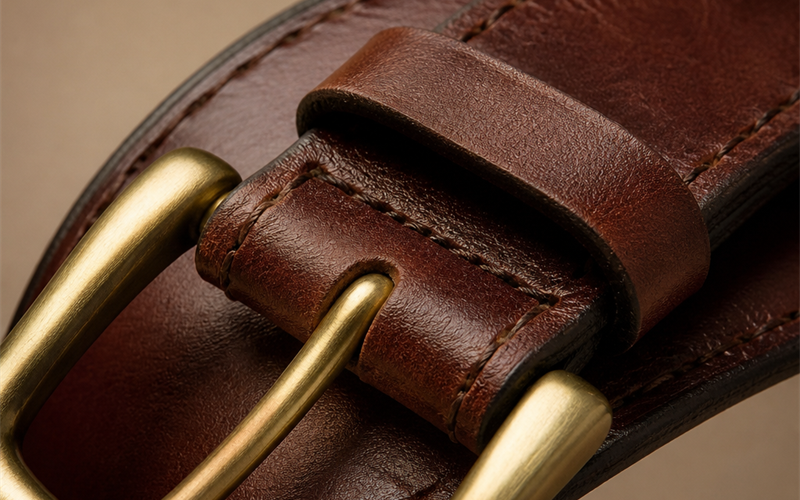
How to Match a Brown Full-Grain Belt With Black Shoes (The Rule, And When to Break It)
Quick answer: Classical menswear rule: match the belt color to the shoe color — brown belt with brown shoes, black belt with black shoes. So technically, no, a brown belt and black shoes don't match. Modern interpretation: you can break this rule deliberately in specific casual contexts (denim, contemporary streetwear, "intentional mismatch" looks), but never in business or formal wear. For 90% of dress and office situations, the rule still applies: brown belt with brown shoes, black belt with black shoes. Own at least one of each color.
Last updated: May 2026 • By BELTLEY Editorial
TL;DR:
- Classical rule: belt color = shoe color. Brown ≠ black.
- The rule still applies for business, formal, suit, and dress wear — never break it there.
- The rule can be broken in casual settings (denim, streetwear) if done deliberately and consistently.
- Two belts (one brown, one black) eliminate this question from your wardrobe forever.
- "Cordovan" and "burgundy" are exceptions that play in both directions.
The "brown belt with black shoes" question is one of the most-Googled style queries in menswear, and the conventional advice is almost always the same: don't do it. The classical menswear rule says match belt to shoe — brown belt with brown shoes, black belt with black shoes — and for dress wear, the rule still holds firmly. But there's nuance in the casual zone, and there are specific deliberate-mismatch looks that modern style accepts. Below is the honest answer and the exceptions. For broader belt selection, see best full-grain leather dress belt for men.
Brown Belt, Black Shoes: Tonight's Ruling
Case-by-case verdicts:
| Your situation | Go with |
|---|---|
| Suit, interview, formal anything | Don't — the classical rule is absolute here. Black shoes demand a black belt. |
| Denim and contemporary casual | Permissible if deliberate — espresso (near-black brown) with black boots reads intentional. |
| Burgundy/cordovan shoes | The in-between zone — match with oxblood or espresso; both read correct. |
| Tired of the dilemma | Own both belts — black + brown full-grain from $58 each ends the question permanently. |
The two-belt fix: BELTLEY's full-grain collection.
Why does the classical rule exist?
Because visual coordination is the foundation of menswear elegance. The belt-and-shoes rule emerged from early-20th-century tailoring conventions, where leather goods came in two main families (brown and black) and matching them signaled put-together attention to detail. The rule works because the belt and shoes are the two main leather elements visible in most outfits — when they coordinate, the outfit reads cohesive; when they clash, the outfit reads accidentally mismatched.

The rule is also about visual weight balance. Black and brown leather have different visual weights and read at different formality levels. Mixing them creates a visual conflict — black reads more formal and severe; brown reads more relaxed and warm. Putting them on the same person in close proximity (belt and shoes are both at the legs) creates a small but real visual tension.
When should you NEVER break the rule?
Five situations where matching is non-negotiable. (1) Business suits and professional wear — black shoes demand a black belt; brown shoes demand a brown belt. No exceptions. (2) Formal occasions — weddings, funerals, formal dinners; mismatched leather reads as careless. (3) Job interviews — first impressions hinge on small coordination details. (4) Court appearances or professional client meetings — visible mismatched leather signals disorganization. (5) Black-tie events — the only acceptable belt is a slim black belt (often the same patent leather as the shoes).
For all of these contexts, the rule is binary: brown shoes mean brown belt; black shoes mean black belt. Trying to be deliberately mismatched in these settings reads as "didn't realize" rather than "intentional style choice." See best full-grain leather dress belt for men for dress belt selection.
When can you break the rule deliberately?
Three specific casual contexts. (1) Denim and casual streetwear — brown belt with black sneakers or black boots is acceptable in casual contexts, especially in workwear-influenced or vintage Americana styles. (2) Intentional contrast looks — fashion-forward outfits sometimes pair contrasting leathers deliberately, but this requires the rest of the outfit to clearly signal "intentional choice." (3) Weekend casual outfits — brown belt + black jeans + brown shoes works (because the belt matches the shoes, not the jeans); the absolute rule is belt-to-shoes, not belt-to-pants.

The single rule for breaking the rule: the rest of the outfit must clearly signal casual context. A suit-and-tie business outfit with deliberately mismatched leather reads as "made a mistake." A casual weekend outfit with the same mismatch reads as "intentional choice." Context is everything.
Key stat: In professional settings, observers register a belt-shoe color mismatch within 3-5 seconds of seeing someone — typically as a subconscious "something looks off" reaction even if they can't articulate why. The "rule" exists because the visual mismatch is genuinely perceptible, not just a fashion convention.
What about cordovan, burgundy, and other "in-between" colors?
These play in both directions. Cordovan (a deep reddish-brown leather, also a specific Horween product) and burgundy belts can coordinate with both black and brown shoes acceptably, because they share visual undertones with both. Oxblood works similarly — it reads "warm" enough to match brown leathers but "dark" enough to coordinate with black. These shades are the menswear "swing" colors that can extend a small belt collection to cover more shoe combinations.

If you're building a small belt collection, the practical second purchase (after black and brown) is often a cordovan or oxblood — it expands your matching options without adding a third strict category. See horween chromexcel vs english bridle belts for the cordovan context.
Belt-shoe matching guide
| Shoes | Best belt | Acceptable alternatives | Avoid |
|---|---|---|---|
| Black dress shoes | Black | None (dress contexts) | Brown, tan, mid-brown |
| Black casual shoes (sneakers, boots) | Black | Brown (casual only) | None strict |
| Dark brown shoes | Dark brown | Cordovan, oxblood | Black |
| Mid-brown shoes | Brown | Cognac, tan | Black |
| Light brown / tan shoes | Tan or brown | Light brown | Black, very dark brown |
| Cordovan / burgundy shoes | Cordovan or oxblood | Dark brown, black | Light brown, tan |
| White sneakers | Brown or black | Tan, cognac | None strict |
| Two-tone shoes | Match dominant color | Either color | — |
What's the minimum belt collection that covers all cases?
Two belts: one black, one brown. Combined with their matching shoes, you can confidently dress for any situation without belt-shoe coordination problems. Adding a cordovan or oxblood as a third extends the range further. Adding a fourth (tan or cognac) gives full coverage from very dark to light brown shoes.
For most men, the two-belt approach is enough. The vast majority of business and casual outfits use either brown shoes or black shoes; one belt of each color and one pair of shoes of each color covers almost every situation. See one belt wardrobe test: can a man survive on a single belt for the single-belt approach (spoiler: it requires compromises).
Does the rule apply to women's wardrobes?
Less strictly. Women's belt coordination rules are looser overall — exact matching is less expected, and "in the same color family" is the working standard. A cognac belt with brown boots and brown leather handbag reads coordinated even without perfect color match. Black-with-brown is still avoided in formal contexts but is much more accepted in casual women's wear than in men's.

For women, the practical guideline: build a small belt collection in versatile colors (black, brown, and one statement color), and let the overall outfit coordination handle the rest. See best full-grain leather belt for women.
What about leather goods beyond belts and shoes?
The same logic extends to bags and watch straps. A brown leather watch strap, brown belt, and brown shoes is the classical "matched leather" look — coordinates fully. Mixing brown leather watch with black belt and shoes is less common but acceptable if the watch is intentionally contrasted (e.g., a vintage piece). Briefcase or bag leather should ideally coordinate with belt and shoes in dress contexts; can be more relaxed in casual ones.

The looser rule for accessories: belt and shoes are the most strict pairing because they're closest in proximity on the body; bags and watch straps have more flexibility because they're more visually separated. Don't overthink it — match what's close, allow flexibility for what's far.
The Bottom Line
The classical menswear rule "belt color = shoe color" is still the right rule for business, formal, and dress wear — never break it there. Brown belt with black shoes reads as accidental mismatch in these contexts, regardless of how stylish the individual pieces are. In casual contexts (denim, weekend wear, streetwear), the rule can be broken deliberately if the rest of the outfit clearly signals "intentional casual choice." Cordovan, burgundy, and oxblood belts play in both directions and extend a small collection. The minimum belt collection for full coverage is two — one black, one brown — paired with their matching shoes. BELTLEY's men's belt collection and full-grain leather belt collection offer both colors in dress and casual styles, backed by a 10-year warranty. Ready to never get this wrong again? Start there.
Frequently Asked Questions
Q: Can you wear a brown belt with black shoes?
Not in business or formal contexts — classical menswear says belt color should match shoe color, and the rule applies firmly to suits, business wear, formal events, and professional settings. In casual contexts (jeans, weekend wear, streetwear), the rule can be broken deliberately, but the rest of the outfit must clearly signal "intentional casual" rather than accidental mismatch.
Q: What color belt goes with black shoes?
Black, almost always. For specific casual exceptions, cordovan or oxblood can work because they share visual undertones with both black and brown. For dress and business wear, stick to a black belt with black shoes — no exceptions.
Q: Does the belt-and-shoes rule still apply in 2026?
Yes for dress, business, and formal wear — the rule remains the menswear standard. For casual wear, the rule is looser and deliberate-mismatch looks are accepted in streetwear and contemporary casual styles. Modern style hasn't abandoned the rule; it's clarified when the rule applies (dress contexts) and when it doesn't (casual contexts).
Q: What's the minimum belt collection for a complete wardrobe?
Two belts — one black, one brown — with matching shoes of each color. This covers 90%+ of business and casual outfits. Adding a cordovan or oxblood belt as a third extends coverage to in-between shoe shades. Most men don't need more than three belts.
Q: What's the difference between cordovan, burgundy, and oxblood for belts?
All three are reddish-brown leather shades that play in both directions (match with brown shoes or black shoes acceptably). Cordovan is technically a specific leather type (Horween shell cordovan); burgundy and oxblood describe color shades. For matching purposes, all three function similarly — they're the "swing" colors that extend a small belt collection.