Garrison vs. Harness vs. Engineer Belt Buckles
Quick answer: A garrison buckle is a square or rectangular frame buckle that sits in front of a wide leather strap, rooted in U.S. military uniforms. A harness buckle uses a squared frame with a center bar the strap wraps around. An engineer buckle is a heavy, clamp-style or center-bar buckle from workwear. All three are rugged, squared, and built for heavy straps.
Last updated: May 2026 • By BELTLEY Editorial
TL;DR:
- Garrison buckle — squared military-heritage frame that sits fully in front of a wide strap.
- Harness buckle — squared frame with a center bar the strap loops around; heavy and secure.
- Engineer buckle — chunky workwear buckle, often clamp-style, built for thick leather.
- All three favor strength and a no-nonsense look over dress-belt refinement.
Three rugged buckles get confused constantly: the garrison buckle, the harness buckle, and the engineer buckle. They share a family resemblance — squared, substantial, built for thick leather — but each has its own history and mechanism. Get them straight and you can pick the right heavy-duty belt with confidence instead of guessing. This guide lays out where each came from, how each fastens, and when to wear it. For the wider field of closures, our types of belt buckles guide puts them in context.
What is a garrison buckle?
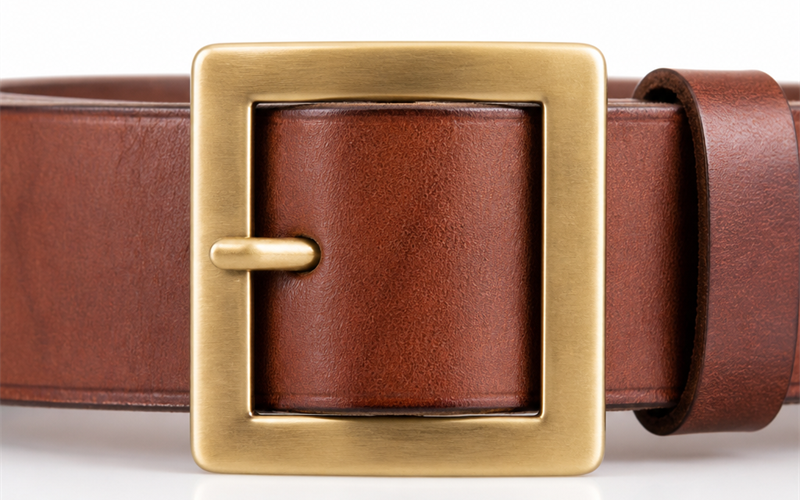
A garrison buckle is a square or rectangular frame buckle, traditionally worn so both sides of the buckle sit in front of the leather strap rather than the strap covering half of it. It is defined by its military heritage and clean, front-facing geometry.

The name is literally martial. From around World War I until 1942, U.S. soldiers were issued a garrison belt — a wide, russet-leather strap with a removable square brass buckle — for wear with dress uniforms in garrison. That heritage gave the style its enduring, no-frills look, and it remains a staple of workwear and Americana wardrobes today. You will find that solid-brass character across our brass buckle belts.
What is a harness buckle?
A harness buckle is a squared frame buckle with a fixed center bar that the strap wraps around and threads through. Originally drawn from equestrian harness hardware, it is built to hold thick, heavy leather securely, often with a roller on the bar to ease adjustment.

The center-bar construction is the giveaway. Where a garrison buckle frames the strap from the front, a harness buckle loops the strap over an internal bar, distributing tension across a wider contact area. That makes it a workhorse for heavy-duty belts that carry weight or take abuse. Pair it with thick leather and it becomes nearly indestructible — see our double layer heavy-duty belts for that level of build.
What is an engineer buckle?
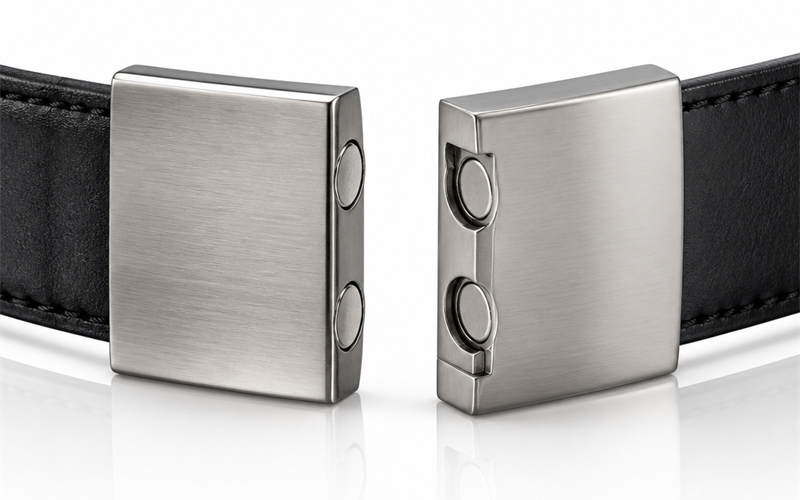
An engineer buckle is a heavy, chunky buckle associated with workwear and engineer boots — typically a squared frame or a clamp-style closure designed to grip thick leather without slipping. It prioritizes brute security and a rugged, industrial look.

Engineer-style hardware grew up alongside heavy work gear, where a belt had to survive real labor. Some engineer buckles use a center bar like a harness buckle; others clamp the strap end. Either way, the design language is the same: oversized, solid, and unfussy. It is the buckle for someone who wants their belt to look as tough as it is.
Garrison vs. harness vs. engineer: how do they compare?
The three differ mainly in how the strap meets the buckle and where each came from. Garrison buckles frame the strap from the front and carry military heritage. Harness buckles loop the strap around a center bar for heavy-duty hold. Engineer buckles are the chunkiest, built for workwear durability.

| Feature | Garrison | Harness | Engineer |
|---|---|---|---|
| Frame | Square/rectangular | Squared with center bar | Heavy squared or clamp |
| Strap mounting | Sits in front of strap | Wraps around center bar | Threads or clamps |
| Heritage | U.S. military uniform | Equestrian harness | Workwear / engineer boots |
| Look | Clean, classic | Substantial, utilitarian | Chunky, industrial |
| Best for | Americana, smart-casual | Heavy-duty everyday | Hard-wearing workwear |
Key stat: The garrison belt was standard U.S. military issue for roughly 25 years — from about WWI until 1942 — which is why the squared brass buckle still reads as classic Americana.
How do you choose a rugged buckle that lasts?
Choose by the strap and the hardware, not just the silhouette. A rugged buckle is only as good as the leather behind it and the metal it is cut from, so look for thick full-grain leather, solid (not hollow) brass or steel, and sealed edges that resist fraying.

At BELTLEY we hold heavy-duty belts to what we call the 3-Material Rule: full-grain leather, a solid stainless steel (304 or 316L) or solid-brass buckle, and sealed (burnished or painted) edges. Hit all three and a garrison, harness, or engineer belt will outlast a decade of hard wear; miss one — a bonded strap, a hollow buckle, a raw fraying edge — and it fails early no matter how tough it looks. A piece like our super heavy-duty antique brass belt is built to that standard. For structured settings, check whether leather belts are authorized in the army before you commit.
The Bottom Line
Garrison, harness, and engineer buckles are three rugged answers to the same question: how to hold a heavy strap and look tough doing it. The garrison brings military-heritage polish, the harness brings center-bar strength, and the engineer brings workwear bulk. The silhouette is your style call — but the lifespan comes down to materials. Demand full-grain leather, solid hardware, and sealed edges, and any of the three will serve you for years. Explore BELTLEY's brass buckle belts for heritage hardware built to last.
Frequently Asked Questions
Q: What is the difference between a garrison belt and a regular belt?
A garrison belt has a wide leather strap and a squared buckle that traditionally sits fully in front of the strap, rooted in U.S. military uniforms. A regular dress belt is usually narrower with a prong buckle and a more refined look. The garrison reads more rugged and heritage-driven.
Q: Is a harness buckle the same as a center-bar buckle?
A harness buckle is a type of center-bar buckle — it uses a fixed bar that the strap wraps around. Not every center-bar buckle is a harness buckle, but the harness style is one of the most recognizable heavy-duty examples of the center-bar design.
Q: Are engineer buckles only for boots?
No. The engineer buckle style comes from heavy workwear, including engineer boots, but the chunky, rugged buckle is also used on belts. It suits anyone who wants industrial-strength hardware and a tough, no-nonsense look.
Q: What metal is best for a rugged belt buckle?
Solid brass and 316L stainless steel are the best choices for rugged buckles. Both resist corrosion and bending far better than hollow or plated pot metal. A solid buckle paired with thick full-grain leather gives you a belt that holds up to years of heavy use.