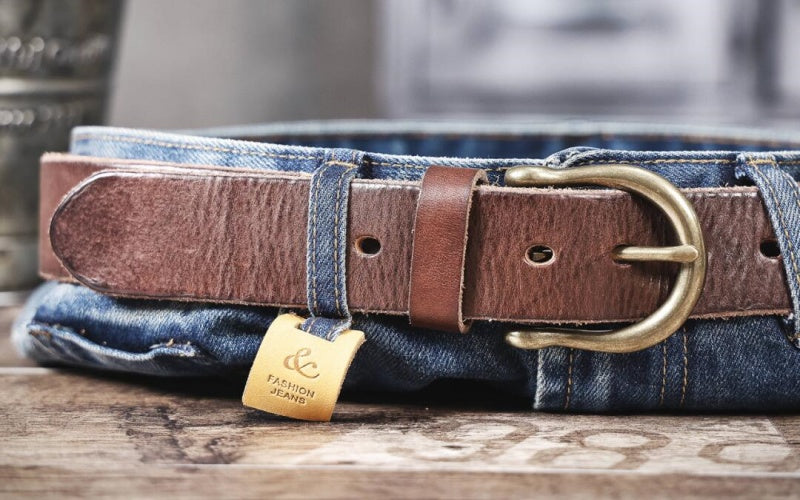
Are Leather Belts Authorized in the Army? (What You Actually Need to Know)
TL;DR: Quick Answer
- Leather belts are authorized in the U.S. Army, but only with specific dress uniforms — not with the OCP combat uniform. The ASU and AGSU have strict belt specifications for color, width, buckle type, and material.
- For the OCP (combat uniform), only nylon rigger belts in Tan 499 or black are authorized per AR 670-1. Leather is not permitted.
- Off-duty and civilian wear has no restrictions — a quality leather belt is the natural upgrade once you're out of regulation uniform.
If you're active duty, a veteran transitioning to civilian life, or just curious about military dress codes, the question "are leather belts authorized in the Army?" comes up more than you'd expect. The answer depends entirely on which uniform you're wearing. Army regulations are specific — down to the buckle finish, belt width, and the direction the tip passes through the buckle.
This guide breaks down the exact belt requirements for each Army uniform based on AR 670-1, covers how other branches handle leather belts, and explains what to look for in a quality leather belt for off-duty and post-service wear. For a broader comparison of dress and casual belt styles, our guide on dress belt vs. casual belt covers the full spectrum.

Are Leather Belts Allowed with Army Dress Uniforms?
Yes — leather belts and leather-like belts are authorized with Army dress and service uniforms, including the ASU (Army Service Uniform) and the AGSU (Army Green Service Uniform). However, both uniforms have specific requirements for color, material, width, and buckle style that must be followed exactly.
The distinction is important: the Army doesn't simply say "wear a leather belt." It prescribes the exact belt configuration for each uniform. You can't substitute a personal leather belt — even a high-quality one — for the regulation-specific belt unless it meets every spec. According to AR670.com's belt regulation breakdown, the belt's color, buckle type, tip finish, and wearing direction are all inspectable items.

Army Belt Requirements by Uniform
Here's the complete breakdown of which belts are authorized for each Army uniform, based on AR 670-1 and DA PAM 670-1:
ASU (Army Service Uniform) — Black Dress
| Specification | Requirement |
|---|---|
| Color | Black |
| Material | Web (cotton or nylon) |
| Width | 1¼ inches |
| Buckle (Male) | Brass tip, brass open-faced buckle |
| Buckle (Female) | Gold tip, gold open-faced buckle |
| Tip Direction | Left for males, right for females |
The ASU uses a web belt, not a leather belt. The standard-issue ASU belt is black cotton web with a gold-finished buckle and tip. As of January 1, 2027, the ASU transitions to an optional formal/ceremonial uniform as the AGSU becomes mandatory for all Soldiers.
AGSU (Army Green Service Uniform)
| Specification | Requirement |
|---|---|
| Color | Heritage Walnut 567 (brown) |
| Material | Cotton web |
| Width | 1¼ inches |
| Buckle | Oxidized brass, open-faced |
| Tip Direction | Left for males, right for females |
The AGSU belt is a distinctive Heritage Walnut shade — a warm brown that complements the green uniform. According to Uniforms-4u's AGSU belt specifications, this unisex cotton web belt pairs with an oxidized brass tip and open-face buckle. Like the ASU, this is a web belt rather than leather.
OCP (Operational Camouflage Pattern) — Combat Uniform
| Specification | Requirement |
|---|---|
| Color | Tan 499 (coyote brown) or black |
| Material | Nylon (rigger belt) |
| Width | 1¾ inches |
| Buckle | Matte aluminum or open-faced black |
| Closure | Hook-and-loop or standard buckle |
| Tip Overhang | No more than 2 inches past buckle edge |
The OCP uniform requires a nylon rigger belt — leather is not authorized. The AR 670-1 compliant rigger belt is designed for tactical functionality, with a heavy-duty nylon construction rated for load-bearing applications.

Why Does the Army Use Web Belts Instead of Leather?
The Army's preference for web and nylon belts over leather comes down to three practical factors: standardization, field durability, and cost.
Standardization. Web belts manufactured to military specifications look identical across every Soldier. Leather varies naturally — grain patterns, color consistency, and aging behavior differ between hides. Military uniforms demand absolute visual uniformity, and web materials deliver that consistency at scale.
Field durability. Nylon rigger belts resist moisture, mud, and extreme temperatures without warping or rotting. Leather — even high-quality full-grain leather — requires care in wet conditions and can stiffen in extreme cold. For field operations, synthetic materials are simply more practical.
Cost. The Department of Defense supplies millions of belts. Web belts cost a fraction of leather alternatives to produce at military scale, which matters for a force this large.
That said, leather has advantages the military doesn't need but civilians do: aesthetics, patina development, comfort over extended daily wear, and longevity that far exceeds nylon when properly maintained. The same qualities that make leather impractical for combat make it the superior choice for everything outside of regulation uniform.

What About Other Military Branches?
Belt regulations vary significantly across service branches. Here's a quick overview:
| Branch | Dress Uniform Belt | Combat/Duty Belt |
|---|---|---|
| U.S. Army | Web belt (black or Heritage Walnut) | Nylon rigger (Tan 499 or black) |
| U.S. Marines | Black leather ratchet belt with USMC buckle | Tan web belt or rigger belt |
| U.S. Navy | Black web belt with command buckle authorized | Black web or nylon |
| U.S. Air Force | Blue web belt with silver-tip buckle | Tan 499 rigger belt |
The Marines stand out here — they're the branch that most clearly authorizes leather belts for dress uniform wear, with a black ratchet leather belt featuring the iconic USMC eagle, globe, and anchor buckle. The belt tip must extend 3½"–5" past the buckle edge.

What to Look for in a Leather Belt After Service
Once you're off duty — or if you're a veteran building a civilian wardrobe — the restrictions disappear and the choices open up. After years of standardized web belts, investing in a quality leather belt is one of the simplest upgrades you can make.
Here's what matters for a civilian leather belt that matches the discipline and durability military personnel are used to:
- Full-grain leather. The strongest, most durable leather grade — it develops character over time rather than falling apart. Military-grade durability in a civilian package.
- Solid metal hardware. Look for stainless steel or solid brass buckles. Zinc alloy and plated buckles corrode and snap — the same reason the military specifies specific buckle metals.
- 1.25"–1.5" width. The standard belt width range for both dress and casual wear. Anything narrower reads as a fashion belt; anything wider reads as a work or utility belt.
- Black and brown. Two belts cover 95% of civilian outfits. A black leather belt for formal and dark-palette outfits, a brown for everything else.
At BELTLEY, many of our customers are active-duty service members and veterans who appreciate the same values the military instills: quality materials, durable construction, and no-nonsense functionality. Our belts are handcrafted from full-grain leather with stainless steel buckles and backed by a 10-year warranty — built to a standard that military personnel recognize.

The Bottom Line
Leather belts are authorized in the Army for dress uniforms (ASU and AGSU use web belts with specific configurations), but not for the OCP combat uniform, which requires a nylon rigger belt. The Marines are the branch most clearly authorizing leather for dress wear. Off-duty and post-service, leather is the clear upgrade — and the quality gap between a regulation web belt and a full-grain leather belt is immediately noticeable.
If you're ready to invest in civilian leather that matches the durability standards you're used to, explore BELTLEY's dress belt collection and black leather belt collection — handcrafted from full-grain leather, fitted with stainless steel buckles, and backed by a 10-year warranty with free worldwide shipping.
Frequently Asked Questions
Q: Are leather belts authorized with the OCP uniform?
No. The OCP (Operational Camouflage Pattern) combat uniform requires a nylon rigger belt in Tan 499 or black, per AR 670-1. Leather belts are not authorized with the OCP. The rigger belt must be 1¾ inches wide with a matte-finish buckle, and the tip cannot extend more than 2 inches past the buckle.
Q: What color belt does the Army require?
It depends on the uniform. The ASU requires a black web belt. The AGSU requires Heritage Walnut 567 (brown). The OCP requires Tan 499 (coyote brown) or black. Each uniform's belt color, buckle finish, and tip direction are prescribed in AR 670-1 and DA PAM 670-1.
Q: Do Marines wear leather belts?
Yes. The USMC authorizes a black ratchet leather belt with the eagle, globe, and anchor buckle for dress uniforms. The belt tip must extend 3½"–5" past the buckle edge. Marines are the branch most associated with leather belt wear in dress uniform configuration.
Q: Can you wear a personal belt with your Army uniform?
Only if it meets every specification in AR 670-1 for that particular uniform — exact color, width, buckle type, and material. In practice, most Soldiers wear the standard-issue or regulation-compliant belt rather than a personal substitute, as any deviation is an inspectable item.
Q: What belt should veterans wear with civilian clothes?
A full-grain leather belt in black or brown, 1.25"–1.5" wide, with solid brass or stainless steel hardware covers virtually every civilian outfit. For military-grade durability in a civilian belt, look for full-grain leather construction with a 10-year warranty.
Q: When does the AGSU become mandatory?
As of January 1, 2027, all Soldiers must wear the AGSU. The ASU will transition to an optional formal and ceremonial uniform. The AGSU belt is Heritage Walnut 567 cotton web with an oxidized brass buckle and tip.