Sterling Silver, Damascus, Titanium & Carbon Buckles
Quick answer: Sterling silver is a precious, tarnish-prone luxury metal. Damascus steel is forge-welded layered steel with a watery pattern. Titanium is ultra-light, strong, and hypoallergenic. Carbon fiber is the lightest, a strong composite that can be brittle. Each suits a different priority: prestige, pattern, lightness, or modern edge.
Last updated: May 2026 • By BELTLEY Editorial
TL;DR:
- Sterling silver — 92.5% silver, precious and beautiful, but tarnishes and is soft.
- Damascus steel — layered, forge-welded steel with a unique flowing pattern.
- Titanium — strongest-for-its-weight metal, light, corrosion-proof, hypoallergenic.
- Carbon fiber — lightest of all, modern and strong, but brittle under impact.
Beyond brass and stainless steel lies a tier of exotic belt buckle materials for people who want their hardware to be the statement. Sterling silver, Damascus steel, titanium, and carbon fiber each bring something the everyday metals cannot — prestige, pattern, featherweight strength, or a high-tech edge. But each also has a catch. This guide compares all four on the things that matter: look, weight, durability, and upkeep. For where buckles cross into jewelry territory, see is a belt buckle considered jewelry.

What is a sterling silver belt buckle?
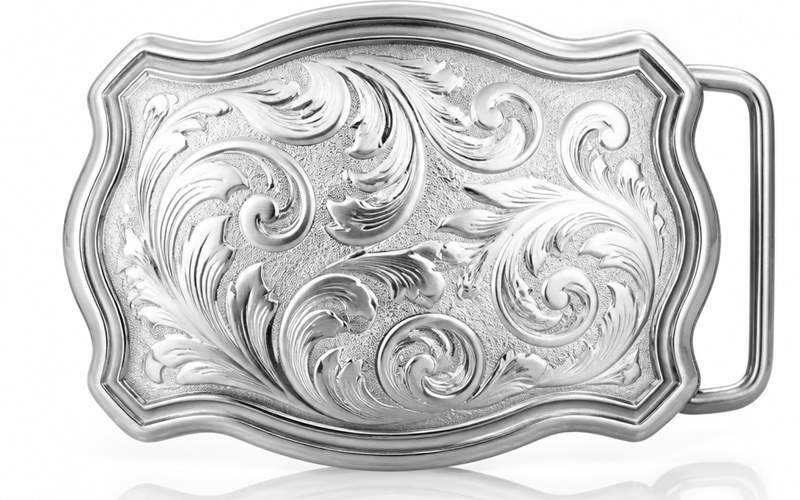
A sterling silver belt buckle is made from 92.5% pure silver alloyed with about 7.5% copper for strength — the "925" standard. It is a genuine precious-metal buckle, prized for its bright luster, but it is relatively soft and tarnishes over time.

Sterling silver is 92.5% silver with usually copper making up the rest, carrying a 925 fineness. The copper hardens otherwise-too-soft pure silver, but the metal still scratches more easily than steel and develops a dark tarnish from exposure to air and sulfur. It is the choice for heirloom-grade, Western, or jewelry-style buckles where preciousness matters more than ruggedness — explore our unique buckle belts for statement hardware.
What is a Damascus steel belt buckle?
A Damascus steel belt buckle is made from multiple layers of steel forge-welded together, producing a distinctive flowing, watery pattern. No two are exactly alike, which makes each buckle visually unique.

Modern Damascus is created by forge-welding several differing pieces of steel and folding the billet until many layers form, giving the banded, mottled "watered" look the name describes. It is the same material celebrated on premium knife blades. A Damascus buckle is a craftsmanship showpiece — durable, hard, and one-of-a-kind in its pattern, appealing to anyone who wants visible artistry in their hardware.
Are titanium and carbon fiber good buckle materials?
Yes — both excel at being strong and light. Titanium has the highest strength-to-weight ratio of any metal, is corrosion-proof and hypoallergenic. Carbon fiber is even lighter, a high-tech composite, though it is more brittle and can fail suddenly under sharp impact.

Titanium has the highest tensile-strength-to-density ratio of any metallic element and is highly biocompatible, making it ideal for a tough, skin-friendly, featherweight buckle. Carbon fiber reinforced polymer is extremely strong and light, used wherever high strength-to-weight matters, but it is brittle and vulnerable to impact damage. Titanium is the more forgiving everyday choice; carbon fiber is the modern, ultralight statement.
| Material | Look | Weight | Durability | Upkeep | Best for |
|---|---|---|---|---|---|
| Sterling silver | Bright, precious | Heavy | Soft, scratches | Polishes tarnish | Heirloom, Western, jewelry |
| Damascus steel | Watery pattern | Heavy | Hard, tough | Oil to prevent rust | Unique, craft showpiece |
| Titanium | Modern gray | Very light | Excellent | None | Active wear, sensitive skin |
| Carbon fiber | High-tech weave | Lightest | Strong but brittle | Low | Modern, ultralight looks |
Key stat: Titanium has the highest strength-to-weight ratio of any metallic element — as strong as some steels but far lighter — which is why it dominates aerospace and makes such a comfortable all-day buckle.
Which exotic buckle material should you choose?
Choose by your top priority. Pick sterling silver for prestige and a precious metal, Damascus steel for a unique pattern, titanium for lightweight strength and sensitive skin, and carbon fiber for the lightest, most modern look.

There is no single winner — each trades something. Sterling is gorgeous but needs polishing and scratches easily. Damascus is striking but requires light oiling to resist rust. Titanium is the most practical all-rounder. Carbon fiber is the lightest but the least impact-tolerant. Match the material to how you actually wear a belt, and coordinate the finish with your other metals — our guide on whether your buckle should match your watch helps.
The Bottom Line
Sterling silver, Damascus steel, titanium, and carbon fiber are the buckle world's specialists — each unbeatable at one thing and compromised at another. Sterling brings precious-metal prestige with tarnish and softness as the price. Damascus brings an unrepeatable pattern but needs care against rust. Titanium brings near-perfect strength-to-weight and skin-friendliness. Carbon fiber brings the lowest weight with the most fragility. Decide what you value most — prestige, pattern, lightness, or modern edge — and the right material picks itself. Explore BELTLEY's belt buckles collection for hardware that matches your priorities — or our brass buckle belts for a warm, solid everyday alternative.
Frequently Asked Questions
Q: Does a sterling silver buckle tarnish?
Yes. Sterling silver naturally develops a dark tarnish as the silver reacts with sulfur compounds in the air. It is not damage and polishes away easily with a silver cloth. If you prefer zero upkeep, titanium or stainless steel stays bright with no maintenance.
Q: Is Damascus steel just for looks, or is it durable?
Both. Damascus steel is genuinely hard and durable, the same material used for premium knife blades, while its layered construction creates the signature pattern. The one upkeep note is that it can rust if neglected, so a light oiling now and then keeps it protected.
Q: Is a titanium belt buckle worth it?
For active wearers, frequent travelers, and anyone with sensitive skin, yes. Titanium is exceptionally light, corrosion-proof, and hypoallergenic, so it is comfortable all day and effectively maintenance-free. The higher price buys real, lasting performance rather than just a name.
Q: Are carbon fiber buckles strong?
Carbon fiber is very strong for its weight and extremely light, but it is more brittle than metal and can crack under a sharp impact rather than bending. For normal wear it performs well; it is just less forgiving of drops or hard knocks than titanium or steel.