Full-Grain vs Nubuck Leather Belt: Surface Treatment Compared
Quick answer: Full-grain and nubuck come from the same layer of the cowhide — the top, grain side — but they're finished differently. Full-grain keeps the natural grain surface intact, producing a smooth, dense, patina-friendly leather. Nubuck is full-grain that's been lightly sanded on the grain side, raising a fine, velvety nap. Both are high-quality leathers; full-grain is more durable and water-resistant, while nubuck has a softer hand and a suede-like look without the structural weakness of true suede.
Last updated: May 2026 • By BELTLEY Editorial
TL;DR:
- Both come from the top grain layer of the hide — both are premium leathers.
- Full-grain = unaltered surface; smooth, dense, develops patina.
- Nubuck = same layer, lightly sanded for a fine velvety nap; soft suede-like feel.
- Nubuck is not suede — suede is from the underside (split layer); nubuck is from the top.
Full-grain and nubuck get confused often because they both sit at the top of the leather hierarchy — but they're not the same. Nubuck is full-grain leather that's been sanded on its grain side to raise a fine fuzzy texture. The result looks suede-ish but is actually built on the strongest layer of the hide. Below is the real difference, the durability trade-off, and which one belongs in your belt rotation. For the broader hierarchy, see our 10 most iconic leather types for belts.
Nubuck Temptation: Worth It for You?
Same layer, sanded vs natural — your call:
| Your situation | Go with |
|---|---|
| Velvety texture, casual wardrobe | Nubuck — genuinely premium, beautifully soft-faced. |
| Patina and decades of wear | Full-grain — sanding the grain trades longevity for nap. |
| Wet climate | Full-grain — nubuck drinks water and shows every drop. |
| Can't tell them apart in-store | Drag a fingertip: nubuck's nap shifts and shades; full-grain stays smooth. |
The long-game surface: BELTLEY's full-grain collection.
What is full-grain leather?
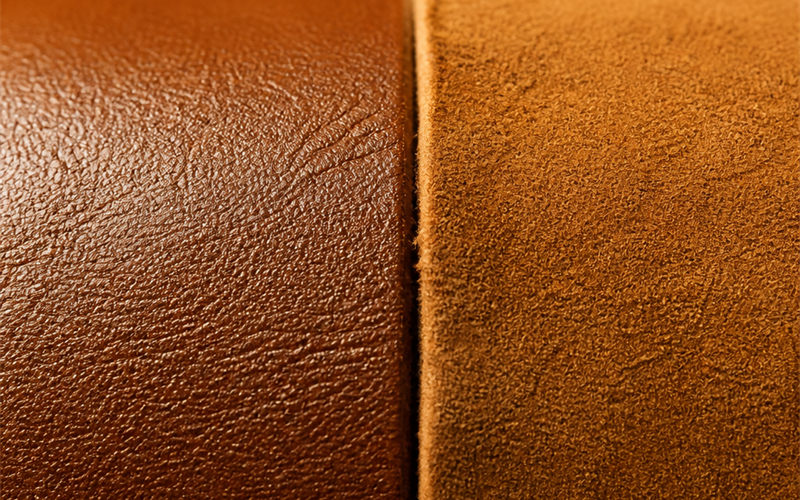
Full-grain is the top, unaltered layer of an animal hide. The grain surface — the dense, naturally textured top of the hide — is kept intact without sanding, buffing, or correction. The result is the strongest, most durable leather grade, and the only one that develops a real patina over years of wear.

The grain is the source of strength. The top layer of a hide has the tightest fiber structure, which is why full-grain is the highest grade of leather. Belts made from full-grain age into a deepened color and warm sheen — the visible reward of a real leather investment. Our full-grain leather belts collection is built around this material.
What is nubuck leather?
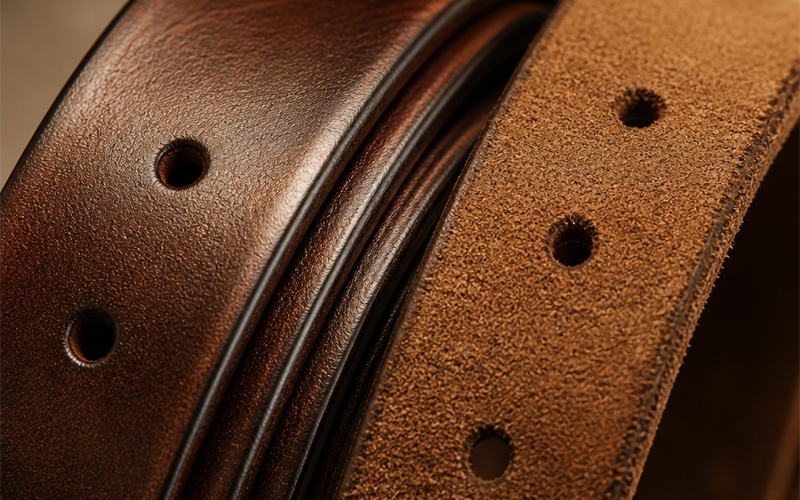
Nubuck is full-grain leather whose grain side has been lightly sanded or buffed to raise a short, fine, velvety nap. The base is the same top hide layer as full-grain — the difference is the surface treatment. Nubuck is sometimes called "grain-sanded leather" because the sanding happens on the grain side (where the hair was), not on the flesh side.
The sanding is fine and intentional. The goal isn't to remove the grain — it's to raise a tiny nap of fibers that gives the leather a soft, suede-like hand without compromising the structural top layer. The result is a luxurious texture: it feels softer than full-grain, looks more matte and uniform, and develops a slightly different aging pattern. Premium watch straps, footwear, and certain belt styles use nubuck for this exact tactile quality.
Key stat: Nubuck and full-grain come from the same top grain layer of the hide. The structural difference is only the surface treatment — nubuck is sanded; full-grain is not. This is why nubuck is sometimes described as "top-grain that's been sanded on the right side."
Is nubuck the same as suede?
No — and the difference matters. Both have a fuzzy/napped surface, but nubuck is made from the top grain side of the hide (the strong layer), while suede is made from the inner split layer (the weaker layer). Nubuck is far more durable than suede because its base material is structurally superior — even though they feel similar to the touch.

The construction is the deciding factor. Suede is what you get when you take the lower hide layer (the splits) and finish the flesh side. Nubuck is what you get when you take the top hide layer and lightly sand the grain side. Same kind of fuzzy texture, very different underlying material. We dig into the suede comparison in full-grain vs suede leather belt.
Which is more durable?
Full-grain — slightly, but meaningfully. Both materials start from the same hide layer, so the underlying strength is identical. The difference is in surface vulnerability: full-grain's intact grain surface naturally resists water, scuffs, and stains, while nubuck's raised nap is more porous and shows wear (and water spots) more readily.
The trade-off is honest. Nubuck is softer and more luxurious to the hand, but you'll see scratches, oil marks, and water rings sooner than on full-grain. With proper care (suede brush, nubuck spray, regular conditioning), nubuck belts still last many years — just with a more lived-in patina that includes texture variation rather than just color deepening. We cover general care in our leather care page.
Full-grain vs nubuck at a glance
| Factor | Full-grain | Nubuck |
|---|---|---|
| Hide layer | Top grain | Top grain (same layer) |
| Surface | Natural grain, smooth | Lightly sanded, velvety nap |
| Hand feel | Firm, smooth | Soft, suede-like |
| Water resistance | Higher | Lower (without spray) |
| Stain resistance | Higher | Lower |
| Patina | Color deepens, glossy sheen | Texture softens, color deepens |
| Care | Conditioner every 6 mo | Suede brush + nubuck spray |
| Best for | Daily/dress/work | Casual, statement, luxury feel |
| Restorable | Yes (re-dye, polish) | Yes (with nubuck-specific products) |
What's the right belt occasion for each?
Full-grain is the all-rounder; nubuck is the statement. A full-grain belt works in every context — dress, business, casual, work — and ages beautifully across all of them. Nubuck reads more casual and tactile by default, and is best paired with chinos, denim, and softer outfits where its matte texture stands out. It's a less common choice for strict dress occasions because its softness reads less formal.

The visual cue matters. A nubuck belt next to a polished leather dress shoe creates a slight tonal mismatch — the textures fight. A nubuck belt with suede chukka boots, by contrast, is gorgeous. Full-grain on a tucked-in dress shirt looks correct; full-grain with jeans looks correct too. If you can only own one premium belt, full-grain is the safer call (we make the full argument in the one belt wardrobe test). If you already own a good full-grain, nubuck is a great second-belt choice for variety.
How do you care for nubuck specifically?
It needs different products than smooth leather. The core kit: (1) a nubuck brush (soft brass-bristle or rubber-tipped) to lift the nap and remove surface dust, (2) a nubuck/suede protector spray applied to a clean belt before first wear, (3) a gum eraser or specialized cleaner for spot stains. Avoid liquid leather conditioners on nubuck — they flatten the nap and create dark patches.

The brush is the workhorse. A weekly brush lifts the nap back to its original velvety texture and removes most surface dust. Water spots — nubuck's most common cosmetic issue — usually fade after the belt fully dries and is brushed. Prevention with a quality nubuck spray is much easier than spot cleaning after the fact. Our general leather care page covers full-grain conditioning; nubuck needs the specialty products.
How do you tell nubuck from full-grain at the counter?
Three quick checks. (1) Hand test — full-grain feels smooth and slightly firm; nubuck feels soft and velvety. (2) Light test — pass your fingers across the surface and check for nap direction; nubuck shows a slight color shift as the fibers tilt, full-grain doesn't. (3) Sheen test — full-grain shows a low to medium sheen depending on tannage; nubuck is matte by default.
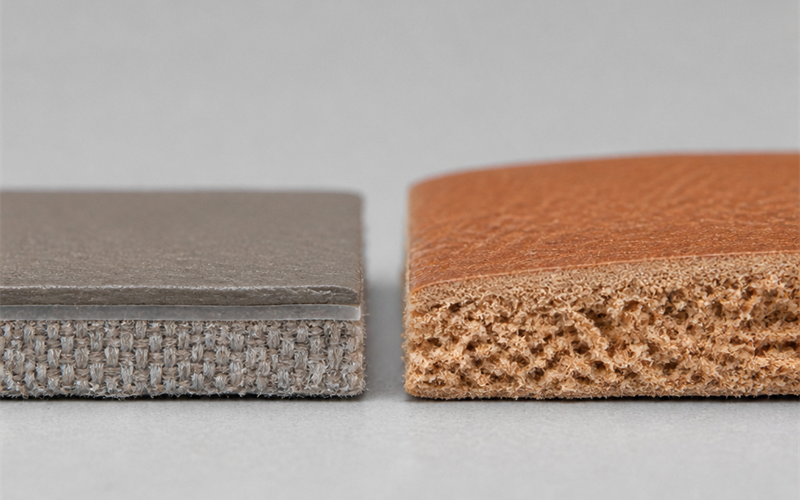
These all reveal the surface treatment. A grain stamp test (where pressing a fingernail leaves a temporary mark that fades) works on both — they're both real leather. The texture and sheen are the real tells. Both materials are premium, and both are dramatically better than the bonded or PU alternatives — so neither is a wrong answer if both are real.
Are nubuck belts worth the price?
Yes, when made from quality hides. A good nubuck belt costs about the same as a comparable full-grain belt — usually $80–$200 — because the underlying material and labor are similar; only the surface treatment differs. The premium for nubuck isn't material cost; it's an aesthetic and tactile choice. If you love the look and feel, the price is fair.

Premium pricing on nubuck rarely reflects extra hidden value. Designer nubuck belts are subject to the same brand markup as designer full-grain — see why are designer belts so expensive. For a quality DTC nubuck belt, the price should be in line with the equivalent full-grain. Our unique belts collection includes textured, statement leathers worth considering as nubuck alternatives.
The Bottom Line
Full-grain and nubuck aren't really competitors — they're two finishes on the same premium hide layer, optimized for different jobs. Full-grain is the durable, smooth, all-occasion workhorse that develops a deep patina; nubuck is the soft, matte, tactile second belt that reads casual and luxurious. Both are real high-grade leather, both are worth the price when made well, and both are dramatically better choices than bonded or PU alternatives. The right answer for you depends on whether you want one all-rounder or a more textured rotation. At BELTLEY, our full-grain leather belts are built for daily wear over decades, with solid hardware and a 10-year warranty. Ready to start with the all-rounder? Browse our men's collection.
Frequently Asked Questions
Q: Is nubuck a high-quality leather?
Yes — nubuck is made from the top grain layer of the hide, the same layer as full-grain. The only difference is that nubuck has been lightly sanded on the grain side to raise a velvety nap. It's a premium leather, not a lower grade.
Q: Is nubuck the same as suede?
No. Nubuck comes from the top grain layer (the strong outer hide); suede comes from the inner split layer (the weaker inside). They feel similar but the underlying material strength is very different — nubuck is much more durable than suede.
Q: Is nubuck more or less durable than full-grain?
Slightly less, because nubuck's sanded nap is more porous and shows water spots, scuffs, and oil marks sooner than full-grain's intact surface. With proper care (suede brush, protector spray), nubuck still lasts many years.
Q: How do you care for a nubuck belt?
Use a nubuck brush weekly to lift the nap and remove dust, apply a nubuck/suede protector spray before first wear, and treat stains with a gum eraser or specialized nubuck cleaner. Avoid liquid leather conditioners — they flatten the nap.
Q: Should I buy a full-grain or nubuck belt first?
Full-grain, if you can only own one premium belt. It works across dress, business, and casual outfits and ages beautifully. Add a nubuck belt as your second belt for casual styling and tactile variety.