Eel-Skin Belt — The Durability Truth and the Myths
Quick answer: An "eel-skin" belt is not made from eels at all — it's made from hagfish skin, a remarkably soft, smooth, and surprisingly strong leather. Genuine eel-skin is more durable than its silky feel suggests, resisting tearing well, but it scratches and water-stains more easily than tougher exotics. The old claim that it demagnetizes credit cards is a myth.
Last updated: June 2026 • By BELTLEY Editorial
TL;DR:
- "Eel skin" is actually hagfish skin — not from true eels.
- It's silky-soft and smooth yet surprisingly tear-resistant for its thinness.
- It scratches and water-stains more easily than crocodile or stingray.
- The "eel skin demagnetizes credit cards" story is a myth — debunked decades ago.
Eel-skin leather has one of the most charming textures in the exotic world — buttery, satiny, and unlike anything else — and one of the most persistent myths attached to it. This guide clears up what eel skin actually is, how tough it really is, why the credit-card story refuses to die, and how to keep an eel-skin belt looking good. If you're building exotic knowledge generally, pair this with which animal leather is best for belts.
What is eel-skin leather actually made from?
Eel-skin leather is made from hagfish, not eels. The hagfish is a slim, eel-like marine animal, and its skin is tanned into the soft, smooth leather sold as "eel skin." The name stuck because the hagfish resembles an eel, but no commercial "eel-skin" product comes from true eels.

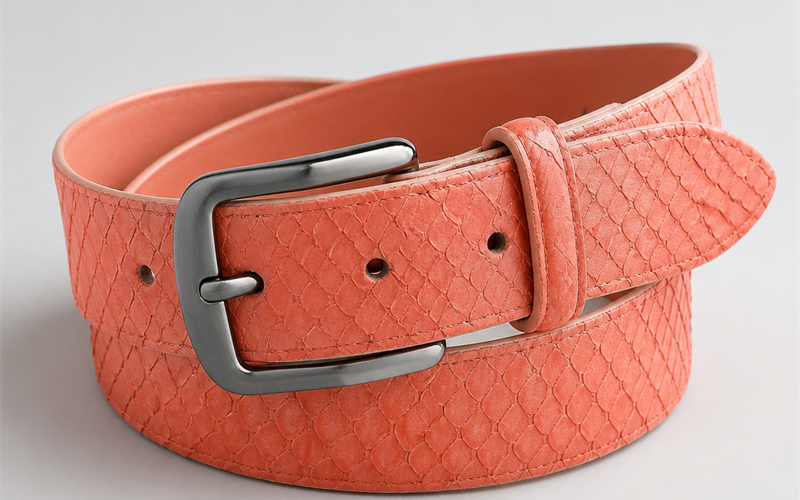
This surprises almost everyone. As the reference on the hagfish states plainly, "Hagfish skin, used in a variety of clothing accessories, is usually referred to as 'eel skin.'" The hagfish is also famous for producing defensive slime, but that has nothing to do with the finished leather, which is clean, supple, and faintly glossy. The leather is typically made of many small skins stitched into panels, which is why you'll often see fine seams across an eel-skin belt — a normal feature of genuine leather of this type, not a defect.
Is an eel-skin belt durable?
More durable than it looks, but not the toughest exotic. Eel-skin (hagfish) leather has a tight fiber structure that resists tearing surprisingly well for such a thin, soft material. However, its delicate surface scratches, scuffs, and water-stains more easily than hard-surfaced exotics like crocodile, stingray, or ostrich.

Key stat: Eel-skin panels are typically built from many small hagfish skins seam-joined together — so the finished leather's durability depends as much on the quality of the stitching as on the hide itself.
The honest picture is a trade-off: you get an exceptionally soft, smooth feel, but you give up some of the scratch- and water-resistance you'd get from a bead-surfaced or scaled exotic. An eel-skin belt is best treated as a refined, somewhat delicate accessory rather than a knockabout daily strap. Because the leather is panel-built, the seams matter enormously — quality construction with tight, even stitching is what keeps an eel-skin belt intact. That's why BELTLEY holds every belt to a standard of solid construction, sealed edges, and real metal hardware, so a softer hide isn't undone by weak assembly. For the broader reality of leather longevity, see the truth about leather belt durability.
Does eel skin demagnetize credit cards?
No. The claim that an eel-skin wallet or belt demagnetizes credit cards is a myth. Eel-skin (hagfish) leather contains no magnets and no magnetic field, so it cannot demagnetize a card's magnetic stripe. The myth likely arose from a magnetic clasp on some eel-skin wallets — the clasp, not the leather, was the culprit.

This is one of the most repeated leather myths, and it's been debunked for decades. A classic Straight Dope investigation traced the demagnetizing to the wallet's clasp, concluding "it was the clasp, not the eelskin itself, that did the demagnetizing." Magnetic damage to cards comes from actual magnets — the snap clasps that some vintage eel-skin wallets used — not from the hide. The leather itself is completely inert. So an eel-skin belt poses zero risk to your cards, phone, or any other magnetic media. If you ever do see card demagnetizing, look for a magnetic closure on the item, not the material it's made from. It's a good reminder that exotic-leather lore is full of half-truths worth checking.
How does eel skin compare to other exotic leathers?
Eel skin is the softest and smoothest of the common exotics, but the least scratch- and water-resistant. It trades the toughness of stingray or crocodile for an unmatched satiny hand-feel. Think of it as the "luxuriously soft" exotic rather than the "indestructible" one.

Here's where it sits among popular exotics:
| Leather | Feel | Surface toughness | Water resistance | Best for |
|---|---|---|---|---|
| Stingray (shagreen) | Hard, beaded | Extremely high | High | Maximum durability |
| Crocodile/alligator | Firm, glossy | High | Medium-high | Formal status |
| Ostrich | Soft, supple | Medium-high | Medium | Versatile wear |
| Eel skin (hagfish) | Silky, smooth | Lower | Lower | Soft luxury feel |
If your priority is a hard-wearing exotic, stingray or crocodile is the smarter buy; if you want the softest, sleekest texture and will treat it gently, eel skin delivers something no other leather quite matches. Compare the firmer options in our exotic leather belts and crocodile and alligator belts collections.
How do you care for an eel-skin belt?
Keep it dry, wipe it gently, and condition lightly. Because eel skin scratches and water-stains easily, avoid rain and rough surfaces, blot any moisture immediately, and use only a small amount of a soft-leather conditioner a couple of times a year. Store it flat or loosely rolled, away from heat and direct sun.

The delicacy that makes eel skin feel wonderful also makes it less forgiving, so gentle handling is key. Don't soak it, don't use harsh cleaners, and don't over-condition, which can darken the surface unevenly. Our general leather care guide and how to keep a leather belt in good condition both apply — just err on the side of caution. Treated well, an eel-skin belt keeps its signature softness and subtle sheen for years.
The Bottom Line
An eel-skin belt is one of the exotic world's pleasant surprises: not eel at all but hagfish, silky-soft yet tougher than it looks, and entirely innocent of the credit-card myth that follows it around. It's the choice for someone who prizes a satiny hand-feel over rugged toughness — a refined, slightly delicate accessory that rewards gentle care. As with every BELTLEY belt, solid construction and real hardware keep a soft hide from being let down by weak assembly, all priced fairly without a Brand Tax. For exotic textures from silky to armored, explore our exotic leather belts collection.
Frequently Asked Questions
Q: Is eel skin really not from eels?
Correct — "eel skin" leather is made from hagfish, a slim, eel-like marine animal, not from true eels. The name stuck because of the resemblance. The finished leather is soft, smooth, and faintly glossy, and is typically built from many small skins seamed together into panels.
Q: Does an eel-skin belt or wallet demagnetize credit cards?
No. Eel-skin leather contains no magnets and cannot demagnetize a card. The myth came from magnetic snap clasps on some old eel-skin wallets — the clasp caused any damage, not the leather. An eel-skin belt is completely safe for cards and electronics.
Q: Is eel skin durable for a belt?
It's more durable than its softness suggests, with good tear resistance, but it scratches and water-stains more easily than hard exotics like crocodile or stingray. Treat an eel-skin belt as a refined accessory and keep it dry, and it will last well.
Q: How do you clean an eel-skin belt?
Wipe it gently with a dry or barely damp soft cloth, blot any moisture right away, and condition lightly once or twice a year with a soft-leather product. Avoid soaking, harsh cleaners, heat, and direct sun, since eel skin's delicate surface marks and darkens more easily than tougher leathers.