Tight Belt and Thigh Numbness — Meralgia Paresthetica Explained
Quick answer: A tight belt can cause numbness, tingling, or a burning feeling on the outer thigh by compressing the lateral femoral cutaneous nerve where it passes near the hip and waistband. This condition is called meralgia paresthetica, and a belt is a recognized cause. Loosening the belt, wearing it lower and looser, or switching to a softer-fitting option usually relieves it.
Last updated: June 2026 • By BELTLEY Editorial
TL;DR:
- A tight belt can compress a nerve at the hip, causing outer-thigh numbness or burning.
- The condition is meralgia paresthetica — and tight belts are a documented cause.
- Symptoms: tingling, numbness, or burning on the outer thigh, not pain in the back.
- The fix is mechanical — loosen, lower, or change the belt to relieve nerve pressure.
If the outside of your thigh feels numb, tingly, or like it's mildly burning, and you wear your belt tight, the two may be connected. There's a sensory nerve that runs near the front of the hip, and a constricting waistband can pinch it. The result is a surprisingly common, harmless-but-annoying condition with a long name. This guide explains what's happening, how to recognize it, and how a change in how you wear a belt often fixes it. It pairs well with our broader rundown of the side effects of wearing a tight belt.

Can a tight belt cause numbness in your thigh?
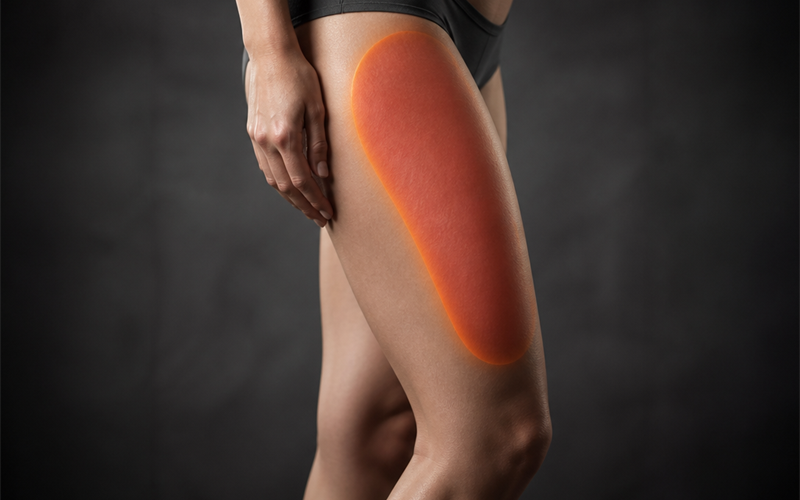
Yes. A tight belt can compress the lateral femoral cutaneous nerve, which runs near the hip and supplies sensation to the outer thigh. When that nerve is squeezed by a constricting waistband, you can feel numbness, tingling, or burning on the outside of the thigh — a condition known as meralgia paresthetica.

This is well documented medically. The reference on meralgia paraesthetica states directly that the syndrome "can be caused by anything which places prolonged pressure on the LFCN, such as wearing a tight belt." Cleveland Clinic's meralgia paresthetica guide agrees, naming "wearing clothing that's too tight or belts around your waist" as a cause and recommending you avoid tight belts to prevent it. So this isn't speculation — a tight belt is a named cause in the clinical literature. The nerve is relatively superficial as it passes near the front of the hip bone, which is exactly where a low, tight waistband sits, making it vulnerable to compression. The reassuring part is that belt-related cases are mechanical: remove the pressure and the nerve usually recovers.
What does belt-related nerve compression feel like?
It feels like numbness, tingling, prickling, or a burning sensation on the outer (lateral) part of one thigh — not deep pain and not in your back. The area may feel oversensitive to light touch or, conversely, partly numb. Symptoms often worsen with standing, walking, or anything that keeps the belt pressing on the nerve.

Key stat: Meralgia paresthetica affects the outer thigh only because the lateral femoral cutaneous nerve is purely sensory — it carries no movement signals, so the condition causes numbness and burning but never muscle weakness, which helps distinguish it from a back problem.
This is a key distinction from back-related leg symptoms. Because the nerve is purely sensory, you won't get weakness, and the sensation stays on the outer thigh rather than radiating down to the foot the way sciatica does. Here's a simple contrast:
| Belt nerve compression (meralgia) | Back-related (e.g., sciatica) |
|---|---|
| Outer thigh only | Down the back of leg to foot |
| Numbness, tingling, burning | Often sharp, shooting pain |
| No muscle weakness | Can include weakness |
| Worse with tight waistband | Worse with certain back movements |
If your symptoms match the left column and improve when you loosen your belt, the belt is the likely culprit. If they match the right column, that's a different issue worth checking with a doctor. Either way, the belt fix is harmless to try first.
How do you fix belt-related thigh numbness?
Relieve the pressure on the nerve. Loosen the belt a notch or two, wear it lower and less tight, avoid cinching it hard over the hip, and choose a belt and trousers that don't dig in. In most belt-caused cases, symptoms ease within days to weeks once the compression stops. Persistent symptoms warrant a doctor's visit.

The fixes are simple and mechanical:
- Loosen up. Go one or two holes looser so the waistband isn't compressing the front of the hip.
- Wear it correctly sized. A belt fastened comfortably on a middle hole won't pull tight — see how should a belt fit on a man.
- Use precise adjustment. A belt with closely spaced holes or a micro-adjust ratchet lets you find a non-constricting tension instead of being stuck between too tight and too loose; our ratchet buckle belts adjust in small steps.
- Mind the whole waistband. Tight, high-rise trousers can compress the nerve too, so the belt isn't always the only factor.
Because the affected nerve is sensory only, belt-caused meralgia is typically benign and reversible. If numbness lingers after you've relieved the pressure, see a healthcare professional to rule out other causes.
Does the type of belt matter for preventing it?
It can help. A belt that lets you adjust tension precisely and sits comfortably without digging in is less likely to compress the nerve. Closely spaced holes or a ratchet micro-adjust system avoid the trap of choosing between a too-tight and too-loose hole. But how tightly you wear any belt matters more than the style.

No belt is a medical device, and the real lever is tension, not brand. That said, the practical features that help are precise adjustability and a comfortable, well-finished edge that doesn't bite. A properly sized belt worn at a relaxed tension rarely causes the problem in the first place. If you tend to cinch tight out of habit, a ratchet belt makes it easy to dial in just-enough tension, and choosing the right size from the start — covered in how do I know what size men's belt to buy — keeps the everyday hole comfortable.
The Bottom Line
Numbness, tingling, or burning on the outer thigh can be meralgia paresthetica — and a tight belt is a recognized cause, because it compresses a sensory nerve near the front of the hip. The condition is usually harmless and reversible: loosen the belt, wear it lower and looser, and the nerve typically recovers. A correctly sized, precisely adjustable belt worn at a comfortable tension is the best prevention. At BELTLEY, comfort and fit are part of how we design, because a belt should hold your trousers without leaving a mark on you. Explore comfortable, finely adjustable options in our men's belts and ratchet buckle belts collections. If symptoms persist, see a doctor.
Frequently Asked Questions
Q: Can a belt really cause thigh numbness?
Yes. A tight belt can compress the lateral femoral cutaneous nerve near the hip, causing numbness, tingling, or burning on the outer thigh — a condition called meralgia paresthetica. Medical references list tight belts as a recognized cause, and loosening the belt usually relieves it.
Q: How do I know if it's my belt or my back?
Belt-related nerve compression affects only the outer thigh, causes numbness, tingling, or burning (not weakness), and improves when you loosen the belt. Back-related issues like sciatica often cause shooting pain that travels down the leg to the foot and may include weakness. If unsure, see a doctor.
Q: How long does belt-related thigh numbness take to go away?
When a tight belt is the cause, symptoms usually ease within days to a few weeks after you relieve the pressure by loosening or repositioning the belt. If numbness persists despite removing the compression, consult a healthcare professional to check for other causes.
Q: How should I wear my belt to avoid pinching the nerve?
Wear it at a comfortable tension that holds your trousers without compressing the front of your hip, and a hole or two looser if you tend to cinch tight. A belt with closely spaced holes or a ratchet micro-adjust helps you find a non-constricting fit instead of choosing between too tight and too loose.