Do Expensive Belts Last Longer? The Data Says It's Complicated
- Expensive belts last longer only up to a point. Price correlates with durability to roughly $150–$200, then flatlines sharply.
- Above $200 for cowhide, you're paying for brand name, marketing, and retail overhead — not better leather or stronger stitching.
- A $120 full-grain belt lasting 15 years costs $8/year. A $500 designer belt lasting 5 years costs $100/year. The "cheap" belt is the expensive one by every measure that matters.

You'd expect a simple answer: spend more, get more years. But the relationship between belt price and belt lifespan isn't a straight line — it's a curve that flattens long before most luxury price tags begin.
The question of whether expensive belts last longer depends entirely on what you're paying more for. More leather quality?
Yes, that buys time. More brand prestige? That buys nothing your waist will notice. This guide maps the actual price-to-durability curve, compares real lifespans across price tiers, and shows you exactly where your money stops buying years and starts buying logos.

Do Expensive Belts Actually Last Longer Than Cheap Ones?
Yes — but only within the range where higher price reflects higher material quality. A $120 full-grain leather belt dramatically outlasts a $25 bonded leather belt. But a $600 designer belt does not outlast a $150 artisan belt made from the same grade of leather. Price buys durability up to approximately $150–$200, then the correlation breaks.
The reason is straightforward: once you've paid for full-grain leather, quality hardware, and competent construction, there's nothing left to improve.
Additional cost above that threshold goes toward brand overhead — marketing campaigns, luxury retail leases, celebrity endorsements, and shareholder margins. The belt itself doesn't get stronger. Hoplok Leather's cost analysis confirms that material and labor costs for a premium cowhide belt top out at $50–$110 — meaning anything above a 2–3× markup is funding something other than the product on your waist.

The Price-Durability Curve: Where Your Money Actually Goes
Here's how belt durability maps to price tiers based on industry data and real-world owner reports:
| Price Tier | Typical Material | Expected Lifespan | Cost Per Year | What You're Paying For |
|---|---|---|---|---|
| $15–$40 | Bonded / split leather | 3–12 months | $30–$80+ | Bare minimum materials; designed to be disposable |
| $40–$80 | Genuine / top-grain | 1–4 years | $20–$80 | Decent leather, mediocre hardware; functional but short-lived |
| $80–$200 | Full-grain cowhide | 10–20+ years | $4–$20 | The sweet spot — premium leather, solid hardware, artisan construction |
| $200–$500 | Full-grain (designer) | 10–20 years | $10–$50 | Same leather quality as $80–$200 tier + brand overhead |
| $500–$1,000+ | Full-grain or canvas (luxury) | 5–20 years* | $25–$200 | Brand name, packaging, retail experience; varies widely |
| $100–$300 | Exotic (crocodile/alligator, DTC) | 15–30+ years | $3–$20 | Best cost-per-year — superior hide structure, DTC pricing |
*Luxury tier varies enormously: Hermès full-grain lasts 20+ years; Louis Vuitton PVC-coated canvas can fail in 2–3.
Data compiled from Effortless Gent, BeltBuy's 10-year durability data, Szoneier Leather, and BELTLEY's internal product testing.
The $80–$200 tier is where the curve peaks. Below it, you're compromising on leather grade. Above it, you're paying for things that don't extend the belt's life by a single day. BELTLEY's full-grain leather belts sit squarely in this sweet spot — priced at $58–$200 because the DTC model eliminates the retail markups that inflate other brands into the $300–$800 range for identical materials.

What Makes a Belt Last — and What Doesn't?
Three construction factors determine belt lifespan. Price only matters insofar as it buys these three things:
Leather Grade
This is the single biggest variable. Last State Leather's cheap-vs-quality comparison documents that full-grain leather has roughly 3× the tear strength of genuine leather because its intact collagen fiber network distributes stress evenly instead of concentrating it at weak points. A full-grain belt doesn't crack, peel, or delaminate — it develops patina.
For a full breakdown of how to identify leather grades by touch and sight, BELTLEY's guide on how to tell if a belt is full-grain leather covers the specific tests.
Hardware Quality
Cheap buckles use die-cast zinc alloy with thin plating that chips within weeks, exposing dull base metal. Quality belts use solid brass or 316L stainless steel — the same surgical-grade alloy found in watches and marine hardware. Buckle My Belt's quality guide identifies buckle weight as a fast quality indicator: heavier buckles use better alloys.
BELTLEY's stainless steel buckle collection uses exclusively 316L stainless steel — non-corrosive, non-allergenic, and built to outlast the leather itself.
Edge and Stitch Work
Premium belts have burnished or sealed edges and tight stitching (8–12 stitches per inch with waxed thread). Budget belts have raw, fraying edges and loose stitching that unravels under tension. Proven Hands' 500lb durability test showed that a properly constructed full-grain belt survived extreme load with minimal deformation — while a competing lower-quality belt snapped entirely.

Why Some $500 Belts Fail Before $100 Belts
Not all expensive belts use expensive materials. This is the single most important insight in the belt market, and most buyers miss it entirely.
Louis Vuitton's most popular belts use PVC-coated cotton canvas — not leather. That signature Monogram print is a synthetic coating on fabric. At $500–$800, you're paying luxury prices for a material that peels and cracks within 2–5 years. A $100 full-grain cowhide belt from any competent maker will outlast it by a factor of three.
Gucci's GG Supreme canvas has the same issue — it's coated fabric, not leather. The leather-strap Gucci models perform better (5–10 years), but even those carry a 60–70% brand tax relative to material cost. Alibaba's independent durability analysis found that brand name accounts for most of the price premium in belts above the $300 mark, with minimal gains in actual material quality.
The lesson: price tells you what a brand charges. It doesn't tell you what the belt is made of. Always check the material, not the price tag. A $150 belt from a maker that spends on leather will outlast a $600 belt from a brand that spends on advertising — every time.

The Cost-Per-Wear Math That Changes Everything
Forget retail price. The only number that matters is how much each day of wear costs you. Here's the math across five real scenarios:
| Belt | Purchase Price | Days Worn Per Year | Lifespan | Total Days of Wear | Cost Per Wear |
|---|---|---|---|---|---|
| Bonded leather (fast fashion) | $25 | 200 | 8 months | ~130 | $0.19 |
| "Genuine leather" (mid-mall) | $60 | 200 | 2 years | ~400 | $0.15 |
| Full-grain cowhide (DTC artisan) | $130 | 200 | 15 years | ~3,000 | $0.04 |
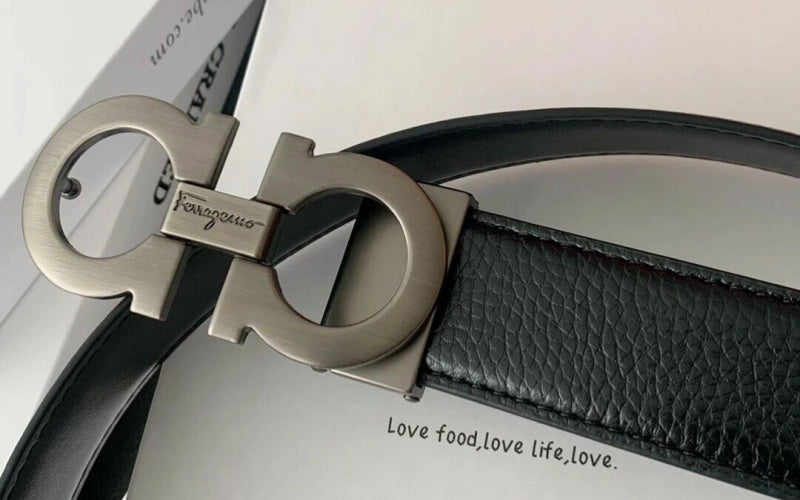
| Designer leather (Gucci/Ferragamo) | $500 | 150 | 10 years | ~1,500 | $0.33 |
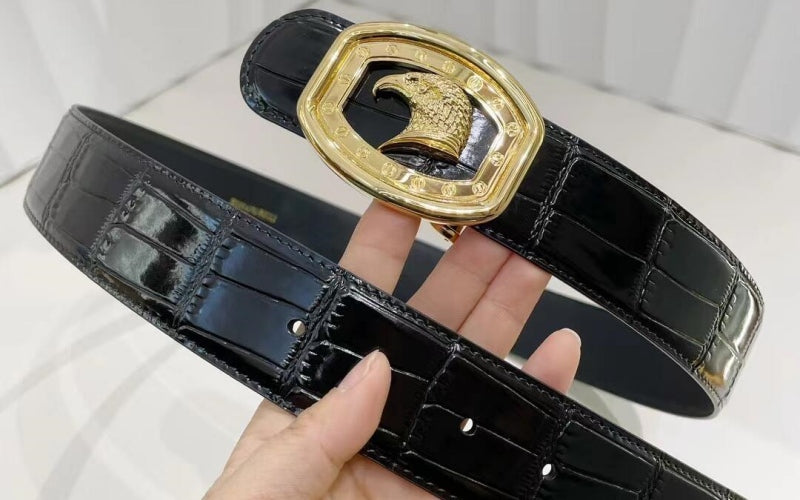
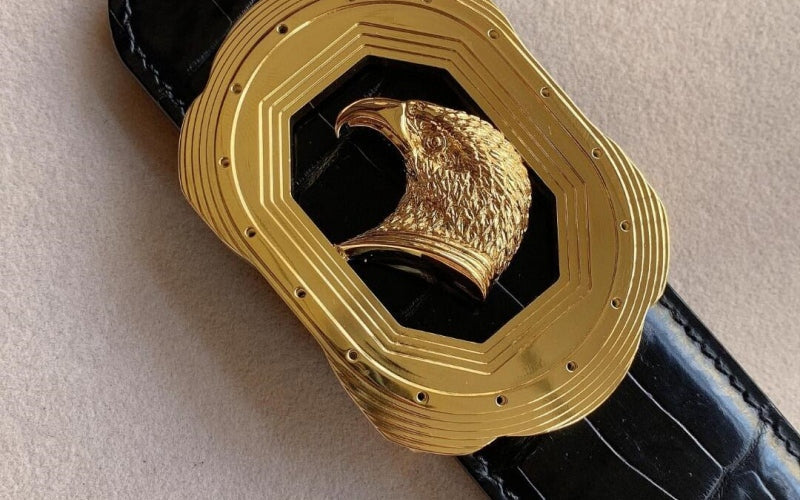
| Exotic leather (DTC crocodile) | $200 | 150 | 25 years | ~3,750 | $0.05 |
The $25 belt costs nearly 5× more per wear than the $130 full-grain belt. The $500 designer belt costs 8× more per wear than the $130 artisan belt despite lasting a respectable 10 years. And the exotic leather belt delivers the lowest cost-per-wear of any option — because crocodile and alligator hides have a natural bony plate structure that resists wear longer than any cowhide grade.
This is the math the "Smart Money" buyer runs. It's why BELTLEY's crocodile leather belts at $99–$299 represent the best value proposition in the belt market — decades of wear at pennies per day, with no brand tax inflating the number.

How Much Should You Actually Spend on a Belt?
Spend $80–$200 on a full-grain cowhide belt, or $100–$300 on an exotic leather belt from a DTC brand. This range buys you the best materials, solid hardware, and competent construction — without funding someone else's marketing budget.
NY Weekly's analysis of belt pricing reached the same conclusion: the value sweet spot sits between $80 and $200 for cowhide, where every dollar goes toward materials and craftsmanship rather than brand overhead. Below $60, you're almost certainly getting bonded or split leather that will fail within a year. Above $300 for cowhide, you're paying for intangibles.
The three-question test before buying any belt:
- What is the leather grade? Full-grain is the only grade that lasts 10+ years. "Genuine leather" is a downgrade, not a quality mark.
- What is the buckle made of? Solid stainless steel or brass = decades. Plated zinc alloy = months before chipping.
- Does the brand offer a warranty? A confident maker backs their product. BELTLEY offers a 10-year warranty. Most designer brands offer 1–2 years. That gap tells you everything about expected lifespan.
For a deeper buying framework, see BELTLEY's guide on how much a leather belt should cost.

The Environmental Cost of Disposable Belts
There's a sustainability angle most belt guides ignore. A person who buys a $25 bonded leather belt every 8 months generates 15 discarded belts over a decade — each one made from petroleum-based polyurethane, chemical adhesives, and mixed materials that can't be recycled. That's roughly 15 pounds of non-biodegradable waste from one accessory slot in one wardrobe.
A person who buys one full-grain leather belt and wears it for 12 years generates zero belt waste for over a decade. And when that belt eventually retires, vegetable-tanned full-grain leather is biodegradable — it breaks down naturally, unlike the synthetic coatings on bonded and faux leather belts.
The buy-it-for-life approach isn't just economically smarter — it's materially less wasteful. Pampeano's belt lifespan research frames this as the core argument for investing in quality leather goods: one purchase replaces a decade of disposable consumption.
The Bottom Line
Do expensive belts last longer? Yes — but only when "expensive" means better leather, not a bigger logo. A belt priced at $80–$200 from a maker that invests in full-grain leather and solid hardware will outlast most $400–$800 designer belts made from coated canvas or lower-grade materials. The price-to-durability curve peaks around $150–$200 for cowhide. Every dollar above that funds brand overhead, not belt performance.
The smartest belt purchase isn't the most expensive one — it's the one with the lowest cost-per-wear. A $130 full-grain belt lasting 15 years costs $0.04/day. A $500 designer belt lasting 5 years costs $0.27/day. The math doesn't lie.
BELTLEY's collection — full-grain cowhide at $58–$200 and exotic crocodile at $99–$299 — sits in the sweet spot where every dollar goes into materials and master-artisan craftsmanship, not marketing. 316L stainless steel hardware, a 10-year warranty, and free worldwide shipping — because real value means spending less per year for more years of wear.
Frequently Asked Questions
Q: How long should a good leather belt last?
A full-grain leather belt should last 10–15 years with regular wear and basic care. With conditioning every 3–6 months and proper storage, many full-grain belts exceed 20 years. Exotic leather belts (crocodile, alligator) can last 25–30+ years. If your belt is cracking or peeling in under 2 years, it's not full-grain. See BELTLEY's guide on leather belt durability for details.
Q: Are designer belts worth the money for durability?
Only if the designer uses full-grain leather. Hermès belts (Box Calf, Togo leather) genuinely last 15–20+ years. But many designer belts at the $400–$800 range use coated canvas or corrected-grain leather that fails in 2–5 years. The brand name doesn't predict durability — the leather grade does.
Q: How can you tell if a belt will last?
Check three things: (1) Leather grade — look for "full-grain," not "genuine leather." (2) Edge quality — smooth, burnished edges mean proper finishing. (3) Buckle weight — heavy, solid metal resists corrosion and wear. For the complete quality checklist, see BELTLEY's guide on how to choose a good leather belt.
Q: Is genuine leather a sign of quality?
No. "Genuine leather" is one of the lowest usable leather grades — it uses inner hide layers that have been heavily processed and coated. A genuine leather belt typically lasts 1–3 years before cracking. The term sounds premium but functions as a marketing label that signals the opposite.
Q: What's the best belt for the money?
A full-grain leather belt from a DTC (direct-to-consumer) brand in the $80–$200 range offers the best value. You get the same leather grades used by luxury houses at 2–3× production cost instead of 8–10×. For exotic leather, DTC prices of $100–$300 deliver decades of wear at the lowest cost-per-year of any belt option.
Q: Do leather belts get better with age?
Full-grain leather belts do — they develop a patina (a warm, deepened color and slight sheen) that makes the belt more attractive over time. Lower-grade leather does not improve with age; it cracks, fades, and peels. The aging behavior is one of the fastest ways to identify leather quality after purchase.