How Long Do Luxury Belts Last? Real Lifespans by Brand and Leather
TL;DR: Quick Answer
- Hermès belts last 15–20+ years thanks to full-grain Box Calf and Togo leathers — the longest lifespan of any mainstream luxury belt brand.
- Gucci belts last 5–10 years with normal use; their GG Supreme canvas models show friction wear in 6–12 months.
- Louis Vuitton canvas belts average 2–5 years before the PVC coating peels; their Epi leather models hold up better at 7–12 years.
- Leather grade — not price tag — is the primary predictor of belt lifespan. A $150 full-grain DTC belt can outlast a $600 designer belt made from lower-grade materials.
A $900 belt should outlast a $90 belt. That seems obvious. But the reality is messier — some luxury belts crack in two years while properly made mid-range belts last decades. The question of how long do luxury belts last depends less on brand name and more on leather grade, construction method, and hardware quality.
This guide provides real lifespan data by brand and by leather type, the cost-per-year math that changes how you think about belt value, and the care habits that separate a 5-year belt from a 20-year belt.

How Long Do Luxury Belts Actually Last?
A luxury belt lasts anywhere from 2 to 20+ years depending on the leather type, construction quality, and care routine — not the price or brand name. Full-grain leather belts from any maker typically last 10–20 years. Canvas and coated-leather designer belts often fail in 2–5 years despite costing $400–$800.
The word "luxury" creates a misleading expectation. A belt stamped with a fashion house logo doesn't automatically outlast one without it. Effortless Gent's analysis of leather belt value confirms that material quality and construction method — not brand prestige — determine how long any belt survives daily wear. BELTLEY's guide on the truth about leather belt durability documents the structural reasons behind these differences in detail.

Belt Lifespan by Leather Type
Leather grade is the single biggest variable in belt longevity. Here's how each grade performs under regular wear:
| Leather Grade | Expected Lifespan | What Happens When It Fails |
|---|---|---|
| Full-grain cowhide | 10–20+ years | Rarely fails — develops patina, may stretch slightly at primary hole |
| Exotic (crocodile/alligator) | 15–30+ years | Virtually indestructible with conditioning; may dry without care |
| Top-grain | 5–10 years | Surface coating cracks, color fades unevenly |
| Coated canvas (LV, Gucci GG) | 2–5 years | PVC/polyurethane coating peels, cracks at fold points |
| Genuine leather | 1–3 years | Cracks, peels, delaminates at buckle and primary hole |
| Bonded leather | 3–12 months | Surface layer flakes off in sheets |
According to Szoneier Leather's belt lifespan research, full-grain leather's dense collagen fiber network distributes stress evenly across the belt, preventing the concentrated wear points that destroy lower-grade materials. That's why a $120 full-grain belt from a craft-focused maker can structurally outlast a $700 coated-canvas designer belt — the leather itself is fundamentally stronger.
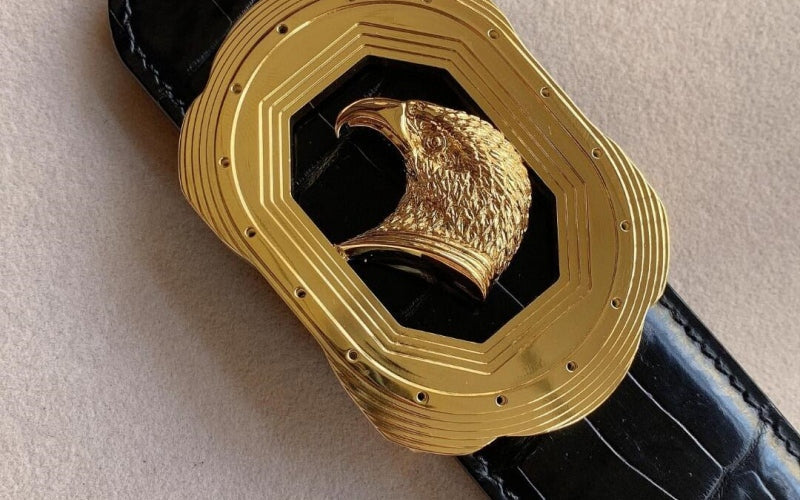
The exotic leather surprise: Crocodile and alligator belts have a natural osteoderm structure — bony plates beneath the scales — that resists scratching and scuffing better than any cowhide grade. With proper conditioning, a well-made crocodile leather belt can last 25–30 years. That makes exotic leather the highest-longevity option in the belt market, not just the most visually distinctive.

How Long Do Hermès Belts Last?
Hermès belts last 15–20+ years with regular use and basic care. The brand uses Box Calf, Togo, Epsom, and Swift leathers — the same full-grain hides used in their Birkin and Kelly bags — which are among the most durable leathers in the luxury industry. Multiple long-term owners on PurseForum report 15+ years of daily wear with no structural failure.
What makes Hermès belts outlast most competitors is leather selection, not just brand reputation. The Gentleman's Gazette's in-depth Hermès belt review found that the leather grain, edge finishing, and hardware weight all exceed industry norms — though they note the iconic H buckle's gold plating can show wear within 2–3 years of daily use, even as the strap itself remains pristine.
The Hermès caveat: At $1,000–$5,000+ per belt, the durability is real but the value proposition is debatable. A full-grain belt at $100–$200 from a DTC artisan brand uses comparable leather grades and can match Hermès on lifespan — at roughly 10–20% of the price. You're paying for the H buckle, the orange box, and the brand story — not for a fundamentally different leather experience.

How Long Do Gucci Belts Last?
Gucci belts last 5–10 years with normal care, though the lifespan varies significantly by model. Their full-grain leather belts with the antiqued brass GG buckle hold up best. The GG Supreme canvas belts — Gucci's most popular line — show friction wear, scuffing, and coating deterioration within 6–12 months of daily use.
Real-world reports support this split. WhatVeeWore's 24-month Gucci belt review found the leather strap in good condition after two years of regular rotation, but noted visible wear on the buckle's antique finish. Mangoful's durability assessment estimates 5–10 years for the leather models and significantly less for the canvas line under heavy use.
Key factor: Gucci offers only a 2-year warranty on manufacturing defects — one of the shortest in the luxury belt space. Compare that to BELTLEY's 10-year warranty, which covers materials and construction for a decade. A brand's warranty length tells you how long they expect the product to last.

How Long Do Louis Vuitton Belts Last?
Louis Vuitton's coated canvas belts — the Damier and Monogram lines — average 2–5 years before the PVC coating begins to peel, crack at fold points, or separate from the backing material. Their Epi leather and Taurillon leather belts perform significantly better, lasting 7–12 years with care.
1stDibs' collector assessment estimates daily wear reduces LV canvas belt lifespan to 2–3 years, while careful rotation extends it to 5–7 years. The most common failure point is buckle plating — LV's metal finishes can show wear within 6–12 months, revealing base metal underneath.
The uncomfortable truth about LV canvas: It's not leather. Louis Vuitton's signature canvas is a cotton base coated with PVC (polyvinyl chloride). It's durable by fabric standards, but it's fundamentally a synthetic-coated textile competing with genuine leather belts at 3–5× the price. For a detailed material analysis, see BELTLEY's breakdown of what Louis Vuitton belts are actually made of.

Brand Durability Comparison: The Full Picture
Here's how the major luxury brands stack up against a well-made DTC full-grain belt on actual performance:
| Brand | Primary Material | Typical Lifespan | Warranty | Retail Price | Cost Per Year |
|---|---|---|---|---|---|
| Hermès | Full-grain (Box Calf, Togo) | 15–20+ years | Limited | $1,000–$5,260 | $50–$350 |
| Gucci (leather) | Full-grain calf | 5–10 years | 2 years | $400–$890 | $40–$178 |
| Gucci (canvas) | GG Supreme canvas | 2–5 years | 2 years | $350–$600 | $70–$300 |
| Louis Vuitton (leather) | Epi/Taurillon | 7–12 years | 2 years | $500–$1,000 | $42–$143 |
| Louis Vuitton (canvas) | PVC-coated cotton | 2–5 years | 2 years | $500–$800 | $100–$400 |
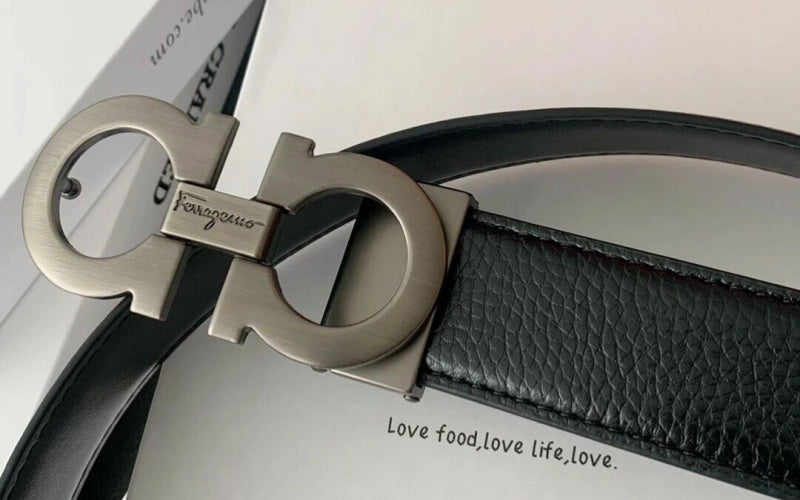
| Ferragamo | Full-grain calf | 8–15 years | Limited | $400–$850 | $27–$106 |
| DTC full-grain (e.g., BELTLEY) | Full-grain cowhide | 10–20 years | 10 years | $80–$200 | $4–$20 |
| DTC exotic (e.g., BELTLEY) | Crocodile/alligator | 15–30 years | 10 years | $118–$289 | $3–$20 |
Sources: Extrabux brand comparison, FFashionFrenzy designer showdown, brand retail sites, and owner reports from PurseForum.
The cost-per-year column reveals what the retail price hides. A $500 Louis Vuitton canvas belt that lasts 3 years costs $167/year. A $150 full-grain leather belt that lasts 15 years costs $10/year. The "luxury" belt costs 16× more per year of actual use.
Do Expensive Belts Actually Last Longer?
Not necessarily. Price correlates with lifespan up to approximately $150–$300, then flatlines. Above that threshold, additional cost goes toward brand overhead — marketing, retail leases, packaging, and profit margins — not improved materials or construction. A belt made from the same grade of Italian full-grain leather costs $120 from a DTC brand and $800 from a fashion house. The leather doesn't know the difference.
Alibaba's independent analysis of designer belt durability found that brand name accounts for most of the price premium in belts above $300, with diminishing returns on material quality. Gentleman's Gazette's belt dissection project physically cut apart belts at multiple price points and found that construction quality varied more by individual brand philosophy than by price tier — some $100 artisan belts had better edge finishing and tighter stitching than $500 designer models.
The smart money principle: The most cost-effective luxury belt is a full-grain or exotic leather belt from a maker that spends money on materials rather than marketing. BELTLEY's exotic leather belts use legally sourced crocodile and alligator hides — the same species and grades handled by European fashion houses — at $118–$289 because the savings from a DTC model go directly into material quality, not storefront rent.
7 Signs Your Belt Is Dying
Even the best belt eventually shows its age. Replace yours when you see three or more of these signs:
- Deep cracks or splits in the leather surface — especially at the primary buckle hole and where the belt bends over your hip.
- Peeling or flaking surface layer — definitive proof of bonded leather, coated canvas, or corrected grain reaching end-of-life.
- Stretched buckle holes — the hole you use most has elongated into an oval, and the belt no longer holds tension.
- Buckle plating wearing off — base metal showing through chrome, gold, or nickel plating. Green oxidation on the buckle or prong.
- Fraying or splitting edges — the belt's edge finishing has broken down, revealing loose fibers or delaminated layers.
- Permanent odor — musty smell that doesn't respond to airing out, indicating moisture-trapped bacteria in the leather fibers.
- Loss of structure — the belt droops, folds, or won't hold its shape when threaded through belt loops.
Buckle My Belt's replacement guide adds that visible color patchiness — where dye has worn unevenly, creating light and dark zones — is another clear signal. A belt developing patina (uniform deepening of color) is aging well. A belt developing patches is deteriorating.

How to Make a Luxury Belt Last Longer
The difference between a belt that lasts 5 years and one that lasts 20 often comes down to four care habits:
Rotate your belts. Wearing the same belt every day concentrates moisture, stress, and flex damage. A three-belt rotation — one black, one brown, one casual — lets each belt rest and dry between wears.
Condition every 3–6 months. Leather is skin. It dries out. A quality leather conditioner restores moisture and flexibility, preventing the cracks that kill belts prematurely. Pampeano's belt care research estimates that consistent conditioning can double a belt's functional lifespan. BELTLEY's leather care page has specific product recommendations by leather type.
Store flat or hanging. Rolling a belt tightly or stuffing it in a drawer creates permanent curl and stress marks. Hang it on a hook or lay it flat in a drawer with the buckle straight.
Keep it dry. Wipe off moisture immediately. Never store leather in humid closets, bathrooms, or hot cars. Moisture is the single fastest destroyer of leather — it breaks down the tanning agents that keep fibers supple and connected.

The Bottom Line
How long do luxury belts last? Hermès leads at 15–20+ years thanks to genuine full-grain hides. Gucci's leather models manage 5–10 years; their canvas line, 2–5. Louis Vuitton's canvas belts average 2–5 years before the coating fails, while their leather models push 7–12. But brand name isn't the variable that matters most — leather grade is. A full-grain belt from any competent maker will outlast a coated-canvas designer belt at three times the price.
The cost-per-year math makes the case clearly. A $500 designer belt lasting 4 years costs $125/year. A $150 DTC full-grain belt lasting 15 years costs $10/year. A $200 exotic leather belt lasting 25 years costs $8/year. BELTLEY builds on exactly this principle — handcrafted full-grain leather and crocodile belts priced at $58–$299, fitted with stainless steel hardware, backed by a 10-year warranty, and shipped free worldwide. Because the smartest luxury purchase is the one that costs the least per year of impeccable wear.
Frequently Asked Questions
Q: Can a leather belt last a lifetime?
Yes — a well-made full-grain leather belt with proper care (conditioning every 3–6 months, rotation, dry storage) can last 20–30+ years. Exotic leather belts like crocodile and alligator have even longer potential lifespans due to their natural osteoderm structure. See BELTLEY's guide on the truth about leather belt durability for the structural details.
Q: How long do Gucci belts last?
Gucci leather belts typically last 5–10 years with normal wear and care. Gucci GG Supreme canvas belts show friction wear and coating deterioration earlier — 2–5 years under regular use. The antiqued brass buckle finish can show wear within 1–2 years of daily use.
Q: How often should you replace a leather belt?
Replace a leather belt when you see deep cracks, stretched holes, peeling surface, or buckle plating failure. A quality full-grain belt shouldn't need replacement for 10–15 years. If you're replacing belts every 1–2 years, you're buying the wrong leather grade — upgrade to full-grain and break the replacement cycle.
Q: Are expensive belts worth the money?
It depends on where the money goes. A $150–$250 belt from a craft-focused brand that invests in full-grain leather and solid hardware is worth every dollar — it'll last a decade or more. A $600+ designer belt where 60–70% of the price is brand tax delivers the same material quality at a far worse cost-per-year ratio. For a deeper analysis, see BELTLEY's guide on whether expensive belts are worth the investment.
Q: What is the most durable leather for a belt?
Crocodile and alligator leather are the most durable options — their natural bony plate structure resists scratches and scuffs better than any cowhide grade. Among cowhide, full-grain is the most durable, followed by top-grain, then genuine leather. For a full comparison, see BELTLEY's guide on which animal leather is best for belts.
Q: How do you make a leather belt last longer?
Four habits: (1) Rotate between 2–3 belts to reduce daily stress. (2) Condition with leather cream every 3–6 months. (3) Store flat or hanging — never rolled tightly. (4) Keep away from moisture, direct sunlight, and heat. Follow BELTLEY's leather care guide for product-specific instructions.