Belt Style Guide for Men Over 50: Timeless Beats Trendy
TL;DR:
- The 50s belt wardrobe is three pieces: black dress belt (32–35mm), dark brown heritage full-grain belt (35mm daily wearer), and one exceptional belt that rewards closer inspection — exotic leather or distinctive grain
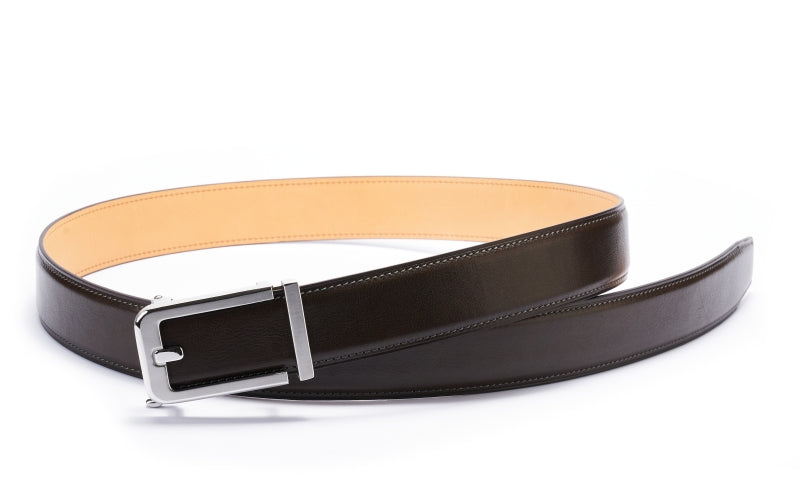
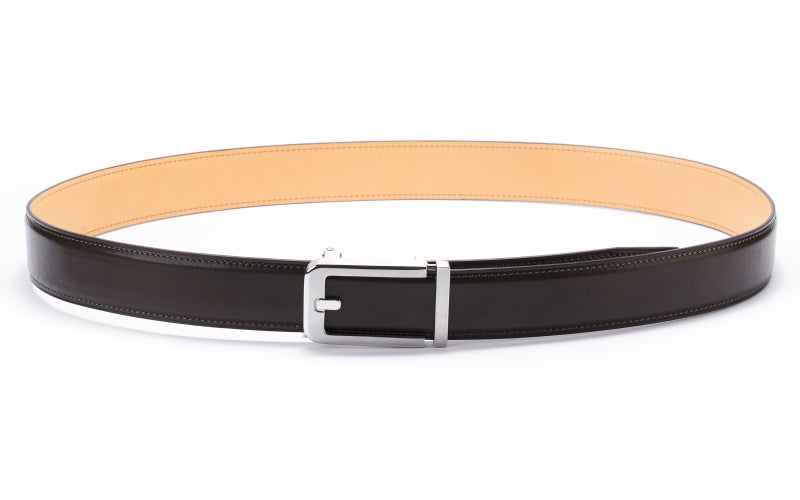
- Comfort is a real design criterion at 50: ratchet buckle belts adjust in 6mm increments and eliminate the tight-after-dinner problem entirely
- Full-grain leather is the minimum at 50; vegetable-tanned or exotic develops genuine character over years — either choice looks better in year ten than day one
There's a particular kind of confidence that comes with being in your 50s. You've stopped caring what strangers think. You've stopped buying things because they're on trend. You've started noticing quality in ways you couldn't at 25.
That confidence should show up in how you dress — including the belt. Here's what a well-considered belt wardrobe looks like for a man who's been around long enough to know what actually works.
The 50s Belt Question You're Actually Asking
Most readers arrive with one of these:
| Your situation | Go with |
|---|---|
| Comfort now matters as much as style | Ratchet buckle on full-grain — 6mm micro-adjustments end the tight-after-dinner problem. |
| Simplifying the wardrobe | The trio: black dress, brown daily, one exceptional piece. Donate the rest. |
| Ready for the "exceptional piece" | Glazed crocodile ($118–$289) — at 50+ it reads as taste, never as trying. |
| Buying gifts for grown kids | Full-grain from $58 — start their trio the way you wish someone had started yours. |
Timeless over trendy: BELTLEY's men's collection.
The Over-50 Belt Philosophy in One Sentence
Fewer belts, better leather, and never again buy something you wouldn't be proud to still own in ten years.

That's it. That's the whole guide. Everything below is details.
Which Three Belts Should a Man Over 50 Keep?
A black dress belt (32–35mm), a dark brown heritage full-grain belt (35mm), and one exceptional piece. The black dress belt is still essential for anything formal. The dark brown heritage belt — full-grain leather that develops a patina — is the daily wearer that improves season by season. The exceptional piece could be alligator, bridle leather, or any belt built to still look better in year ten than it did on day one.

1. A black leather dress belt, 32–35mm You know the one. Smooth, slim, reliable. Black shoes, black belt. For anything that involves a tailored suit, a formal dinner, or an occasion where the word "guests" appears in the invitation. If yours is looking tired, replace it with something you'll keep for the next twenty years.
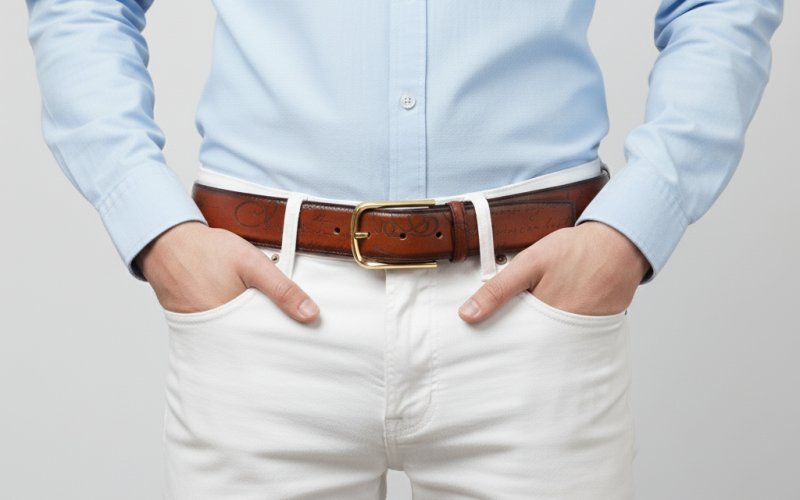
2. A dark brown heritage leather belt, 35mm This is your daily workhorse — and in your 50s, you want it in a leather that tells a story. A full-grain dark brown belt develops a patina over years of daily wear that looks richer and more interesting every season. A cheap one from five years ago just looks worn. The difference is the leather. Full-grain leather versus everything else — the breakdown that explains why the material matters so much.
3. One exceptional belt This is the belt you wear when you want to. An alligator belly-cut belt in espresso. A Nile crocodile piece that you bought because you appreciate what goes into it. Or a bridle leather belt that looks better at year seven than it did on day one. Exotic leather belts — these are the belts that make people ask.
Which Belt Features Matter Most for Comfort in Your 50s?
Fit precision and leather suppleness become the two most meaningful belt qualities as comfort preferences sharpen. A ratchet buckle adjusts in 6mm increments rather than 1-inch hole intervals — a meaningful difference for all-day wear. Supple full-grain leather tanned for flexibility conforms to your body within the first weeks and stays comfortable through extended wear in ways stiff leather doesn't.

Let's talk about something most style guides won't: your body changes in your 50s, and belts that were comfortable at 35 might not work the same way at 55.
A few things worth knowing:
Belt fit matters more with age. A belt that's too tight after a meal is an all-evening annoyance. A ratchet (automatic) buckle belt — which adjusts in 6mm increments rather than 1-inch hole intervals — gives you precise fit throughout the day. No compromise. It looks essentially the same as a standard plaque buckle. BELTLEY's ratchet belts — worth a look if you've ever spent an evening slightly uncomfortable and said nothing about it.
Softer leather is not worse leather. Some full-grain leathers are tanned to be supple rather than stiff. A belt that breaks in naturally over the first few weeks of wear will conform to your body and be significantly more comfortable than one that stays rigid. This is a mark of quality, not softness.
Width affects comfort too. A 35mm belt distributes tension more evenly than a 38mm one. If you're between widths, 35mm is the more comfortable choice for extended daily wear.
What Should Men Over 50 Stop Wearing in Their Belt Collection?
Logo belts from the 40s, any leather that's started to peel or crack, braided belts past their prime, and fashion pieces tied to a specific moment. These don't improve with time. Degrading leather gets worse. Fashion belts that were tied to a trend continue dating every season they're worn. The replacement standard is simple: if you wouldn't be proud to still own it in ten years, let it go now.

- The logo belt from your 40s that was already a stretch then. Enough said.
- Anything that's started to peel or crack. Degrading leather doesn't get better.
- Braided belts that are more than five years old unless they're genuinely still in great shape.
- Fashion belts that made sense in a specific moment but don't fit who you've become.
According to Ape to Gentleman's guide to men's style at every age, the defining characteristic of men who dress exceptionally in their 50s and beyond is restraint — fewer items, better quality, more intention. The belt is one place that philosophy is completely achievable.
What a Belted Outfit Looks Like at 50+
In your 50s, a well-chosen belt is less visible and more felt. The outfit just looks right. The trousers sit correctly. The silhouette is clean. Nobody says "nice belt" — they say "you look great," which is the superior outcome.

A 35mm dark brown leather belt with medium grey trousers and a navy sport coat is a complete outfit. A black 32mm dress belt under a charcoal suit reads as someone who knows exactly what they're doing. These aren't complicated choices — they're confident ones. How to match a belt with your work outfit — if you want the matching logic spelled out.
The Bottom Line
In your 50s, you dress for yourself — and doing it well means choosing things that are genuinely excellent rather than fashionably correct. A full-grain leather dress belt, a heritage casual belt, and one exceptional piece. That's a complete belt wardrobe that serves every occasion without apology.
BELTLEY has been making these belts since 1999 — we understand the difference between a belt that looks good once and one that earns its place for a decade. The 10-year warranty is proof of that confidence. Browse full-grain leather belts — free worldwide shipping, and if it's not right, 30 days to return it.
Frequently Asked Questions
Q: What style of belt looks best on men over 50?
Slim, smooth full-grain leather in black or dark brown with minimal hardware. Classic proportions — 32–35mm for formal, 35mm for casual — and a buckle matched to your watch metal. The goal is a belt that completes the outfit rather than announcing itself.
Q: Should men over 50 wear wide belts?
Generally no — for daily professional and smart-casual wear, 35mm is the sweet spot. Wider belts (38mm+) are casual and work well with jeans, but the traditional 35mm width reads as more considered and proportional for the wider range of occasions men over 50 typically dress for.
Q: Are ratchet belts good for men over 50?
Yes — particularly for daily wear. Ratchet belts adjust in small increments for a more precise fit throughout the day, which becomes more relevant as comfort preferences sharpen with age. They look nearly identical to standard plaque buckle belts and are available in full-grain leather.
Q: What leather is best for men over 50?
Full-grain leather is the minimum — preferably aged or heritage tanned leather that develops a patina with wear. Exotic leathers (crocodile, alligator) are excellent choices at this stage — they reward material knowledge and age in a way that standard cowhide doesn't.
,%20dark%20brown%20heritage%20full-grain%20belt%20(35mm%20daily%20wearer),%20and%20one%20exceptional%20belt%20that%20rewards%20closer%20inspection%20%E2%80%94%20exo...)