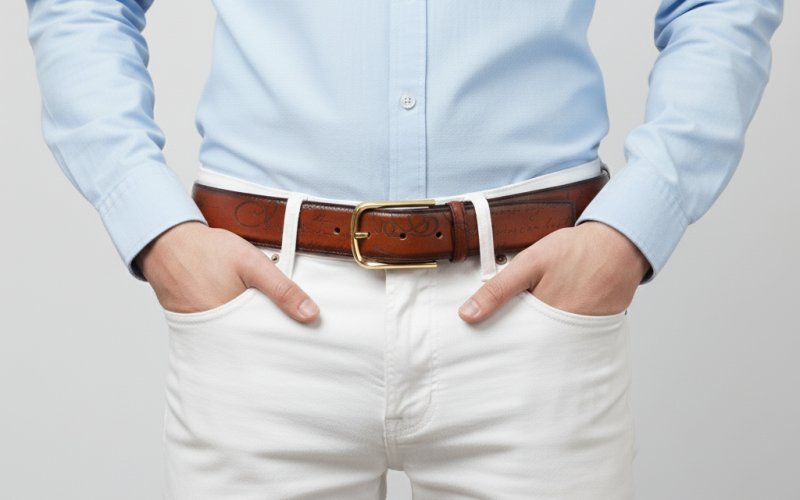
Belt Guide for Men in Their 30s: Building a Wardrobe That Actually Works
TL;DR:
- Three belts: black full-grain dress belt (32–35mm), brown casual belt (35–38mm), and one upgrade piece in a material that earns closer inspection — exotic leather, distinctive grain, something beyond standard cowhide
- Your 30s are when the math shifts: a $150 full-grain belt worn daily for 10 years costs $15/year vs. $30–$40 replaceable belts every 18 months
- 35mm is the most versatile single width — works with dress trousers, chinos, and dark jeans without forcing through any loop
Something shifts in your 30s. You stop buying things because they're cheap and start buying things because they're right. Furniture that doesn't wobble. Shoes you can actually resole. And yes — belts you didn't find in a two-pack at a department store.
This is the decade when your wardrobe stops being accidental and starts being intentional. The belt collection is a good place to start, because it's cheap to get right and surprisingly expensive to get wrong over time.
Where's Your 30s Belt Wardrobe Now?
Find your gap, fill only that:
| Your situation | Go with |
|---|---|
| Still wearing your 20s belts | Start over with the trio: black dress (32–35mm), brown casual (35–38mm), one upgrade piece. |
| Have the basics, ready for the third slot | Exotic leather — croc or alligator ($118–$289) is the 30s upgrade that signals arrival quietly. |
| Promotion incoming, wardrobe lagging | Prioritize the dress belt — it's in every meeting your jeans aren't. |
| Budget-conscious decade (kids, mortgage) | The math favors quality: one $58–$148 full-grain belt per decade beats $35 yearly replacements. |
All three slots: BELTLEY's men's collection, free shipping.
How Many Belts Should a Man in His 30s Own?
Three. Specifically:

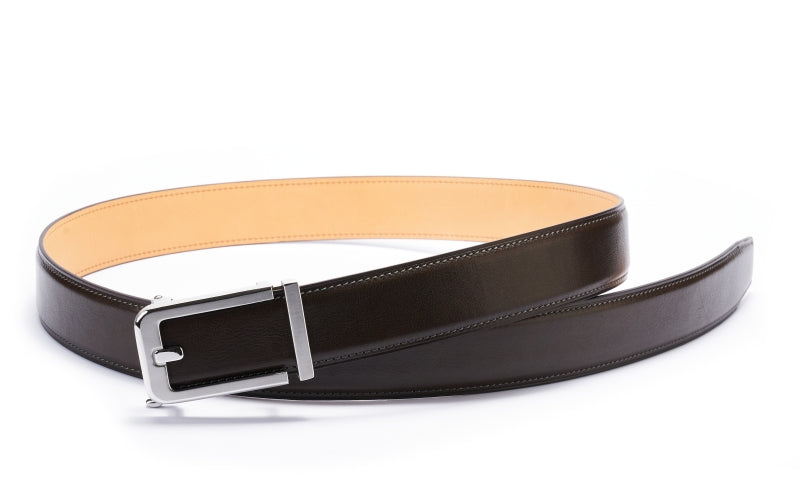
1. Black full-grain dress belt, 32–35mm — For anything that involves a suit, a blazer, or a parent-teacher conference where you want to look like you have opinions about things. This is the belt for job interviews, board meetings, and funerals. Boring, essential, irreplaceable.
2. Brown full-grain casual belt, 35–38mm — The workhorse. Dark jeans on Friday, chinos at the weekend, dinner out when you're not quite sure of the dress code. A warm medium brown covers more terrain than any other belt color. Brown leather belts — the whole range is here.
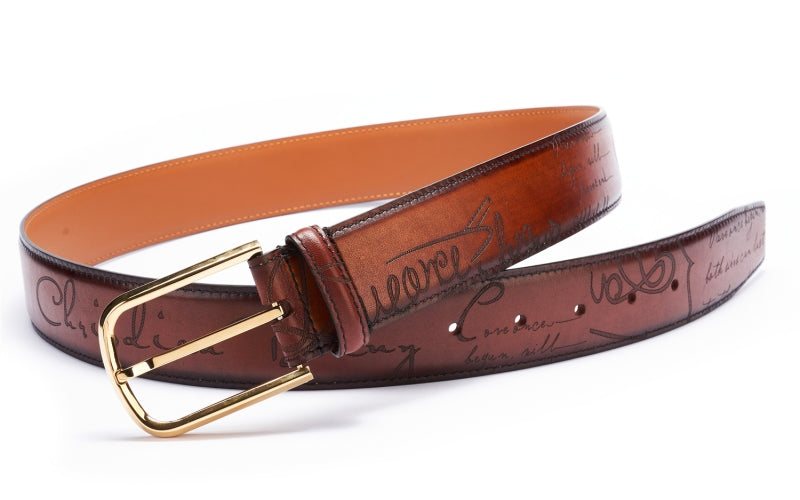
3. One upgrade belt — This is where your 30s are different from your 20s. You've earned something that's actually interesting. An espresso crocodile leather belt. An elephant leather piece in cognac. Something that someone who knows about leather notices and asks about. Not a logo. A material.
Why the 30s Are the Right Time to Upgrade Belt Quality
In your 20s, spending $150 on a belt felt irresponsible. In your 30s, doing the math changes everything.

Research from Ape to Gentleman's men's belt buying guide consistently identifies leather accessories as some of the highest-return purchases in men's fashion — specifically because quality leather improves with age while cheap leather disintegrates. A full-grain belt bought at 32 can still look exceptional at 45. The same belt bought for $35 looks rough by 34.
BELTLEY has made full-grain leather belts since 1999 — 25+ years of watching how leather ages in the real world. The belts that come back for warranty claims aren't the full-grain ones. They're the ones someone grabbed cheap because the full-grain "felt like too much." Don't be that guy at 42.
The Dress Belt vs. Casual Belt Problem Most Men Get Wrong
Here's a thing that happens in your 30s: your life has more contexts than it used to. Work presentations. Kids' birthday parties. Company dinners. Actual dates with your actual partner at places that have a dress code.
One belt doesn't cover all of that. A 38mm casual belt with a stainless rectangular buckle looks wrong with a charcoal suit. A slim 32mm dress belt looks weirdly formal with dark jeans and a blazer. Dress belt versus casual belt — the full breakdown of what goes where.
The good news: you only need two or three. And once you have them, you stop thinking about it entirely. That's the goal.
What Belt Width Actually Means for Your Outfits
- 32mm: Formal suit trousers, tailored dress pants. Narrow, elegant, correct.
- 35mm: The universal belt. Works with dress trousers AND chinos AND dark jeans. Buy this width if you're only buying one.
- 38mm: Casual trousers, jeans, weekend wear. Too wide for dress pants — the belt loops won't accommodate it cleanly.
If you wear a lot of chinos (you probably do — you're in your 30s), 35mm is your belt. Full width breakdown with every trouser type — genuinely useful if this is news to you.

What About Exotic Leather in Your 30s?
Your 30s are precisely when an exotic leather belt makes sense. You've got enough context to wear it correctly (not to a place it would look try-hard), and enough appreciation for materials to get what you're paying for.

A crocodile belly-cut belt in espresso brown. An elephant leather belt in cognac. These aren't status symbols — they're material choices, the same way choosing a heritage watch over a fashion watch is a material choice. Exotic leather belts — if you want to see what's possible beyond cowhide.
According to Ape to Gentleman's style investment guide, the 30s are when men start choosing quality over novelty — and exotic leather is exactly that kind of choice.
The Care Piece Nobody Mentions
Here's the unsexy part: leather needs maintenance. Not much, but some. Condition your belts twice a year — once before summer, once before winter. Takes ten minutes. Keeps your leather from drying and cracking. A $10 leather conditioner applied twice a year is the only reason a good belt lasts 15 years instead of 5.

BELTLEY's leather care guide covers the whole routine. It's short. Do it.
The Bottom Line
Three belts. One black dress belt, one brown casual belt, one upgrade piece that's actually interesting. Full-grain leather or better across all three. That's the 30s belt wardrobe — intentional, complete, and built to last the decade.
Browse full-grain leather belts to start building it properly. Free worldwide shipping, 10-year warranty, 30-day returns.
Frequently Asked Questions
Q: How many belts should a man own in his 30s?
Three: a slim black dress belt (32–35mm) for formal contexts, a brown leather casual belt (35–38mm) for everyday wear, and one quality upgrade piece — exotic leather or a distinctive material that rewards closer inspection. That set covers every situation without redundancy.
Q: Is it worth upgrading to a full-grain leather belt in your 30s?
Absolutely. Full-grain leather is the outermost layer of the hide — it doesn't peel, develops a patina with age, and outlasts multiple cheaper belts over a decade. At $10–$15 per year amortized, it's one of the better wardrobe economics available.
Q: What's the difference between a dress belt and a casual belt?
Width and finish. A dress belt is 32–35mm with a smooth finish and slim buckle — it fits dress trouser loops cleanly. A casual belt is 35–38mm with a heavier build and often more texture — better proportioned for jeans and chinos. Using the wrong one for the occasion is one of the most common men's style errors.
Q: What belt color does the most work in your 30s?
Medium-to-dark brown is the workhorse. It pairs with navy, grey, tan, and olive without looking overdressed or underdressed. Black is more versatile formally but less flexible casually. If you can only own one belt, medium brown at 35mm covers the widest ground.
,%20brown%20casual%20belt%20(35%E2%80%9338mm),%20and%20one%20upgrade%20piece%20in%20a%20material%20that%20earns%20closer%20inspection%20%E2%80%94%20exotic%20leather,%20distinctive%20grain,%20someth...)